

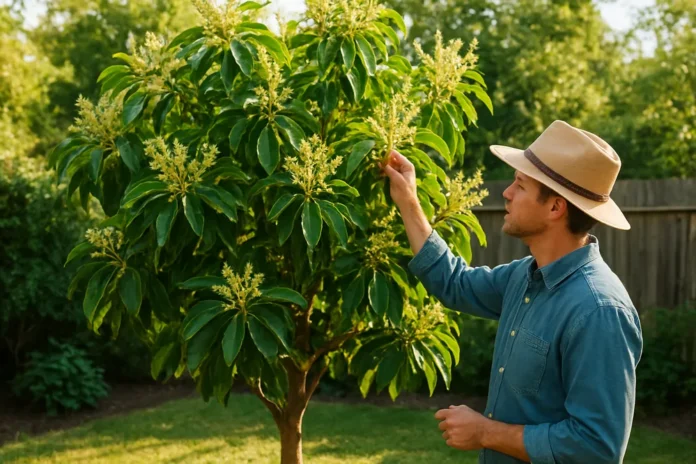
An avocado tree usually fails to fruit because it is too young, not getting pollinated well, or growing under stress from cold, pruning, water, or nutrition problems. Some trees also bloom but drop flowers or tiny fruit before they can mature.
It is frustrating to wait on an avocado tree that looks leafy and vigorous but still gives you no fruit. In home gardens, this is a very common problem, and the cause is often something simple like tree age, poor pollination, or weather at the wrong time.
I have found that avocado tree not fruiting issues usually come down to timing and conditions rather than one dramatic failure. A tree can appear perfectly healthy, push out plenty of growth, and still skip fruiting if flowering, pollination, and early fruit development do not line up well.
The good news is that most fruiting problems leave clues. Once you know whether your tree is too young, blooming poorly, dropping flowers, or struggling with stress, it becomes much easier to make the right fix.
Tree Age Is Often the Biggest Reason
If your avocado tree has never fruited, the first question I ask is how old it is and whether it was grown from seed or grafted. This matters a lot. Avocados grown from seed can take many years to mature, and some take so long that gardeners assume something is wrong when the tree is simply juvenile.
A grafted avocado tree usually begins fruiting sooner, often in about 3 to 5 years under good conditions. A seed-grown tree may take 7 to 15 years, and occasionally even longer. In some cases, seedling trees never become reliable producers because their genetics are unpredictable.
- Grafted trees typically fruit much earlier than seed-grown trees.
- Young trees may flower lightly before they are mature enough to hold fruit.
- A vigorous, leafy tree is not always a mature, fruit-ready tree.
- If you planted a pit from store-bought fruit, patience may need to be measured in years, not seasons.
When a home gardener tells me their avocado has grown fast but never fruited, I immediately want to know whether it came from a nursery as a named variety or from a pit. That one detail often explains the whole situation.
Pollination Problems Can Limit Fruit Set
Avocado flowers are unusual because they do not function the same way all day. Each flower opens twice, once as female and once as male, and the timing depends on whether the tree is a Type A or Type B variety. That does not mean you absolutely need two trees, but having both types nearby often improves pollination and fruit set.
Even self-fertile avocado varieties can struggle if bloom timing is disrupted by cool weather, heat, wind, or low bee activity. A tree may flower heavily and still produce very little if pollen is not moving well between open flowers at the right time.
How Flowering Type Affects Fruiting
- Type A varieties open female in the morning and male the following afternoon.
- Type B varieties open female in the afternoon and male the following morning.
- Having one Type A and one Type B nearby can improve overlap and increase fruit set.
- Cool spring temperatures can throw off normal flower timing and reduce pollination.
If you only have one tree, fruiting is still possible, especially in areas where other avocado trees are nearby. But if your tree blooms well year after year and never sets much fruit, weak pollination is a strong suspect.
Weather Stress Can Ruin Flowers and Tiny Fruit
Avocados are sensitive trees, especially during flowering and early fruit development. A healthy canopy does not guarantee healthy blooms. Cold snaps, late frosts, strong wind, extreme heat, and dry air can all cause flowers to abort or tiny fruit to drop before you even realize the tree had set anything.
This is one of the most overlooked reasons for poor production. Many gardeners remember major winter cold, but they do not always connect a single chilly night during bloom with a missing crop months later.
- Late frost can damage blossoms and tender new growth.
- Hot, dry wind can dry out flowers and reduce pollinator activity.
- High heat during bloom can shorten flower viability.
- Sudden weather swings can trigger flower drop and early fruit drop.
If your avocado tree flowers but never carries fruit, compare that season with the weather during bloom, not just the weather during harvest time. I have seen one rough week in spring wipe out an otherwise perfect-looking crop.
Too Much Shade Reduces Flowering
Avocado trees need plenty of sun to bloom and fruit well. They can survive in partial shade, but survival and productivity are not the same thing. A tree tucked near tall fences, large shade trees, or the north side of a structure may put its energy into foliage instead of flowers.
For best fruiting, aim for full sun or at least 6 to 8 hours of direct light. If light levels have changed over time because nearby trees matured, your avocado may be producing less now than it did a few years ago.
- Dense shade can reduce flowering.
- Morning and midday sun are especially helpful during bloom and fruit set.
- Crowding from nearby plants can also reduce airflow and pollinator visits.
- A tree with lush green growth but very few flowers may be getting too little sun.
Watering Mistakes Can Interrupt Fruiting
Avocado trees need consistent moisture, but they dislike soggy soil. Both underwatering and overwatering can interfere with flowering and fruit set. Dry stress can cause flower drop and early fruit drop, while waterlogged roots can reduce overall vigor and make the tree less capable of supporting a crop.
The tricky part is that the symptoms can overlap. Leaves may yellow, curl, or drop in both cases. Fruit production often suffers before the tree shows dramatic leaf damage, so poor irrigation habits can be quietly reducing your harvest.
What Good Avocado Watering Looks Like
- Water deeply rather than lightly and often.
- Let the top few inches of soil dry somewhat before watering again.
- Avoid standing water around the root zone.
- Increase watering during prolonged heat, especially for trees carrying young fruit.
- Use mulch to hold moisture, but keep it away from the trunk.
If your soil drains slowly, watering on a fixed schedule can become a problem. Avocados are especially vulnerable to root stress in heavy soils.
Nutrient Imbalance Can Favor Leaves Over Fruit
An avocado tree that gets too much nitrogen may grow beautifully and still produce very little fruit. Nitrogen pushes leafy growth, which can be useful for a young tree, but too much can delay or reduce flowering. On the other hand, a tree lacking key nutrients may bloom poorly or fail to hold fruit.
Avocados also commonly struggle with micronutrient issues in some soils, especially zinc or iron problems in high pH conditions. These deficiencies may not be the only reason a tree is not fruiting, but they can weaken bloom performance and overall health.
- Too much nitrogen often means lots of leaves and fewer flowers.
- Poor nutrition can reduce flower quantity and fruit retention.
- High pH soil may limit access to iron and zinc.
- A balanced fruit-tree fertilizer schedule usually works better than frequent lawn-style feeding.
When I see an avocado making long, soft shoots but no meaningful crop, I get suspicious of heavy feeding, especially if lawn fertilizer is being applied nearby. A tree can look impressively vigorous and still be nutritionally out of balance for fruiting.
Pruning at the Wrong Time Can Remove Future Fruit
Avocados do not usually need aggressive pruning to stay productive. Light shaping is fine, but hard cutting can remove flowering wood and push the tree into a flush of vegetative growth instead of bloom. If you prune heavily before or during the flowering cycle, you may unintentionally remove much of the wood that would have carried fruit.
This is especially common when a tree is cut back to reduce size or improve access, then fails to fruit the following season. The tree is not necessarily sick. It may simply be rebuilding canopy instead of focusing on reproduction.
- Avoid severe pruning unless the tree truly needs renovation.
- Do structural pruning after harvest or at a time that interferes least with bloom.
- Remove dead, damaged, and crossing wood first.
- Expect reduced fruiting after a major cutback.
Temperature and Climate May Be Outside the Tree's Comfort Zone
Some avocado trees survive in climates that are only marginally suitable for fruiting. They may grow as ornamentals, but consistent crops are harder to get. If your area has frequent spring cold, dry winds, high summer heat, or winter lows that regularly damage buds and young wood, fruiting may always be unreliable.
Container-grown avocados face this too. They can bloom indoors or on patios, but they may not get enough light, warmth, humidity, or pollinator activity to set fruit well. A potted tree can also become root-bound, which limits both vigor and production.
Signs Climate May Be the Limiting Factor
- The tree flowers inconsistently from year to year.
- New growth is often burned by cold or wind.
- Tiny fruit appears briefly, then all drops off.
- You are growing a variety poorly suited to your local conditions.
Pests, Disease, and Root Problems Can Reduce Fruit Production
A stressed avocado tree may stop fruiting long before it looks seriously sick. Root rot is one of the biggest concerns, especially in poorly drained soil. When roots struggle, the tree cannot support heavy flowering or fruit development. You may notice sparse growth, yellowing leaves, dieback, or a general lack of vigor.
Pests such as mites, thrips, or scale can also weaken the tree, especially if infestations are repeated or severe. Disease pressure on flowers and tender new growth may reduce fruit set as well. These issues are less often the only cause, but they can compound other stresses and push a borderline tree into a no-fruit season.
- Poor drainage raises the risk of root rot.
- Weak, thin canopies often signal a root or health problem.
- Repeated pest pressure can reduce bloom quality and tree energy.
- A tree that declines a little each year should be inspected more closely than a tree that is simply unproductive.
How to Narrow Down the Real Cause
The fastest way to solve an avocado fruiting problem is to match the symptom pattern to the likely cause. Start by asking a few basic questions: Is the tree old enough? Does it bloom heavily, lightly, or not at all? Do flowers drop, or does tiny fruit form and then fall? Has the weather been rough during bloom? Was the tree pruned hard or fed heavily?
Those answers usually point you in the right direction. If the tree has never bloomed much, think age, shade, nutrition, or climate. If it blooms heavily but sets little fruit, think pollination or weather. If it sets tiny fruit and then sheds it, think stress from watering, temperature swings, or root trouble.
A Practical Troubleshooting Checklist
- Confirm whether the tree is grafted or seed-grown and estimate its age.
- Watch the next bloom cycle closely to see whether flowers are abundant or sparse.
- Note spring weather during bloom, especially cold nights, heat spikes, and wind.
- Review sun exposure and whether nearby trees or structures now cast more shade.
- Check watering habits and drainage rather than relying on a calendar alone.
- Look at fertilizer history, especially high-nitrogen products.
- Inspect the canopy and root zone for decline, pests, or disease symptoms.
Try not to change everything at once. If you adjust irrigation, fertilizing, pruning, and sun exposure all in the same season, it becomes hard to tell what actually helped.
What You Can Do to Encourage Fruiting Next Season
Once you have a likely cause, focus on creating stable conditions rather than chasing a quick fix. Avocados fruit best when stress is low and bloom conditions are favorable. That means good light, even moisture, moderate feeding, and as little disturbance as possible during flowering.
- Give the tree full sun if possible.
- Water deeply and improve drainage if soil stays wet.
- Use mulch to moderate soil moisture and temperature.
- Avoid overfeeding with nitrogen-heavy fertilizers.
- Prune lightly and only when necessary.
- Consider planting a compatible Type A or Type B tree nearby if pollination seems weak.
- Protect blooms from unusual cold when practical, especially on smaller trees.
Be realistic about timing. Even after you correct the main issue, avocado trees may need a full growing cycle or more to respond with better bloom and fruit set. The payoff is worth it, but it usually takes patience.
FAQ
Can a Single Avocado Tree Produce Fruit by Itself?
Yes, a single avocado tree can produce fruit on its own, especially if it is a self-fertile variety. However, fruit set is often better when a compatible Type A or Type B tree is nearby to improve pollination.
How Long Does It Take an Avocado Tree to Fruit?
A grafted avocado tree often fruits in about 3 to 5 years. A seed-grown tree may take 7 to 15 years, and some are slow or unreliable producers.
Why Does My Avocado Tree Flower but Not Make Avocados?
This usually points to pollination trouble, bad weather during bloom, or stress that causes flowers and tiny fruit to drop. Cold nights, heat, wind, and inconsistent watering are common triggers.
Does Too Much Fertilizer Stop Avocado Fruiting?
It can. Too much nitrogen encourages leafy growth and may reduce flowering or fruit set, especially if the tree is already vigorous.
Will Pruning Help My Avocado Tree Fruit More?
Usually only light, well-timed pruning is helpful. Heavy pruning often removes flowering wood and pushes the tree to focus on regrowing branches instead of making fruit.
Can an Avocado Tree Be Too Young to Hold Fruit Even if It Blooms?
Yes. Young trees sometimes produce a few flowers before they are mature enough to support a real crop, and those flowers may not lead to lasting fruit.
Why Does My Avocado Tree Drop Tiny Fruit?
Small fruit drop often happens after poor pollination or weather stress, but it can also be triggered by drought, overwatering, root stress, or a natural thinning response.
Do Avocado Trees Need Full Sun to Fruit Well?
They fruit best in full sun. Trees in too much shade may stay healthy enough to grow leaves but not productive enough to flower and set fruit well.
Want to turn a healthy avocado tree into a productive one? Read our avocado tree care guide and product picks for fertilizers, mulch, and watering tools that support better flowering and fruit set.
