

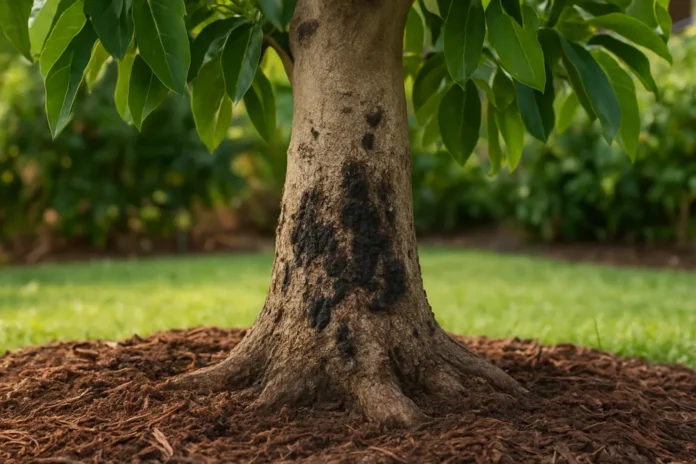
Black spots on an avocado tree trunk are usually caused by bark disease, rot, sun damage followed by infection, sap bleeding, or pest injury. In many cases, excess moisture and stressed bark make the problem worse.
Seeing black spots on an avocado tree trunk can be unsettling, especially if the canopy still looks fairly healthy. In my experience, trunk symptoms matter because the trunk is not just cosmetic bark. It is the tree's main highway for water, nutrients, and stored energy, so dark spotting there deserves a closer look.
The tricky part is that black marks on avocado tree bark do not all mean the same thing. Some are minor surface issues like dried sap or old injury. Others can signal fungal infection, canker, rot, sunburn damage, or pest activity that opened the bark to disease. The pattern, texture, and location of the spots usually tell you far more than the color alone.
If you want to figure out what is going on, start by looking at whether the spots are dry or wet, flat or sunken, isolated or spreading, and whether the bark is cracking, oozing, or peeling. Once you match those clues to the most likely cause, the right fix becomes much clearer.
What Black Spots on the Trunk Usually Mean
Black spotting on avocado trunks usually falls into a few broad categories: disease, moisture damage, injury, sap staining, or pest-related bark problems. Avocados have relatively thin bark compared with many landscape trees, so trunk stress often shows up quickly. A dark spot can start as a small wound or infection point, then expand if the bark stays damp or the tree is already weakened.
- Small, dry, crusty black marks may be old sap, superficial fungal growth, or weathered injury.
- Sunken, expanding, dark patches are more concerning and can point to canker or rot.
- Blackened bark near the soil line often suggests crown rot, poor drainage, or repeated moisture against the trunk.
- Spots that ooze, crack, or smell sour usually indicate active tissue damage rather than harmless staining.
- Black marks paired with leaf yellowing, branch dieback, or canopy thinning mean the trunk issue may be affecting the whole tree.
When I inspect an avocado trunk, I do not judge the problem by color first. I press gently around the spot, look for sunken bark, and compare several areas. Soft tissue or a spreading edge worries me much more than a dry black stain.
Fungal and Bacterial Trunk Diseases
Cankers and Bark Infections
One of the most important causes of black trunk spots is a canker, which is an area of dead bark and underlying tissue caused by fungi or bacteria entering through wounds, sunburned bark, pruning cuts, or cracks. On avocados, a canker may begin as a dark, slightly water-soaked area and later become sunken, cracked, or gummy. The bark can turn black or very dark brown, and the edges may look sharply defined against healthy tissue.
Some cankers stay localized for a while, while others spread around the trunk and begin girdling it. If the dark area wraps around much of the trunk circumference, water flow is restricted and the canopy may start declining. That is when leaves wilt, twigs die back, and fruit production drops.
Anthracnose and Surface Fungal Growth
Home gardeners often hear about anthracnose on avocado fruit and leaves, but related fungal issues can also show up on damaged bark. A trunk that has already been injured by sunburn or mechanical damage may develop blackened patches where fungi colonize weakened tissue. Sometimes the black layer is more on the bark surface than deep in the wood, but it still tells you the bark has been stressed.
How Disease-related Black Spots Tend to Look
- The bark looks dark, sunken, or irregular rather than evenly stained.
- Cracks, ooze, or gummy sap may appear near the margins.
- The area may slowly enlarge over weeks or months.
- The tissue under loosened bark may look brown, reddish, or black instead of fresh green.
- You may also see branch dieback above the damaged section.
Root and Crown Rot Near the Base of the Tree
If the black spots are concentrated low on the trunk, especially right at or just above the soil line, crown rot should move high on your suspect list. Avocados are famously sensitive to poor drainage and excess moisture. When the root zone stays wet, pathogens such as Phytophthora can attack the roots first and then affect the crown area where trunk and roots meet.
This kind of damage often starts subtly. The bark near the base darkens, stays damp-looking, or develops black lesions. The trunk may ooze dark sap, and the bark can peel back more easily than normal. Over time, the tree may show yellow leaves, sparse new growth, smaller fruit, or branch dieback because the roots are no longer supporting the canopy well.
- The tree is planted in heavy clay or a low spot.
- Water collects around the trunk after irrigation or rain.
- Mulch or soil is piled against the bark.
- The base of the trunk stays shaded and slow to dry.
- Leaf drop and general decline appear along with trunk spotting.
I nearly always pull mulch and soil back from the avocado trunk before deciding what I am looking at. A buried or constantly damp crown can make a moderate problem look mysterious when the real issue is simply that the bark has been kept too wet.
Sunburn, Cold Injury, and Physical Bark Damage
Not every black spot starts as a disease. Avocado bark can be damaged by intense afternoon sun, sudden exposure after heavy pruning, cold snaps, string trimmers, lawn mower nicks, staking ties, or rough handling. Once bark is injured, it often darkens as tissue dies. Later, fungi may colonize the damaged area and make it look even darker and more serious.
Sunburn on avocado trunks is especially common on young trees or on older trees that were suddenly opened up by pruning. The bark may first bleach, tan, or crack on the sunny side, then turn darker as it deteriorates. A wound from equipment usually looks more localized, often with a scraped, split, or gouged look instead of a random patch.
Clues That Injury Came First
- The dark area sits on the southwest or west side where sun exposure is strongest.
- The shape follows a scrape, cut, tie mark, or crack.
- The problem appeared after pruning, transplanting, or extreme weather.
- The bark around the spot feels dry and hard rather than wet and mushy.
- There is no obvious spread into surrounding bark after the original event.
If the injury is minor, the tree may eventually wall it off and heal around the edges. If it is large, the exposed tissue becomes a perfect doorway for canker organisms and decay.
Sap Bleeding, Sooty Growth, and Insect-related Black Marks
Avocado trunks sometimes show black spots that are really dried sap or darkened exudate from a wound. Fresh sap can look amber, reddish-brown, or dark as it ages. If it repeatedly oozes from the same place, that usually means something is irritating the bark, such as a canker, boring insect, crack, or internal stress.
In some cases, the black appearance is more of a surface coating than bark death. Honeydew-producing insects such as scale can attract sooty mold, which grows on the sticky residue and creates a black film. This is more common on stems and leaves than on the main trunk, but it can extend onto bark. Sooty mold itself does not invade the trunk, but it tells you insects may be active nearby.
When to Suspect Insects
- You see scale insects, tiny bumps, or white residue on twigs and branches.
- Ants are running up and down the trunk, often protecting sap-sucking insects.
- The black material rubs off somewhat instead of being part of the bark.
- There are small holes, frass, or tunneling signs that hint at boring pests.
- Sap is emerging from pinpoints or narrow cracks rather than broad lesions.
How to Tell Whether the Black Spots Are Serious
The most important question is not whether the spots look ugly. It is whether the trunk tissue underneath is alive, stable, and limited to a small area, or whether the damage is actively spreading. Serious trunk issues usually come with at least one other warning sign.
- The bark is soft, wet, or easy to peel away.
- The patch is enlarging over time.
- Dark lesions are near the soil line or circling the trunk.
- The tree is losing leaves, wilting, or showing dieback above the spot.
- You see repeated oozing, cracking, or foul-smelling tissue.
- Large branches on one side are declining, suggesting the vascular tissue is affected.
On the other hand, a small dry black scar that stays the same size for months may simply be an old wound. Avocado bark often holds the visual memory of earlier stress, even after the active problem has passed. That is why watching for change is such a useful part of diagnosis.
I like to take a clear photo every week from the same angle. Trunk problems can be hard to judge day to day, but photos make it obvious whether a black patch is stable, drying out, or quietly expanding.
What to Do for an Avocado Trunk with Black Spots
Treatment depends on the cause, but the first goal is always to reduce stress on the tree and keep the trunk as dry and protected as possible. Avoid random spraying or cutting until you understand whether you are dealing with rot, a canker, a surface fungus, or a healed injury.
Improve Drainage and Watering Practices
If the damage is low on the trunk or your soil stays wet, correct the moisture issue first. Water deeply but less often, based on soil drying and season, rather than keeping the root zone constantly damp. Make sure water is reaching the feeder roots and not pooling against the trunk. If necessary, redirect emitters farther out from the base.
Expose the Crown
Pull mulch, compost, and soil several inches back so the trunk flare and crown can breathe. Avocado trunks should not stay buried or wrapped in wet organic matter. This simple change can slow further bark decline when excess moisture is part of the problem.
Protect Damaged Bark From Sun
If sunburn is involved, shield the trunk from harsh direct sun. Many gardeners use a diluted interior white latex paint or a commercial tree whitewash on exposed bark to reflect light. This does not cure black spots that already formed, but it helps prevent additional bark death on vulnerable areas.
Remove Only Clearly Dead Loose Bark
Do not aggressively carve into the trunk. If bark is hanging loose and obviously dead, you can carefully trim away ragged flaps with a sterilized tool so the area dries more cleanly. Stop as soon as you reach firm tissue. Deep cutting can enlarge the wound and invite more infection.
Address Insects if Present
If scale, ants, or borers are part of the picture, manage those pests directly. On avocado, controlling ants can help natural predators suppress scale. Borer issues are more serious and often require local extension advice or arborist input because trunk integrity may already be compromised.
Know when Professional Help Makes Sense
If a dark lesion is expanding, girdling the trunk, or paired with canopy decline, it is worth getting a certified arborist or local extension expert involved. Avocado trunk diseases can move slowly but still become fatal, and a lab-confirmed diagnosis is sometimes the only reliable way to separate one canker or rot issue from another.
Mistakes That Often Make the Problem Worse
- Keeping mulch piled directly against the trunk
- Watering lightly every day instead of deeply and appropriately
- Pruning heavily during hot weather and exposing bark to sudden sun
- Using wound sealers or thick coatings that trap moisture
- Digging into the lesion to "clean it out" without knowing how deep the damage goes
- Fertilizing a stressed tree heavily in hopes of forcing recovery
- Ignoring ant activity that points to scale or honeydew problems
Avocado trees usually respond best when you remove the stressors first. Good drainage, careful irrigation, sun protection, and patience often matter more than any single product.
When the Tree Can Recover and when It May Not
A healthy avocado can recover from small bark injuries, minor sunburn, and limited superficial fungal spotting if the trunk tissue underneath remains alive. You will often see healing as dry, stable margins and gradual callusing around the damaged area. New growth in the canopy is a good sign that the vascular system is still functioning well.
Recovery becomes less likely when black lesions are deep, wet, and low on the trunk, or when they wrap around a large portion of the circumference. Severe crown rot, advanced canker, or extensive girdling damage can overwhelm the tree even if some branches still look green for a while. In those cases, decline may continue over months rather than days.
If the trunk is structurally weakening, bark is sloughing off in large sections, or the canopy is steadily thinning, replacement may ultimately be more realistic than long-term rescue. It is not the answer anyone wants, but it is better than losing years trying to save a tree with an already failing trunk base.
FAQ
Are Black Spots on an Avocado Tree Trunk Always a Disease?
No. They can also come from sunburn, cold injury, old wounds, dried sap, or insect-related sooty mold. Disease becomes more likely when the bark is sunken, wet, cracking, or spreading.
What if the Black Spots Are Only at the Bottom of the Trunk?
That pattern often points to excess moisture, crown rot, or bark staying too wet from mulch or irrigation. The lower trunk is one of the most important places to inspect closely on avocado trees.
Can Overwatering Cause Black Spots on Avocado Bark?
Indirectly, yes. Overwatering and poor drainage create the conditions that allow root and crown diseases to develop, and those problems can show up as dark lesions or blackened bark near the base.
Should I Scrape the Black Bark Off My Avocado Tree?
Only remove clearly loose, dead bark at the surface, and do it gently with a clean tool. Do not dig into firm tissue or carve out the lesion, because that can enlarge the wound.
Can Sunburn Turn Avocado Bark Black?
Yes. Sunburn often starts as pale, tan, or cracked bark and later darkens as the injured tissue dies or secondary fungi colonize it.
Will Fungicide Fix Black Spots on the Trunk?
Not always. If the real problem is rot, poor drainage, or physical bark injury, fungicide alone will not solve it. Correct diagnosis and reducing stress usually matter more than spraying first.
How Do I Know if My Avocado Tree Is Dying From Trunk Damage?
Watch for expanding dark lesions, bark peeling away, repeated oozing, branch dieback, canopy thinning, and decline that starts above the damaged area. Those signs suggest the trunk issue is affecting the tree's internal transport system.
Can an Avocado Tree Recover From Trunk Black Spots?
Yes, if the damage is small, stable, and not girdling the trunk. Recovery is much less likely when the lesion is deep, wet, near the crown, or wrapping around a large section of the trunk.
Need help choosing the right treatment for avocado disease, drainage problems, or trunk pests? Read our avocado tree care and treatment guides to find the most effective fixes before the damage spreads.
