

Note: This article contains affiliate links. If you click on these links and make a purchase, I may earn a small commission at no extra cost to you. This helps support my research and content. Read my full affiliate disclosure here.
Choosing the right feeding approach makes a big difference for cherry trees because timing and nutrient balance affect bloom, fruit set, and winter hardiness. Whether you tend a single patio tree or a backyard row, the right fertilizers and application method help limit biennial bearing, reduce pest stress, and produce sweeter fruit. This guide covers our shortlisted options for fertilizing cherry trees and explains the practical tradeoffs gardeners face. We evaluated how products deliver key nutrients, how easy they are to apply in a home orchard, and how they perform across common soil types and tree ages. Read on to find feeding options that match your soil test, tree size, and orchard routine.
Top Picks at a Glance
| Best Overall The best all-around choice for most situations | Jobe's Organics Tree & Shrub Fertilizer Spikes, 16-4-4, 30 Count (2 Pack) | 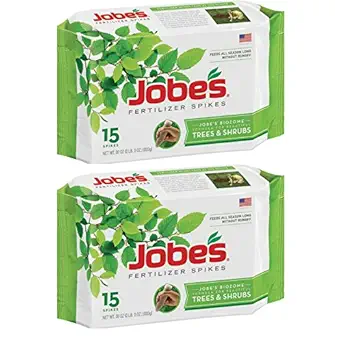 |
| Best Quality Built to a higher standard if you want something more solid | Espoma Tree-tone Organic Fertilizer for Trees, 4 lb (Pack of 2) |  |
| Best Value The sweet spot between price and what you get | Farmer's Secret Fruit Tree Booster Liquid Fertilizer (8 oz) |  |
| Best Budget The cheapest option that still gets the job done reliably | Jobe's Organics Granular Fruit & Citrus Fertilizer, 4 lb |  |
| Highest Rated A top-rated pick with lots of positive feedback | Wellspring Gardens Mulberry Fuel Slow-Release Fertilizer (1 lb) |  |
| Most Popular A crowd favorite that many people choose with confidence | Miracle-Gro Tree & Shrub Plant Food Spikes, 12 Spikes |  |
| Best Seller A high-volume bestseller chosen again and again | Miracle-Gro Water Soluble All Purpose Plant Food, 1.5 lb |  |
Jobe's Organics Tree & Shrub Fertilizer Spikes, 16-4-4, 30 Count (2 Pack)

| Item Form | Sticks |
|---|---|
| Application Method | Insert spikes around each tree's dripline |
| Coverage | Medium |
| Target Species | Trees and shrubs |
| Mixing Ratio | 16:4:4 |
Jobe's Organics Tree & Shrub Fertilizer Spikes are preformed nutrient sticks you push into the soil around a tree's dripline to provide season-long feeding. Each spike contains a 16-4-4 NPK formulation that releases nutrients gradually, so you do not need to mix or measure granular fertilizer. Typical use is to space spikes around the dripline in early spring and again in late fall, where the spikes dissolve and feed roots below the surface. The product is easy and clean to apply, reduces runoff compared with surface feeding, and is well suited to maintenance feeding of fruit trees such as cherry trees. Limitations are that spike placement must be correct to reach active roots and that spikes supply a medium coverage rate, so large or very nutrient-hungry trees may need multiple packs or supplemental fertilizer. Also spikes do not address specific micronutrient needs unless those are part of the formula.
Best for: Home gardeners who want a simple, low‑mess way to maintain healthy cherry trees without regular measuring or complex feeding schedules.
Less Ideal for: Growers managing large orchards or trees with diagnosed nutrient deficiencies that require customized or high‑volume feeding should look at concentrated granular or liquid fertilizers instead.
- Slow-release 16-4-4 formula provides steady feeding through the season
- Pre-measured sticks eliminate mixing, measuring, and messy application
- Designed for insertion at the dripline to deliver nutrients where roots are active
- Reduces surface runoff compared with broadcast granular fertilizers
- Medium coverage may require multiple packs for larger or very mature trees
- Does not target specific micronutrient deficiencies unless included in the formula
Verdict: A tidy, low‑effort slow‑release spike that makes seasonal feeding of cherry trees straightforward for backyard gardeners.
Espoma Tree-tone Organic Fertilizer for Trees, 4 lb (Pack of 2)

| Item Form | Powder |
|---|---|
| Specific Uses For Product | Plant Growth |
| Coverage | Medium |
| Target Species | trees |
| Mixing Ratio | No mixing required |
Espoma Tree-tone is an organic, ready-to-use granular fertilizer made specifically for trees and designed to be applied in spring and fall. It supplies a balanced 6-3-2 nutrient mix plus about 5% calcium and is formulated to support growth and fruit development in shade, ornamental and fruit trees such as cherries. Because it contains organic ingredients and Espoma’s Bio-tone formula, it can improve soil biology over time rather than just providing a quick nutrient flush. Application is straightforward since no mixing is required and the product comes in two 4 lb. bags that let you treat multiple young to medium trees. Limitations: the NPK is moderate compared with high-analysis synthetic fertilizers, so you will see slower, steadier results rather than rapid leafy growth, and heavier feeding needs or large mature trees may require larger quantities or supplemental fertilizer. For gardeners seeking an organic program for cherry trees, this is a practical, low-effort option that supports fruiting and long-term soil health.
Best for: Gardeners who prioritize consistent fruit production and soil health for cherry trees and prefer an organic, low-effort feeding schedule applied in spring and fall.
Less Ideal for: Users who need rapid, high-impact feeding for large or nutrient-depleted trees or who prefer synthetic quick-release fertilizers for immediate growth responses.
- Formulated specifically for trees including fruit trees so nutrient balance suits cherries
- Ready to use with no mixing required for easy spring and fall application
- Contains organic ingredients and Bio-tone to support soil biology and longer-term fertility
- Includes calcium in the formula which can aid fruit development and tree health
- Moderate NPK (6-3-2) means slower, steadier nutrient release compared with high-analysis synthetics
Verdict: Choose this organic, ready-to-use tree fertilizer when you want steady, fruit-focused feeding and improved soil biology for cherry trees.
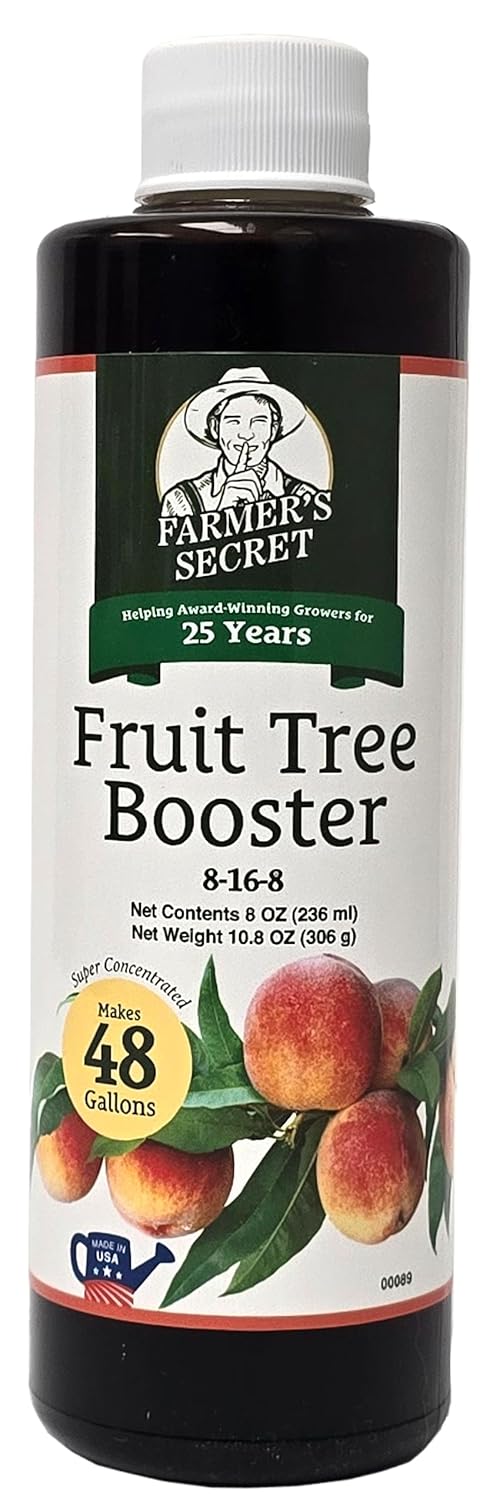
Farmer's Secret Fruit Tree Booster Liquid Fertilizer (8 oz)
| Item Form | Liquid |
|---|---|
| Specific Uses For Product | Plant Growth, Fruit Production |
| Coverage | Full |
| Target Species | Apple, Banana, Peach |
| Unit Count | 7.98 Fluid Ounces |
This liquid Fruit Tree Booster is a highly concentrated fertilizer designed to strengthen roots and increase fruit production when applied as a soil drench or foliar feed. It is mixed at one teaspoon per gallon and can be applied weekly along the tree drip line or sprayed on leaves in cooler parts of the day. The formula emphasizes phosphorus for root development plus NPK and trace minerals like zinc and iron, so you can expect faster nutrient uptake compared with granular options. Practical features include compatibility with watering cans, sprayers, and irrigation systems and clear dosage guidance for young and mature trees. Because the bottle is concentrated, a small 8 oz container can treat multiple feedings, which is efficient for routine maintenance. Important limitations are that the product is small in volume relative to large orchards and requires careful dilution and regular weekly applications to see results, so it is best for planned, consistent feeding rather than one-off corrections.
Best for: Gardeners who value efficient, repeatable feeding routines and want a concentrated, easy-to-mix fertilizer to strengthen roots and improve fruiting on cherry and other fruit trees.
Less Ideal for: People who need a one-time corrective treatment for nutrient deficiencies or who manage large orchards at scale should consider bulk or granular options instead.
- Super-concentrated formula reduces storage and shipping of water and stretches multiple feedings from a small bottle
- Phosphorus-rich blend and added trace minerals promote stronger root systems and support fruit set
- Works as both soil drench and foliar feed and is compatible with watering cans, sprayers, and irrigation systems
- Clear dilution and feeding guidance for young and mature trees makes repeat application simple
- 8 oz volume may be insufficient for large trees or multiple cherry trees without frequent repurchasing
- Requires weekly applications and correct dilution for safe and effective use
Verdict: A concentrated, phosphorus-forward liquid fertilizer that lets practical gardeners boost root growth and fruiting with small, easy weekly feedings.
Jobe's Organics Granular Fruit & Citrus Fertilizer, 4 lb

| NPK | 3-5-5 |
|---|---|
| Form | Granules |
| Unit Count | 64 Ounce |
| OMRI Listed | Yes |
| Application Frequency | Every 4-8 weeks |
Jobe's Organics Granular Fruit & Citrus Fertilizer is a small 4 lb bag of slow-release granular fertilizer designed to support fruiting trees and plants. You apply it by spreading measured granules around the root zone and watering in, then reapply every 4 to 8 weeks during the growing season. The formula (3-5-5) focuses on phosphorus and potassium to encourage bloom and fruit development while providing modest nitrogen for foliage. Because it is OMRI listed and derived from feather meal, bone meal, and processed poultry manure, it fits into organic garden plans and is marketed as safe around children and pets. Practical benefits include easy measuring, reduced risk of burning from slow release, and targeted root feeding for better fruit set. Limitations are the small bag size for larger trees and the lower nitrogen level if you need vigorous vegetative growth; you may need multiple applications or a larger quantity for established cherry trees. It is best used as part of a seasonal fertilizing routine rather than a one-time fix for nutrient-deficient soil.
Best for: Home gardeners looking for an affordable organic granular fertilizer to encourage blossoms and fruit on young or small cherry trees and who prefer simple, repeatable applications.
Less Ideal for: Owners of large or mature cherry trees who need to fertilize multiple trees or who require higher nitrogen formulations for rapid canopy growth should consider bulk or different NPK products.
- OMRI listed organic formula suitable for certified organic gardening
- Slow-release granular form reduces risk of fertilizer burn and feeds roots over time
- NPK 3-5-5 emphasizes phosphorus and potassium to support flowering and fruiting
- Easy to apply and measure with instructions for regular seasonal use
- 4 lb bag may be insufficient for multiple or mature fruit trees
- Lower nitrogen percentage may not support rapid vegetative recovery if trees are severely nutrient deficient
Verdict: A budget-friendly organic granular fertilizer that reliably supports bloom and fruit set for small to young cherry trees.
Wellspring Gardens Mulberry Fuel Slow-Release Fertilizer (1 lb)

| Item Form | Granules |
|---|---|
| Application Method | Spread around the base of plants |
| Target Species | Mulberries, berries, cherries, nuts |
| Mixing Ratio | 20:6:9 |
Wellspring Gardens Mulberry Fuel is a 20-6-9 slow-release granular fertilizer made for mulberries, berries, cherries, nuts, and other fruit trees. You apply the granules around the base of the plant and the formula is intended to feed roots on a roughly 90-day cycle, reducing the need for frequent reapplication. The N-P-K ratio (20-6-9) gives a strong nitrogen push for leaf and vegetative growth while keeping phosphorus and potassium at levels aimed at development and fruiting. The product comes in a resealable pouch for easier storage and measured applications. Because it is a slow-release granule it is forgiving of missed feedings and lowers the risk of brief nutrient spikes compared with soluble concentrates, but it will be slower to correct an existing deficiency. Practical limitations are that results depend on following label rates and soil conditions and that larger trees will need repeated applications or larger quantities than this 1 pound bag provides.
Best for: Best for gardeners who prioritize consistent, low-maintenance feeding for young fruit trees and small established specimens and who prefer predictable, steady nutrition over frequent liquid feeds.
Less Ideal for: Not a good choice for growers who need rapid correction of nutrient deficiencies or who are feeding large mature trees where bulk quantities and repeated applications are required.
- Slow-release granules provide steady nutrition for up to about 90 days
- Formulated for mulberries, cherries and other fruiting trees and shrubs
- Resealable packaging keeps product dry and easy to store
- Higher nitrogen ratio supports vigorous leaf and shoot growth
- One-pound size is small for established trees and may require multiple purchases
- Will not correct acute nutrient deficiencies quickly because it releases slowly
Verdict: Use this slow-release fertilizer when you want reliable, low-maintenance, steady feeding for mulberries and similar fruit trees.
Miracle-Gro Tree & Shrub Plant Food Spikes, 12 Spikes

| NPK Ratio | 15-5-10 |
|---|---|
| Application Method | Place spikes around tree drip line |
| Coverage | 12 spikes per season |
| Target Species | trees, shrubs, evergreens and acid-loving plants |
Miracle-Gro Tree & Shrub Plant Food Spikes are pre-measured, slow-release sticks (NPK 15-5-10) designed to be driven into the soil around a tree or shrub drip line to feed roots over the season. You water the soil first, space spikes around the drip line roughly 3 feet apart, and drive them below the surface where they gradually release nitrogen, phosphorus and potassium. For cherry trees this method delivers nutrients close to feeder roots without repeated applications and can help maintain leaf color and vigor when used in early spring and mid-fall as recommended. The product is simple to apply and eliminates measuring or mixing liquid feeds, but it is a seasonal treatment only and not a quick fix for severe deficiencies. Also spikes work best in soil that can be softened by watering and may be difficult to install in compacted ground. The 12-spike pack covers a small number of trees, so larger orchards will need multiple packages or an alternative feeding plan.
Best for: Home gardeners or small-scale growers who want a low-effort, seasonal feeding method to maintain healthy cherry trees and improve foliage without frequent applications.
Less Ideal for: Commercial orchardists or growers needing fast corrective feeding or coverage for many trees should consider bulk granular or liquid fertilisers and a planned nutrient program.
- Delivers nutrients directly to root zone for efficient uptake
- Easy, low-skill application with no measuring or mixing
- Slow-release formula feeds through the season when applied in spring and fall
- Limited quantity per pack so not cost-effective for larger orchards
- Not a rapid corrective treatment for acute nutrient deficiencies
- Installation can be difficult in very compacted or rocky soils
Verdict: A simple, low-effort seasonal feeding option that delivers slow-release nutrients directly to cherry tree roots for steady health and foliage improvement.
Miracle-Gro Water Soluble All Purpose Plant Food, 1.5 lb

| Item Form | Powder |
|---|---|
| Application Method | Watering Can |
| Target Species | For all flowers, vegetables, trees, shrubs and houseplants |
| Mixing Ratio | 24-8-16 |
This water-soluble Miracle-Gro is designed as a quick-feed fertilizer for a wide range of plants, and it is easy to use on cherry trees when applied carefully to the root zone. The powder mixes into water and can be applied with a watering can or garden feeder to soak the soil around trunk drip lines, delivering nitrogen-forward nutrition that kickstarts leafy growth and supports fruit development. Notable features include the concentrated 24-8-16 analysis, directions for indoor and outdoor mixing, and compatibility with container or in-ground plants. For a risk-averse gardener the product is straightforward to measure and use as directed, and the manufacturer notes it will not burn plants when mixed properly. Important limitations are the high nitrogen proportion, which can favor vegetative growth over fruiting if overused, and the need to follow the recommended schedule and dilution rates to avoid nutrient imbalance. For established cherry trees, it works best as a targeted, periodic supplement rather than a sole long-term soil management strategy.
Best for: Home gardeners who prefer a simple, well-documented fertilizer they can reliably measure and apply to established fruit trees and surrounding plantings.
Less Ideal for: Growers seeking a low-nitrogen or slow-release fertiliser designed specifically to maximize fruit set and long-term soil conditioning should consider alternatives tailored to fruit trees.
- Water-soluble powder mixes quickly for immediate root uptake
- Clear, published mixing and application directions for indoor and outdoor use
- Broadly labeled safe for many plant types when used as directed
- Concentrated NPK (24-8-16) that supplies a strong nitrogen boost
- High nitrogen ratio may encourage leafy growth at the expense of fruit if used too frequently
Verdict: A dependable, easy-to-use water-soluble fertiliser that gives a fast nitrogen-rich boost for gardeners who want predictable, measured feeding for cherry trees.
Choosing the Right Fertilizing Cherry Trees: Key Factors to Consider
Nutrient Ratio and Analysis
Cherry trees need a balance of nitrogen, phosphorus, and potassium tuned to their growth stage. Excess nitrogen late in the season can encourage soft growth that is susceptible to frost and disease, while too little nitrogen reduces leaf area and carbohydrate stores needed for fruiting. Look for a guaranteed analysis that gives clear N-P-K percentages and includes secondary nutrients such as magnesium or sulfur when soils show deficiencies.
A fertilizer with clear labeling helps you match applications to the tree's age and the results of a soil test. If your soil test shows low phosphorus or potassium, choose a formulation that corrects that imbalance rather than applying a high-nitrogen product by default.
Application Method and Timing
How you apply fertilizer affects nutrient availability and the risk of root or foliage burn. Granular formulations spread around the drip line and then watered in feed roots slowly, while liquid feeds deliver nutrients more rapidly through foliar sprays or soil drench. Controlled-release granules can reduce the number of applications but may be less responsive if you need a quick correction.
Timing matters: an early spring application supports leaf-out and bloom, while a midseason feed can help fruit development without encouraging excessive late-season shoot growth. Avoid high-nitrogen applications late in the growing season to prevent tender new growth before dormancy.
Soil Type and pH
Soil texture and pH control nutrient availability and movement. Sandy soils drain quickly and often require more frequent, smaller applications to avoid leaching, while clay soils hold nutrients longer but can become compacted, limiting root uptake. Cherry trees prefer slightly acidic to neutral pH; if pH is outside the ideal range, certain nutrients may be locked up even when present in the soil.
A soil test tells you what amendments are needed. Some fertilizers include pH-stabilizing components or secondary nutrients useful for specific soil types. Choose formulas that address your soil's limitations rather than repeating a generic feeding schedule.
Tree Age and Root Zone
Young trees and newly planted stock need gentler feeding and careful placement of nutrients near the developing root system. Overfertilizing young roots can cause salt stress and stunt establishment. Mature trees have a broader feeder root zone and tolerate larger, slower-release applications placed at or beyond the drip line.
Adjust rates and application locations as trees grow. For container-grown cherry trees, follow container-specific rates and be prepared to flush the root ball periodically to reduce salt buildup.
Safety and Environmental Impact
Consider runoff risk and salt buildup when choosing a fertilizer and application schedule. High-salt formulations can harm roots and nearby plants if applied too close to trunks or without adequate watering. Products designed for slow release or targeted foliar feeding reduce the risk of nutrient loss to runoff in rainy climates.
Also think about pollinators and nearby water features. Avoid foliar sprays during peak bloom when pollinators are active unless the product label explicitly permits safe use. Choosing products with clear environmental instructions helps reduce unintended impacts.
Ease of Use and Measurement
Practical details like clear measuring instructions, pre-measured packets, or spreader-friendly granules make it easier to apply the correct dose. Products that require complex mixing ratios or frequent reapplication increase the chance of error in a home orchard. Simple application instructions tailored to tree size categories reduce guesswork and improve consistency across seasons.
Consider whether the fertilizer integrates with tools you already own, such as handheld spreaders or hose-end applicators, and whether the package protects material from moisture if you store it outdoors.
Seasonal Feeding Calendar
A seasonal calendar helps you time feeds to what the tree needs most. Start with a light application in early spring as buds swell to support leaf expansion and bloom. After fruit set, a modest midseason feeding can support fruit sizing without pushing late-season vegetative growth.
Late summer and fall are generally for letting the tree harden off. Avoid high-nitrogen applications late in the season. If a soil test shows deficiency, a small dose of phosphorus or potassium can be applied earlier in the summer so the tree can incorporate those nutrients before dormancy.
- Early spring: support leaf and flower development
- Post-bloom: address nutrient shortfalls for fruit development
- Mid to late summer: avoid high nitrogen to prevent soft growth
- Fall: focus on storage and root health rather than shoot growth
Matching Feed to Soil Test Results
A soil test is the most useful tool for setting a feeding program. Test pH and macronutrient levels before making major changes. If phosphorus or potassium are low, choose a targeted amendment rather than blanket nitrogen-heavy fertilizer.
Correcting pH can be as important as adding nutrients because it affects availability. If soil is overly alkaline or acidic, appropriate lime or sulfur amendments should be part of the plan before repeated fertilization.
- Test every 2 to 3 years for established trees
- Adjust fertilizer type and rate based on test results
- Address pH issues first when possible
Foliar Feeding Versus Soil Application
Foliar feeding supplies nutrients directly to leaves and can correct micronutrient shortages quickly. It is useful for treating deficiencies identified during the growing season, but it is not a substitute for building soil fertility.
Soil-applied fertilizers feed the root system and provide a longer-term supply. Use foliar sprays as a spot treatment when leaves show deficiency symptoms and reserve soil applications for regular seasonal feeding and longer-term correction.
- Use foliar feeds for rapid correction of micronutrient issues
- Soil applications build long-term fertility and root health
- Avoid foliar feeding during bloom when pollinators are active
Safe Application Practices
Measure carefully and follow label rates to prevent overapplication, which can cause salt damage or excessive vegetative growth. Place granular fertilizer starting at the trunk's drip line and extend outward to cover the feeder roots, not directly against the trunk.
Water in granular applications to move nutrients into the root zone and reduce foliar burn risk. When using liquids, avoid applying on very hot afternoons to minimize foliage burn and turf stress.
- Keep granules off the trunk flare
- Water after application to move nutrients into the soil
- Wear gloves and eye protection when handling concentrated materials
Managing Common Nutrition Problems
Yellowing leaves, poor fruit set, and small fruit can point to specific nutrient issues such as nitrogen deficiency, iron chlorosis, or low potassium. Observe the pattern of symptoms across the canopy to determine whether problems are systemic or localized.
Corrective strategies range from targeted foliar sprays for micronutrients to broader soil amendments for macronutrients. Track changes after each treatment and retest soil before making further adjustments.
- Leaf yellowing with green veins often indicates iron issues
- Interveinal chlorosis and poor growth can signal magnesium or manganese deficiency
- Poor fruit set may respond to balanced feeding and bloom-time care
How We Chose the Best Fertilizing Cherry Trees
We prioritized factors that matter in real orchards: nutrient formulation and balance, timing flexibility across the season, delivery method and ease of application, root- and foliar-safety for young and mature trees, and suitability across common soil types. We focused on products whose guaranteed analysis matched recommended cherry tree ratios and that include clear application rates for different tree ages. We excluded options that lacked clear nutrient labeling, had confusing application instructions, or posed known risks of salt buildup near roots. We also filtered out fertilizers formulated primarily for lawns, containers, or exclusively for flowering ornamentals when their nutrient ratios did not suit fruit production. Our editorial review emphasized measurable specs, clear instructions, and compatibility with typical garden tools and watering routines. The resulting list favors balanced nutrient profiles, flexible application windows, and formats that reduce labor or overapplication risk. Scoring emphasized how each choice supports bloom and fruit set while limiting root stress or foliage burn.
FAQ
How often should I fertilize established cherry trees?
Often once or twice per season is sufficient for established trees: a spring application and an optional midseason feed if growth or fruiting looks weak. Frequency depends on soil fertility, tree age, and whether you use slow-release formulas.
Can I use a general-purpose garden fertilizer on cherry trees?
Sometimes, if the guaranteed analysis matches what your soil test recommends. General fertilizers can work, but targeted fruit-tree formulas or balanced blends tuned to orchard needs reduce the risk of excessive vegetative growth and nutrient imbalances.
Is foliar feeding safe during bloom?
Usually it is best to avoid foliar sprays during bloom to protect pollinators. If a foliar feed is necessary, apply it during times of low pollinator activity and use formulations labeled as safe for flowering trees.
How do I correct nutrient deficiency without overfeeding?
Start with a soil test to identify the deficiency, then apply a targeted amendment in the recommended amount. Use smaller, repeatable applications for sandy soils and consider foliar sprays for quick micronutrient correction while building long-term soil fertility.
Will late-season fertilizing affect winter hardiness?
Yes. High-nitrogen feeding late in the season can promote tender growth that reduces winter hardiness. Favor low-nitrogen, potassium-rich feeds in late summer if corrections are needed to help carbohydrate storage and overall hardiness.
Final Verdict
Prioritize nutrient balance, application timing, and soil compatibility when choosing a fertilizing approach for cherry trees. Use soil tests to guide whether to correct phosphorus, potassium, or micronutrient shortages and match application method to your tree age and soil type. Focus on feeding schedules that support bloom and fruit development without encouraging late-season vegetative growth. With clear instructions and attention to timing and placement, you can improve fruit set and long-term tree health while minimizing environmental risks.
