

Note: This article contains affiliate links. If you click on these links and make a purchase, I may earn a small commission at no extra cost to you. This helps support my research and content. Read my full affiliate disclosure here.
Keeping a healthy lawn means killing weeds without harming turf. Picking the right herbicide for lawn weeds matters because gardeners need selective control, predictable recovery time, and minimal impact on desirable grass. This guide covers five top shortlisted products suitable for typical home lawns and evaluates them on practical performance factors like selectivity, turf safety, and ease of application. Read on for clear criteria gardeners use to choose between selective and nonselective options, application methods, and season-specific timing before the product summaries.
Top Picks at a Glance
| Best Overall The best all-around choice for most situations | Ortho WeedClear Weed Killer for Lawns with Comfort Wand, 1 gal. | 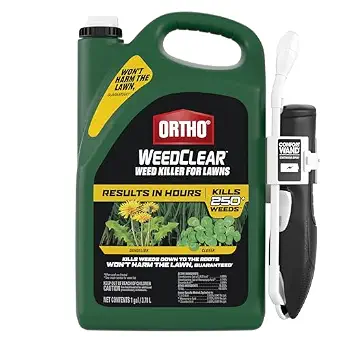 |
| Best Quality Built to a higher standard if you want something more solid | BASF Drive XLR8 Crabgrass Herbicide Concentrate, 64 fl oz |  |
| Best Value The sweet spot between price and what you get | Spectracide Weed Stop for Lawns Concentrate, 40 oz |  |
| Best Budget The cheapest option that still gets the job done reliably | Spectracide Weed Stop for Lawns Concentrate, 32 oz Ready-to-Spray |  |
| Highest Rated A top-rated pick with lots of positive feedback | Trimec 992 Broadleaf Herbicide, 2.5 Gallons |  |
Ortho WeedClear Weed Killer for Lawns with Comfort Wand, 1 gal.

| Item Form | Spray |
|---|---|
| Coverage | 16000 square feet |
| Unit Count | 128 Fluid Ounces |
| Item Highlight | Kills over 250 listed weeds |
Ortho WeedClear is a 1-gallon ready-to-use lawn herbicide that targets more than 250 common broadleaf weeds using a three‑ingredient formula and an attached Comfort Wand for precise spraying. It is typically used for spot treatments or light broadcast applications when weeds are actively growing in spring or fall; the label gives a mix rate for covering 400 sq. ft. per gallon if you choose broadcast application. The Comfort Wand provides continuous, controlled spray without pumping, which makes hitting individual dandelions, clover, or chickweed straightforward and reduces overspray onto desirable grass. The formula works quickly with visible results in hours and becomes rainproof about an hour after drying. Important limitations are that it is for broadleaf weeds only so it will not control grassy weeds like crabgrass, and best results require application under recommended temperature conditions and on actively growing weeds. Also the product contains common herbicides that require following safety directions and allowing treated areas to dry before people or pets re-enter.
Best for: Home gardeners who want an easy, no-mixing solution to remove common broadleaf weeds from turf with targeted spot or small-area broadcast treatments.
Less Ideal for: People looking for crabgrass control, long‑term preemergent weed prevention, or an organic herbicide alternative should consider other products.
- Ready-to-use formula with built-in Comfort Wand for easy, precise application
- Kills over 250 listed broadleaf lawn weeds down to the root
- Visible results in hours and becomes rainproof about one hour after drying
- Includes instructions for both spot and broadcast application for flexible use
- Does not control grassy weeds or provide long‑term preemergent prevention
- Contains synthetic herbicides so users must follow label safety and reentry guidelines
Verdict: A convenient ready-to-use lawn herbicide with a comfort wand that quickly kills a wide range of broadleaf weeds while keeping your turf intact when used as directed.
BASF Drive XLR8 Crabgrass Herbicide Concentrate, 64 fl oz
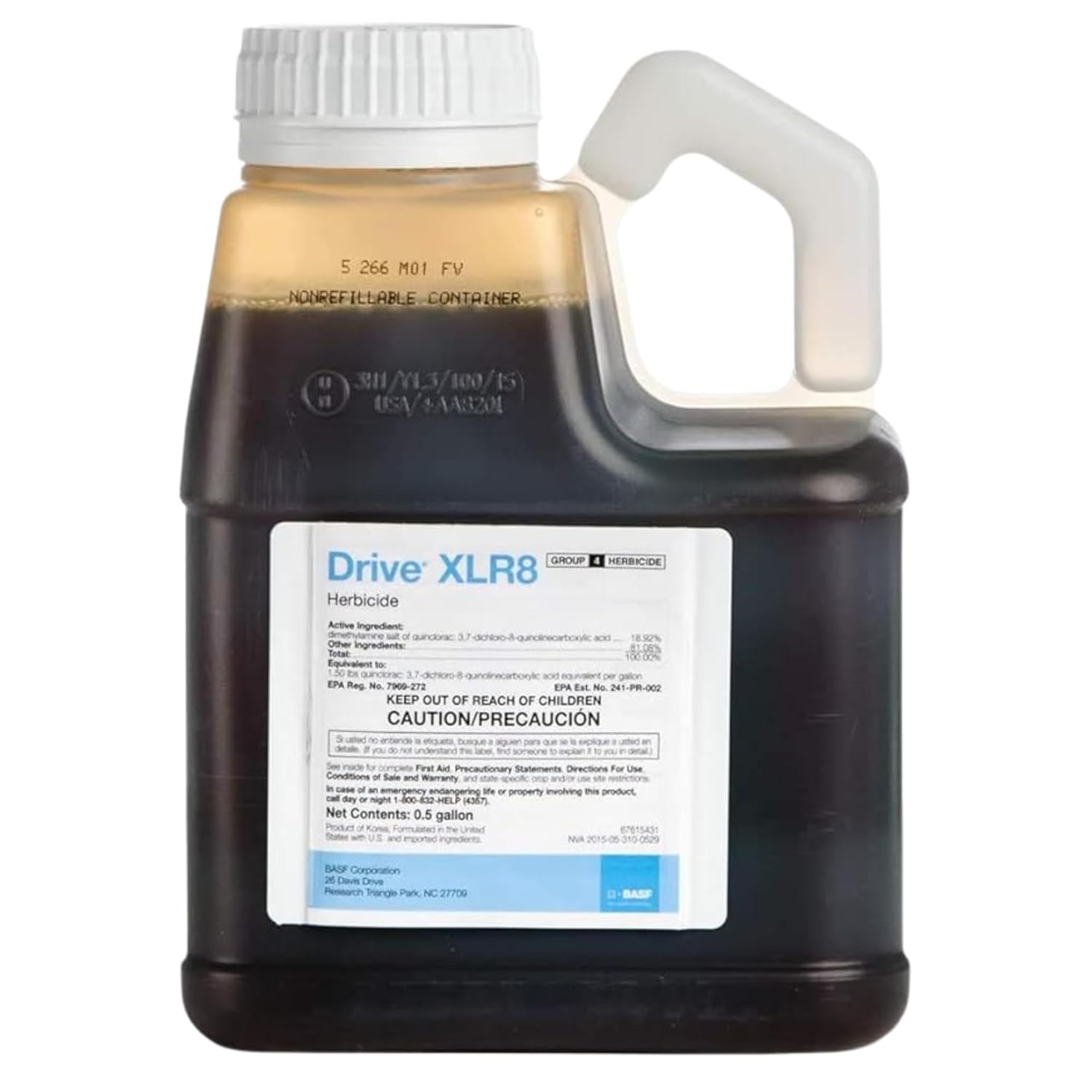
| Unit Count | 64 Ounce |
|---|---|
| Item Form | Liquid |
| Coverage | Full |
| Active Ingredients | Quinclorac 18.92% |
Drive XLR8 is a concentrated, water-based post-emergent herbicide designed to knock back crabgrass and other troublesome turf weeds. You mix the concentrate with water and a methylated seed oil surfactant, then spray to cover about 1,000 sq ft per gallon of finished mix when using the recommended rates. The active ingredient quinclorac delivers fast uptake and a broad spectrum that includes crabgrass, foxtail, kikuyu, torpedo grass and a number of broadleaf species such as clover and dandelion. Notable practical benefits are the extended residual control of up to 30 days and a rainfast formulation that sets in under an hour, which reduces reapplication after light rain. The label allows use on warm- and cool-season turf and the product can be tank-mixed with other herbicides for flexible programs. Important limitations are the need for careful PPE and label-following because it is a potent herbicide, plus state or site restrictions that may limit broadcast use in some areas and require spot treatment in others.
Best for: A buyer who prioritizes strong, performance-driven weed control for lawns and wants a concentrated product they can integrate into a seasonal treatment plan. Good for homeowners or turf managers focused on measurable reduction of crabgrass and other grassy weeds.
Less Ideal for: Casual gardeners who prefer low-toxicity or non-chemical weed control methods and those uncomfortable with mixing and applying concentrated herbicides.
- Effective active ingredient (quinclorac) for crabgrass and many grassy weeds
- Water-based concentrate allows relatively quick plant uptake and is rainfast in under an hour
- Up to 30 days residual control reduces frequency of reapplication
- Can be tank-mixed with other pre- and post-emergent products for program flexibility
- Requires careful handling and personal protective equipment because it is a strong herbicide
- Some states or turf sites restrict broadcast use and may require spot application
Verdict: Choose Drive XLR8 when you need a concentrated, fast-acting post-emergent herbicide that delivers reliable crabgrass and grassy weed control with up to 30 days residual protection.
Spectracide Weed Stop for Lawns Concentrate, 40 oz

| Unit Count | 40 Fluid Ounces |
|---|---|
| Coverage | 20000 square_feet |
| Item Form | Liquid |
| Item Type Name | Lawn Weed Killer |
Spectracide Weed Stop for Lawns is a concentrated liquid herbicide you mix with water and apply with a garden sprayer to target broadleaf weeds across a lawn. It is formulated to kill more than 200 listed weed types, including dandelion, chickweed and clover, and the manufacturer says it works down to the root with visible results in hours and full effect overnight. The bottle treats up to 20,000 square feet and becomes rainproof about six hours after application, which adds flexibility if weather is uncertain. Typical use is mowing first, then spot-treating or broadcasting in spring when weeds are actively growing or in fall to reduce next season's seedbank. Practical benefits include concentrated coverage for larger yards and instructions for repeat spot treatments on stubborn weeds. Important limits: it is a contact herbicide so heavy infestations may require follow-up applications, and you must follow label directions to avoid harming desirable plants or turf. Also, you need a separate sprayer and careful personal protective measures when mixing and applying.
Best for: Buyers who want a cost-effective, concentrated herbicide to control broadleaf weeds across a medium to large lawn and who prefer planning treatments for seasonal timing and follow-up spot work.
Less Ideal for: People looking for an all-in-one fertilizer plus weed control or those who want an out-of-the-bottle ready-to-spray solution with no mixing or separate applicator.
- Concentrated formula covers up to 20,000 square feet from one 40 oz bottle
- Kills over 200 listed broadleaf weeds and works down to the root
- Becomes rainproof in about six hours, reducing wash-off risk
- Visible results reported within hours and can be used for spot or broadcast treatments
- Requires mixing and a separate garden sprayer for application
- May need repeat spot treatments for particularly tough or established weeds
- Must be applied within specific temperature range for best results
Verdict: A concentrated, rainproof lawn herbicide that delivers wide coverage and fast control of common broadleaf weeds when mixed and applied responsibly.
Spectracide Weed Stop for Lawns Concentrate, 32 oz Ready-to-Spray

| Unit Count | 32 Ounce |
|---|---|
| Coverage | 8,000 square feet |
| Item Form | Liquid |
| Active Ingredients | 2,4-D, Mecoprop-P, Dicamba, Sulfentrazone |
Spectracide Weed Stop for Lawns is a hose-attach, ready-to-spray concentrate designed to kill a long list of broadleaf lawn weeds by contact and down to the root. You connect it to a garden hose, flip the sprayer and walk the yard, spraying until weeds are wet; the formula is labeled for common turfgrasses like bluegrass, fescue, Bermuda and perennial ryegrass. Notable features include the QuickFlip sprayer for fast coverage, a claim of controlling 460+ listed weeds, and visible browning of treated weeds in roughly three hours. Practical benefits are speed of application, coverage suitable for typical yards, and effectiveness on common weeds such as dandelion, clover and chickweed. Important limitations are that it is a contact killer so thorough spray coverage is needed, it should not be used on zoysiagrass emerging from dormancy, and care is required with temperature limits and re-seeding windows to avoid lawn injury. Follow label directions closely for timing, temperature range and safety around people and pets.
Best for: A homeowner looking for an inexpensive, fast-to-apply solution to spot-treat common broadleaf weeds across a typical lawn who prioritizes ease and immediate results.
Less Ideal for: Those managing delicate or newly established lawns, specialty turfgrasses outside the label list, or gardeners who need a systemic, long-term residual herbicide for deep-rooted perennial weeds.
- QuickFlip hose-attach sprayer makes application fast and simple
- Advertised control of over 460 listed broadleaf weeds including dandelion and clover
- Visible results in as little as three hours so you can confirm effectiveness quickly
- Formulated for common lawn grasses when used as directed
- Contact-action formula requires thorough wetting of weeds for root control
- Not safe for zoysiagrass emerging from dormancy and has temperature restrictions
Verdict: A budget-friendly, ready-to-spray concentrate that quickly kills common broadleaf lawn weeds with a convenient hose-attached applicator.
Trimec 992 Broadleaf Herbicide, 2.5 Gallons

| Unit Count | 320 Fluid Ounces |
|---|---|
| Item Form | Liquid |
| Coverage | About 975 square feet |
| Active Ingredients | Herbicide, Trimec |
Trimec 992 is a professional-strength liquid herbicide designed to kill a variety of broadleaf lawn weeds such as dandelion, clover, chickweed and plantain. It is supplied as a 2.5 gallon concentrate intended for dilution and application with a garden or professional sprayer, and the label gives spray volume guidance and safety precautions for turf use. The formula combines three active ingredients to deliver reliable control when used on labeled turf areas including residential lawns, sports turf and golf fairways. Practical benefits are straightforward: a single container treats a substantial area and the multi-ingredient mix improves control of hard-to-kill broadleaf species. Important limitations are that it is a chemical selective herbicide so it must not be used on certain grasses like Floratam St. Augustine, it requires careful handling and protective measures, and you must avoid application in windy conditions and allow an eight hour rain-free window. Follow the manufacturer directions exactly for proper mixing rates, sprayer setup and post-application precautions.
Best for: Buyers who prioritize dependable, professional-style weed control for established lawns and turf and who follow label instructions and safety practices.
Less Ideal for: Gardeners seeking an all-purpose or organic weed solution or those who need an immediate rain-safe option for spot treatments.
- Concentrated 2.5 gallon supply treats about 975 square feet, reducing reapplication frequency
- Three active ingredients broaden control across many common broadleaf weeds
- Labelled for multiple turf settings including residential lawns, sports turf and golf course fairways
- Clear application and safety instructions for sprayer use and post-application waiting period
- Not safe for all turf types—do not use on Floratam St. Augustinegrass
- Requires careful handling and personal protective equipment during mixing and spraying
- Must avoid application in wind and wait after treatment for rain which limits flexible timing
Verdict: Pick this product when you want a proven, concentrated broadleaf herbicide that delivers consistent control across a wide range of lawn weeds.
Choosing the Right Herbicide for Lawn Weeds: Key Factors to Consider
Selectivity and Turf Safety
How selective an herbicide is determines whether it will kill targeted weeds while leaving the lawn grass intact. Selective herbicides are formulated to exploit biological differences between broadleaf weeds and turfgrasses, so choosing a product rated for your grass type reduces the risk of scorch or standing damage. Always check the label for the grass species listed because a product safe on one turfgrass may harm another.
Timing and application rate also affect turf safety. Overdosing or spraying hot, stressed turf increases risk. For spot treatments versus broadcast applications, look for formulations and dilution guidance that let you be precise without endangering desirable grass.
Spectrum of Weeds Controlled
Different products target different groups of weeds. Some herbicides focus on broadleaf species like dandelion and clover, while others add selective control for grassy weeds such as crabgrass or annual bluegrass. Match the product spectrum to the weeds present in your lawn; a broad-spectrum selective is useful for mixed infestations, while a specialist formula can be better for a dominant weed problem.
Consider lifecycle control as well. Preemergent ingredients prevent seedlings of certain grassy weeds, whereas postemergent actives kill established plants. Knowing whether your primary challenge is seedlings, mature perennial weeds, or both will guide the right product choice.
Application Method and User Controls
How you apply the herbicide affects both effectiveness and safety. Ready-to-spray bottles, hose-end sprayers, concentrates for pump or backpack sprayers, and granular options each have different advantages. Ready-to-spray units are convenient for small areas and spot treatments, while concentrates are more economical for larger lawns but require careful measuring and mixing.
Look for products with adjustable nozzles, clear dilution charts, and guidance on spray height and overlap. Good user controls reduce drift risk and improve placement, which is critical when treating near flower beds, vegetable patches, or sensitive landscape plants.
Timing, Residual Activity, and Lawn Recovery
Seasonal timing influences effectiveness. Many postemergent herbicides work best when weeds are actively growing in spring or fall. Preemergent options need application before weed seeds germinate. Residual activity varies widely: some products leave a short-lived effect that lets you reseed or overseed sooner, while others provide longer control but restrict replanting.
Consider how long treated areas require restricted activity and whether watering, mowing, or reseeding must be delayed. Faster lawn recovery reduces visible injury and helps maintain turf density after treatment.
Environmental Precautions and Safety Instructions
Herbicides differ in environmental mobility and toxicity to non-target organisms. Pay attention to label warnings about runoff, allowed buffer distances from water, and restrictions around ornamentals. Choosing formulations with clear mitigation steps helps reduce accidental exposure to pollinators, pets, and nearby plants.
Personal protective equipment recommendations, storage and disposal instructions, and emergency first-aid guidance are important practical considerations. Products with straightforward safety instructions and low-mobility chemistries are easier to use responsibly in a home landscape.
Label Clarity and Local Use Restrictions
The label is the legal and practical instruction manual for safe, effective use. Clear labels list target weeds, application rates by area, mixing instructions, and any turfgrass restrictions. Local regulations or homeowner association rules may limit the use of certain active ingredients, so a product with explicit regulatory guidance on the label simplifies compliance.
If a label lacks specific directions for common home lawn situations, the risk of misuse rises. Prefer products with examples for common lawn sizes and application scenarios to minimize guesswork.
When to Use Preemergent Versus Postemergent Treatments
Preemergent herbicides work by stopping weed seeds from germinating and are best applied before soil temperatures rise and seeds begin to sprout. Use them in early spring to block summer annuals like crabgrass, or in late summer when targeting winter annual broadleaf weeds in cool-season lawns.
Postemergent herbicides kill established weeds and are most effective on actively growing plants. For perennial broadleaf weeds, apply in cooler, moist conditions in spring or fall. Avoid treating heat-stressed turf during summer unless the product is specifically rated for those conditions.
- Preemergent: timing critical, prevents seedlings
- Postemergent: controls established plants, best on actively growing weeds
- Combine approaches for seasons with both seedlings and mature weeds
Safe Application Near Flower Beds and Vegetable Gardens
Protect non-target plants by creating physical barriers and avoiding spraying on windy days. Drift is a common cause of accidental damage, so use low-drift nozzles and spray when winds are light. When treating edges near garden beds, spot-spray with a wand or use a shielded applicator to limit overspray.
Consider the residual label restrictions before treating adjacent soil where you plan to sow crops or ornamentals. If reseeding or planting is needed soon, choose a product with minimal residual activity or plan treatments well in advance of planting.
- Use shields and low-drift nozzles
- Avoid applications during windy conditions
- Follow replanting and soil-use intervals on the label
Managing Tough Perennial Broadleaf Weeds
Perennial broadleaf weeds like dandelion and plantain have deep roots and often need repeat treatments or spot applications during active growth. Effective control relies on thorough coverage of leaves so translocated herbicides can reach roots. For large patches, treat in multiple sessions and combine with cultural practices like dethatching and overseeding to reduce reinfestation.
Manual removal followed by targeted herbicide application to regrowth can reduce chemical use while improving long-term results. Always allow enough time after treatment for the herbicide to translocate before removing plant material to avoid reducing effectiveness.
- Apply during active growth for best translocation
- Combine mechanical removal and spot treatments
- Repeat applications may be needed for complete control
Applying Herbicides Safely Around Pets and Children
Plan treatments for times when pets and children will not access the lawn until the spray has dried and the label-specified reentry period has passed. Keep pets off treated areas during that time and avoid walking treated turf with bare feet until dry.
Store herbicides in original containers out of reach and follow mixing and disposal instructions carefully. If pets or children enter treated areas sooner than recommended, follow the label's decontamination and emergency advice.
- Observe drying and reentry times on the label
- Restrict access until treated areas are safe
- Store and dispose of products according to instructions
Combining Cultural Practices With Chemical Control
Healthy turf is the best defense against weeds. Regular mowing at the recommended height for your grass species, proper fertilization, aeration, and overseeding reduce open niches that weeds exploit. Chemical control works faster and lasts longer when it is part of an integrated lawn-care plan.
After herbicide treatments, follow maintenance steps that support recovery and fill bare spots so weeds have fewer opportunities to reestablish. Consider addressing drainage or compaction issues that contribute to persistent weed problems.
- Mow and fertilize to promote dense turf
- Aerate and overseed after addressing weed patches
- Fix soil issues to reduce long-term weed pressure
How We Chose the Best Herbicide for Lawn Weeds
We started by focusing on products formulated specifically for use on established lawns and excluded general-purpose garden herbicides that are nonselective or intended for hardscape use. Our selection prioritized products that target the common broadleaf and grassy weeds found in home turf without damaging popular lawn grasses. Evaluation criteria included selectivity and turf safety, because protecting grass species is the top concern; spectrum of control, to cover the typical mix of dandelion, clover, plantain, and grassy weeds; application method and user controls, since ease and accuracy matter for spot treatments and broadcast sprays; and residual activity and reentry guidance, which determine how long treated areas need special care. We also considered label clarity and environmental precautions, focusing on products with clear mixing rates and safe disposal instructions. We excluded herbicides intended solely for garden beds, aquatic environments, or industrial use. Products without clear turf-label instructions or lacking common regulatory guidance were removed. The listed products meet the practical needs of homeowners and lawn-care-minded gardeners based on the concrete dimensions above.
FAQ
Can I use a lawn herbicide while overseeding or reseeding?
It depends on the product. Some herbicides have residual activity that restricts seeding for several weeks, while others allow seeding soon after application. Check the label for replanting or reseeding intervals before treating.
Will a broadleaf herbicide harm my grass if I apply it on a hot day?
Many selective herbicides increase risk of turf injury when applied to heat-stressed grass. Apply during moderate temperatures and when weeds are actively growing. If unsure, wait for cooler conditions or choose a product rated for warm-weather use.
How soon will treated weeds show visible decline after application?
Timing varies by active ingredient and weed type. Some annual weeds can wilt within a few days, while perennial roots may take several weeks to die as the herbicide translocates. Expect variable visual response and avoid disturbing plants too early.
Can I mix different herbicides together to broaden control?
Mixing should only be done if both labels allow it. Tank mixes can change activity, increase turf risk, or violate label directions. When in doubt, follow label instructions or apply products separately at recommended intervals.
What should I do if herbicide drift damages nearby plants?
Rinse affected foliage with water to reduce residue and monitor for recovery. For severe damage, consult local extension guidance. Prevent drift by using proper nozzles, low spray pressure, and treating during calm conditions.
Are granular and liquid formulations equally effective?
Both formats can be effective depending on the weed and application. Granular products are convenient for even coverage and often used for preemergent control, while liquids offer better coverage for spot treatment and translocated control of perennials.
Final Verdict
Prioritize selectivity and label guidance when choosing a herbicide for lawn weeds. Match the product spectrum to the weeds you face, plan timing around weed growth cycles, and pick an application method you can use accurately. Balancing residual activity and turf recovery with safety and environmental precautions leads to the best long-term results. Choose a product that fits your grass type and treatment scale, follow the label closely, and pair chemical control with cultural practices for a healthier lawn.
