

Note: This article contains affiliate links. If you click on these links and make a purchase, I may earn a small commission at no extra cost to you. This helps support my research and content. Read my full affiliate disclosure here.
Removing weeds from gravel, river rock, and compacted rocky beds is a different task than weeding a flower border. You need a tool that reaches between stones, resists bending when hitting buried rock, and clears roots without scattering grit. This guide looks at five top weeding tools for rocks shortlisted for gardeners who manage patios, pathways, and rock gardens. We focus on practical user concerns like reach, tip strength, and ergonomic handling. Below you will find the vetted shortlist and clear evaluation factors that matter in real outdoor use, followed by guidance to help you pick the best weeding tool for your specific rocky situation.
Top Picks at a Glance
| Best Overall The best all-around choice for most situations | Hivenlly 2-in-1 Adjustable-Handle Weed Puller and Hoe |  |
| Best Quality Built to a higher standard if you want something more solid | TAICHEUT 2-Pack 30oz Weeding Mattock Hoe with Dual-Head Pick |  |
| Best Value The sweet spot between price and what you get | NICOFPHY 60" Long-Handle 2-in-1 Weed Puller Rake and Hoe | 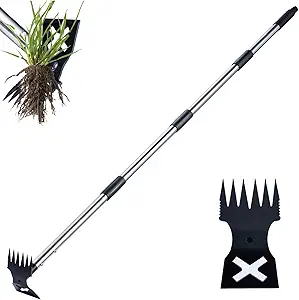 |
| Highest Rated A top-rated pick with lots of positive feedback | Fiskars Pro IsoCore 14" Pick Mattock, 1.5 lb Head |  |
| Most Popular A crowd favorite that many people choose with confidence | CKLT 2-in-1 Garden Hoe and Weed Puller with Adjustable Handle |  |
Hivenlly 2-in-1 Adjustable-Handle Weed Puller and Hoe

| Head Material | Cast Steel |
|---|---|
| Handle Material | Metal |
| Handle Type | Adjustable |
| Head Size | 6 inches |
This Hivenlly weed puller combines a 6-tine rake and a flat hoe edge in one head, letting you dig, loosen soil, and extract shallow-rooted weeds without switching tools. The head is cast steel for durability and the handle ships as four stainless steel poles that lock to provide adjustable lengths from 16 to 60 inches so you can use it sitting or standing. In practice the rake teeth bite into loose soil to pull up dandelions and crabgrass while the hoe side scrapes and levels small patches. The metal construction feels sturdy for routine garden and lawn maintenance and it rinses clean easily after use. Expect limitations when working in very rocky soil or extracting deeply rooted taproots because the manual head and tines are designed for surface to shallow work rather than levering around large stones. Assembly is straightforward but the entirely metal grip may be less comfortable over long sessions compared with padded-handled tools.
Best for: A practical gardener who wants one durable hand tool to handle routine weeding, light digging, and soil leveling while minimizing trips to switch tools.
Less Ideal for: People who regularly clear heavily rocky beds or need a tool specifically for prying deep taproots should consider heavier-duty or specialized options.
- 2-in-1 head serves as a 6-tine rake and flat hoe for multiple weeding tasks
- Adjustable metal handle extends from 16 to 60 inches to reduce bending
- Cast steel head offers strength and resistance to deformation
- Simple design is easy to clean and maintain after use
- Not optimized for heavy rocky ground or extracting very deep taproots
- Grip is metal rather than padded, which can be less comfortable during long sessions
Verdict: A versatile, sturdy 2-in-1 manual weeder that reduces bending and handles common surface weeds and light soil work efficiently.
TAICHEUT 2-Pack 30oz Weeding Mattock Hoe with Dual-Head Pick

| Unit Count | 2 Count |
|---|---|
| Handle Material | Rubber |
| Blade Material | Carbon Steel |
| Head Type | Mattock |
This 2-pack of TAICHEUT mattock hoes is built for hands-on digging and light rock work around the garden. Each tool pairs a pointed pick for breaking compacted soil and small stones with a blunt mattock face for chopping roots, chopping through weeds, and leveling or compacting loose soil. The carbon steel heads should hold up to routine use without bending, while the rubberized textured handles improve grip during heavier strikes or prolonged use. Their 12-inch length keeps them portable and easy to maneuver in tight beds, raised planters, and around rockier patches where a full-sized mattock would be unwieldy. Because they are compact, they require more effort per strike than long-handled tools and are best for short bursts of breaking or digging rather than sustained excavation. The two-pack is handy for sharing tasks or keeping a spare in a tool kit, and the simple, durable construction makes maintenance straightforward.
Best for: Gardeners who need a durable, performance-focused hand mattock for breaking compacted soil, removing small rocks, and clearing roots in rockier beds or confined planting areas.
Less Ideal for: People who plan to move large volumes of soil, dig deep trenches, or do long sessions of excavation should choose a long-handled mattock or pick instead.
- Dual-head design provides a pointed pick for breaking compacted soil and a mattock face for chopping roots and leveling.
- Carbon steel heads offer strength and wear resistance for repeated use.
- Rubberized textured handles improve grip and control during heavier strikes.
- Compact 12-inch length makes the tools easy to maneuver in tight spaces and portable for a toolbox.
- Short handle increases the force required per strike compared with long-handled mattocks, making them less efficient for very large or deep jobs.
Verdict: A compact, heavy-duty two-pack mattock that delivers focused breaking and chopping power for rockier garden beds where precision and durability matter.
NICOFPHY 60" Long-Handle 2-in-1 Weed Puller Rake and Hoe

| Head Material | Cast Steel |
|---|---|
| Handle Material | Metal |
| Item Weight | 0.83 kg |
| Head Size | 6 inches |
This NICOFPHY 60-inch weed puller is designed to let you stand while removing weeds and doing light soil work. The tool ships as a head with four stainless-steel poles that screw together to reach 60 inches or shorter lengths, so you can use it from a comfortable upright position. One side of the head has six sharp tines for levering out deep-rooted weeds like dandelions and crabgrass while the broad, sharpened shovel side doubles as a hoe for loosening soil, leveling small patches, and scraping away larger areas of growth. The cast-steel head and welded construction make the working end feel solid and resistant to bending, and the metal handle/grip keeps things simple and durable. Expect to use it for beds, lawns, and small yards where you need to remove roots or tidy soil without kneeling. The tool is practical and low-maintenance, though the all-metal grip may be less comfortable on long jobs and the screw-together poles add a little setup time compared with a one-piece shaft.
Best for: Gardeners who prioritize efficient, back-friendly weeding and want a durable, no-frills tool to remove roots and tidy small lawns or beds without kneeling.
Less Ideal for: People who need cushioned handles for extended use or who prefer a single-piece shaft with no assembly.
- 60-inch adjustable pole lets you work standing up and reduce bending
- Two-head design (six tines plus broad hoe) handles both deep-rooted weeds and surface weeding or soil leveling
- Cast steel head and welded construction provide strength and resistance to deformation
- Screwed pole connections allow compact storage and adjustable length
- All-metal grip offers little cushioning for long sessions
- Screw-together poles require assembly and can loosen over heavy use
Verdict: Choose this tool if you want a sturdy, stand-up 2-in-1 weeder that removes deep roots and also works as a hoe for quick soil work.
Fiskars Pro IsoCore 14" Pick Mattock, 1.5 lb Head

| Handle Material | Fiberglass + Steel Tube |
|---|---|
| Blade Material | Alloy Steel |
| Head Type | Mattock |
| Included Components | Pick/Mattock |
The Fiskars Pro IsoCore pick mattock is a compact, heavy-duty tool for breaking hard ground, cutting roots, and prying rocks. Its inseparable riveted forged-steel head puts a pick on one side and a mattock blade on the other so you can switch tasks without changing tools. The IsoCore shock control system and the textured, slip-reducing handle noticeably reduce vibration and user fatigue compared with traditional wood-handled picks, which makes longer sessions like trenching or demolition feel easier on shoulders and hands. The fiberglass plus steel-tube handle and milled alloy-steel head give the tool durable construction intended for repeated use, and the short 14-inch form makes it easier to maneuver in tight beds or around landscaping. Expect strong, concentrated strikes rather than long-reach leverage, so this is best for medium-duty digging and root cutting rather than large-scale rock breaking. The compact size is convenient for storage and control, but if you need extra reach or heavier impact force you should consider a longer or heavier model.
Best for: Buyers who prioritize a proven, lower-fatigue tool for regular medium-duty digging and landscaping tasks and who value peer-tested reliability and comfort over maximum reach.
Less Ideal for: People who need maximum leverage or heavy demolition power on large rocks or deep compacted soil should choose a longer, heavier pick or a dedicated sledge tool instead.
- IsoCore shock control system reduces vibration for less user fatigue
- Dual-head design (pick and mattock) handles root cutting, prying, and breaking ground without switching tools
- Forged alloy-steel head with riveted construction for durable, secure connection
- Textured, slip-reducing fiberglass handle improves grip and swing control
- Short 14-inch length limits reach and leverage compared with full-size pickaxes
- Head weight (1.5 lb) is tuned for medium-duty work and may be light for heavy rock or hardpan
Verdict: Choose this IsoCore pick mattock if you want a compact, durable pick that significantly reduces vibration for more comfortable medium-duty digging and root work.
CKLT 2-in-1 Garden Hoe and Weed Puller with Adjustable Handle

| Head material | Tempered spring steel |
|---|---|
| Rake width | 3.75 inches |
| Handle | 4-section adjustable up to 61 inches |
| Fasteners | 304 stainless steel bolts and nuts |
This CKLT 2-in-1 garden hoe and weed puller combines a sharp trapezoid hoe edge with a 3.75-inch tempered spring-steel rake to tackle weeding, digging, and light trenching. The tool is used either upright with the full-length handle to protect your back or shortened for close work around plants and in raised beds. Hardened spring-steel heads resist bending and provide enough spring-back to pull stubborn taproots and loosen compacted soil, while the pre-sharpened edge helps cut through roots and compacted ground. The four-section adjustable handle locks up to 61 inches so you can work standing up or reduce length for precision tasks. A sand-texture finish and 304 stainless fasteners improve corrosion resistance for outdoor use. Expect a durable, versatile weeder that covers beds, lawns, gravel, and pathways. Limitations: the head is best for surface weeding and loosening rather than heavy-duty excavation, and metal-to-metal joints may need occasional tightening after frequent heavy leverage work.
Best for: Buyers who prioritize durable, proven tools and prefer a single versatile weeder that lets them work standing up to reduce back strain while handling routine garden and lawn maintenance.
Less Ideal for: If you need a tool for deep digging, heavy root removal, or professional-scale landscaping, a dedicated digging spade or heavy pry bar would be a better choice.
- Dual-function head lets you switch between raking and hoeing without changing tools
- Tempered spring steel head resists bending and maintains sharpness for cutting roots
- Adjustable four-section handle provides upright working height or a shorter shaft for precision
- Sand-texture finish and stainless fasteners improve rust resistance for outdoor storage
- Pre-sharpened edge reduces effort when cutting through compacted soil and roots
- Not intended for heavy excavation or prying very large roots
- Adjustable locking sections can loosen over time and may require periodic tightening
Verdict: A practical, back-friendly two-in-one hoe and rake that reliably handles routine weeding and soil loosening across beds and paths.
Choosing the Right Weeding Tool for Rocks: Key Factors to Consider
Shaft Strength and Construction
A rigid, well-constructed shaft matters because working around rocks often means levering against hard surfaces. A thin or hollow shaft can bend when you apply force to pry a stubborn root out from between stones. Choose a shaft material and diameter that resists flex and takes impact without kinking.
Welds, joints, and attachment points are common failure spots. For tools used in rocky beds, look for continuous shafts or strong, reinforced joints. A stronger shaft reduces the need for awkward body positions and lowers the chance of tool failure while you're working in a constrained space.
Tip Shape and Metal Hardness
The working tip is the part that contacts roots and rock, so its shape and hardness directly affect performance. Narrow, angled tips slip between stones and grab small taproots, while hooked or forked tips can lever roots out of packed gravel. However, softer metals can deform after repeated contact with sharp rock edges.
Harder, heat-treated tip steels maintain a sharp edge and resist chipping, which keeps the tool effective over many seasons. Consider whether the tip profile matches the weeds you combat most often – thin weeds need a fine probe, while woody taproots need a stout hook or fork.
Reach, Length, and Clearance
Length determines whether you can work from a standing position or must kneel between rocks. Longer tools let you reach into rock beds and along pathway edges without stepping on stones, but excessive length can reduce control. Clearance between the tip and shaft or any side guards matters when pulling roots from between uneven stones.
Think about the common planting layout you have: shallow trays of gravel versus deep rock beds require different reach. Also consider whether the tool's geometry allows you to access narrow gaps without knocking loose decorative stones.
Handle Comfort and Leverage
Grip shape, material, and size affect how long you can work without hand fatigue. In rocky areas you often need more torque to pry roots free, so a comfortable handle that transmits force without slipping is essential. Ergonomic shapes reduce strain on the wrist and forearm when levering against a rock.
A handle with some cushioning helps when you apply repetitive force, but avoid overly soft grips that trap grit. Consider whether the handle allows two-handed leverage for very stubborn weeds or awkward angles.
Corrosion Resistance and Finish
Tools used in gritty, often damp rock beds face constant abrasion and exposure to mineral-rich moisture. A finish that resists rust and surface wear prolongs service life. Stainless steels and quality coatings reduce corrosion, but coatings that chip easily can leave exposed metal that rusts quicker.
Maintenance habits interact with finish choices. If you plan to rinse and dry tools after use, a moderate corrosion-resistant finish may suffice. If tools will be stored outdoors or used heavily, prioritize more robust materials and finishes to avoid accelerated deterioration.
Ease of Cleaning and Maintenance
Grit and packed gravel cling to blades and joints, so tools that are easy to rinse and brush clean will last longer and perform better. Simple shapes with fewer crevices prevent trapped debris that causes abrasion and corrosion. Detachable parts can simplify cleaning but add potential failure points.
Regular maintenance needs to be practical. If a tool requires frequent disassembly to keep functional, many gardeners will skip it. Opt for designs that wipe and rinse clean, and that accept occasional sharpening or light rust removal without complex service.
Best Tool Styles for Rocky Beds
Different tool styles handle rocky weeding tasks in distinct ways. Narrow-tipped hand probes and dandelion forks excel at extracting individual taproots tucked between stones. Long-handled weeding forks and serrated blades provide leverage for compacted areas and allow you to work standing up or from the edge of a path.
Think about the weeds you face and the layout of your rock areas. For deep-rooted, stubborn taproots, a sturdy fork or angled hook offers the mechanical advantage needed. For frequent surface sprouts in closely packed gravel, a thin probe or hooked tine helps you lift roots without disturbing surrounding stones.
- Probes and hooks for precision in narrow gaps
- Forks and serrated tools for leverage in compacted gravel
- Long-handled options to reduce kneeling and improve reach
Techniques for Weeding in Gravel and River Rock
Start by loosening the gravel around the weed rather than yanking straight up. Use the tool to pry a small pocket of loosened stone, then work the tip around the root to free it. This reduces the chance of breaking the root and leaving regrowth behind.
Work at an angle to take advantage of leverage against larger stones, and pull slowly to ensure you extract as much of the root as possible. For widespread surface germination, work in short sessions to avoid exhausting your hands and to maintain consistent technique.
- Loosen surrounding rock before pulling
- Angle the tool to use leverage against stones
- Remove small amounts of gravel gradually to avoid scattering
Maintaining Tools After Gritty Use
Rinse tools with water immediately after working in gravel to remove abrasive particles that will wear finishes and dull edges. Use a stiff brush to clear trapped grit from joints and serrations, then dry thoroughly to prevent rust.
Sharpen tips and rebuff any nicks on the edge periodically, and oil pivot points on multi-part tools. Store tools in a dry place off the ground to avoid moisture wicking back into metal parts.
- Rinse and brush off grit after each use
- Sharpen and inspect tips for chips periodically
- Dry and oil metal parts before storage
Working Safely Around Decorative Stones
Protect decorative rocks by placing a small board or kneeling pad under your hands when you need to press against them for leverage. This spreads force and reduces cracking or scuffing of brittle stones. Avoid using excessive force that could fracture a stone and create sharp fragments.
Wear eye protection when prying near larger rocks to shield from flying chips, and gloves to guard against hand cuts from rough stone edges. Keeping a first-aid kit nearby is sensible when working in areas with broken stone or sharp grit.
- Use boards or pads to spread pressure
- Wear eye protection and gloves when levering
- Inspect stones for cracks before applying force
When to Use Long-Handled Versus Handheld Tools
Long-handled weeding tools reduce bending and let you clear edges and walkways from a standing position. They are useful for larger areas and for gardeners with back or knee concerns. However, they can trade some precision for reach and may be harder to manipulate in tight rock gaps.
Handheld tools offer fine control for tight spots and precision extraction. For many gardeners, a combination of a long-handled tool for broad clearing and a narrow hand probe for touch-up work between stones provides the best overall approach.
- Choose long-handled for posture and coverage
- Use handheld tools for tight or delicate areas
- Combine tool types for the most efficient workflow
How We Chose the Best Weeding Tool for Rocks
We prioritized tools built to handle abrasive, uneven surfaces common in gravel beds and rock gardens. Key evaluation criteria included shaft strength and tip durability to survive contact with stones, handle ergonomics for sustained use without wrist strain, effective root engagement for extracting taproots and fibrous roots, reach and clearance to work between rocks and along edges, and ease of cleaning after gritty jobs. We excluded lightweight or purely decorative hand tools that lack the mechanical strength for rocky conditions, and any designs that rely on fragile attachments likely to bend or snap when prying around stones. Durability assessments emphasized materials and construction suited to abrasion and impact rather than cosmetic finishes. Tools were also judged on how easily they clear debris and grit after use, since sticky soil or packed gravel shortens usable life. The end result is a set of options that balance ruggedness with gardener comfort and real-world efficiency for rock-dominated planting areas.
FAQ
What is the best tip shape for pulling weeds from gravel?
A narrow, slightly hooked tip often works best because it slips between stones and grabs roots without displacing much gravel. For woody taproots, a forked tip provides more leverage and allows you to pry the root free.
Can I use a regular garden trowel in rocky beds?
A regular trowel can work for light surface weeding, but it may bend or chip when forced against stones. For frequent weeding in rocky areas, choose tools with stronger shafts and reinforced tips designed for impact and abrasion.
How do I prevent tools from rusting after working in gravel?
Rinse off abrasive grit, brush out joints, dry thoroughly, and apply a light coat of oil to metal surfaces before storing. Consistent cleaning and dry storage significantly reduce rust risk.
Is it better to kneel in the gravel or pull weeds from the edge?
Pulling from the edge with a long-handled tool reduces kneeling and risk of displacing decorative stones, but it can be less precise. Kneeling gives better control in tight spots. Choose based on the weed density and your comfort.
How do I remove roots that break off under gravel?
Use a narrow probe to locate the remaining root fragment, then work the tip around it to loosen surrounding stones and lift the fragment. Repeated loosening rather than forceful tugging helps extract broken roots more completely.
Final Verdict
For rocky beds and gravel pathways, prioritize tools built for strength and precise access. Focus on shaft construction and tip hardness for durability, while balancing reach and handle comfort to match your working style. Expect tradeoffs: longer tools reduce bending but sacrifice some precision, and very hard tips resist chips but may need occasional reshaping. Match the tool style to the common weed types and the layout of your rock areas to choose confidently.
