

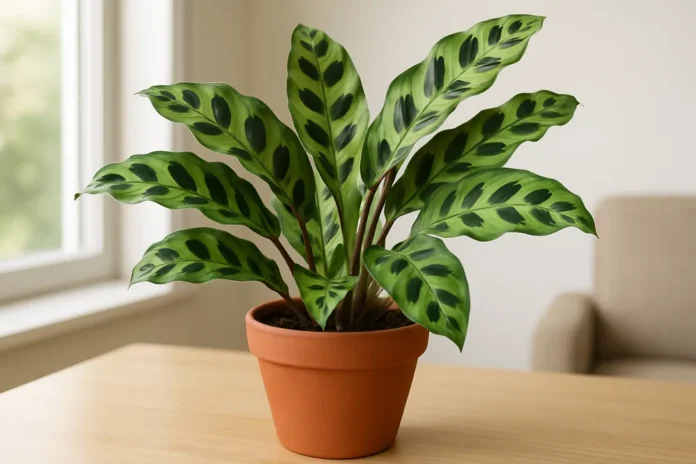
Calathea leaves usually develop black spots from excess moisture, wet foliage, cold exposure, pest damage, or leaf spot diseases. The spots are often a sign that the plant’s warm, evenly moist routine has been disrupted.
Seeing calathea leaves with black spots can be frustrating because these plants are beautiful when they are happy and dramatic when they are not. In my experience, black spotting is usually not random. It tends to come from a short list of issues that all leave slightly different clues behind.
The tricky part is that calatheas love humidity and consistent moisture, but those same conditions can also encourage disease if the soil stays too wet or the leaves stay damp too long. Once you know whether the spots are dry, mushy, spreading, edged in yellow, or paired with curling and drooping, it gets much easier to narrow down the real cause.
What Black Spots on Calathea Usually Mean
Black spots on calathea are most often linked to overwatering, bacterial or fungal leaf spot, cold injury, pest feeding, or physical damage that later turns dark. The spots may start brown or water-soaked before deepening to dark brown or black. Sometimes the tissue stays dry and papery. Other times it turns soft and mushy.
The pattern matters as much as the color. A few black spots near leaf edges often point to stress or damage. Many scattered spots across several leaves can suggest disease or pests. Black patches concentrated on the side facing a cold window or AC vent often indicate temperature shock.
- Small round spots with yellow halos often suggest leaf spot disease.
- Large irregular black patches can come from cold damage or severely waterlogged tissue.
- Tiny dark specks paired with silvery scarring may point to thrips.
- Blackened edges after soggy soil usually indicate root stress from overwatering.
- Spots only on older leaves may simply reflect a past watering or humidity mistake.
When I diagnose calathea spotting, I do not start with the ugliest leaf. I compare the newest leaf, a middle-aged leaf, and an older leaf. If the newest growth looks cleaner than the old leaves, the problem may already be improving. If new leaves are coming out spotted, the issue is still active.
Overwatering and Root Stress
Overwatering is one of the most common reasons calatheas develop dark spotting. These plants like evenly moist soil, but they do not like stale, saturated roots. When the potting mix stays wet too long, roots struggle to breathe, weak roots start to die back, and the leaves often respond with dark blotches, yellowing, drooping, and crispy or blackened margins.
Root stress can show up as black spots even before full root rot sets in. If the soil smells sour, the pot feels heavy for days, or the plant wilts despite wet soil, excess moisture is a strong suspect. The damage may begin at leaf tips and edges, then spread inward as stressed roots fail to move water properly.
Signs the Soil Is Staying Too Wet
- Potting mix feels wet several inches down long after watering
- Leaves yellow before developing dark or blackened areas
- Stems seem limp even though the soil is moist
- A musty or sour smell rises from the pot
- The plant is in a decorative cachepot that traps runoff
If this sounds like your plant, let the top layer of soil dry slightly before watering again, empty any standing water from saucers or outer pots, and make sure the container has drainage holes. If the mix is dense and compacted, repotting into a lighter houseplant mix with added bark or perlite can help prevent future spotting.
A moisture meter can help, but I still trust my finger and the pot’s weight more. Calatheas should feel lightly moist, not swampy. If the pot stays heavy for a week, the mix is holding too much water for the plant’s light level.
Leaf Spot Diseases From Wet Foliage and Poor Airflow
Fungal and bacterial leaf spot diseases are another major cause of black spots on calathea. These problems are more likely when leaves stay wet, air circulation is poor, and the plant sits in a crowded, humid area. The spots often start small, dark, and circular or irregular, then gradually enlarge. Some develop a yellow ring around the black center.
Bacterial spotting often looks water-soaked at first, with lesions that can turn almost ink-black. Fungal spots may stay drier and more defined. In both cases, splashing water, touching wet leaves, and packed plant shelves can spread the issue from one leaf to another.
Clues That Disease Is Involved
- Spots have a distinct edge or yellow halo
- New spots keep appearing on multiple leaves
- Affected leaves were often misted or splashed during watering
- The plant sits where air movement is minimal
- Nearby plants show similar leaf lesions
Remove the worst affected leaves with clean scissors, avoid wetting the foliage, and water the soil directly. Give the plant a little more space and airflow. If the spotting is spreading quickly, isolating the calathea from nearby houseplants is a smart precaution. Mild cases often slow down once the leaves stop staying wet.
Cold Damage, Drafts, and Temperature Shock
Calatheas are tropical plants, and they react badly to sudden chills. A cold windowsill, winter draft, air conditioner blast, or even a cold car ride home can leave dark, almost black patches on the leaves. These patches often appear suddenly and do not have the tidy round shape of a typical leaf spot disease.
Cold damage is especially likely if the spotting is worse on the side of the plant facing the window or vent. The tissue may first look water-soaked, then collapse and turn black. Unlike a disease, this kind of damage does not usually spread from leaf to leaf unless the exposure continues.
- Spots appear after a cold night or after moving the plant
- Damage is concentrated on one side of the plant
- The leaf tissue feels thin and limp before drying
- The plant is near a drafty door, single-pane window, or AC vent
Move the plant somewhere consistently warm, ideally away from temperature swings. Damaged tissue will not turn green again, but once the plant is protected, new leaves should emerge normally.
Pests That Can Leave Dark Specks and Blotches
Certain pests can make calathea leaves look spotted even when disease is not the main issue. Thrips are one of the most common culprits. They scrape leaf surfaces and leave silvery scars, distorted growth, and tiny dark specks that may be mistaken for black spots. Spider mites usually cause stippling and fading first, but severe stress can lead to darkened, damaged patches over time.
Scale insects and mealybugs are less likely to create classic black spotting, but heavy infestations weaken the plant and make leaves more vulnerable to secondary problems. Honeydew from some pests can also encourage sooty mold, which looks like a dark film or smudgy black coating rather than true dead leaf tissue.
What to Look for During a Pest Check
- Tiny moving insects on the undersides of leaves
- Silvery streaks or rasped-looking surfaces
- Black specks that wipe or smear slightly
- Fine webbing near leaf joints
- Sticky residue on foliage or nearby surfaces
If you find pests, isolate the plant and treat it with insecticidal soap or another houseplant-safe product labeled for the pest you identified. Wiping both sides of the leaves and repeating treatment on schedule is usually more effective than a single heavy application.
Thrips damage tricks a lot of growers because the black specks can look like disease at first glance. I look for the silvering first. If the leaf has a dull, scraped look plus pepper-like dots, I start suspecting pests before I assume fungus.
Mineral Buildup, Tap Water Issues, and Fertilizer Burn
Calatheas are known for reacting to water quality, especially hard water, excess salts, chlorine, fluoride, and too much fertilizer. These issues more often cause brown tips and edges than round black spots, but severe buildup can create dark necrotic areas where leaf tissue dies back. If the spotting is concentrated at the margins and the plant has been fed heavily, salt stress is worth considering.
A white crust on the soil surface, a ring inside the pot, or leaf damage that worsens soon after fertilizing are useful clues. Sensitive calathea varieties often respond best to filtered, distilled, or rainwater, especially if your tap water is very hard.
- Leaf edges darken after frequent feeding
- Tips and margins look burned before spots enlarge
- Soil or pot shows visible mineral residue
- The plant is watered exclusively with hard tap water
Flush the pot thoroughly with clean water to wash out excess salts, then reduce fertilizer frequency. During active growth, a diluted fertilizer is usually safer than full-strength feeding for calatheas.
Mechanical Damage and Old Leaf Decline
Not every black mark means a serious care problem. Calathea leaves bruise easily. A bent leaf, rough handling during moving, rubbing against a wall, or a crease from unfurling can all turn dark later. These spots are usually isolated, irregular, and stable rather than spreading.
Older leaves also naturally decline over time. When a plant is otherwise healthy, one aging leaf may yellow, brown, and then develop dark patches before it dies off. If the rest of the plant looks good and no new spots are appearing, you may simply be seeing normal leaf turnover.
In these cases, you can trim off the damaged leaf if it bothers you visually. Focus more on the condition of new growth than on one old imperfect leaf.
How to Tell Which Cause Is Most Likely
Because several calathea problems can produce black spotting, the fastest way to get a useful answer is to combine leaf clues with recent care history. Think about what changed in the last two to three weeks. Was the plant overwatered, moved near a window, misted heavily, fertilized, or exposed to pests from another plant?
Match the Symptom Pattern to the Probable Cause
- Black spots with yellow halos: likely fungal or bacterial leaf spot
- Large dark mushy patches after cold exposure: likely temperature damage
- Dark edges with drooping and soggy soil: likely overwatering or root stress
- Pepper-like black specks with silver scarring: likely thrips
- Dark margins after feeding or with crusty soil: likely salt or fertilizer buildup
- One or two random stable marks after handling: likely physical injury
This is one of those plant issues where the fix depends less on the leaf color itself and more on the overall pattern. Once the cause is corrected, damaged spots stay damaged, but the goal is healthy new growth without fresh lesions.
What to Do Right Now to Stop More Black Spots
If you are not fully sure of the cause yet, start with the safest corrective steps that help in most cases. These reduce stress without making the problem worse.
- Trim off badly damaged leaves with sterilized scissors.
- Check the soil moisture before watering again.
- Make sure the pot drains freely and is not sitting in water.
- Keep the plant warm and away from cold drafts or AC vents.
- Stop misting and avoid splashing the leaves.
- Inspect the undersides of leaves for thrips, mites, or scale.
- Space the plant for better airflow if it is crowded among other houseplants.
- Pause fertilizer until you see healthy new growth.
If the plant is severely waterlogged or the roots smell rotten, repotting may be necessary. If the spots are spreading rapidly with yellow halos or water-soaked lesions, treat it as a possible disease issue and keep it separated from nearby plants until it stabilizes.
Do not make five big changes at once and then guess which one helped. I usually correct moisture first, remove obvious damaged foliage, and improve airflow. Then I watch the next leaf or two. New growth tells the truth much faster than old damaged leaves do.
How to Prevent Black Spots From Coming Back
Calatheas stay cleaner when their environment is steady. Aim for bright indirect light, warm temperatures, moderate to high humidity, and evenly moist but airy soil. The key is balancing humidity with airflow instead of creating a damp, stagnant setup.
- Water when the top inch of soil is just starting to dry, not on a rigid calendar
- Use a well-draining potting mix that still holds some moisture
- Choose a pot with drainage holes
- Keep leaves dry during routine watering
- Use filtered or distilled water if your tap water is harsh
- Keep the plant away from heater blasts, AC, and cold glass
- Inspect new plants before placing them near your calathea
- Wipe leaves occasionally so you can spot pests early
A healthy calathea can tolerate the occasional imperfect leaf. What you want to prevent is a repeating pattern of new black spots. Stable care, cleaner watering habits, and quicker response to pests or soggy soil usually make the biggest difference.
FAQ
Should I Cut Off Calathea Leaves with Black Spots?
Yes, if the leaf is heavily damaged or the spots may be disease-related. Use clean scissors and remove the leaf at the base or trim only the worst section. If the leaf still has plenty of healthy green area, you can leave it for photosynthesis.
Can Black Spots on Calathea Heal?
No, damaged leaf tissue will not turn green again. What you are looking for is an end to new spotting and healthier new leaves after the cause is corrected.
Does Misting Cause Black Spots on Calathea?
It can. Misting does not reliably raise humidity for long, and repeated leaf wetness can encourage fungal or bacterial spotting, especially where airflow is limited.
Are Black Spots on Calathea a Sign of Root Rot?
They can be, especially when combined with yellowing, drooping, soggy soil, and a sour smell from the pot. Black spots alone do not confirm root rot, but overwatering is a very common trigger.
Can Tap Water Make Calathea Leaves Turn Black?
Sometimes. Hard water and salt buildup more often cause brown tips and edges, but severe mineral stress can lead to dark dead patches, especially in sensitive varieties.
Do Fungal Leaf Spots Spread to Other Houseplants?
Some can spread, especially in crowded, humid conditions where leaves stay wet. It is wise to isolate a plant with actively spreading spots until you know what you are dealing with.
Why Does Only One Calathea Leaf Have Black Spots?
A single affected leaf often points to physical damage, old age, or one past stress event such as cold exposure. If no new spots appear, the problem may already be over.
Need the right fix fast? Read our calathea care guide and houseplant pest treatment roundup to choose the best watering setup, soil mix, and products for cleaner new growth.
