

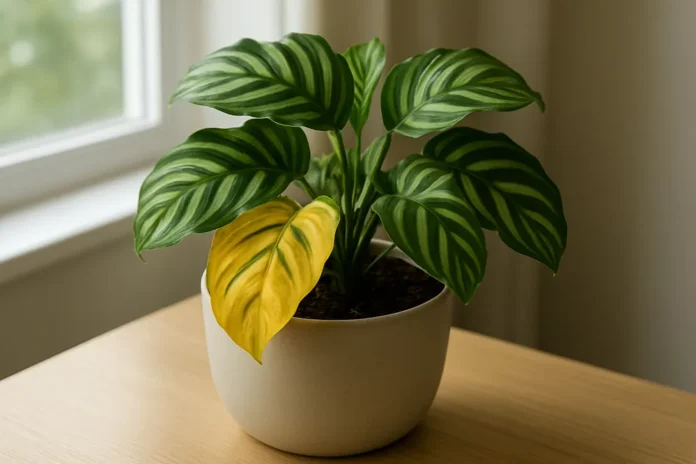
Calathea leaves usually turn yellow because the plant is staying too wet, getting stressed by dry air or temperature swings, or shedding older leaves naturally. Yellowing can also come from root damage, poor water quality, too much sun, or pests.
Few houseplants make people worry faster than a calathea with yellow leaves. These plants are beautiful, but they are also quick to show stress when something in their environment is off. The good news is that yellowing is often an early warning sign, which means you usually have time to correct the problem before the whole plant declines.
In my experience, calatheas rarely yellow for just one reason. A plant might be dealing with damp soil, low humidity, and cold drafts all at once, or it may simply be aging out an older leaf while the rest of the plant looks healthy. The key is to look at the pattern of yellowing, not just the color itself.
If your calathea leaves turning yellow have you second-guessing your care routine, start with the basics: moisture, light, humidity, roots, and pests. Once you match the symptom pattern to the cause, the fix becomes much clearer.
What Yellow Leaves Are Telling You
Yellow leaves on a calathea are a stress signal, but the exact shade and pattern matter. A single bottom leaf turning yellow and fading away is often normal aging. Several leaves yellowing at once, especially if the soil stays wet or the edges also crisp up, usually means something in the plant's care has been off for a while.
Look at where the yellowing starts. If older, lower leaves yellow first while new growth looks fine, think natural aging or gradual root crowding. If the whole plant begins to pale or multiple leaves turn yellow together, think watering, root problems, or nutrient imbalance. If leaves turn yellow with brown, crunchy edges, dry air or inconsistent moisture is often involved.
When I diagnose a calathea, I compare the oldest leaves to the newest ones first. If the newest leaves are also yellowing or emerging weak and pale, I stop assuming it is normal leaf loss and start looking much harder at roots, soil moisture, and light exposure.
Overwatering Is the Most Common Cause
If I had to pick the most common reason for yellow calathea leaves, it would be overwatering or soil that stays wet too long. Calatheas like evenly moist soil, but they do not want to sit in soggy potting mix. When roots stay deprived of oxygen, they become stressed and eventually start to rot. Yellow leaves are often one of the first visible signs.
This often happens even when the owner is not watering excessively. A pot without enough drainage, a heavy soil mix, a decorative cachepot holding runoff, or a plant kept in lower light can all make the root zone stay wet much longer than expected. In those cases, the issue is not only how much water you give, but how slowly the soil dries.
- Leaves turn soft yellow rather than crisp
- Several leaves yellow at the same time
- Soil feels wet days after watering
- Stems near the base may feel weak or mushy
- The pot feels heavy for a long time
- You notice a sour or swampy smell from the soil
If this sounds familiar, reduce watering frequency, empty standing water promptly, and make sure the plant is in a pot with a drainage hole. If the soil is dense and slow to dry, repotting into an airy indoor plant mix with ingredients like coco coir, bark, and perlite can make a dramatic difference.
Underwatering and Inconsistent Moisture Can Also Yellow Leaves
Calatheas also react badly when they dry out too far between waterings. People often associate underwatering only with browning, but yellowing can show up too, especially when the plant cycles between bone-dry soil and sudden soaking. That repeated stress interrupts normal leaf function and can cause older leaves to yellow before they crisp.
This kind of stress is common when a plant is in a warm room, near a vent, or in a very small pot that dries fast. It can also happen when people water lightly and often instead of watering thoroughly. The top inch may seem moist, while the root ball deeper down is becoming hydrophobic and dry.
- Leaves curl inward before or along with yellowing
- Leaf edges become dry and tan
- The potting mix pulls away from the sides of the pot
- The pot feels unusually light
- Yellowing affects older leaves first after a dry spell
I prefer to water calatheas thoroughly, then wait until the top part of the mix is just starting to dry before watering again. Tiny splash watering is one of the quickest ways to create uneven moisture and stressed roots.
Low Humidity and Dry Indoor Air Add Stress Fast
Calatheas come from humid environments, so dry indoor air can push them into decline surprisingly quickly. Humidity alone does not always cause solid yellow leaves, but it often contributes to yellowing when paired with inconsistent watering or mineral-heavy water. In many homes, winter air is the real trigger behind a plant that looked fine in summer.
A calathea in low humidity may first show crispy tips and margins, then broader yellow patches as the leaf tissue struggles. New leaves can emerge smaller or get stuck unfurling. If your plant sits near heating vents, air conditioning, or a constantly running fan, dry air stress becomes even more likely.
- Brown, crispy tips surrounded by yellow halos
- Leaves curl or fold more than usual
- New growth looks distorted or weak
- Symptoms worsen during winter heating season
Grouping plants together, moving the calathea away from vents, and using a humidifier usually help more than occasional misting. Misting can give a temporary boost at best, but it does not reliably raise room humidity for long.
Too Much Direct Sun Can Bleach and Yellow Foliage
Calatheas prefer bright, indirect light. When they get too much direct sun, especially hot afternoon sun, the leaves can fade, bleach, or turn yellow in broad patches. Sun stress sometimes looks different from watering stress because the damage appears more on the exposed side of the plant rather than evenly throughout.
A window that seems gentle in winter may become too intense in late spring and summer. Sheer curtains, pulling the plant back a few feet, or moving it to an east or north exposure can prevent additional damage. Already damaged tissue will not turn green again, but healthy new growth should look normal once the light is corrected.
- Yellow or pale patches on the side facing the window
- Leaf surfaces look washed out or scorched
- Brown, papery areas follow the yellowing
- Symptoms appear after a seasonal increase in sun
Water Quality Can Quietly Cause Yellowing
Calatheas can be sensitive to tap water, especially if it is high in chlorine, fluoride, or dissolved salts. While poor water quality more commonly causes brown tips, it can also contribute to yellowing over time as mineral buildup interferes with root function and overall plant health.
This issue tends to creep in slowly. The plant never seems fully happy, leaf edges discolor, and yellowing becomes more frequent even when watering habits look reasonable. If you fertilize regularly and also use hard tap water, the buildup can become more pronounced.
Using filtered water, rainwater, or distilled water often helps sensitive calatheas recover. Flushing the potting mix thoroughly once in a while can also reduce accumulated salts, as long as the pot drains freely and the soil does not stay soggy afterward.
Root Problems and Compacted Soil Block Recovery
Sometimes the yellow leaves are really a root problem in disguise. If a calathea is rootbound, planted in old compacted mix, or dealing with root rot, it cannot take up water and nutrients normally. That can make the top growth look confusingly similar to both overwatering and underwatering at the same time.
A rootbound plant may dry out too quickly and yellow because it cannot stay evenly moist. A plant in degraded, compacted mix may stay wet on top while roots below suffocate. In either case, the plant becomes less able to support healthy foliage and older leaves are often sacrificed first.
- Water runs through too quickly or barely penetrates the root ball
- Roots circle densely around the pot edge
- Soil feels hard, dense, or shrinks into a tight mass
- The plant wilts despite moist soil
- Growth has slowed noticeably and yellowing persists
If a calathea keeps yellowing no matter how carefully you water, I usually stop adjusting the schedule and inspect the roots. Care tweaks cannot fix a root system that is rotting or trapped in exhausted soil.
Repotting is often the reset a struggling calathea needs. Choose a pot only slightly larger than the current root ball, and use a mix that holds moisture but still stays airy. Oversized pots can make yellowing worse because they keep too much unused soil wet.
Temperature Stress and Drafts Can Trigger Leaf Decline
Calatheas dislike extremes. Cold drafts from windows, bursts of hot air from vents, and sudden room temperature swings can all stress the foliage and contribute to yellowing. These plants prefer stable warmth, and they often react when nighttime temperatures dip lower than expected.
This is especially common in winter when a plant sits close to glass, an exterior door, or a forced-air register. You may notice yellowing along with curling, drooping, or leaf edges browning soon after a weather shift.
If your calathea is otherwise cared for well but still struggles, think about the microclimate around the plant rather than only the watering routine. Moving it just a few feet away from a draft source can make a bigger difference than many people expect.
Nutrient Issues and Overfertilizing Can Both Show Up as Yellow Leaves
Nutrient deficiencies are not the first cause I suspect with calatheas, but they can play a role. If a plant has been in the same soil for a long time and has not been fertilized during active growth, older leaves may gradually yellow because the plant is pulling resources from them.
More often, though, I see the opposite problem: overfertilizing. Too much fertilizer can burn roots, increase salt buildup, and lead to yellowing, browning, and weak growth. This is especially likely when feeding a stressed plant in hopes of greening it up quickly.
- Deficiency tends to be gradual and mild at first
- Overfertilizing often causes yellowing plus brown tips or edges
- Crusty white residue on the soil can point to salt buildup
- A struggling plant usually needs root and watering fixes before feeding
During spring and summer, a diluted balanced fertilizer can help if the plant is healthy and actively growing. During fall and winter, or while the plant is stressed, it is better to hold off than to push extra nutrients into an unhappy root system.
Pests Can Weaken Leaves and Cause Yellow Mottling
Spider mites, thrips, and sometimes mealybugs can all contribute to yellowing on calatheas. Spider mites are especially common when humidity is low. Their feeding causes fine stippling, dull leaves, and eventual yellowing as the tissue loses vigor.
Pest damage usually looks more speckled, mottled, or patchy than the broad yellowing caused by root issues. You may also see webbing, tiny moving insects, black specks, or distorted new leaves. Check the undersides of leaves and along the midrib where pests often hide.
- Fine yellow stippling across the leaf surface
- Silvery scarring or patchy discoloration
- Tiny webs or moving dots under leaves
- New leaves that emerge twisted or damaged
If you find pests, isolate the plant and treat consistently rather than once. A gentle shower, insecticidal soap, or neem-based treatment can help, but repeat applications matter because eggs and hidden insects are easy to miss.
When Yellow Leaves Are Normal
Not every yellow leaf means something is wrong. Calatheas do shed older leaves from time to time, especially lower ones that have been shaded by fresh growth. If the rest of the plant looks strong, the soil is behaving normally, and new leaves are coming in healthy, one aging leaf is not an emergency.
Natural aging usually follows a simple pattern: one older leaf slowly fades, yellows evenly, and is eventually removed. The problem is less likely to be normal if several leaves change color quickly, if newer leaves are affected, or if the plant seems to be losing vigor overall.
How to Fix a Yellowing Calathea
Once you have a likely cause, focus on stabilizing the plant rather than trying every remedy at once. Calatheas do best when their environment becomes more consistent, not when they are repeatedly moved, fed, soaked, and sprayed in rapid succession.
- Remove completely yellow leaves if they are more than halfway spent. This helps the plant redirect energy.
- Check the soil moisture at root level, not just on the surface.
- Adjust watering so the mix stays lightly and evenly moist, never soggy and never bone dry.
- Move the plant into bright, indirect light away from harsh sun and drafts.
- Raise humidity if your home is dry, especially during heating season.
- Inspect roots if yellowing continues despite better watering.
- Pause fertilizer until the plant shows stable, healthy new growth.
Do not expect damaged leaves to turn green again. Success is measured by how the next leaves look. If new growth appears healthy and the yellowing slows, you are moving in the right direction.
FAQ
Should I Cut Off Yellow Calathea Leaves?
Yes, if a leaf is mostly yellow or declining, you can trim it off with clean scissors near the base of the stem. If a leaf is only partly damaged, you can leave it until the plant has more healthy growth to support itself.
Can Yellow Calathea Leaves Turn Green Again?
No. Once a leaf has yellowed, that tissue will not recover its green color. Watch the new growth to judge whether your care changes are helping.
How Often Should I Water a Calathea with Yellow Leaves?
There is no fixed schedule that works in every home. Water when the upper part of the potting mix starts to dry, then water thoroughly and let excess drain away.
Do Calatheas Need Distilled Water?
Not always, but many calatheas respond better to distilled, filtered, or rainwater if your tap water is hard or chemically treated. Sensitive plants often show fewer brown tips and less ongoing stress with gentler water.
Why Are Only the Bottom Leaves of My Calathea Turning Yellow?
If only older bottom leaves are yellowing and the rest of the plant looks healthy, it is often normal aging. If yellowing keeps spreading upward or the plant looks weak, check roots and watering habits.
Can Low Humidity Alone Cause Yellow Leaves on Calathea?
It can contribute, especially when paired with inconsistent watering or dry heating air. More often, low humidity shows up first as brown tips, curling, and weaker new growth before broader yellowing follows.
Is My Calathea Getting Too Much Sun if the Leaves Are Yellow?
Possibly. If the yellowing is strongest on the side facing the window and looks bleached or scorched, direct sun is a likely cause. Calatheas prefer bright but filtered light.
Need help dialing in the right setup for fussy prayer plants? Read our guide to the best calathea soils, pots, and humidifiers so you can stop yellowing at the source.
