

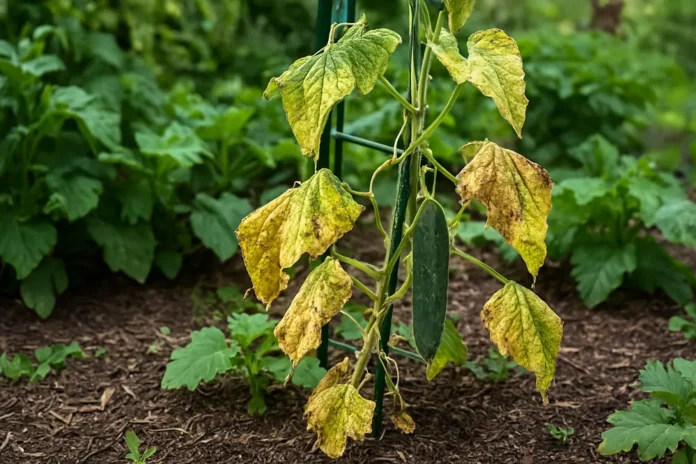
A cucumber plant usually starts dying because of water stress, root damage, disease, or heavy pest pressure. Heat swings, poor drainage, and cucumber beetles are especially common triggers.
A cucumber plant dying can go downhill fast. One day it looks a little limp, and the next it is yellowing, collapsing, or stopping growth altogether. Cucumbers are productive plants, but they are not especially forgiving when their roots, leaves, or stems are under stress.
In my garden, the biggest mistake people make is treating every wilted cucumber like a watering problem. Sometimes the plant is thirsty, but sometimes the roots are sitting in soggy soil, the stem is infected, or cucumber beetles have already done the real damage. The key is to match the pattern of decline to the most likely cause.
If your cucumber plant looks like it is dying, start by looking at the whole plant, not just one yellow leaf. Whether the problem is heat, disease, pests, or poor soil, the symptoms usually give you enough clues to narrow it down.
What a Dying Cucumber Plant Usually Looks Like
Cucumbers rarely fail without warning. Before the plant fully collapses, you will often see wilting in the afternoon, yellow lower leaves, slowed growth, shriveled fruit, brown stem damage near the base, or leaves that look chewed, spotted, or crisped around the edges. Some problems move slowly over a week or two, while others seem to hit overnight.
- Temporary wilting that improves by evening often points to heat stress or dry soil
- Wilting that does not recover overnight often points to root problems, stem injury, or disease
- Yellowing from the bottom up commonly suggests age, nutrient stress, or root trouble
- Sudden collapse of one vine while others still look normal can suggest bacterial wilt or stem damage
- Leaves with holes, ragged feeding, or sticky residue usually signal pest pressure
When I diagnose cucumbers, I pay close attention to which part declines first. If the whole plant droops at once, I think roots or vascular disease. If the oldest leaves fade first while new growth hangs on, I look harder at nutrition, watering habits, and general stress.
Watering Problems Are the Most Common Cause
Underwatering and Hot Weather
Cucumbers grow fast, have large leaves, and use a lot of water once they start flowering and setting fruit. In hot weather, dry soil can make them wilt dramatically by midday. If the soil is dry several inches down and the plant perks back up after a thorough soaking, underwatering is the likely issue.
Repeated dry spells do more than cause temporary limpness. They can lead to bitter fruit, stunted vines, yellow leaves, blossom drop, and eventually vine decline. Container cucumbers are especially vulnerable because pots dry out much faster than garden beds.
Overwatering and Poor Drainage
Too much water can look surprisingly similar to too little. Leaves wilt because the roots cannot breathe, lower foliage yellows, and growth stalls. If the soil stays wet for days, roots begin to rot and the plant may never fully recover. This is very common in heavy clay soil, low spots, raised beds without good drainage, or containers without enough drainage holes.
- Dry, dusty soil and limp leaves suggest underwatering
- Wet, sour-smelling soil and yellowing leaves suggest overwatering
- Wilting in both morning and evening with wet soil often means root stress rather than thirst
- Mulch helps keep moisture more even and reduces repeated stress cycles
I like to check cucumber soil with my finger before I reach for the hose. If the top inch is dry but the root zone below is still damp, watering again can push a stressed plant into root rot.
Root Damage Can Make the Whole Plant Fail
Anything that injures cucumber roots can make the plant look like it is dying because the top growth depends on a healthy, active root system. Compacted soil, transplant shock, accidental hoe damage, nematodes, and waterlogged soil can all reduce the plant's ability to take up water and nutrients.
Transplanted cucumbers sometimes sulk if they were root-bound, planted too early into cold soil, or handled roughly during planting. Unlike some crops, cucumbers do not always bounce back gracefully from root disturbance. A plant that never really started growing, stayed pale, or wilted after transplanting may have had root trouble from the beginning.
- Plants that remain small and weak from an early stage often have root or soil issues
- Roots sitting in cold spring soil may stop growing even if the leaves still look decent for a while
- Mechanical damage near the crown can cut off water flow to the whole vine
- Root-knot nematodes may cause stunting, yellowing, and weak growth in sandy, warm soils
Diseases That Commonly Kill Cucumber Plants
Bacterial Wilt
Bacterial wilt is one of the fastest and most frustrating cucumber problems. It is spread by cucumber beetles, and infected plants often wilt suddenly even when the soil has enough moisture. One vine may collapse first, followed by the rest of the plant. Once bacterial wilt takes hold, the plant usually cannot be saved.
Powdery Mildew and Downy Mildew
Mildew diseases weaken cucumbers over time by reducing the plant's ability to photosynthesize. Powdery mildew looks like pale, dusty white coating on leaves. Downy mildew often starts as yellow angular patches that later turn brown. A severe infection can defoliate the plant and leave fruit exposed to sunscald and poor development.
Fusarium, Verticillium, and Other Wilts
Soilborne wilt diseases affect the vascular system, meaning the plant cannot move water normally even if the ground is moist. These diseases often cause persistent wilting, yellowing, and progressive vine death. They tend to be worse in warm soil and in gardens where cucurbits are planted in the same area year after year.
Stem Rot and Crown Problems
If the lower stem looks dark, soft, pinched, or cracked, crown rot or stem injury may be the main reason the plant is dying. This can happen after prolonged wet weather, splashing soil, or physical damage at the base of the plant.
A cucumber that wilts while the soil is evenly moist makes me suspicious of disease before anything else. I also look at whether neighboring cucumbers are starting to show the same pattern, because contagious foliar problems usually spread through a bed faster than a simple watering issue.
Pests That Weaken or Kill Cucumbers
Cucumber Beetles
Cucumber beetles are small, but they cause outsized problems. They chew leaves, flowers, and stems, stress young plants, and spread bacterial wilt. Seedlings and newly transplanted cucumbers are especially vulnerable. If your plant is fading and you also see yellow-and-black beetles or fresh feeding damage, do not ignore them.
Squash Bugs and Aphids
Squash bugs are more famous for damaging squash, but they can also feed on cucumbers. Their feeding causes leaf speckling, wilt, and general decline. Aphids gather on tender growth, suck sap, distort leaves, and leave sticky honeydew that can lead to sooty mold. A heavy aphid infestation can stress a small cucumber plant enough to stall or weaken it badly.
Spider Mites
In hot, dry weather, spider mites can drain a cucumber plant surprisingly fast. Leaves may look stippled, dull, bronzed, or dusty before they dry up and fall. Fine webbing on the undersides of leaves is a strong clue.
- Chewed leaves and beetle activity point toward cucumber beetles
- Sticky residue and curled new growth suggest aphids
- Bronzed leaves and fine webbing suggest spider mites
- Large pest populations often build during periods of plant stress
Temperature Stress and Weather Damage
Cucumbers like warm conditions, but not every kind of heat or cold. Cold nights, chilly soil, sudden heat waves, harsh wind, and intense afternoon sun can all make them appear sick. A plant set out too early may turn pale, stall, or rot at the base. A plant hit by extreme summer heat may wilt daily, abort flowers, and produce poorly shaped fruit.
Storms can also break stems, shred leaves, and pack the soil so tightly that roots struggle afterward. If decline begins right after a weather event, the timing itself is an important clue.
- Cold stress often causes slowed growth, pale foliage, and root problems
- Heat stress often causes midday wilt, blossom drop, and leaf scorch
- Wind damage can tear leaves and dry the plant faster than roots can keep up
- Rapid weather swings often expose weak root systems that seemed fine before
Nutrient Issues and Soil Imbalances
A lack of nutrients usually does not kill a cucumber overnight, but it can weaken the plant enough that heat, pests, or disease finish the job. Nitrogen deficiency often shows up as pale or yellow older leaves and weak vine growth. Potassium shortages can contribute to marginal leaf burn and poor fruit quality. Soil that is too acidic or too alkaline can also lock up nutrients even when they are present.
On the other hand, too much fertilizer can burn roots or push lush, tender growth that attracts pests and disease. Excess salts from synthetic fertilizer are especially rough on container cucumbers when pots are not flushed regularly.
- General pale growth suggests low fertility or poor nutrient uptake
- Leaf-edge burn can come from salt buildup, drought, or potassium issues
- A plant with dark green leaves but no vigor may have root stress rather than simple hunger
- Compost improves both fertility and moisture balance, which helps cucumbers handle stress better
How to Narrow Down the Real Cause
When a cucumber looks like it is dying, do not guess from leaf color alone. Start with the root zone, then inspect stems, then leaf surfaces, and finally think about recent weather and pest activity. This sequence usually saves time because many cucumber problems start below the soil line or near the crown.
- Feel the soil 2 to 3 inches deep to see whether it is dry, evenly moist, or soggy
- Inspect the stem base for rot, pinching, cracks, or chewing damage
- Check leaf tops and undersides for spots, mildew, webbing, beetles, aphids, or eggs
- Notice whether the entire plant is failing or only one section of vine
- Think back to any recent transplanting, storms, cold snaps, fertilizer applications, or irrigation changes
If the plant is badly diseased or suddenly collapsed from bacterial wilt, replacement is often more realistic than rescue. If the issue is moisture, fertility, or moderate pest pressure, the plant may recover if the new growth remains healthy.
Change one thing at a time when you are trying to save a struggling cucumber. If you water more, fertilize, spray, and prune all at once, you will not know what helped or whether you added even more stress.
What to Do Next to Save the Plant if Possible
Your best fix depends on the cause, but a few responses are consistently useful. Give dry plants a deep soak rather than frequent shallow sprinkles. Improve drainage around waterlogged plants and hold off on more irrigation until the soil begins to dry. Remove severely diseased leaves if the problem is foliar and the plant still has plenty of healthy growth left.
For pest problems, act early before feeding damage becomes overwhelming. Insecticidal soap can help with aphids, while row covers are useful early in the season to protect young plants from cucumber beetles until flowering begins. If bacterial wilt is confirmed, remove the infected plant to reduce problems in the bed.
Support long vines on a trellis when possible. Better airflow keeps leaves drier, makes pest checks easier, and often slows the spread of disease. A light mulch layer also helps stabilize soil moisture and reduce splash-up from the ground.
How to Prevent Cucumber Plants From Dying Next Time
Prevention matters more with cucumbers than heroics after the plant is already collapsing. Start with warm, well-drained soil, good spacing, and consistent moisture. Rotate where you plant cucumbers and other cucurbits so disease pressure does not build up in one spot year after year.
- Plant only after the soil has warmed and nights are reliably mild
- Use compost to improve drainage and moisture retention at the same time
- Water deeply and consistently, especially during flowering and fruiting
- Mulch to keep roots cooler and soil moisture steadier
- Inspect plants often for cucumber beetles, mildew, and stem damage
- Avoid wetting foliage late in the day when disease pressure is high
- Choose resistant varieties when bacterial wilt, mildew, or wilt diseases are common in your area
Healthy cucumber plants are still somewhat dramatic, especially on hot afternoons, but repeated stress is what pushes them into real decline. When you keep roots steady, watch for pests early, and avoid overcrowding, you give the plant a much better shot at producing for the whole season.
FAQ
Can a Wilted Cucumber Plant Recover?
Yes, if the cause is temporary stress such as dry soil, heat, or moderate pest pressure. If the plant has bacterial wilt, severe root rot, or advanced crown damage, recovery is much less likely.
Why Does My Cucumber Wilt During the Day but Recover at Night?
That pattern often points to heat stress or a plant that is using water faster than its roots can replace it. It can also happen when soil moisture is uneven and the plant is close to drought stress.
Should I Cut Off Yellow Cucumber Leaves?
Remove yellow leaves if they are clearly spent, badly diseased, or blocking airflow. Do not strip too many at once, because the plant still needs healthy foliage to power growth and fruiting.
How Often Should I Water Cucumbers?
Most cucumbers do best with deep, consistent watering rather than light daily sprinkles. The exact schedule depends on heat, soil type, mulch, and whether the plant is in the ground or in a container.
What Does Bacterial Wilt Look Like on Cucumbers?
The plant often wilts suddenly even when the soil is moist, and the wilt does not improve after watering. One vine or the entire plant may collapse quickly after cucumber beetle activity.
Can Too Much Fertilizer Kill a Cucumber Plant?
Yes. Overfertilizing can burn roots, create salt buildup, and push weak, lush growth that is more attractive to pests and disease.
Why Are Only the Bottom Leaves on My Cucumber Turning Yellow?
Lower leaf yellowing often happens first with age, inconsistent watering, low nitrogen, or early root stress. If the yellowing moves upward quickly or is paired with wilt, look for a larger root or disease problem.
Need help choosing the right fix fast? Read our guide to the best cucumber treatments and pest controls so you can stop the damage before the whole planting goes down.
