

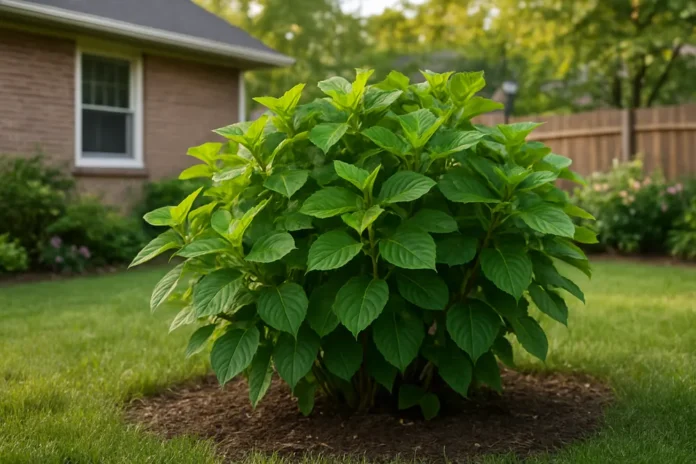
A hydrangea usually fails to bloom because flower buds were pruned off, damaged by cold, or never formed well due to too much shade or excess nitrogen. Some varieties also bloom on old wood, so timing matters more than many gardeners realize.
A hydrangea with healthy leaves but no flowers can be incredibly frustrating, especially when you know how spectacular it looked in past summers or in the garden center. In most cases, a hydrangea not blooming is not a mystery for long. Once you narrow down the type of hydrangea you have and how it sets buds, the problem usually starts to make sense.
I have found that bloom failure usually comes down to a short list: pruning at the wrong time, winter or late frost damage, too much shade, too much nitrogen, or a plant that is still settling in. The good news is that hydrangea blooms are often recoverable next season once you correct the real cause instead of guessing.
Know Which Hydrangea You Are Growing
The first step in solving bloom problems is knowing your hydrangea type. Different hydrangeas make flower buds in different seasons. If you do not know whether yours blooms on old wood, new wood, or both, it is easy to prune away buds or misread normal growth as a problem.
- Bigleaf hydrangea (Hydrangea macrophylla): often blooms on old wood, meaning buds form on last year's stems.
- Mountain hydrangea (Hydrangea serrata): similar to bigleaf and often blooms on old wood.
- Oakleaf hydrangea (Hydrangea quercifolia): blooms on old wood.
- Climbing hydrangea: also flowers on older growth and can take years to mature.
- Panicle hydrangea (Hydrangea paniculata): blooms on new wood, so it is usually more forgiving.
- Smooth hydrangea (Hydrangea arborescens): blooms on new wood and can often be cut back without losing flowers.
If you inherited the plant or lost the tag, look closely at the flowers, leaves, and growth habit. Mophead and lacecap types are commonly the ones that disappoint after a badly timed pruning or a rough winter. Panicle hydrangeas, with cone-shaped flowers, are less likely to miss a season because old buds were removed.
When I am troubleshooting a bloomless hydrangea, I try to identify the species before I do anything else. That one detail often explains the whole problem, because a pruning method that works perfectly on panicle hydrangeas can wipe out flowers on bigleaf types.
Pruning at the Wrong Time Is the Most Common Cause
For many home gardeners, pruning is the biggest reason a hydrangea does not flower. Old-wood bloomers set next season's buds on stems that are already growing this year. If you cut those stems back in late summer, fall, winter, or early spring, you may remove every flower bud without realizing it.
How Old-wood Hydrangeas Lose Their Buds
Bigleaf, mountain, and oakleaf hydrangeas often produce flower buds after the current blooming season ends. Those buds sit on the plant through fall and winter. A neat cleanup in autumn or an enthusiastic spring trim can leave you with lush green growth and no flowers at all.
How to Prune Without Sacrificing Flowers
- For old-wood types, prune only right after flowering if shaping is needed.
- Remove dead wood in spring only after you can clearly see what failed to leaf out.
- Avoid shearing the whole shrub into a tight ball.
- For new-wood types like panicle and smooth hydrangeas, late winter or early spring pruning is usually fine.
If you suspect you pruned off buds this year, there is usually no way to force a redo this season on old-wood varieties. The best fix is to stop unnecessary pruning and let the plant rebuild a full cycle of stems and buds.
If a hydrangea is healthy but flowerless, I usually skip all cosmetic pruning for a full year except for clearly dead stems. That gives me one clean season to see how the plant naturally sets buds and whether pruning was the real issue.
Cold Weather and Late Frosts Can Kill Flower Buds
Hydrangeas that bloom on old wood are especially vulnerable to winter injury and spring temperature swings. Even if the stems survive, the flower buds at the tips or upper nodes can be damaged by deep cold, drying winter winds, or a warm spell followed by a hard freeze.
This is common in colder parts of the U.S. where bigleaf hydrangeas are borderline hardy. The plant may leaf out from lower buds and look alive, but the flower buds that would have opened are gone.
Signs That Cold Damage Is the Reason
- The shrub grows leaves from the base or lower stems but not from the tips.
- Upper stems look dry, blackened, or hollow when lightly scratched.
- The plant bloomed well in mild years but not after a harsh winter.
- Leaf growth seems delayed or uneven across the shrub.
How to Reduce Future Bud Loss
- Plant hydrangeas in a sheltered location out of strong winter wind.
- Avoid late-season fertilizing that encourages tender new growth.
- Use mulch around the root zone to moderate soil temperature.
- In colder zones, protect old-wood varieties with burlap screening or a loose cage filled with leaves after the ground cools.
- Choose reblooming or more cold-hardy varieties if bloom failure repeats often.
Late spring frosts are especially maddening because the plant may already look ready to grow. One cold night can damage swelling buds that took all year to form.
Too Much Shade Limits Flower Production
Hydrangeas are often described as shade plants, but that can be misleading. Most do best in bright morning sun with some afternoon protection, especially in warmer regions. A plant tucked under dense trees or on the north side of a house may stay green and healthy-looking while producing few or no blooms.
Low light reduces the energy available for flower bud formation. The plant prioritizes leaves and stem growth instead. This is especially common after nearby trees mature and quietly change the amount of sun the shrub gets.
What Better Light Usually Looks Like
- Morning sun for several hours with shade during the hottest part of the day
- Bright filtered light rather than deep, all-day shade
- Enough open sky that the plant dries fairly quickly after rain
If your hydrangea is in heavy shade, improving light can make a major difference. That might mean selective tree pruning, thinning nearby shrubs, or transplanting the hydrangea during the right season if the site is truly too dark.
Too Much Nitrogen Can Give You Leaves Instead of Flowers
Hydrangeas that receive frequent lawn fertilizer, high-nitrogen plant food, or rich manure may put on beautiful foliage but few blooms. Nitrogen pushes leafy growth. That can be useful for a struggling plant, but too much often comes at the expense of flower production.
This issue often shows up when a hydrangea is planted near a fertilized lawn or fed with a general-purpose product meant for rapid green growth. The shrub looks vigorous, so gardeners naturally assume it is happy, but the balance is off.
Fertilizer Habits That Can Interfere with Blooming
- Frequent use of high-nitrogen fertilizer
- Heavy applications of fresh or very rich composted manure
- Lawn fertilizer drifting into the root zone
- Feeding late in the season when the plant should be slowing down
For hydrangeas, a balanced slow-release fertilizer is usually enough, and often only once or twice during the growing season depending on your soil. If the plant already has good leaf color and solid growth, more feeding is not always better.
Water Stress and Root Problems Can Reduce Blooming
Hydrangeas need consistent moisture, especially while establishing and during hot weather. Drought stress can reduce the plant's ability to form or support flower buds. On the other hand, constantly soggy soil can weaken roots and reduce overall vigor.
A hydrangea that is repeatedly wilting, then recovering, may survive but still skip flowering. I see this most often with shrubs planted under thirsty trees, against hot foundations, or in soil that dries out much faster than expected.
Common Water-related Bloom Problems
- Dry soil during bud formation
- Shallow, frequent watering instead of deep soaking
- Poor drainage that leaves roots oxygen-starved
- Competition from tree roots or overcrowded planting beds
Aim for deep, even watering rather than constant light sprinkling. A layer of mulch helps conserve moisture and buffer temperature swings around the roots.
When a hydrangea keeps missing blooms in spite of decent care, I pay attention to its summer wilting pattern. A shrub that droops hard by midday in a dry site often spends more energy surviving than setting up a good flower display for next year.
Immaturity, Transplant Shock, and Overcrowding Matter Too
Sometimes the answer is simply timing. A young hydrangea may need a season or two to settle in before it flowers well. Climbing hydrangeas are especially famous for taking their time. Recently transplanted shrubs can also pause bloom production while they reestablish roots.
Overcrowding can make the problem worse. If nearby shrubs, perennials, or tree roots are pressing in, the hydrangea may have less light, less water, and less airflow than it did when first planted.
- Newly planted hydrangeas may bloom lightly at first
- Transplanted shrubs often prioritize root recovery over flowering
- Crowded beds can reduce light and increase moisture competition
- Mature shrubs may benefit from gentle thinning of surrounding plants
How to Tell What Is Happening on Your Plant
You can often narrow the problem down by looking at where growth appears and what last season's stems look like. A hydrangea with sturdy old stems but no blooms after a spring haircut points strongly to pruning. A plant that dies back to the ground after winter but regrows from the base points more toward cold damage. A shrub with long, floppy, leafy growth in deep shade suggests a light issue.
Questions That Help with Diagnosis
- What kind of hydrangea is it?
- Did you prune it in fall, winter, or early spring?
- Did it bloom in past years but stop after a cold winter?
- How many hours of direct sun does it actually get?
- Has it been heavily fertilized or planted next to turf?
- Was it newly planted or moved recently?
Try to answer those questions before making changes. Hydrangeas respond slowly enough that random fixes can waste an entire season.
What to Do Next for More Blooms Next Season
Once you identify the likely cause, focus on a few targeted corrections rather than overhauling everything. Hydrangeas reward steady care, and bloom improvement often shows up the following year rather than immediately.
- Identify whether your hydrangea blooms on old wood or new wood.
- Stop unnecessary pruning, especially on bigleaf, mountain, and oakleaf types.
- Protect old-wood varieties from winter exposure if your area gets hard freezes.
- Increase light if the plant sits in deep shade.
- Cut back on high-nitrogen fertilizer and avoid lawn fertilizer runoff.
- Water deeply during dry periods and mulch to keep root conditions even.
- Be patient with newly planted or recently stressed shrubs.
If repeated winter damage is the main problem, consider replacing the plant with a reblooming bigleaf hydrangea or a more reliable panicle or smooth hydrangea suited to your climate. Sometimes the best long-term fix is matching the plant more closely to the site.
FAQ
Will My Hydrangea Bloom Again if I Pruned It at the Wrong Time?
Yes, usually next season if the plant is otherwise healthy. Old-wood hydrangeas often need one full growth cycle to rebuild stems and set new flower buds after they were accidentally removed.
Can a Hydrangea Be Too Young to Bloom?
Yes. Newly planted hydrangeas may take a year or two to settle in, and climbing hydrangeas can take even longer before flowering well.
How Much Sun Does a Hydrangea Need to Bloom?
Most hydrangeas bloom best with several hours of morning sun or bright filtered light. Deep all-day shade often leads to weak flowering or no blooms at all.
Why Does My Hydrangea Have Lots of Leaves but No Flowers?
That usually points to too much nitrogen, too much shade, or pruning that removed flower buds. Healthy foliage alone does not mean the plant has the right conditions for blooming.
Should I Cut Back a Hydrangea That Did Not Bloom?
Not automatically. If it is a type that blooms on old wood, cutting it back can make the problem worse by removing next year's buds.
Can Late Frost Stop Hydrangeas From Blooming?
Yes. Late frost can damage tender flower buds, especially on bigleaf and other old-wood hydrangeas, even when the rest of the plant survives.
Do Coffee Grounds Help Hydrangeas Bloom?
Not reliably. Coffee grounds are not a bloom booster, and adding random amendments will not fix pruning, shade, or cold damage problems.
Want more flowers and fewer guesswork fixes? Read our hydrangea care guide and top fertilizer picks to choose the right pruning, feeding, and protection plan for your shrub.
