

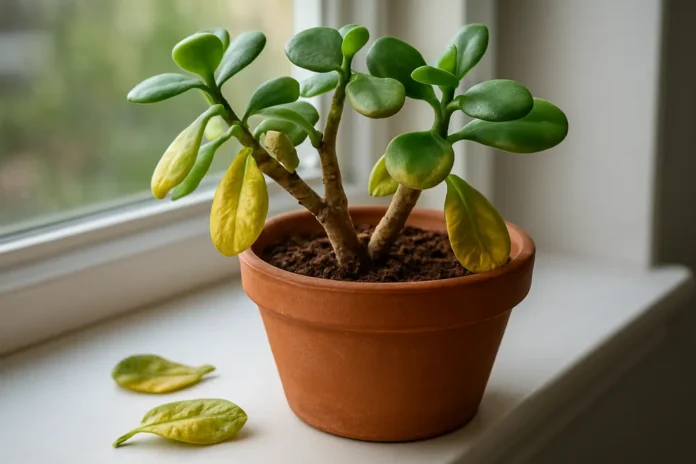
A jade plant usually starts dying from too much water, poor drainage, not enough light, cold stress, or pests. These problems weaken roots and leaves until the plant begins dropping foliage, shriveling, or rotting.
Jade plants have a reputation for being nearly indestructible, so it can feel especially frustrating when one suddenly starts dropping leaves, turning mushy, or looking limp and weak. In my experience, a jade plant rarely declines for no reason. It usually gives a trail of clues through its leaves, stems, roots, and overall growth habit.
When people ask why a jade plant is dying, the answer is often tied to moisture around the roots. But watering is only part of the picture. Light levels, temperature swings, pot choice, soil texture, and even hidden pests can all push a healthy plant into slow decline.
The good news is that jade plants often recover if you catch the problem early enough. The key is matching the symptom you see, like shriveled leaves, black stems, leaf drop, or soft spots, to the most likely cause so you can fix the actual issue instead of guessing.
The Most Common Reason Jade Plants Start Dying
Overwatering is the most common cause of a dying jade plant. Jade plants store water in their leaves and stems, so they are built to handle dry periods much better than constantly damp soil. When the potting mix stays wet too long, the roots begin to suffocate and rot. Once that starts, the plant cannot move water properly even though the soil is still moist.
This is why overwatered jade plants can look strangely limp, yellow, or even wrinkled at the same time. Gardeners sometimes see that droopy look and water again, which makes the problem worse. A healthy jade should have firm leaves and sturdy stems. If the leaves feel soft, translucent, or mushy, I immediately start thinking about root stress.
When I troubleshoot jade plants, I trust the stems and lower leaves more than the surface of the soil. A pot can look dry on top while the root zone stays soggy underneath for days.
How to Read the Symptoms Your Jade Plant Is Showing
Jade plants tend to show different symptoms depending on what is stressing them. Looking closely at the exact pattern helps narrow the cause much faster than treating every problem the same way.
- Soft, yellowing leaves often point to overwatering or root rot.
- Wrinkled, thin, or puckered leaves usually suggest underwatering or damaged roots that cannot absorb moisture well.
- Black stems or mushy stem sections are strong signs of rot.
- Sudden leaf drop can come from overwatering, cold exposure, or a sharp environmental change.
- Leggy growth with wide gaps between leaves often means the plant is not getting enough light.
- Brown scabby patches may be old physical damage, sun stress, or edema from erratic watering.
- Sticky residue, cottony clusters, or tiny bumps on stems can indicate sap-sucking pests.
A single symptom does not always tell the whole story. For example, wrinkled leaves can mean the plant needs water, but they can also happen when rotted roots are too damaged to take up water. That is why it helps to consider the pot, soil, light, and recent care changes along with the visible damage.
Watering Mistakes That Slowly Kill Jade Plants
Overwatering and Soggy Soil
Jade plants should not be watered on a rigid calendar without checking the soil first. Watering every few days, keeping a saucer full, or using dense indoor potting mix can keep roots wet for too long. The result is often yellowing leaves, leaf drop, softness, and eventually rot.
This problem is especially common in winter when jade plants grow more slowly and use much less moisture. A schedule that seemed fine in summer can become excessive once the days shorten.
Underwatering and Prolonged Dryness
Underwatering happens too, though it is less deadly in the short term. Leaves may shrivel, flatten, or wrinkle when the plant uses up stored moisture. If this continues for too long, older leaves drop and stems can weaken. Severe drought can kill fine roots and make recovery slower even after watering resumes.
The difference is that an underwatered jade often perks up after a proper deep watering, while an overwatered or rotting jade may stay limp or get worse despite wet soil.
What Proper Watering Looks Like
A better approach is to water deeply, then let the mix dry substantially before watering again. For most jade plants, that means waiting until the soil is dry several inches down, or nearly all the way through in a smaller pot, before soaking it thoroughly and letting extra water drain away.
If you are unsure whether your jade is too dry or too wet, lift the pot before and after watering a few times. That weight difference teaches you more quickly than any fixed schedule.
Root Rot and Poor Drainage Problems
Root rot is often the real reason a jade plant is dying, even when the visible symptoms show up in the leaves first. Rot begins when roots sit in wet, airless soil for too long. Fungal and bacterial decay can follow, and the root system starts turning brown, black, mushy, and foul smelling.
Poor drainage is usually caused by one or more of these conditions: a pot without a drainage hole, a decorative cachepot that traps runoff, heavy peat-based soil, a pot that is too large for the root ball, or repeated watering before the mix dries enough.
- Roots look dark, soft, or stringy instead of pale and firm.
- Lower stems feel mushy or discolored.
- Leaves are dropping even though the soil is wet.
- The plant smells sour near the base.
- The trunk feels unstable because damaged roots are no longer anchoring the plant.
If root rot has started, watering less is not always enough on its own. The plant may need to be removed from the pot, trimmed back to healthy tissue, and replanted in a fast-draining succulent mix. Any badly rotted stems should be cut away with a clean tool.
Light Problems That Weaken Jade Plants
Jade plants need bright light to stay compact, sturdy, and healthy. Indoors, they often decline slowly in dim rooms. A plant that is alive but stretching toward the window, leaning, producing smaller leaves, or dropping lower foliage may be suffering from insufficient light rather than a disease.
Low light does not usually kill a jade overnight, but it weakens the plant over time. Weak growth uses water more slowly, which means the soil stays wet longer after each watering. That combination of low light and excess moisture is a common reason indoor jade plants spiral downward.
Signs of Too Little Light
- Long, stretched stems with sparse leaf spacing
- Leaning growth toward the nearest window
- Smaller new leaves than older leaves
- Pale green color and weak, floppy stems
- Persistent leaf drop on interior or lower branches
Signs of Too Much Direct Sun
Jade plants like strong light, but sudden exposure to intense afternoon sun can scorch leaves, especially if the plant was grown in shade or under indoor conditions. Sunburn can show up as brown, bleached, or reddish patches. While mild sun stress is not usually fatal, severe exposure can damage tissues and add stress to an already struggling plant.
When moving a jade outside or into a brighter window, gradual acclimation is safer than an abrupt jump from low light to all-day sun.
Cold Damage and Temperature Stress
Jade plants are not frost hardy in most of the U.S., and cold exposure can cause fast, dramatic damage. If your plant sat near a freezing window, was left outdoors during a cold snap, or experienced a chilly draft, the leaves and stems may turn soft, dark, or translucent within a short time.
Even temperatures above freezing can stress a jade if they stay low for too long, especially in wet soil. Cold roots absorb water less efficiently, and that can make moisture problems worse.
- Sudden collapse after a cold night
- Watery-looking leaves or stems
- Blackened patches on exposed growth
- Leaf drop shortly after a move outdoors or near an exterior door
Cold-damaged tissue does not recover, but the plant may survive if the trunk and roots remain healthy. In many cases, it helps to wait until the full extent of damage is clear before pruning, then remove dead tissue once it dries out.
Pests That Make a Jade Plant Look Sick
Jade plants are fairly tough, but they can still attract common houseplant pests. Mealybugs, scale, spider mites, and aphids can all weaken growth by feeding on sap. Heavy infestations may cause yellowing, leaf drop, distorted growth, sticky residue, or a dull, dusty appearance.
Mealybugs and Scale
Mealybugs look like little bits of white cotton tucked into leaf joints and stem crevices. Scale appears as small brown or tan bumps attached to stems and leaves. Both can quietly spread before the plant shows major decline.
Spider Mites
Spider mites are tiny and easy to miss at first. They usually show up as fine webbing, stippled leaves, and an overall faded look. Dry indoor air can make infestations worse.
If pests are part of the problem, the plant may need repeated treatment rather than a single wipe-down. Isolating the jade from other houseplants helps prevent the issue from spreading.
On jade plants, I check where leaves meet stems before I inspect the leaf surfaces. That is where mealybugs and scale tend to hide first, and catching them early makes cleanup much easier.
Soil, Pot, and Fertilizer Issues That Contribute to Decline
Sometimes a jade is not dying from one dramatic mistake but from a setup that keeps creating stress. The wrong soil, the wrong container, or excess fertilizer can keep the plant from stabilizing.
Dense or Moisture-retentive Soil
Standard houseplant mixes often hold too much moisture for succulents. Jade plants prefer a gritty, fast-draining mix that allows air around the roots. If the mix stays swampy for a week or more after watering, it is probably too heavy.
Oversized Pots
A pot that is much larger than the root system holds extra wet soil that roots cannot use quickly. This makes rot far more likely. Jade plants generally do better slightly snug than swimming in a large container.
Fertilizer Burn and Salt Buildup
Too much fertilizer can damage roots and lead to brown leaf edges, weak growth, or a crusty white buildup on the soil surface. A struggling jade usually does not need more feeding until the underlying stress is fixed and healthy growth resumes.
How to Save a Dying Jade Plant
Saving a jade plant starts with correcting the conditions that caused the decline. Healthy new growth is the real sign of recovery, not whether damaged leaves bounce back. Old injury often remains visible even after the plant is back on track.
- Stop watering until you understand whether the root zone is actually dry or still wet.
- Remove the plant from its pot if rot is suspected or the soil stays soggy for too long.
- Trim away black, mushy, or foul-smelling roots and stems with a clean blade.
- Repot into a container with a drainage hole using a fast-draining succulent or cactus mix.
- Place the plant in bright light, but avoid sudden harsh sun if it has been in low light.
- Hold off on fertilizer until you see active, healthy new growth.
- Check carefully for pests and treat them consistently if present.
If the lower plant is badly rotted but the upper stems are still firm, stem cuttings can be the best rescue option. Jade cuttings root readily when allowed to callus before planting in dry, gritty mix. That means even if the original root system is lost, you may still be able to save the plant genetically.
I avoid making three or four changes at once unless the plant is clearly rotting. If the jade is stable but stressed, changing one big factor, usually light or watering, makes it easier to see what actually helps.
When a Jade Plant Cannot Be Fully Saved
Not every jade plant can be restored to its old shape, especially if rot has moved into the main trunk or cold damage has destroyed most of the tissues. In those cases, success may mean salvaging healthy cuttings rather than reviving the entire original plant.
If the trunk is mushy from the base upward, roots are gone, and no firm green stems remain, the plant is usually beyond recovery. But if even a few branches are still solid and healthy, propagation is often worth trying. Jade plants are forgiving in that way, and I have seen small rescued cuttings turn back into handsome plants over time.
How to Keep Your Jade Plant Healthy Going Forward
Once your jade is stable again, the goal is simple: give it strong light, excellent drainage, and a watering routine based on soil dryness instead of habit. Jade plants thrive on a little benign neglect more than constant attention.
- Use a pot with a drainage hole.
- Choose a coarse, fast-draining succulent mix.
- Water thoroughly, then wait until the mix dries well before watering again.
- Provide bright light or several hours of direct sun once acclimated.
- Protect the plant from frost and cold drafts.
- Inspect leaf joints and stems regularly for pests.
- Repot only when needed, not just because the plant is old.
A healthy jade should look firm, balanced, and sturdy. If it starts changing quickly, the best move is to pause and read the symptoms before reaching for the watering can. Most jade plant losses happen when stress signals are misunderstood in the early stages.
FAQ
Can a Jade Plant Come Back After Overwatering?
Yes, if the stems and some roots are still healthy. The faster you correct soggy soil and remove rotted tissue, the better the odds of recovery.
Why Are My Jade Plant Leaves Falling Off?
Leaf drop in jade plants is commonly caused by overwatering, cold stress, sudden environmental changes, or severe dehydration. Look at whether the leaves are soft, wrinkled, or damaged to narrow it down.
What Does an Underwatered Jade Plant Look Like?
An underwatered jade usually has wrinkled, thinner leaves that feel less plump than normal. The potting mix will also be very dry, and the plant often improves after a deep watering.
How Do I Know if My Jade Plant Has Root Rot?
Root rot is likely if the soil stays wet, leaves are yellowing or mushy, stems are soft near the base, and the roots look dark or smell sour when removed from the pot.
Should I Mist My Jade Plant?
No, jade plants do not need misting. Extra surface moisture does not help them much and can contribute to poor airflow around the foliage.
Can I Save a Jade Plant by Taking Cuttings?
Yes, healthy stem cuttings are often the best way to save a jade when the original roots or base have rotted. Let the cut end callus before rooting in a dry, gritty mix.
How Often Should I Water a Jade Plant Indoors?
There is no single schedule that fits every home. Water only after the potting mix has dried well, which may mean every couple of weeks or even less often in winter.
Need the right setup for a healthier succulent? Check our guide to the best cactus and succulent soils, pots, and plant lights so your jade can recover and stay strong.
