

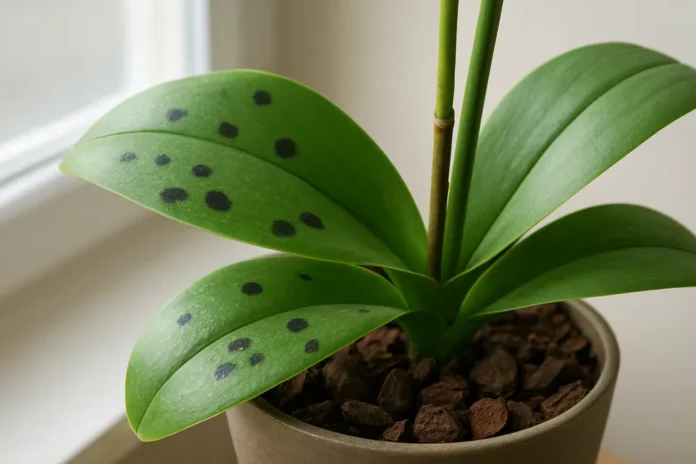
Orchid leaves get black spots most often from fungal or bacterial disease, sun scorch, cold injury, or water sitting on the leaves. The exact cause usually shows up in the size, texture, and spread of the spots.
Seeing orchid leaves with black spots can be unsettling, especially if the plant looked fine a few days earlier. In my experience, this symptom can mean anything from a minor cosmetic issue to a fast-moving disease problem, so the key is not to panic and not to guess too quickly.
Orchids are a little unforgiving when moisture, light, or air circulation slip out of balance. A few dark marks may come from sunburn or cold exposure, while wet, spreading spots often point to fungal or bacterial trouble. The good news is that the leaf pattern usually gives you useful clues, and once you know the cause, you can make much better decisions about trimming, watering, and placement.
If your orchid leaves have black spots, start by looking at where the spots sit, whether they feel dry or mushy, and whether the problem is spreading. That simple observation tells me more than almost anything else when I am trying to save an orchid early.
What Black Spots on Orchid Leaves Usually Mean
Black spots are not a single diagnosis. They are a symptom, and orchids develop them for several different reasons. The most common causes are fungal leaf spot, bacterial infections, sun scorch, cold damage, lingering water on leaves, and stress from pests or poor airflow. Sometimes the damage is old and harmless. Other times it is active and spreading.
The first thing I want to know is whether the spot is dry or wet. Dry, flat, sharply defined spots often point to old sunburn, physical injury, or healed fungal damage. Soft, dark, water-soaked spots are more concerning because they can signal bacterial rot or active infection, especially in warm, humid rooms.
- Small, round, dark spots with yellow halos often suggest fungal disease.
- Soft black patches that expand quickly may indicate bacterial infection.
- Bleached, scorched, or blackened areas on the sun-facing side can be sunburn.
- Dark damage after a chilly draft or winter transport often points to cold injury.
- Scattered black specks with silvery scarring can show up with pest feeding.
When I diagnose orchids, I compare the newest leaf, the oldest leaf, and the side facing the window. If only the exposed side is damaged, I think light or temperature before disease. If spots are random and keep enlarging, I take disease much more seriously.
Fungal Leaf Spot Is One of the Most Common Causes
Fungal leaf spot is common on orchids that stay damp too long, sit in stagnant air, or are watered late in the day so leaves remain wet overnight. Several fungi can cause it, but the visible result is often similar: black or very dark brown spots that may start small and gradually enlarge.
How Fungal Spots Usually Look
- Round or irregular dark spots
- Yellow edging around the spot in some cases
- Dryer texture than bacterial lesions
- Slow to moderate spread rather than explosive spread
- More common when humidity is high and airflow is poor
On Phalaenopsis orchids, fungal spots often begin where moisture lingers, especially near the center of the plant, in leaf creases, or on leaves that were misted frequently. The leaf tissue may look sunken as the spot ages. If only one or two small areas are affected and the plant is otherwise vigorous, the issue may be manageable if conditions improve quickly.
Fungal disease often takes advantage of an orchid that is already stressed. Overwatering the potting mix, crowding plants together, and low light can all make it easier for pathogens to take hold. That is why treatment is not only about removing bad tissue. It is also about changing the environment that allowed the problem to start.
Bacterial Infections Cause Darker, Wetter, Faster Damage
If black spots look water-soaked, soft, or greasy, bacterial infection moves to the top of the suspect list. Bacterial leaf spot and soft rot can spread quickly on orchids, especially in warmth and humidity. These infections are more urgent because they can move from one part of the plant to another in a short time.
Signs That Suggest Bacterial Trouble
- Spots feel mushy or wet rather than dry
- Tissue darkens rapidly over a day or two
- The lesion may smell unpleasant
- Water-soaked halos or translucent margins appear around the spot
- Damage may begin in the crown or where water pools
A bacterial problem often starts after water sits in the crown, after a leaf is nicked or bruised, or after the orchid is kept in a poorly ventilated area. If you have ever watered an orchid in the evening and left it in a cool room, you have created ideal conditions for this kind of damage.
Because bacteria spread through moisture and contact, isolate the orchid from others right away if you suspect this cause. Avoid splashing water, avoid misting, and sanitize any cutting tools before and after use. That one step can keep a small issue from becoming a shelf-wide problem.
If a black spot is soft and actively expanding, I do not wait several days to see what happens. Fast, wet lesions on orchids rarely improve on their own, and hesitation often costs more leaf tissue than the original spot ever did.
Sunburn Can Leave Blackened Patches After the Tissue Dies
Orchids like bright light, but many common houseplant orchids do not want harsh direct midday sun. When they get too much intense light, the leaf tissue can bleach first, then turn tan, brown, or black as the damaged area dies. This is especially common after moving an orchid from a dim room to a south- or west-facing window without a gradual transition.
How Sunburn Differs From Disease
- Damage is often on the side facing the window
- Spots may begin pale, yellow, or whitish before darkening
- The area is usually dry, papery, or firm rather than mushy
- New spots do not keep appearing once the light problem is corrected
- Nearby leaves may show similar exposure patterns
Sun damage does not spread like an infection, though the injured tissue does not heal back to green. Once a leaf is scorched, the marked area usually remains. The goal is preventing more damage by moving the orchid to bright, indirect light or filtering the window with a sheer curtain.
I see this often after people hear that orchids need more light to bloom and then overcorrect. More light helps only when it stays within the plant's comfort range. A healthy green leaf with a slight warm tint is far better than a heavily sunburned leaf that cannot photosynthesize well.
Cold Injury and Temperature Shock Can Mimic Disease
Cold exposure can create dark, collapsed-looking spots that are easy to mistake for infection. Orchids that sit near a freezing window, get hit by an air conditioner vent, or spend too long in a cold car may develop blackened tissue a day or two later. The damage often shows up suddenly after the temperature event has already passed.
Unlike fungal spotting, cold damage usually follows an obvious exposure pattern. The outermost leaves, the side closest to the glass, or the uppermost tissue may be hit first. The blackened area can look watery at the beginning, but it usually does not spread indefinitely unless secondary rot sets in.
- Damage appears after a cold draft, chilly shipment, or winter move
- Affected tissue may turn dark and sunken all at once
- The plant may also drop buds or flowers from stress
- Spots are often tied to one side or one recent event
Water on the Leaves and Poor Airflow Often Set the Stage
Even when water is not the direct cause, it is often part of the story. Orchids do best when their roots dry somewhat between waterings and their leaves stay relatively clean and dry. Water trapped in the crown or leaf axils creates a perfect entry point for fungal and bacterial issues, particularly on Phalaenopsis orchids.
Poor airflow magnifies the problem. A humid bathroom, tightly packed plant shelf, or decorative cachepot that keeps the plant damp can all turn a healthy orchid into a disease magnet. Good air movement does not mean a cold blast from a vent. It means gentle circulation that helps surfaces dry in a reasonable time.
Common Care Habits That Contribute to Black Spotting
- Misting leaves often without strong airflow
- Watering late in the day
- Letting water sit in the crown
- Keeping the orchid in a crowded, still corner
- Using old, compacted potting media that stays wet too long
I rarely recommend misting orchids indoors unless the grower has excellent airflow and a very specific reason for doing it. For most home setups, misting adds leaf-wetting risk without solving the deeper humidity problem.
Pests and Mechanical Damage Can Also Lead to Dark Spotting
Not every black mark starts as a disease. Pest feeding from thrips, scale, or spider mites can leave stippling, scarring, or tiny dark areas that later turn brown-black. Physical injury from bending, rubbing against a stake, or handling a leaf roughly can also create damaged spots that darken as the tissue dies.
Pest-related spots usually come with other clues such as sticky residue, silvery patches, distorted growth, webbing, or visible insects on the undersides of leaves. Mechanical damage tends to stay confined to a specific wound line or bruise rather than multiplying across the leaf.
- Check leaf undersides and the crown with a flashlight
- Look for sticky honeydew, webbing, or tiny moving insects
- Notice whether the spot follows a crease, tear, or bruise
- Watch for distorted new growth, which often points to pests rather than sunburn
How to Tell Whether the Problem Is Serious
A black spot becomes more serious when it is spreading, soft, numerous, or close to the crown. A single old dry spot on a lower leaf is often not an emergency. Multiple fresh spots on new growth are much more concerning. The plant's overall condition matters too. If the orchid is also wilting, dropping leaves, or showing root problems, the leaf symptom may be only part of a larger issue.
Red Flags That Call for Quick Action
- The spot enlarges noticeably within 24 to 48 hours
- Tissue feels soft, wet, or foul-smelling
- Blackening starts near the crown or stem
- Several leaves develop spots at once
- The orchid recently sat in cold, stagnant, or very wet conditions
When I am unsure whether I am seeing old damage or active disease, I take a photo, then compare it the next day. That simple habit removes guesswork. If the margin has expanded, darkened, or become wetter, I treat it as active trouble and respond much more aggressively.
What to Do Right Now if Your Orchid Has Black Spots
Start by isolating the plant from other orchids or houseplants. Then stop misting, keep water off the leaves, and improve airflow around the plant. If the spots are dry and stable, your next move may simply be correcting light or temperature. If they are wet and enlarging, you may need to remove affected tissue with a sterile blade and discard it immediately.
Do not cut into healthy tissue casually, but do not leave obvious rot to travel deeper into the plant either. Sterilize tools between cuts. If the crown is involved, be especially careful because crown rot can kill the whole orchid. After trimming, keep the plant drier on top and avoid fertilizing heavily until you see stable new growth.
Immediate Response Checklist
- Move the orchid away from other plants.
- Check whether the spots are dry, firm, soft, or wet.
- Keep all water out of the crown and leaf joints.
- Improve gentle air circulation and reduce stale humidity.
- Trim rotting tissue only with sterilized tools if the damage is active.
- Monitor daily for spread, especially on newer leaves.
If the potting mix is old, sour-smelling, or compacted, consider repotting once the plant is stable enough. Root stress does not directly create black leaf spots every time, but a weakened root system lowers the plant's ability to resist problems and recover from them.
How to Prevent Black Spots From Coming Back
Prevention comes down to clean watering habits, steady temperatures, and enough airflow. Water the potting mix thoroughly, but let excess drain fully. Try to water early in the day so any splashes dry quickly. Keep orchids away from direct hot sun unless the variety truly wants it, and protect them from cold glass, outdoor chill, and drafty vents.
Repot orchids when the mix begins to break down instead of waiting until the plant declines. Old bark holds moisture too long and reduces root oxygen, which creates stress and raises disease pressure. Also keep your growing area tidy. Dead leaves, stagnant saucers, and crowded spacing all make leaf diseases easier to sustain.
- Water in the morning rather than late evening
- Never leave standing water in the crown
- Provide bright, indirect light for most common orchids
- Use a loose orchid mix and repot before it decomposes badly
- Space plants so leaves are not pressed together
- Inspect leaves regularly so small issues are caught early
FAQ
Should I Cut Off Orchid Leaves with Black Spots?
Only remove leaf tissue if the spot is active, soft, spreading, or clearly rotting. Small dry spots that are stable can often be left alone while you correct the underlying care issue.
Can an Orchid Recover From Black Spots on Its Leaves?
Yes, many orchids recover well if the cause is caught early. The damaged part of the leaf will not turn green again, but the plant can still produce healthy new leaves and roots.
Are Black Spots on Orchid Leaves Always a Fungus?
No. Black spots can come from bacteria, sunburn, cold injury, pest damage, or physical bruising as well as fungal infection.
Is It Safe to Mist an Orchid with Black Spots?
It is usually better to avoid misting while black spots are present. Extra moisture on the leaves can worsen fungal or bacterial problems and make diagnosis harder.
Can Too Much Sun Make Orchid Leaves Turn Black?
Yes. Intense direct sun can scorch orchid leaves, and the injured tissue may later turn brown or black after it dries out and dies.
Why Do Black Spots Appear After I Water My Orchid?
Watering can expose an existing problem if moisture sits on the leaves or in the crown. Wet surfaces and poor airflow often trigger faster development of fungal or bacterial spotting.
Will Black Spots Spread to My Other Orchids?
They can if the cause is fungal or bacterial and moisture or tools spread it around. Isolating the affected plant and avoiding shared splashes is a smart precaution.
Need help deciding whether your orchid has rot, sunburn, or a watering problem? Read our orchid care and treatment guides to choose the right fix before the damage spreads.
