

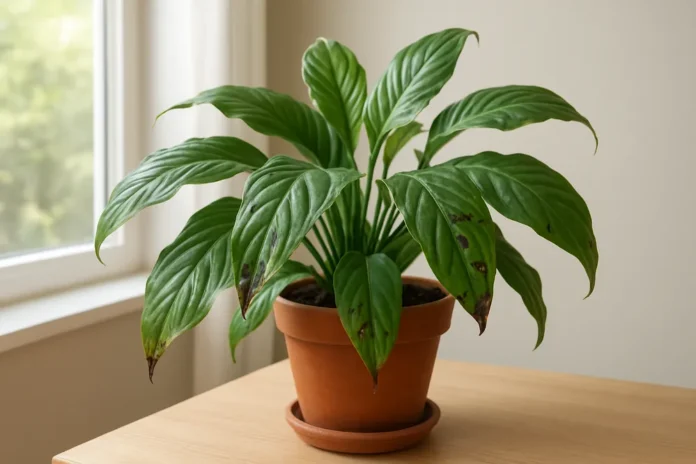
Peace lily leaves usually develop black spots from overwatering, fungal or bacterial leaf problems, cold damage, sun scorch, or stress from poor growing conditions. The spots are a sign that leaf tissue has died or is being damaged.
Seeing peace lily leaves with black spots can be alarming, especially on a plant that normally has smooth, deep green foliage. In most cases, those dark marks mean part of the leaf has been damaged by excess moisture, disease, environmental stress, or a care issue that has gone on a little too long.
Peace lilies are popular houseplants because they tolerate lower light and clearly show when they need attention, but that also means their leaves often reveal problems early. Black spotting can start as tiny specks, grow into irregular patches, or appear at the tips and edges before spreading across the blade.
The good news is that black spots are often manageable once you match the pattern of damage to the cause. A few details, like where the spots appear, whether the plant is wilting, and how wet the soil stays, can usually narrow down what is going wrong.
What Black Spots Usually Mean On A Peace Lily
Black spots are areas of leaf tissue that have died. Sometimes the damage is dry and crisp, which often points to sun or cold injury. Other times it looks soft, water-soaked, or ringed with yellow, which more often suggests overwatering, root trouble, or leaf disease.
On peace lilies, the most common causes are too much water, poor drainage, prolonged wet foliage, bacterial or fungal leaf spot, direct sun, temperature stress, and occasionally pest damage that weakens the leaf. Mineral buildup from tap water or fertilizer can also contribute, especially when black spotting starts at the tips and margins.
- Tiny dark specks or circular spots often suggest fungal or bacterial leaf spot.
- Large black patches with yellowing and drooping often point to root stress from overwatering.
- Blackened tips or edges may be linked to salts, fluoride sensitivity, low humidity, or inconsistent watering.
- Bleached tan areas that later turn dark often happen after sun scorch.
- Sudden blackened leaves after a cold draft usually indicate chilling injury.
Overwatering And Root Stress Are The Most Common Causes
How Excess Moisture Leads to Black Spotting
Peace lilies like evenly moist soil, but they do not want to sit in soggy potting mix. When the roots stay wet for too long, oxygen levels drop and roots begin to weaken or rot. Once the roots are damaged, the leaves cannot move water properly, and dark spotting may appear along with yellowing, drooping, or limp stems.
This is especially common in decorative cachepots without drainage, oversized containers, or dense potting mixes that stay wet for a week or more. Watering on a fixed schedule instead of by soil moisture also causes trouble, particularly in winter when indoor plants dry out more slowly.
Signs the Roots Are Staying Too Wet
- Soil feels damp several inches down for many days after watering
- Leaves are yellowing and spotting at the same time
- The plant droops even though the soil is wet
- Lower leaves collapse first
- There is a sour or musty smell from the pot
- Roots look brown, mushy, or stringy instead of firm and pale
If black spots are appearing on several leaves at once and the whole plant looks tired, the problem is often below the soil line. Root stress tends to create a more general decline than simple leaf burn or one isolated injury.
Fungal And Bacterial Leaf Spot Can Create Dark Lesions
What Disease Spotting Looks Like
Leaf spot diseases usually begin as small dark dots or irregular lesions that expand over time. Some have a yellow halo around them. Others look wet or greasy at first, then turn dark brown to black as the tissue dies. If humidity is high and air circulation is poor, these spots can spread quickly from one leaf to another.
Peace lilies are especially vulnerable when water regularly sits on the leaves, when the plant is crowded among other houseplants, or when older damaged foliage is left in place. Bacteria and fungal spores take advantage of weakened or wet tissue.
Conditions That Encourage Leaf Spot Disease
- Misting or splashing water on leaves late in the day
- Poor airflow around dense foliage
- Persistently wet soil that stresses roots
- Cool indoor conditions combined with high humidity
- Using dirty scissors when pruning damaged leaves
Disease spotting often starts on a few leaves rather than across the whole plant. If the spots keep enlarging, merge together, or appear soft and damp, a leaf spot pathogen is more likely than simple cosmetic damage.
Cold Damage Can Turn Leaf Tissue Black
Peace lilies are tropical plants, so they react badly to cold windows, winter drafts, air conditioning vents, and chilly water. Cold-damaged tissue may first look limp, gray-green, or water-soaked, then turn dark brown or black within a day or two.
This kind of injury often appears suddenly after a temperature drop or after bringing the plant home in cold weather. Leaves touching a cold pane of glass can develop isolated black patches in the exact contact area.
- Blackened patches appear quickly after a cold event
- Damage is often on the side facing a window or vent
- Newer tender leaves may be hit hardest
- Spots do not usually spread from leaf to leaf like disease
Direct Sun Can Scorch Leaves And Lead To Dark Spots
Peace lilies prefer bright, indirect light. Strong direct sun, especially afternoon sun through glass, can burn the leaves. Sunburn often starts as bleached, pale, or tan patches, then those damaged areas dry out and become dark brown or nearly black.
If your plant was recently moved from a low-light corner to a brighter window, sun scorch is a real possibility. One clue is that the spots appear mostly on the side facing the light source while shaded leaves remain healthy.
Unlike disease, sun scorch usually follows a clear exposure pattern. The affected tissue will not turn green again, but new leaves should emerge normally once the light is corrected.
Water Quality, Fertilizer Salts, And Fluoride Sensitivity
Peace lilies can be sensitive to dissolved minerals in tap water, especially fluoride and salts from repeated fertilizing. This problem more often causes brown or blackened tips and margins than round spots in the middle of the leaf, but severe buildup can create scattered necrotic patches too.
When salts accumulate in potting mix, roots struggle to absorb water correctly. The result can mimic drought stress even when the soil is moist. Leaf tips darken, edges crisp up, and older leaves may show irregular black areas.
Common Clues of Salt or Mineral Buildup
- Black or brown damage begins at the tips first
- A white crust appears on the soil surface or pot rim
- The plant is fertilized often or at full strength year-round
- Tap water is very hard or highly treated
- The plant otherwise looks healthy but older leaves have dark margins
Pests And Mechanical Damage Sometimes Cause Dark Marks
Spider mites, thrips, and other sap-feeding pests do not always create true black spots, but their feeding can leave stippling, silvery scarring, or weak areas that later darken. Thrips, in particular, can cause damaged streaks and tiny black specks that are actually insect waste.
Physical damage can also turn dark. A leaf that was bent, bruised, rubbed against a wall, or pinched during unfurling may develop a blackened scar. These marks stay localized and do not spread unless infection follows the injury.
- Inspect the undersides of leaves for fine webbing, insects, or black specks
- Check whether the damage follows a crease, tear, or bruise line
- Look at new growth, since pests often target tender leaves first
How To Tell Which Cause Is Most Likely
The pattern of spotting is more useful than the color alone. Black is simply the end result of dead tissue, but the way it appears can help separate one cause from another.
- Soft black spots with yellow halos suggest bacterial or fungal leaf spot.
- Large dark patches with wilting and wet soil suggest overwatering or root rot.
- Crisp blackened tips and edges suggest salt buildup, low humidity, or inconsistent watering.
- Dark areas after pale sunburned patches suggest direct sun damage.
- Sudden blackening after cold exposure suggests temperature injury.
- Random isolated dark scars suggest physical damage.
If several symptoms overlap, start with root health and watering habits. For peace lilies, moisture-related stress is the most frequent hidden issue and it can make the plant more vulnerable to disease and other damage.
What To Do Right Now
Remove the Worst Damaged Foliage
Cut off heavily spotted leaves with clean scissors, especially if the spots are soft, spreading, or affecting large portions of the leaf. Trimming improves appearance and can reduce disease pressure. If only the tip is damaged, you can trim just the dead section while following the natural leaf shape.
Adjust Watering Before the Roots Decline Further
Water when the top inch or two of the potting mix feels slightly dry, not on a rigid calendar. Empty saucers and cachepots so the roots never sit in standing water. If the mix stays wet too long, consider repotting into a loose indoor plant mix with good drainage.
Improve the Growing Environment
- Move the plant into bright, indirect light
- Keep it away from cold drafts, heater blasts, and hot afternoon sun
- Avoid wetting the foliage when watering
- Give the plant a little space from neighboring plants for better airflow
Flush Salts if Buildup Is Suspected
Run room-temperature water through the pot thoroughly to help wash out excess fertilizer salts, provided the pot has drainage. Going forward, fertilize lightly during active growth and use filtered, distilled, or rainwater if your tap water is harsh.
When Repotting Is The Best Fix
Repotting helps when the soil has broken down, stays wet too long, smells sour, or the roots show signs of rot. Use a container with drainage holes and only move up one pot size if the plant is rootbound. A pot that is too large stays wet longer and can restart the same problem.
Trim away mushy black or brown roots with sterile scissors and keep only firm healthy roots. Replant in fresh mix, water once to settle the soil, and then let the top layer begin to dry before watering again. Expect some recovery time. Existing spots will not heal, but healthy new growth is the sign that the plant is stabilizing.
How To Prevent Black Spots In The Future
Most black spotting on peace lilies is preventable with steady indoor care. The goal is to keep roots healthy, leaves dry, and the environment gentle rather than extreme.
- Use a pot with drainage and a light, airy potting mix
- Water based on soil moisture instead of a strict weekly schedule
- Place the plant in bright, filtered light rather than direct sun
- Keep temperatures consistently warm and avoid cold window contact
- Do not leave water standing in saucers or decorative pots
- Fertilize lightly and flush the pot occasionally to reduce salt buildup
- Remove aging or diseased leaves promptly
- Inspect leaves regularly for pests and early spotting
Peace lilies usually bounce back well when conditions improve. If new leaves are coming in clean and green, your changes are working even if older leaves still show scars.
When Black Spots Mean The Problem Is Serious
A few scattered marks on older leaves are often cosmetic, but widespread blackening paired with collapse usually means the plant is under significant stress. That is more urgent when the soil is constantly wet, the crown feels soft, or many leaves are yellowing and darkening at the same time.
Rapidly spreading soft spots can also indicate a bacterial issue that may continue moving through the plant in humid conditions. In those cases, removing affected foliage, improving airflow, and correcting watering problems quickly gives the best chance of recovery.
FAQ
Should I Cut Off Peace Lily Leaves with Black Spots?
Yes, remove heavily damaged leaves, especially if the spots are soft, spreading, or making the plant look crowded. Clean cuts help the plant direct energy into healthy growth.
Can Black Spots on Peace Lily Leaves Turn Green Again?
No. Black spotted tissue is dead and will not recover. Focus on stopping new spots from forming and watching for healthy new leaves.
Do Black Spots Mean My Peace Lily Has Root Rot?
Not always, but root rot is one of the most common causes when black spots appear along with yellowing, drooping, and constantly wet soil. Check the potting mix and root condition if the whole plant seems stressed.
Can Tap Water Cause Black Spots on a Peace Lily?
It can contribute, especially if your water is high in salts or fluoride. This usually shows up first as black or brown tips and edges rather than round disease-like spots.
Is Misting Good for a Peace Lily with Black Spots?
Usually no. Misting can leave foliage wet and encourage leaf spot problems. It is better to improve humidity in other ways and keep the leaves dry.
Can Too Much Sun Cause Black Spots on Peace Lily Leaves?
Yes. Direct sun can scorch the leaves, and the damaged areas may turn tan first and then dark brown or black as the tissue dies.
How Often Should I Water a Peace Lily to Avoid Black Spots?
Water when the top inch or two of soil feels slightly dry rather than on a fixed schedule. How often that happens depends on light, temperature, pot size, and season.
Are Black Spots on Peace Lily Leaves Contagious to Other Plants?
If the cause is fungal or bacterial leaf spot, the issue can spread under wet, crowded conditions. Isolating the plant and avoiding leaf wetness helps reduce that risk.
Need the right fix fast? Read our peace lily care and rescue guide to choose the best watering tools, potting mixes, and treatments for healthier new growth.
