

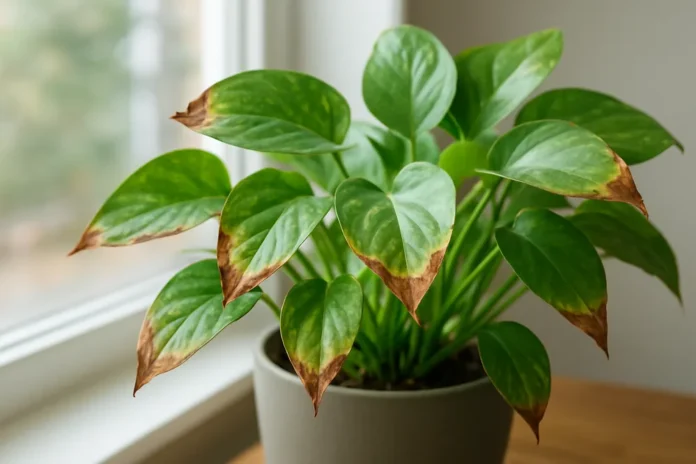
Pothos leaves usually turn brown because the plant is too dry, too wet, getting harsh direct sun, or stressed by salts, cold drafts, or pests. Browning happens when leaf tissue is damaged and can no longer stay healthy and green.
When pothos leaves start turning brown, it is usually a sign that the plant is under stress rather than a sign that it is beyond saving. Browning can show up as crispy tips, dry edges, dark spots, or whole leaves that fade and die, and each pattern points to a different cause.
Pothos is one of the easiest houseplants to grow, but it still reacts quickly to inconsistent watering, dry indoor air, harsh light, and poor root conditions. The good news is that most brown-leaf problems can be corrected once you match the symptom pattern to the right issue.
If only an occasional older leaf is browning, that may be normal aging. But if several leaves are affected at once, or the damage is spreading, your plant is telling you that something in its environment or care routine needs to change.
What Brown Leaves Are Telling You
Brown areas form when leaf cells die. That damage can happen from drought, rot, sunburn, fertilizer salts, cold injury, or pest feeding. The exact shape and location of the browning gives useful clues.
- Brown tips often point to dry soil, dry air, or salt buildup from tap water or fertilizer.
- Brown edges can come from underwatering, inconsistent watering, or environmental stress.
- Soft dark brown patches may suggest overwatering or root problems.
- Bleached tan or brown scorched spots often happen after too much direct sun.
- Single lower leaves turning yellow, then brown are often just older leaves finishing their life cycle.
Before changing everything at once, look at the whole plant. Check the soil, light exposure, pot drainage, and whether the damaged leaves are old or new. A pothos with brown leaves but firm stems may recover quickly, while a pothos with brown leaves and mushy stems needs more urgent attention.
Watering Problems Are the Most Common Cause
Underwatering and Drought Stress
Pothos prefer soil that dries slightly between waterings, but they do not like staying bone dry for long periods. When the potting mix gets too dry, the leaf tips and margins often turn brown and crispy. Leaves may curl, droop, or feel thin before they fully dry out.
This happens a lot when a pothos is rootbound, kept near heat vents, or watered on a fixed schedule instead of by soil moisture. Small nursery pots also dry much faster than large containers.
Overwatering and Root Stress
Too much water can also lead to brown leaves, especially when the roots stay wet for too long. In soggy soil, roots cannot get enough oxygen and may begin to rot. Damaged roots stop supporting the leaves properly, so the foliage may develop dark brown patches, yellowing, limp stems, and eventual collapse.
Overwatering is not just watering too often. It can also mean using a pot without drainage, planting in a dense soil mix, or leaving water in a saucer so the root ball never drains fully.
- If the soil feels dry several inches down and leaves are crispy, the plant is likely too dry.
- If the soil feels wet for days and the plant looks limp or yellow, excess moisture is more likely.
- Healthy pothos roots are firm and pale. Rotten roots are brown, mushy, and may smell sour.
Light Stress Can Scorch Pothos Foliage
Pothos grow best in bright, indirect light. They can tolerate lower light than many houseplants, but they are not built for intense afternoon sun. When direct sun hits the leaves through a hot window, leaf tissue can bleach first and then turn tan or brown.
Sun scorch usually appears on the side facing the light source. The damaged areas may look papery, faded, or sharply outlined. Variegated types can be especially vulnerable because the lighter portions of the leaf have less chlorophyll protection.
On the other hand, very low light does not usually cause brown spots by itself, but it can weaken the plant and slow how quickly the soil dries. That can set the stage for overwatering and root trouble.
Low Humidity and Indoor Air Can Dry Leaf Tips
Although pothos are adaptable, they still appreciate moderate humidity. In many U.S. homes, especially during winter, indoor air becomes very dry. That dry air pulls moisture from the leaf tips and edges faster than the roots can replace it.
Humidity-related browning usually looks like crisp tips or narrow brown margins rather than large soft patches. It is often worse in rooms with forced-air heat, fireplaces, space heaters, or strong air conditioning.
- Browning is often concentrated at the tip first.
- The rest of the leaf may remain green for a while.
- Damage tends to worsen in winter or in very dry rooms.
- Plants grouped together often fare better than isolated plants near vents.
Fertilizer Salts and Tap Water Minerals Can Burn Leaves
If your pothos is watered regularly and gets decent light, brown tips may come from salt buildup rather than simple dryness. Houseplant fertilizers leave salts in the potting mix over time. Some municipal tap water also contains minerals, chlorine, or fluoride that sensitive plants react to.
This type of damage often shows up as dry brown tips and edges on otherwise healthy-looking leaves. You might also see a white crust on the soil surface or around the drainage holes.
Salt burn is more likely if you fertilize frequently, never flush the soil deeply, or keep the plant in the same pot for a long time. It is also common in smaller pots because salts concentrate faster there.
Temperature Stress and Drafts Can Injure Leaves
Pothos are tropical plants and dislike temperature extremes. Chilly windows, winter drafts, sudden moves outdoors, or blasts from heating and cooling vents can all cause browning. Leaf tissue exposed to cold may turn dark, water-soaked, and then brown as it dies.
Hot dry airflow can cause similar stress, especially when paired with dry soil. A plant that sits next to a radiator, sunny glass, or a vent may dry out far faster than expected and develop scorched-looking tips and edges.
- Keep pothos away from exterior doors that open often in winter.
- Do not let leaves press against cold window glass.
- Avoid placing the plant directly under heating or AC vents.
- Aim for stable room temperatures instead of frequent swings.
Pests and Disease Are Less Common but Still Possible
Sap-sucking Pests
Spider mites, thrips, scale, and mealybugs can damage pothos leaves and lead to browning. Spider mites are especially common in dry homes and often cause fine stippling before leaves turn dull, dry, and brown. Thrips can create silvery scarring that later darkens.
Look closely at the undersides of leaves and along the stems. Tiny moving dots, sticky residue, cottony clusters, or shell-like bumps are all warning signs.
Leaf Spot and Rot-related Disease
Fungal or bacterial leaf spots are less common indoors but can happen when leaves stay wet, airflow is poor, or the plant is already weakened. These spots may begin as dark specks with yellow halos and expand into larger brown lesions.
If the browning is spreading in irregular spots and the foliage stays damp from misting or overhead watering, disease may be involved. Remove affected leaves promptly and improve airflow.
How to Diagnose the Exact Cause
A fast diagnosis comes from combining symptom pattern with growing conditions. Instead of assuming all browning means the same thing, match what you see with what the plant has experienced in the last couple of weeks.
- Feel the soil 2 to 3 inches deep. Dry points to underwatering. Constantly wet points to root stress.
- Check the pot for drainage holes and make sure excess water can escape.
- Look at where the plant sits each day. Strong direct sun, vent exposure, or cold glass often explains sudden damage.
- Inspect the leaves closely for pests, webbing, spots, or sticky residue.
- Think about your recent care. Heavy feeding, missed watering, or a recent move can explain sudden browning.
It is normal to find more than one factor involved. For example, a pothos in a sunny window may dry out too quickly, while a pothos in low light may stay wet too long. The visible browning is often the result of overlapping stress.
How to Fix Brown Pothos Leaves
Correct Watering First
Water when the top inch or two of soil is dry, not just because the calendar says so. Then water thoroughly until excess drains out. Empty the saucer so the roots are not left sitting in water.
Improve the Root Environment
If the soil stays wet too long, repot into a loose, well-draining indoor potting mix and use a pot with drainage. If the plant is severely rootbound and drying too fast, move it up one pot size so moisture stays more even.
Adjust Light and Humidity
Move sunburned pothos out of intense direct sun and into bright, filtered light. If air is very dry, increase humidity with a humidifier or by grouping plants together. Keep the plant away from heating and cooling vents.
Reduce Salt Stress
Flush the soil occasionally by watering deeply until extra water runs through the pot for a minute or two. Cut back on fertilizer if you have been feeding heavily, and consider filtered or distilled water if your tap water is very hard.
Treat Pests Promptly
Isolate infested plants and wipe leaves clean. Insecticidal soap or neem-based treatments can help with many common houseplant pests when applied thoroughly and repeatedly according to label directions.
Brown tissue will not turn green again, so focus on stopping new damage. Once conditions improve, fresh growth should emerge healthy.
Should You Cut Off the Brown Parts
Yes, if the damaged areas bother you or the leaf is mostly dead. Trim brown tips with clean scissors, following the natural shape of the leaf so the cut looks less obvious. Remove whole leaves if they are more than half damaged, yellowing heavily, or diseased.
Do not remove too much healthy foliage at once, especially on a stressed plant. The remaining green leaves still help the pothos recover by supporting photosynthesis.
How to Prevent Brown Leaves in the Future
Prevention comes down to steady care. Pothos handle imperfect conditions better than many houseplants, but they still prefer consistency over extremes.
- Give bright, indirect light instead of intense afternoon sun.
- Water based on soil dryness, not on a rigid schedule.
- Use a container with drainage and a loose potting mix.
- Keep the plant away from cold drafts and hot vents.
- Fertilize lightly during active growth instead of overfeeding.
- Flush the potting mix occasionally to reduce salt buildup.
- Inspect leaves regularly so pests are caught early.
A pothos that gets even moisture, moderate humidity, and stable indoor temperatures is far less likely to develop crispy tips, brown patches, or whole leaf collapse.
FAQ
Can Brown Pothos Leaves Turn Green Again?
No. Brown tissue is dead and will not recover. The goal is to correct the cause so new leaves grow in healthy and green.
Why Are Only the Tips of My Pothos Leaves Turning Brown?
Brown tips usually point to dry soil, low humidity, or salt buildup from fertilizer or hard tap water. It is often an environmental issue rather than a serious disease.
Should I Mist My Pothos to Stop Brown Leaves?
Misting gives only brief humidity and usually does not solve persistent browning. A humidifier, better watering habits, and moving the plant away from dry airflow work better.
How Often Should I Water Pothos to Prevent Browning?
There is no single schedule that fits every home. Water when the top inch or two of soil feels dry, then let excess water drain away completely.
Do Pothos Leaves Turn Brown From Too Much Sun?
Yes. Direct sun can scorch pothos leaves, especially in hot afternoon light. Sun damage often appears as pale, tan, or brown patches on the side facing the window.
Can Tap Water Make Pothos Leaves Brown?
It can. Minerals and chemical residues in some tap water may contribute to brown tips over time, especially if salts are already building up in the potting mix.
Is It Normal for an Older Pothos Leaf to Turn Brown?
Yes, an occasional older lower leaf may yellow and brown as part of normal aging. It becomes a concern when several leaves are affected or the damage spreads quickly.
Need the right fix for stressed houseplants? See our guide to the best potting mixes, watering tools, and indoor plant treatments to help your pothos recover faster.
