

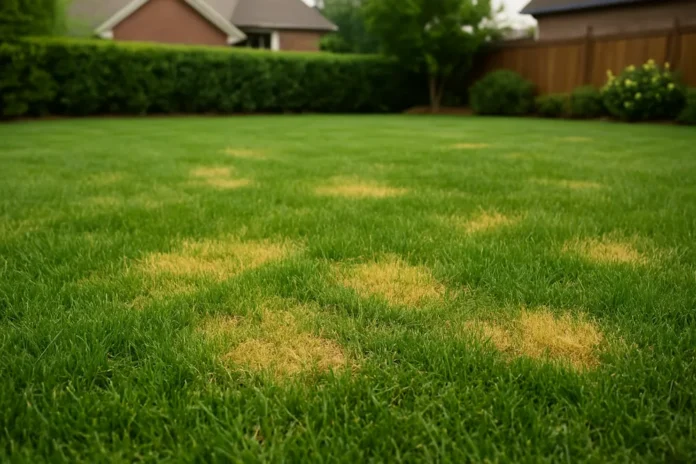
Yellow spots in a lawn are usually caused by watering stress, pet urine, nutrient imbalance, lawn disease, insect damage, or fertilizer burn. The exact cause often depends on the size, shape, and spread of the yellow patches.
Seeing yellow spots in your lawn can be frustrating, especially when the rest of the grass looks healthy. In many cases, the discoloration is your grass's way of signaling stress from too much or too little water, uneven feeding, pet damage, disease, insects, or chemical exposure.
The good news is that yellow spotting is often easier to fix than widespread browning or dieback. If you pay attention to the shape of the patches, how quickly they appeared, and what has recently changed in your yard care routine, you can usually narrow the problem down and choose the right treatment before the damage spreads.
This guide breaks down the most common causes of yellow lawn spots, what each one tends to look like, and how to fix the issue so your grass can green up again.
What Yellow Spots Usually Mean
Yellow grass is not a single problem. It is a symptom. Grass turns yellow when chlorophyll production drops, roots are stressed, or blades are damaged faster than they can recover. That can happen from drought, soggy soil, poor nutrition, fungal infections, insect feeding, or burns from salts and chemicals.
The pattern matters. A few small round spots often suggest pet urine, disease, or localized fertilizer burn. Irregular patches can point to watering issues, soil compaction, or grub activity. Yellowing that follows sprinkler lines or shows up in low spots may signal drainage or irrigation problems.
- Small bright yellow circles with a greener edge often suggest pet urine.
- Stripes or repeated patches can indicate uneven watering or spreader error.
- Yellow spots that enlarge over time may be linked to fungal disease or root damage.
- Spots that feel loose underfoot or lift easily can point to grubs or root-feeding insects.
Watering Problems Are a Leading Cause
Underwatering
Grass that does not get enough water often starts to lose its rich green color before it turns tan or brown. In the early stage, blades may look pale green or yellow, especially on sunny slopes, near pavement, and in areas with shallow roots. If only certain spots are yellowing, the issue may be blocked sprinkler coverage, compacted soil, or dry pockets in the lawn.
Overwatering
Too much water can also create yellow spots. Constantly wet soil limits oxygen around the roots, weakens turf, and invites disease. Overwatered grass may look yellow and limp rather than dry and crisp. You may also notice soft ground, fungus, or a musty smell in heavily soaked areas.
How to Fix Watering-related Yellow Spots
- Water deeply but less often so roots grow down instead of staying shallow.
- Check sprinkler coverage with a few empty cans to see whether some spots get much less water than others.
- Reduce watering frequency if the soil stays wet for long periods.
- Improve drainage in low spots where water pools after irrigation or rain.
- Aerate compacted areas so water can move into the soil more evenly.
Pet Urine Can Leave Yellow Lawn Spots
Dog urine is one of the most common causes of yellow patches in home lawns. The problem is usually not the acidity of urine. It is the concentrated nitrogen salts. In small amounts, nitrogen can green up grass. In heavy concentrations, it burns the blades and roots, leaving yellow or straw-colored spots.
These spots are often round and may have a darker green ring around the outside. That ring forms because the diluted edge of the urine acts like a light fertilizer dose, while the center gets too much.
How to Reduce Urine Damage
- Water the area soon after your dog urinates to dilute salts before they build up.
- Train pets to use a designated gravel or mulch area if possible.
- Keep the lawn well watered overall so it is less stressed and better able to recover.
- Reseed or patch heavily damaged areas once the salt buildup has been flushed from the soil.
Nutrient Deficiencies and Fertilizer Mistakes
Not Enough Nutrients
Nitrogen deficiency is a classic reason lawns turn pale or yellow. Since nitrogen fuels green leafy growth, low levels often show up as overall fading. In some yards, however, patchy soil conditions create isolated yellow spots. Deficiencies in iron or poor nutrient uptake from high soil pH can also produce yellowing, especially if the grass veins stay slightly greener than the rest of the blade.
Too Much Fertilizer
Fertilizer can help a lawn recover, but too much in one area can burn it. This often happens when a spreader overlaps, stops in one place, leaks, or when granular fertilizer is applied to wet grass and sticks to the blades. Fertilizer burn usually appears quickly as yellow or tan streaks, dots, or sharply defined patches.
How to Handle Feeding Problems
- Use a soil test if yellowing keeps returning and you are unsure whether nutrients are low or locked up.
- Apply fertilizer at the labeled rate and avoid overlapping passes.
- Water in granular fertilizer when the product label calls for it.
- For suspected burn, flush the area with water to help move excess salts through the soil.
- Choose a slow-release lawn fertilizer when possible for gentler feeding.
Lawn Diseases Can Start as Yellow Spots
Several turf diseases begin with yellow spots before the grass turns brown or thins out. Fungal problems are most common when the lawn stays wet for long periods, is overfertilized with nitrogen, or is stressed by heat and humidity.
Common Disease Patterns
- Dollar spot often causes small, pale yellow or tan spots that can merge into larger patches.
- Brown patch may start with yellowing and then expand into circular areas, especially during warm, humid weather.
- Rust can make grass look yellow-orange and dusty, with spores rubbing off onto shoes or mower wheels.
- Leaf spot may begin as yellowing with lesions on individual blades before larger areas weaken.
Disease is more likely when you water late in the day, mow too low, or leave the lawn dense and damp. A yellow patch caused by disease often spreads gradually rather than appearing overnight, unless weather conditions strongly favor fungal growth.
How to Limit Disease Pressure
- Water early in the morning so the blades dry faster.
- Avoid mowing when the grass is wet.
- Raise mowing height slightly during heat stress.
- Reduce excessive nitrogen applications in hot, humid periods.
- Improve airflow and sunlight if nearby shrubs or trees keep the turf damp.
Insects and Root Damage May Be Hiding Below the Surface
When roots are damaged, the blades often turn yellow before the area fully declines. Grubs are one of the most common culprits. They feed on grassroots, making the lawn unable to take up enough water and nutrients. Chinch bugs and other sap-feeding insects can also cause yellowing, especially in hot, dry weather.
Grub-damaged spots may feel spongy or pull up like loose carpet because the roots are gone. Chinch bug injury is often seen in sunny areas near sidewalks, driveways, or dry edges of the lawn. Because the symptoms overlap with drought stress, insect problems are easy to miss at first.
Signs Insect Damage May Be Involved
- Yellow spots worsen even though irrigation seems adequate.
- Turf lifts easily from the soil in damaged areas.
- Birds, raccoons, or skunks are digging in the lawn for food.
- Damage is concentrated in hot, exposed areas where pests are active.
Compaction, Poor Drainage, and Soil Problems
Sometimes the grass itself is not the first problem. The soil is. Hard, compacted ground limits root growth and reduces how well water and nutrients move through the root zone. As a result, certain spots stay weak and yellow while better soil nearby supports greener growth.
Drainage problems can create a similar effect. In low spots, roots may sit in water too long and lose oxygen. In very sandy patches, water may drain too fast and leave the turf thirsty. Soil pH can also affect nutrient availability, especially iron, which may cause yellowing even when fertilizer is present.
- Aerate compacted lawns, especially in high-traffic areas.
- Topdress with compost to improve soil structure over time.
- Correct low spots that stay soggy after rain or irrigation.
- Test soil pH if yellowing persists without a clear cause.
Chemical Burn, Mower Stress, and Other Local Causes
Yellow spots can also come from accidental exposure to herbicides, de-icing salts, gasoline, cleaning products, or other chemicals. These injuries are often sharply outlined and may appear soon after application or spill. If a weed killer was used recently, drift or overlap can easily affect grass in isolated spots.
Mowing stress matters too. Scalping the lawn by cutting it too short removes too much blade surface and can expose crowns to heat. That often shows up as yellow patches on bumps, slopes, and uneven areas where the mower deck cut lower than intended. Dull mower blades can shred grass tips, leaving a yellowed cast across the surface.
Simple Prevention Steps
- Follow herbicide and fertilizer labels closely and avoid overlapping passes.
- Keep mower blades sharp for cleaner cuts.
- Never remove more than one-third of the grass blade at a time.
- Store and use chemicals carefully to avoid spills in the lawn.
How to Tell Which Cause Is Most Likely
If you are trying to identify the source of yellow spots, focus on recent changes and visible patterns rather than guessing based on color alone. Ask yourself when the spots first appeared, whether they are spreading, and whether they line up with irrigation coverage, foot traffic, pet habits, or a recent application of fertilizer or weed control.
- Look at the shape. Circular spots suggest pets or disease, while streaks suggest spreader or sprinkler problems.
- Check the soil moisture a few inches down. Bone-dry and constantly wet soils can both cause yellowing.
- Examine the blades closely for lesions, orange dust, or burned tips.
- Gently tug the grass. Turf that lifts easily may have root damage from grubs.
- Review your recent lawn care. Fertilizer, herbicide, mowing, and irrigation changes often explain sudden symptoms.
How to Help Yellow Spots Recover
Once the underlying problem is corrected, many yellow spots will gradually green up if the crowns and roots are still alive. Recovery speed depends on the grass type, weather, and severity of the damage. Light stress may improve in a week or two, while more severe injury may require reseeding or patch repair.
- Adjust watering so the soil stays evenly moist but not soggy.
- Pause extra fertilizer until you are sure the lawn is not dealing with burn or disease.
- Mow at the recommended height for your grass type to reduce stress.
- Remove thatch buildup if it is preventing water from reaching the soil.
- Reseed thin spots during the best season for your lawn type after the cause has been addressed.
Patience matters. Grass often needs time to replace damaged blades even after conditions improve. If the area does not recover and continues to thin, revisit the cause or consider a soil test and closer pest or disease evaluation.
FAQ
Will Yellow Lawn Spots Turn Green Again?
Yes, if the grass crown and roots are still alive, yellow spots can often green up after the stress is corrected. Severely burned or dead patches may need reseeding or sod repair.
Can Overwatering Really Make Grass Turn Yellow?
Yes. Too much water reduces oxygen in the soil, weakens roots, and encourages disease, all of which can cause yellowing.
How Do I Know if Dog Urine Is Causing the Spots?
Dog urine spots are usually small and round, often with a darker green ring around the edge. They tend to appear in the same areas where a pet commonly urinates.
What Deficiency Causes Yellow Grass?
Nitrogen deficiency is the most common, but iron deficiency or poor iron uptake from high soil pH can also cause yellowing. A soil test is the best way to confirm a nutrient issue.
Should I Fertilize Yellow Spots in My Lawn?
Not automatically. If the yellowing is from fertilizer burn, disease, or overwatering, adding more fertilizer can make the problem worse.
Can Lawn Fungus Start as Yellow Spots?
Yes. Several turf diseases begin with pale yellow or yellow-brown spots before they expand or turn brown.
Why Are Only Certain Parts of My Lawn Yellow?
Localized yellowing usually means the problem is uneven, such as patchy irrigation, pet urine, compacted soil, fertilizer overlap, disease, or pests in one area.
Need a faster fix for patchy turf? Read our lawn repair guide and compare the best fertilizers, seed blends, and spot treatments to restore green grass sooner.
