

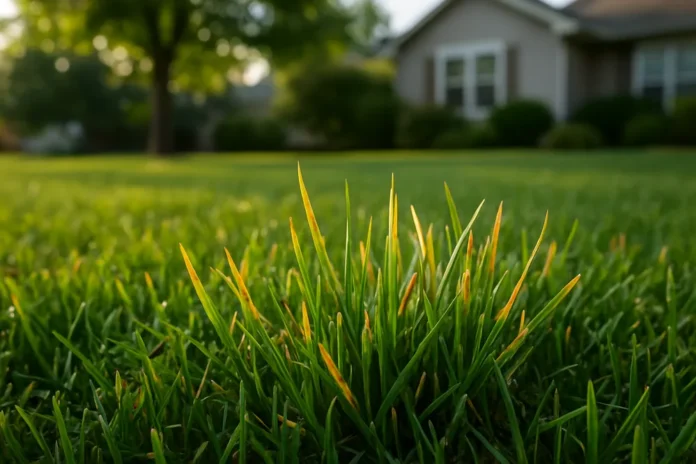
The tips of grass usually turn yellow because the blades are stressed or damaged at the top. Common causes include dull mowing blades, watering problems, fertilizer or salt burn, nutrient imbalance, and certain lawn diseases.
When the tips of your grass start looking pale or straw-colored, it usually means the lawn is under stress rather than completely dying. Yellow tips often show up before larger patches form, so they can be an early clue that something in your mowing, watering, feeding, or weather conditions needs attention.
For many home gardeners, grass tip yellowing comes from simple issues like cutting with a dull mower blade, watering too lightly, or applying too much fertilizer. In other cases, heat, compacted soil, pet urine, salt residue, or fungal disease can injure the ends of the blades first because those exposed tissues dry out and burn more easily.
The good news is that yellowing at the blade tips is often reversible if you correct the underlying cause quickly. Once you know what pattern to look for, you can narrow down whether the problem is cosmetic stress, a care mistake, or a lawn health issue that needs treatment.
What Yellow Grass Tips Usually Mean
Grass blades grow from the base, but the tips are the oldest and most exposed part of each blade. That makes them the first place to show drought, heat scorch, mower injury, fertilizer burn, and salt damage. Yellow tips alone do not always mean the roots are failing. In many lawns, they are simply a sign that the top growth has been stressed.
Look at how widespread the yellowing is. If it appears evenly across the lawn right after mowing, blade damage or mowing height is a likely cause. If the yellowing follows sidewalks, driveways, or pet traffic areas, salt or urine may be involved. If you see patches with spots, fuzzy growth, or thinning areas, disease becomes more likely.
- Even yellowing across freshly cut blades often points to mowing stress.
- Yellow tips with brown, crispy ends often suggest drought, heat, or salt burn.
- Yellowing plus dark green growth, then burn, can signal too much fertilizer.
- Yellow tips with slow growth and overall pale color may indicate nutrient deficiency.
- Patchy yellowing with irregular circles or lesions may indicate fungal disease.
Mowing Problems Are One of the Most Common Causes
Dull Mower Blades Tear Instead of Cut
A healthy grass blade should have a clean, even cut. When the mower blade is dull, it rips the leaf tissue and leaves a frayed edge that quickly dries out. Those ragged ends often turn yellow, tan, or brown within a day or two, especially during hot weather. This is one of the most common reasons lawns look yellow right after mowing even when the lawn is otherwise healthy.
Cutting Too Short Increases Tip Stress
Scalping the lawn removes too much leaf surface at once and exposes the remaining tissue to heat and sun. The result is often yellowing or browning at the blade ends, followed by slower recovery. Cool-season grasses such as Kentucky bluegrass, fescue, and ryegrass are especially likely to show stress when cut too low in summer.
How to Correct Mowing-related Yellow Tips
- Sharpen mower blades regularly during the growing season.
- Follow the one-third rule and never remove more than one-third of the blade at one mowing.
- Raise mowing height during hot, dry periods.
- Mow when the lawn is dry so blades cut more cleanly.
- Bag clippings only if disease is present or clumps are smothering the turf.
Watering Issues Can Yellow the Ends First
Underwatering Causes Tip Scorch
When grass does not receive enough moisture, the blade tips can dry out before the whole lawn changes color. You may notice the ends turning yellow, then tan, along with folded blades, footprints that linger, and soil that feels dry a few inches down. Shallow, frequent watering can make this worse because roots stay near the surface and become less resilient.
Overwatering Weakens Roots and Encourages Disease
Too much water can also produce yellow grass tips, but for a different reason. Waterlogged soil limits oxygen around the roots, weakens growth, and creates favorable conditions for fungal disease. In that situation, the yellowing may be accompanied by soft soil, a spongy feel, or patchy discoloration that does not improve after irrigation.
A Better Watering Approach
Most lawns do best with deeper, less frequent watering rather than daily light sprinkling. That encourages deeper roots and helps the lawn tolerate heat. Early morning watering is usually best because it reduces evaporation while allowing the grass to dry during the day.
- Water deeply enough to moisten the root zone.
- Let the surface dry somewhat between waterings.
- Adjust irrigation during heat waves, rain, and seasonal growth changes.
- Fix sprinkler overlap gaps if only certain strips or edges are yellowing.
Fertilizer Burn and Nutrient Imbalances Are Frequent Culprits
Too Much Fertilizer Can Burn the Blade Tips
Fertilizer contains salts, and excess salts pull moisture from plant tissue. One of the earliest signs is yellowing or browning at the grass tips, especially after a heavy application or when fertilizer lands unevenly. Fast-release products are more likely to cause quick burn if applied too heavily or without enough water.
Too Little Nitrogen Can Leave the Lawn Pale
Nitrogen deficiency usually causes a more general light green or yellow cast rather than burned-looking tips alone, but it can still make the lawn appear faded at the ends. Slow growth, thin turf, and poor color across a broad area are common signs. Other nutrient problems, such as low iron, can also cause chlorosis, though those issues are usually more noticeable in the whole blade than just the tip.
How to Avoid Feeding Mistakes
- Apply fertilizer at the label rate, not by guesswork.
- Use a calibrated spreader for even coverage.
- Water in products when the label calls for it.
- Avoid fertilizing stressed lawns during extreme heat.
- Consider a soil test before adding more nutrients if yellowing keeps returning.
Salt Buildup, Pet Urine, and Chemical Exposure Can Burn Grass Tips
Salt injury often shows up as yellow or brown tips because salts draw water out of the blade tissue. This can happen from overfertilizing, repeated use of deicing salts near sidewalks and driveways, or irrigation water with high salt content. The closer the grass is to the salt source, the more severe the tip burn tends to be.
Pet urine can create a similar effect. Dog urine contains concentrated nitrogen and salts, which can burn the grass where it lands. Some spots become dark green at the edges with yellow or brown centers, while lighter exposure may show up as tip yellowing before full burn appears.
Common Chemical Sources of Yellow Tip Burn
- Excess lawn fertilizer
- Ice melt or road salt splash
- Hard or saline irrigation water
- Pet urine in repeat areas
- Misapplied herbicides or cleaning chemicals
If the yellowing follows pavement edges, a dog run, or areas where products were recently applied, chemical or salt injury is more likely than disease.
Heat, Drought, and Seasonal Stress Can Discolor the Tips
Hot weather can push cool-season lawns beyond their comfort zone, especially in sunny yards with compacted soil. During summer stress, the tips may turn yellow before the lawn goes off-color more broadly. Dry winds, reflected heat from pavement, and high foot traffic all intensify this response.
Seasonal transitions can also cause temporary tip yellowing. After a cold snap, a frost, or a sudden heat jump, the oldest part of the blade may discolor first. This is often more cosmetic than serious if the crown and roots remain healthy.
- South- or west-facing slopes dry out faster and show yellow tips sooner.
- Grass near concrete often suffers extra heat stress.
- Compacted soil reduces water infiltration and root performance.
- Dormancy can begin with subtle yellowing at the ends in some lawns.
Lawn Diseases Sometimes Begin with Yellowing at the Blade Ends
Certain fungal diseases can cause yellow grass tips, especially when the lawn stays wet overnight, receives too much nitrogen, or is already stressed. The exact appearance varies by disease, but you may see small lesions on the blades, patchy circles, thinning turf, or cottony fungal growth early in the morning.
Diseases That May Show Yellow Tip Symptoms
- Leaf spot can create lesions that lead to yellowing and browning on blade ends.
- Dollar spot may begin as small bleached areas and spread into straw-colored patches.
- Brown patch often causes irregular yellowing before areas turn brown.
- Rust can make blades appear yellow-orange and dusty later on.
Disease is more likely when yellow tips come with patch expansion, prolonged moisture, or visible spotting on the blades. If the lawn only looks frayed after mowing, disease is much less likely.
Soil Problems Can Make Grass Tips Yellow Again and Again
Compacted soil, poor drainage, extreme pH, and thatch buildup all reduce how well the lawn takes up water and nutrients. Even if you fertilize and irrigate correctly, the grass may still show yellow tips because roots cannot function normally in poor soil conditions.
A lawn growing in heavy clay or heavily trafficked soil often has shallow roots and inconsistent moisture. In alkaline soil, iron may be present but unavailable, contributing to chlorosis. Thick thatch can also keep water from soaking in evenly and may hold disease-causing moisture near the blade base.
Signs Soil Conditions Are Part of the Problem
- Water puddles easily or runs off instead of soaking in.
- A screwdriver is hard to push into the ground when soil is moist.
- Yellowing returns despite regular feeding and watering.
- Roots are short, sparse, or concentrated near the surface.
- The lawn feels spongy from excess thatch.
How to Narrow Down the Cause in Your Lawn
Because several issues can produce similar yellow tips, context matters. Start with what changed recently. If the lawn looked fine before mowing, inspect the cut ends closely for a ragged, shredded appearance. If yellowing appeared after feeding, salt burn jumps higher on the list. If only edges or pet areas are affected, think chemical exposure. If symptoms spread in patches despite proper care, disease or soil stress becomes more likely.
Quick Clues That Help Separate the Causes
- Ragged cut tips across the lawn: dull blade damage.
- Crispy ends after hot weather: drought or heat stress.
- Yellowing after fertilizing: fertilizer or salt burn.
- Yellow edges near pavement: deicing salt or reflected heat.
- Round or irregular patches: disease, pet urine, or localized irrigation issues.
- Pale lawn with weak growth: nutrient deficiency or root stress.
What to Do to Help the Lawn Recover
Recovery depends on the cause, but many yellow tip problems improve once the lawn is no longer stressed. Grass blades that are already damaged will not turn green again at the tips, but new growth should look healthier after conditions improve.
- Sharpen the mower blade and raise mowing height if the lawn was cut too short.
- Water deeply and consistently, but avoid keeping the lawn soggy.
- Flush salt-affected spots with water when practical, especially after fertilizer or pet exposure.
- Pause additional fertilizer until you know whether deficiency or burn is the real issue.
- Improve airflow and reduce evening irrigation if disease is suspected.
- Core aerate compacted areas and address thatch if the soil is limiting recovery.
- Reseed thin spots after the underlying problem is corrected.
If the lawn continues to decline for several weeks, or if you see patch expansion and blade lesions, it may be worth getting a soil test or a disease diagnosis before applying more products.
When Yellow Grass Tips Are Not a Major Concern
Not every case of yellowing means the lawn is in serious trouble. Mild tip discoloration can happen after routine mowing, temporary weather swings, or brief dry spells. If the turf still feels rooted, new growth is green, and the lawn fills in normally, the problem is often cosmetic and short-lived.
What matters most is whether the symptom is spreading or paired with thinning, bare patches, or continued loss of color. A stable lawn with minor tip yellowing is much less concerning than a lawn with active patch expansion or widespread decline.
FAQ
Will Yellow Grass Tips Turn Green Again?
Damaged tips usually do not turn green again. The lawn improves when new growth replaces the injured ends after the underlying problem is fixed.
Can Dull Mower Blades Really Make Grass Look Yellow?
Yes. Dull blades tear the grass instead of cutting it cleanly, and those frayed ends often dry out and turn yellow or tan very quickly.
Does Overwatering Cause Yellow Tips or Only Underwatering?
Both can cause yellowing. Underwatering dries the tips directly, while overwatering weakens roots and encourages disease that can show up as yellow blades.
How Can I Tell Fertilizer Burn From Nutrient Deficiency?
Fertilizer burn often appears soon after feeding and may cause sharp yellow or brown tip injury. Nutrient deficiency usually causes a more even pale color and slower growth over a broader area.
Why Are Only the Grass Tips Near My Sidewalk Turning Yellow?
That pattern often points to heat reflection, deicing salt, or chemical residue near pavement. Those edge areas dry out faster and are more exposed to salt splash.
Can Dog Urine Make Just the Tips of Grass Yellow at First?
Yes. Light or repeated exposure can start with yellow tip burn before the whole spot turns brown. The salts and nitrogen in urine damage the blade tissue.
Should I Fertilize Yellow-tipped Grass Right Away?
Not automatically. If the cause is fertilizer burn, salt buildup, drought, or disease, adding more fertilizer can make the problem worse.
When Should I Worry About Yellow Grass Tips?
Be more concerned if the yellowing is spreading, forming patches, showing blade spots, or coming with thinning turf. Mild tip yellowing after mowing or weather stress is often temporary.
Need help choosing the right lawn fertilizer, mower blade, or disease treatment? Read our lawn care guides and product picks to fix yellow grass faster and keep new growth green.
