

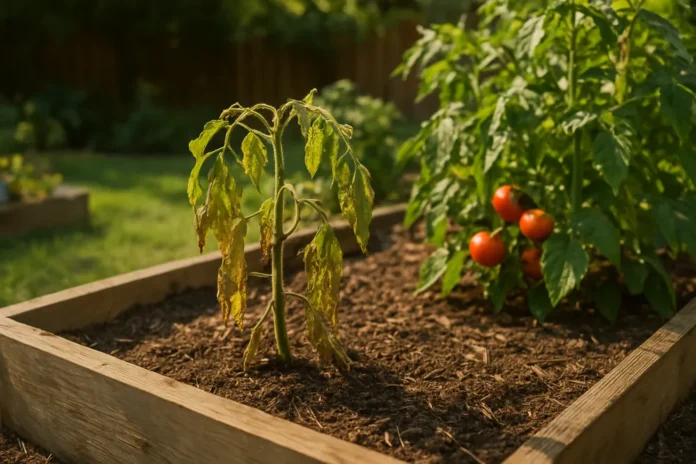
Tomato plants usually wilt because they are losing water faster than they can replace it, often from heat, watering problems, root stress, or disease. Some wilt is temporary in hot afternoon sun, but persistent wilting often points to a root, stem, or vascular problem.
A tomato plant can go from healthy and upright to limp and droopy in what feels like a single afternoon. Wilting is one of the most alarming symptoms for home gardeners because it can signal something simple, like temporary heat stress, or something more serious, like root damage or a soilborne disease.
The good news is that a wilted tomato does not always mean the plant is dying. Tomatoes often droop during extreme heat and recover by evening, but plants that stay wilted through cooler hours usually have a water, root, pest, or disease issue that needs attention.
The key is to look at the timing, the soil moisture, and what the leaves and stems are doing along with the wilt. Once you narrow down the cause, you can usually decide whether the plant needs a quick correction, supportive care, or removal before the problem spreads.
What Normal Wilting Looks Like
Tomatoes commonly wilt in the hottest part of the day, especially during summer heat, dry wind, or after transplanting. This happens because the plant is losing moisture through its leaves faster than the roots can pull water from the soil. If the plant perks back up in the evening or by early morning, that kind of wilting is usually temporary and not a major concern.
Temporary wilt is most common when daytime temperatures climb into the upper 80s and 90s, when containers dry out quickly, or when newly planted tomatoes have not fully rooted into the surrounding soil. The leaves may look limp but still remain green, and the stems stay reasonably firm.
- Wilts mainly in late afternoon
- Recovers after sunset or by morning
- Leaves stay mostly green
- No major spotting, stem collapse, or yellowing at first
When Wilting Means There Is a Problem
Wilting becomes more concerning when the plant stays limp overnight, the soil is not obviously dry, or the leaves also yellow, curl, brown, or develop spots. Persistent wilt means the plant's water transport system is failing somewhere, either because roots cannot take up water or because stems and vascular tissue are blocked or damaged.
A tomato that keeps wilting despite watering may have compacted soil, root rot, cut roots, a stem injury, or a disease such as bacterial wilt, fusarium wilt, or verticillium wilt. Pests that feed on roots or stems can also reduce water flow enough to make the plant droop.
Watering Problems Are the Most Common Cause
Underwatering
Dry soil is the most obvious reason a tomato plant wilts. When roots do not have enough available moisture, the leaves lose turgor pressure and collapse. This often happens in raised beds, sandy soil, grow bags, and containers, where water drains or evaporates quickly.
Underwatered tomatoes may have dry, crumbly soil several inches down, leaves that feel thin or papery, and fruit that stops sizing up. Lower leaves may yellow and dry as the plant prioritizes newer growth.
Overwatering
Too much water can cause wilting too. Waterlogged soil pushes out oxygen, and tomato roots need oxygen to function well. In soggy soil, roots become stressed or begin to rot, which reduces water uptake even though plenty of water is present.
Overwatered plants often wilt while the soil still feels wet. Leaves may look limp but thick, sometimes with yellowing lower foliage. If the problem continues, stems near the base may darken and roots may turn brown and mushy.
- Dry soil plus wilt usually points to underwatering
- Wet soil plus wilt often points to overwatering or root trouble
- Inconsistent watering can cause repeated wilt cycles and weaken the plant
Heat Stress Can Make Healthy Plants Droop
Tomatoes are warm-season plants, but extreme heat can still overwhelm them. When air temperatures are high, sun is intense, and humidity is low, the plant may wilt even if the soil is reasonably moist. This is especially common on dark mulch, against reflective walls, or in black containers that heat the root zone.
Heat-related wilt often shows up as a daily pattern. The plant droops in mid to late afternoon, then rebounds in the evening. Flowers may also drop during heat waves, and fruit can develop sunscald if foliage thins.
If the plant fails to recover after cooler temperatures return, the heat stress may have combined with inadequate water, shallow roots, or container crowding.
Root Stress and Transplant Shock Can Trigger Wilting
Tomatoes frequently wilt after transplanting because their roots have been disturbed. Even careful planting can temporarily reduce the plant's ability to absorb water while it settles into new soil. This is usually short-lived, but it can be worse if the plant was root-bound, planted on a hot day, or not watered deeply after transplanting.
Other root-related causes include cultivation damage, nematodes, poor drainage, compacted soil, or planting in a spot where roots hit hard clay. When roots cannot spread and function normally, wilting follows.
- Recent transplanting
- Digging or hoeing too close to the stem
- Tight, circling roots from nursery pots
- Compacted or poorly drained soil
- Root-knot nematode damage in warm regions
Diseases That Cause Tomato Plants to Wilt
Fusarium Wilt
Fusarium wilt is a soilborne fungal disease that blocks the plant's vascular system. It often starts with yellowing on one side of the plant or one branch before progressing to more obvious wilt. The wilt may seem worse during the day and improve slightly at night early on, but eventually it becomes permanent.
Verticillium Wilt
Verticillium wilt can look similar but often appears in cooler conditions than fusarium. Lower leaves may yellow first, then brown at the edges, while the whole plant gradually loses vigor and wilts.
Bacterial Wilt
Bacterial wilt can cause sudden collapse in otherwise green plants. Leaves may stay green at first while the whole plant rapidly wilts and does not recover. This disease is especially destructive in warm soils and can move quickly once symptoms begin.
Southern Blight and Crown Rot
Diseases that attack the stem base near the soil line can also produce wilting. You may see a dark lesion, rotting tissue, or white fungal growth at the crown. Once the lower stem is girdled, water can no longer move properly to the top growth.
Disease-caused wilt is usually not fixed by extra watering. If the soil is moist and the plant still droops, especially with yellowing, streaking, or stem discoloration, a pathogen becomes more likely.
Pests and Physical Damage That Interfere with Water Flow
Several pests can make tomato plants wilt by chewing roots, boring into stems, or feeding heavily enough to stress the plant. Cutworms can sever young transplants at the base. Stalk borers may tunnel into stems. Root-knot nematodes damage roots and reduce water uptake. In containers, crowded roots or hidden vole damage can also be factors.
Physical injuries matter too. Ties that are too tight, cracked stems from wind, and damage from pruning or handling can partially block water movement. A plant with one wilted branch while the rest looks normal often has a localized stem injury or disease affecting that part of the plant.
- Cut stems or chewing at the soil line suggest cutworms or mechanical injury
- One-sided wilt may point to a damaged stem or vascular disease
- Stunted plants with knobby roots may have root-knot nematodes
How to Tell Which Cause Is Most Likely
The fastest way to narrow down tomato wilt is to combine three clues: when the wilt happens, how the soil feels, and what other symptoms are present. A plant that droops only in afternoon heat behaves very differently from one that is limp in the morning with wet soil.
- Check the plant early in the morning and again in late afternoon. Recovery overnight suggests heat or temporary moisture stress.
- Feel the soil 2 to 4 inches deep rather than judging the dry surface alone. Dry deeper soil points to underwatering, while wet soil with wilt points to root stress or disease.
- Look for yellowing, spotting, browning, stem lesions, or damage at the soil line. Extra symptoms help separate simple watering issues from disease.
- Compare one plant to the rest of the bed. If only one plant is affected, disease, root injury, or transplant problems become more likely.
- Notice whether the whole plant wilts or only one side or one branch. Localized wilt often points to stem blockage or branch-specific disease.
What to Do for a Wilted Tomato Plant
If the Soil Is Dry
Water deeply and slowly so moisture reaches the full root zone. A shallow sprinkle does little for tomatoes. Add mulch around the plant to reduce evaporation and help keep soil moisture steady.
If the Soil Is Soggy
Pause watering until the soil begins to dry slightly, and improve drainage if possible. Containers may need larger drainage holes or a better potting mix. In garden beds, avoid watering on a fixed schedule if recent rain has already saturated the soil.
If Heat Is the Trigger
Keep the root zone evenly moist, mulch well, and consider temporary afternoon shade during extreme heat waves. Container tomatoes may need more frequent watering because hot pots can dry roots quickly.
If Disease Is Likely
Remove badly affected plants if they are not recovering and symptoms strongly suggest wilt disease. Do not compost clearly diseased plants if you are unsure of the cause. Clean tools, avoid moving soil between beds, and rotate tomatoes away from the area in future seasons.
If Roots or Stems Are Damaged
Give the plant steady moisture and support, but understand that severe stem girdling or major root loss may not be reversible. For young plants, replacement is often more productive than waiting weeks for a weak recovery.
How to Prevent Tomato Wilt in the Future
Most wilting problems can be reduced with a few preventive habits. Tomatoes do best when they have consistent moisture, loose well-drained soil, and enough root space to handle hot weather.
- Water deeply and consistently rather than lightly every day
- Mulch with straw, shredded leaves, or another breathable mulch
- Plant in soil with good drainage and plenty of organic matter
- Avoid damaging roots when weeding or cultivating
- Use cages or stakes to reduce stem breakage from wind
- Choose disease-resistant tomato varieties when wilt diseases are common in your area
- Rotate tomatoes and other nightshades to a new part of the garden when possible
- Do not overfertilize with nitrogen, which can push soft growth that is more stress-prone
When a Wilted Tomato Plant Is Unlikely to Recover
Some wilted plants bounce back quickly once the water balance is corrected. Others do not. A plant is less likely to recover if it stays wilted for days despite proper soil moisture, shows browning or collapse at the stem base, has severe root rot, or declines rapidly while the foliage remains green and limp.
In those cases, the issue is often deeper than simple thirst. Replacing a severely diseased or structurally damaged plant may protect the rest of the garden and save time during the growing season.
FAQ
Why Does My Tomato Plant Wilt During the Day but Look Fine at Night?
That pattern usually points to heat stress or temporary moisture stress. If the plant fully recovers by evening or morning, the roots are still functioning, but the plant is struggling to keep up with water loss during peak heat.
Can Overwatering Really Make Tomato Plants Wilt?
Yes. Saturated soil deprives roots of oxygen and can lead to root rot, so the plant wilts even though the ground is wet.
Should I Water a Wilted Tomato Plant Right Away?
Only if the soil below the surface feels dry. If the soil is already wet, adding more water can worsen the problem.
How Do I Know if Wilt Is Caused by Disease Instead of Dry Soil?
Wilt caused by disease often persists after watering and may come with yellowing, one-sided decline, stem discoloration, or a sudden collapse despite moist soil. Disease is more likely when one plant declines while nearby plants still look normal.
Can a Tomato Plant Recover From Bacterial or Fungal Wilt?
Recovery is uncommon once vascular wilt diseases are well established. Mild stress-related wilt often improves, but severe bacterial or fungal wilt usually does not reverse.
Why Is Only One Branch on My Tomato Plant Wilting?
A single wilted branch often means localized damage, such as a cracked stem, pruning injury, borer activity, or a vascular blockage affecting that part of the plant.
Do Container Tomatoes Wilt More Easily than Garden Tomatoes?
Yes. Containers heat up faster and dry out more quickly, so roots experience sharper swings in moisture and temperature.
Want to stop tomato problems before they spread? Read our guide to common tomato diseases and the best treatments so you can protect your plants and harvest more usable fruit.
