

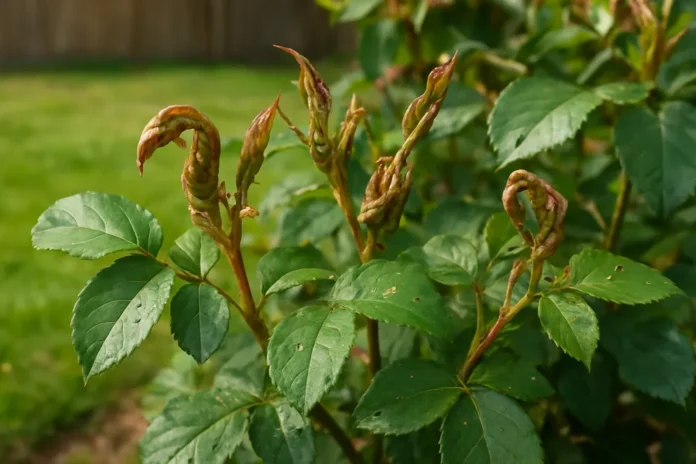
Rose leaves usually curl because of stress from pests, disease, watering problems, heat, or chemical exposure. The exact cause often shows up in how the leaf curls and what other symptoms appear with it.
Seeing rose leaves curling can be frustrating, especially when the plant was healthy just a week ago. Curled foliage is a common stress signal in roses, but it does not always mean the same thing. Sometimes the problem is mild and temporary, like a hot spell or uneven watering. Other times it points to aphids, mites, a fungal issue, or herbicide drift.
The good news is that curled rose foliage usually comes with other clues that help narrow it down. You may notice sticky residue, distorted new growth, yellowing, spotting, crispy edges, or whole stems that look twisted. Those details matter because the right fix for insect damage is very different from the right fix for drought stress or chemical injury.
In most cases, leaves start curling when the plant is trying to protect itself from damage or is no longer growing normally. Once you know the likely cause, you can decide whether to prune, water more consistently, improve airflow, wash off pests, or simply give the plant time to recover.
What Curling Rose Leaves Usually Mean
Leaf curling is not a disease by itself. It is a symptom. Roses may curl upward, downward, inward, or become twisted and puckered depending on what is stressing them. New leaves often show the first damage because they are soft and actively growing, while older leaves may curl later if the stress continues.
A quick way to think about it is this: distortion usually points to pests, viruses, or chemical injury, while simple rolling or cupping often points to heat, water stress, or environmental conditions. If the curled leaves also have spots, mildew, or yellow halos, disease becomes more likely.
- New leaves twisted or tightly curled often suggest aphids, mites, or herbicide exposure.
- Leaves curling with yellowing or drooping often suggest watering stress or root trouble.
- Leaves curling with black spots, white coating, or blotches can point to fungal disease.
- Leaves curling only after intense heat or dry wind may be a temporary environmental response.
Pests That Make Rose Leaves Curl
Aphids on Tender Growth
Aphids are one of the most common reasons rose leaves curl, especially in spring. These tiny soft-bodied insects cluster on buds, stem tips, and the undersides of young leaves. As they feed, they suck sap from tender tissue, which causes leaves to pucker, curl, or grow misshapen.
You may also see sticky honeydew on the leaves or black sooty mold growing on that residue. Ants crawling on the plant can be another clue because they are attracted to honeydew. Mild infestations can often be knocked back with a strong spray of water or insecticidal soap.
Spider Mites in Hot, Dry Weather
Spider mites are harder to see than aphids, but they are very common on stressed roses during hot, dry conditions. Their feeding causes fine stippling, bronzing, and curling, especially on older leaves. In severe cases, leaves may look dusty, dry, and weak before dropping.
Check the undersides of leaves for faint webbing or tiny moving specks. Mites thrive when roses are dusty and water-stressed, so regular deep watering and occasional leaf rinsing can help reduce pressure.
Thrips and Leafhoppers
Thrips can distort young rose leaves and buds, while leafhoppers cause pale stippling and general stress that may lead to curling. These pests are more likely when plants are already under pressure from heat or uneven care. If leaves are curling along with deformed blooms, thrips are worth considering.
Watering and Root Stress
Underwatering and Drought Stress
Roses need consistent moisture, especially in containers and during summer. When the soil gets too dry, leaves may curl inward or downward to reduce moisture loss. They can also feel limp at first, then turn dry and crispy at the edges if the stress continues.
This kind of curling often affects the whole plant rather than one shoot. If the soil is dry several inches down and the plant perks up after a deep soaking, drought stress is the likely cause.
Overwatering and Poor Drainage
Too much water can also curl leaves because roots need oxygen. In soggy soil, roots struggle to function, and leaves may yellow, curl, and droop even though the soil feels wet. Gardeners often mistake this for thirst and water again, which makes the problem worse.
If your rose sits in a low spot, heavy clay, or a decorative pot without good drainage, root stress can show up quickly. Persistent wetness can also invite root rot, which leads to weak growth and chronic leaf problems.
- Dry soil plus curled edges usually points to underwatering.
- Wet soil plus yellow curled leaves often points to overwatering or root damage.
- Container roses dry out faster than in-ground roses and need more frequent attention.
- Mulch helps stabilize moisture and reduce rapid swings between dry and wet.
Heat, Wind, and Sudden Weather Swings
Roses can curl leaves simply because the weather turned harsh. During extreme heat, low humidity, or drying winds, leaves may cup or roll to conserve water. This is especially common on plants near hot walls, reflective pavement, or in spots with intense afternoon sun.
Cold snaps can also distort soft new growth. If a rose puts out tender leaves and then gets hit with a late frost, the damaged tissue may curl, blacken slightly, or emerge misshapen. In these cases, the injury is environmental rather than infectious.
Weather-related curling often appears suddenly across exposed parts of the plant. If newer growth that emerges after conditions improve looks normal, the problem was likely temporary.
Rose Diseases That Can Curl Leaves
Powdery Mildew
Powdery mildew commonly causes young rose leaves to curl, crinkle, or twist, especially when days are warm and nights are cool and humid. You will usually see a white or gray powdery coating on leaves, stems, or buds. New growth may stay small and distorted.
This disease is more common when roses are crowded or have poor airflow. Avoid overhead watering late in the day, prune for better circulation, and remove badly infected growth.
Black Spot and Other Fungal Stress
Black spot does not always cause dramatic curling by itself, but infected leaves can become stressed, yellow, and warped before they drop. Cercospora leaf spot and downy mildew may also distort foliage as infection progresses. If the curling is paired with clear spotting patterns, disease is more likely than insects.
Rose Rosette Disease
Rose rosette disease is a serious viral-like disease spread by tiny eriophyid mites. It can cause distorted, twisted, and abnormal red growth, excessive thorniness, and stems that look unnaturally clustered or broom-like. Leaves may curl, but the bigger clue is the strange, exaggerated growth habit.
Unlike temporary stress, rose rosette does not improve with water or fertilizer. If you suspect it, removal is usually necessary to protect nearby roses.
Herbicide Drift and Chemical Injury
One of the most distinctive causes of curled rose leaves is herbicide exposure. Roses are very sensitive to lawn weed killers and drift from products used on driveways, fence lines, and nearby beds. Even a small amount can cause tightly cupped, narrow, twisted, or strap-like new leaves.
Chemical injury is especially likely if damage appears suddenly after a spraying day or if only the side of the plant facing the spray source is affected. Growth may look oddly stretched, bent, or deformed, while older leaves stay relatively normal.
Insecticides, horticultural oils, and foliar sprays can also burn foliage if applied during high heat or mixed too strongly. That damage usually looks more scorched than twisted, but some curling can happen as injured tissue dries.
Nutrient Imbalances and Soil Problems
Nutrient issues are not the most common reason rose leaves curl, but they can contribute. A rose growing in poor soil or with damaged roots may develop weak, misshapen foliage. Deficiencies are more often linked to chlorosis, pale leaves, and slow growth than to dramatic curling alone.
Soil pH problems can also interfere with nutrient uptake. In alkaline soils, roses may struggle to absorb iron and other micronutrients, leading to yellowing between veins and general decline. When the plant is weakened, leaves may curl secondarily from stress.
Heavy fertilizer salts can injure roots and leaf margins too. If curling follows a recent feeding and leaf edges look burnt, fertilizer stress is worth considering.
How To Tell Which Cause Is Most Likely
The pattern of damage usually gives the best clue. Look at where the curling started, whether the whole plant is affected, and what other symptoms are present. Roses rarely curl leaves for no reason, so small details matter.
- Curled new tips with sticky residue suggests aphids.
- Fine speckling, bronzing, and dry-looking leaves suggests spider mites.
- White powder with distorted young foliage suggests powdery mildew.
- Whole plant drooping with dry soil suggests underwatering.
- Yellow curled leaves in wet soil suggests overwatering or root issues.
- Twisted, strap-like new growth after spraying nearby suggests herbicide drift.
- Abnormal red shoots, excessive thorns, and clustered growth raises concern for rose rosette disease.
What To Do About Curled Rose Leaves
Start by correcting the simplest stressors first. Make sure the rose is getting deep, even moisture, not frequent shallow watering. Check for pests on the undersides of leaves and around buds. Improve airflow by thinning crowded growth, and avoid wetting the foliage late in the day.
If pests are present, wash them off or treat with insecticidal soap or horticultural oil according to the label. If fungal disease is the likely issue, remove the worst affected leaves, clean up fallen debris, and use a rose-labeled fungicide if the problem is spreading. If herbicide injury is the cause, focus on supportive care and wait for cleaner new growth.
Do not rush to fertilize a stressed rose unless you know poor nutrition is part of the problem. Extra fertilizer can make root stress worse. With serious issues like rose rosette disease, prompt removal is more effective than trying to nurse the plant along.
- Inspect curled leaves closely, especially undersides and new shoots.
- Check soil moisture a few inches down before watering again.
- Prune off badly distorted or diseased growth with clean pruners.
- Treat confirmed pests or fungal problems with the right product for roses.
- Monitor the next flush of growth to see whether the plant is recovering normally.
How To Prevent Rose Leaves From Curling Again
Healthy, low-stress roses are much less likely to develop chronic leaf problems. Prevention is mostly about consistent care and avoiding the conditions that trigger pests, disease, and chemical injury.
- Water deeply and consistently instead of letting the soil swing between bone dry and soggy.
- Mulch around the base to keep roots cooler and conserve moisture.
- Space and prune roses so air moves freely through the plant.
- Inspect new growth often in spring for aphids and early mildew.
- Avoid spraying weed killers anywhere near roses, especially on windy days.
- Use rose-safe products exactly as labeled and avoid spraying during high heat.
- Clean up fallen leaves to reduce fungal carryover.
If your rose has a history of mildew or mite problems, regular monitoring matters more than heavy treatment. Catching stress early often prevents a small curling issue from turning into severe leaf drop or bloom loss.
FAQ
Will Curled Rose Leaves Uncurl on Their Own?
Usually, already distorted leaves stay somewhat misshapen. The better sign is whether new growth comes in normal after the underlying problem is corrected.
Should I Cut Off Curled Rose Leaves?
Remove badly damaged, diseased, or heavily infested leaves, but do not strip the plant bare. Mildly curled leaves can still help the plant recover if they remain mostly green.
Can Too Much Sun Make Rose Leaves Curl?
Yes. Extreme afternoon heat, reflected light, and dry wind can make leaves cup or curl, especially when soil moisture is inconsistent.
Why Are Only the New Rose Leaves Curling?
New leaves are most sensitive to aphids, mites, powdery mildew, and herbicide drift. Damage that targets fresh growth often points away from simple age-related stress.
Can Epsom Salt Fix Curling Rose Leaves?
Not usually. Curling is more often caused by pests, disease, watering stress, or chemical injury than by a magnesium shortage.
How Do I Know if Herbicide Drift Damaged My Rose?
Look for sudden twisting, cupping, or strap-like new growth, especially if nearby weeds or lawn areas were recently sprayed. Often one side of the plant is worse than the other.
Do Spider Mites Cause Rose Leaves to Curl?
Yes. Spider mites can cause stippling, bronzing, dryness, and curling, especially during hot, dusty, low-humidity weather.
Is Leaf Curl on Roses Always Serious?
No. Some curling is temporary after heat, wind, or minor watering stress. It becomes more concerning when it spreads, distorts new growth, or comes with spots, sticky residue, webbing, or unusual red shoots.
Need the right fix fast? Explore our rose pest and disease treatment guides to compare the best sprays, soaps, fungicides, and care products for healthier blooms.
