

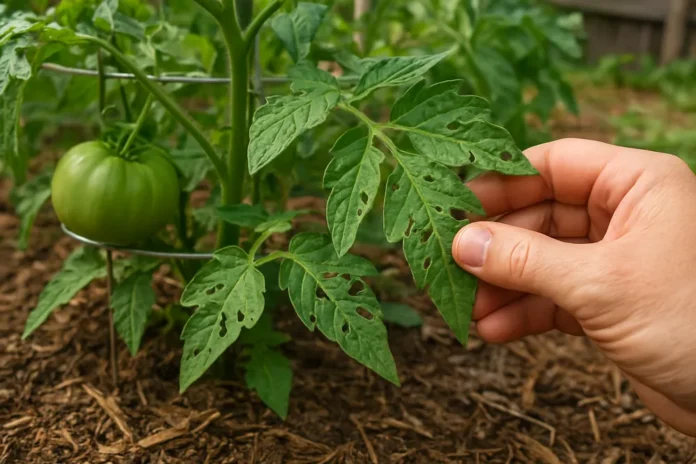
Tomato leaves usually get holes from chewing pests like caterpillars, flea beetles, beetles, and slugs. Less often, disease, wind damage, or physical injury can make Tomato Leaves look like they have Holes in Leaves.
Seeing tomato leaves develop holes is alarming, especially when your plants looked healthy just a day or two earlier. In most home gardens, holes are caused by insects or other pests that feed on tender foliage, but the size, shape, and location of the damage can tell you a lot about what is happening.
The good news is that holey leaves do not always mean your tomato harvest is ruined. Tomatoes can tolerate some leaf damage, especially once plants are established. The key is figuring out whether you are dealing with a minor nuisance, a fast-moving pest problem, or something environmental that needs a different response.
Below, you will learn the most common reasons tomato leaves get holes, how to tell them apart, and what to do so your plants can keep growing and producing.
What Hole Damage On Tomato Leaves Usually Means
When tomato leaves have true holes, the problem is usually chewing damage rather than discoloration from a nutrient issue. Yellowing, browning, or spotting may happen for other reasons, but missing pieces of leaf tissue almost always point to something physically removing that tissue.
Start by looking closely at the damage pattern. Tiny pinholes often suggest flea beetles. Larger irregular holes may point to caterpillars, beetles, earwigs, or slugs. Missing leaf edges can come from chewing insects or nighttime feeders. If the damaged area first looked thin, papery, or spotted and then fell out, disease may be involved.
- Small shot-like holes scattered across young leaves usually suggest flea beetles.
- Large ragged holes in the middle of leaves often suggest caterpillars or beetles.
- Chewed edges and slime trails often point to slugs or snails.
- Skeletonized leaves, where tissue is eaten between veins, often suggest beetles or larvae.
- Leaves that tear after wind, hail, or rubbing usually have more random, rough-edged damage.
Common Pests That Eat Tomato Leaves
Tomato Hornworms and Other Caterpillars
Hornworms are one of the most common reasons tomato leaves suddenly develop large holes or entire missing leaflets. These big green caterpillars blend in with stems and foliage, so they are easy to miss until damage is extensive. Fruitworm caterpillars, armyworms, and other larvae can also chew leaves.
Caterpillar damage is usually irregular and obvious. You may see black droppings on leaves or the soil below. Hornworms can strip upper foliage quickly, especially in midsummer.
- Look for large holes, stripped stems, and dark droppings.
- Check the undersides of leaves and along main stems.
- Hand-pick visible caterpillars and drop them into soapy water.
- If pressure is heavy, products containing Bt can help when used on small caterpillars.
Flea Beetles
Flea beetles create tiny round holes that make leaves look peppered or blasted with a fine spray of damage. They are especially troublesome on young tomato transplants, where enough feeding can slow growth. Adult flea beetles are small, dark, and jump when disturbed.
Established tomato plants usually outgrow light flea beetle damage, but seedlings and newly planted tomatoes may need protection.
- Damage looks like many small pinholes or shot holes.
- Young plants are more vulnerable than mature plants.
- Floating row covers can protect transplants early in the season.
- Keep weeds down, since flea beetles often build up on related host plants.
Slugs and Snails
Slugs and snails feed mostly at night and prefer moist conditions. They leave irregular holes, often on lower leaves close to the ground. In damp gardens, they may also chew stems and ripening fruit.
Their calling card is a shiny slime trail on leaves, mulch, containers, or the soil surface. Damage is often worst in heavily mulched, shady, or overwatered spots.
- Search at dusk or early morning when they are active.
- Reduce hiding places like dense debris or boards near plants.
- Water in the morning so the soil surface dries before night.
- Iron phosphate slug bait is a common garden-safe control option.
Beetles, Earwigs, and Grasshoppers
Several other chewing pests can leave holes in tomato leaves. Blister beetles, Japanese beetles, earwigs, and grasshoppers may all feed on foliage depending on your region. Their damage can range from small irregular bites to heavily ragged leaves.
These pests are often easier to identify by catching them in the act. Inspect plants in the morning, late afternoon, and after dark if necessary.
When Disease Makes Leaves Look Holey
Not every hole starts with a bite. Some leaf diseases create spots that dry out, turn brittle, and eventually fall away. This can make tomato leaves appear eaten even when insects are not the main cause.
Bacterial Spot and Bacterial Speck
These bacterial diseases usually begin as dark leaf spots. As tissue dies, the center may crack or drop out, leaving a tattered appearance. This is more common during warm, wet weather and where leaves stay damp for long periods.
Early Blight and Septoria Leaf Spot
Fungal leaf diseases more often cause spotting and yellowing than true holes, but badly damaged tissue can split or fall apart. Lower leaves are usually affected first, especially where plants are crowded and airflow is poor.
- Disease-related holes are often surrounded by brown, black, or yellow margins.
- Damage usually spreads from leaf to leaf rather than appearing as clean bites.
- Wet foliage, overhead watering, and crowding increase disease pressure.
- Removing badly infected lower leaves can slow spread.
If you see both spotting and holes, you may have more than one issue at once. Tomatoes under stress can attract pests while also becoming more vulnerable to disease.
Environmental And Physical Causes
Tomato leaves can also be torn or punctured by weather and handling. This kind of damage is less common than insect feeding, but it does happen, especially on tender new growth.
Wind and Rubbing
Strong wind can whip leaves against cages, stakes, fencing, or nearby plants. Repeated rubbing may create worn spots that eventually tear into holes. Wind damage often shows up on exposed plants or after storms.
Hail and Storm Injury
Hail can punch obvious holes through leaves or shred foliage in a single event. If the damage appeared suddenly after rough weather, the cause may be obvious. Torn leaves from hail usually have a more random pattern than pest feeding.
Transplant or Mechanical Damage
Leaves may also tear during transplanting, tying, pruning, or harvesting. Pets, children, and tools can cause accidental holes too. This kind of damage does not usually spread, which is one of the easiest ways to separate it from a pest issue.
How To Tell Which Cause You Have
The best diagnosis comes from matching the pattern of damage with what you can actually observe on or around the plant. One quick look in midday may not tell the whole story, since many pests hide under leaves or feed only at night.
- Check whether the holes are tiny, large, round, ragged, or mostly along leaf edges.
- Inspect the undersides of leaves, stems, and the mulch line for insects, eggs, frass, or slime trails.
- Notice whether damage is worst on young leaves, lower leaves, or the top of the plant.
- Think about timing. Damage that appeared after rain, wind, or hail may not be pest-related.
- Look for other symptoms like yellow halos, dark spots, curling, or wilt that may point to disease or stress.
If you find only a few damaged leaves and the plant is otherwise vigorous, the problem is often minor. If damage is spreading quickly, new leaves are being hit, or fruit is also affected, act sooner.
How To Stop Tomato Leaves From Getting More Holes
The right fix depends on the cause, but a few core practices help in almost every situation. Focus on reducing active feeding, limiting plant stress, and improving the growing environment so tomatoes can recover.
Remove Pests by Hand when Possible
For hornworms, beetles, slugs, and larger visible pests, hand removal is often the fastest and most effective control for home gardeners. A nightly check for several days can make a big difference.
Protect Young Plants
Tomato seedlings and fresh transplants are the most vulnerable to hole damage. Temporary row covers, collars, or insect netting can help early in the season, especially where flea beetles are common.
Keep Leaves Dry and Airflow Good
Water at the base of the plant rather than overhead when possible. Space tomatoes properly, prune only as needed, and cage or stake plants to improve air movement. These steps help reduce disease pressure that can make leaves look ragged or spotty.
Use Targeted Controls Instead of Broad Spraying
If you do need treatment, match it to the pest. Bt works on caterpillars but not beetles or slugs. Insecticidal soap is not useful for pests that chew holes in leaves. Broad-spectrum sprays can also harm beneficial insects that naturally keep tomato pests under control.
- Hand-pick caterpillars, beetles, slugs, and snails when numbers are low.
- Use Bt for small caterpillars if needed.
- Use iron phosphate bait for slug problems.
- Remove badly diseased leaves and avoid wetting foliage.
- Support plants well so wind does less damage.
Can Tomato Plants Recover From Holey Leaves?
Usually, yes. Tomatoes are resilient plants, and a healthy one can often outgrow moderate leaf damage. The biggest concern is not the appearance of the holes themselves but whether the cause is still active and whether enough foliage remains to support strong growth and fruit production.
If only a small percentage of leaves are affected, leave the plant alone except for removing clearly diseased or heavily infested foliage. If large parts of the plant are stripped, protect the remaining growth quickly so it can rebuild leaf area.
Avoid overreacting with heavy pruning or repeated sprays. Stressing the plant further can slow recovery more than a few damaged leaves ever would.
How To Prevent Future Leaf Holes
Prevention works best when it combines pest monitoring, garden sanitation, and healthy growing conditions. Tomatoes that are well watered, properly spaced, and regularly inspected are less likely to suffer severe damage before you notice.
- Inspect plants at least twice a week, and more often during warm weather.
- Check under leaves and near growing tips where pests often hide.
- Keep weeds and plant debris down around the bed.
- Rotate tomatoes and related crops when possible.
- Mulch carefully so moisture stays even, but do not create a constant slug habitat against stems.
- Encourage beneficial insects by avoiding unnecessary broad insecticides.
- Stake or cage plants early to reduce leaf contact with soil and improve airflow.
A little damage is normal in most backyard gardens. The goal is not perfect leaves. It is keeping the damage light enough that your tomatoes can continue growing and setting fruit.
FAQ
Will Tomatoes Still Produce if the Leaves Have Holes?
Yes. Most tomato plants can still produce well if the damage is light to moderate. Production drops when pests remove a lot of foliage, spread disease, or start feeding on flowers and fruit too.
Should I Cut Off Tomato Leaves with Holes?
Only remove leaves that are badly damaged, heavily infested, or clearly diseased. Leaves with a few holes can still photosynthesize and help the plant recover.
What Bug Makes Tiny Holes in Tomato Leaves?
Flea beetles are one of the most common causes of many tiny holes in tomato leaves, especially on young plants. Their feeding creates a shot-hole look across the foliage.
What Causes Big Ragged Holes in Tomato Leaves Overnight?
Large ragged holes that seem to appear overnight are often caused by hornworms, other caterpillars, slugs, or snails. Night feeding is common with several of these pests.
Can Overwatering Cause Holes in Tomato Leaves?
Overwatering does not usually create true holes by itself. It can, however, encourage disease and slug activity, which may lead to leaves that look torn or eaten.
Are Holes in Lower Tomato Leaves More Serious than Holes at the Top?
Not always, but lower-leaf damage often points to slugs, soil splash, or early leaf disease. Damage near the top may be more consistent with hornworms or flea beetles on tender growth.
Can I Spray Soapy Water for Tomato Leaves with Holes?
Soapy sprays are not very effective for most pests that chew holes, such as caterpillars, beetles, and slugs. Targeted treatment works better when you know the actual pest.
Need the right fix fast? See our guide to the best tomato pest controls and disease treatments so you can protect leaves, flowers, and fruit before damage spreads.
