

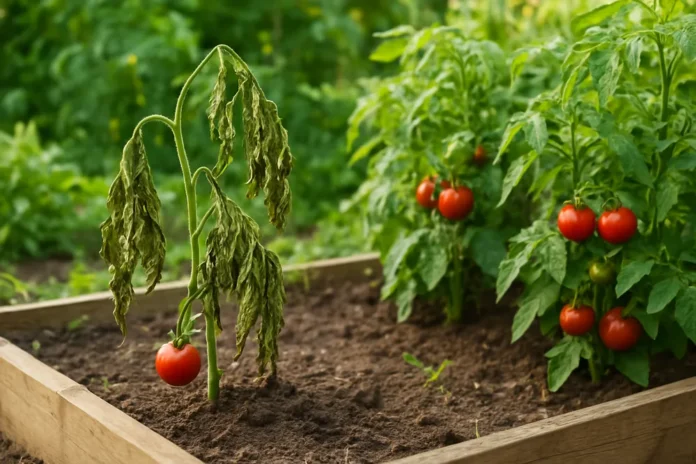
Tomato plants usually droop because they are stressed by watering problems, high heat, root damage, transplant shock, or disease. In many cases the leaves and stems lose firmness because the plant cannot move water normally.
A tomato plant that is drooping can look alarming, especially when it seemed fine the day before. Wilted leaves and limp stems often mean the plant is under stress, but the cause is not always serious. Sometimes the issue is as simple as dry soil on a hot afternoon, while other times it points to root damage, disease, or poor growing conditions.
Tomatoes are fast-growing, heavy-feeding plants that react quickly when something is off. The key is to look at when the drooping happens, how the soil feels, whether the plant recovers by evening, and whether the leaves are also yellowing, curling, spotting, or staying limp overnight. Those clues can tell you whether you are dealing with normal heat wilt, a watering mistake, or a larger health problem.
Below, you will find the most common reasons tomato plants droop, how to tell them apart, and what to do to help your plant recover.
What Drooping Usually Means in Tomatoes
Drooping means the plant is losing turgor pressure, which is the internal water pressure that keeps leaves and stems firm. When roots cannot take up enough moisture, or when the plant loses water faster than it can replace it, tissues go limp. That can happen from dry soil, soggy soil, damaged roots, extreme heat, or diseases that block water movement inside the stem.
Not every drooping tomato is dying. Tomatoes often wilt in the hottest part of the day and perk back up after temperatures cool. That is common in midsummer, especially in containers or raised beds. The bigger concern is drooping that lasts into the evening, worsens day after day, or affects only one part of the plant while the rest looks normal.
- Temporary afternoon wilt often points to heat stress.
- Drooping with dry soil usually means underwatering.
- Drooping with wet soil often suggests overwatering or root trouble.
- One-sided or branch-by-branch wilt can be a sign of stem injury or disease.
- Sudden collapse after planting often indicates transplant shock or root disturbance.
Underwatering Is One of the Most Common Causes
Tomatoes need consistent moisture to support rapid leaf growth, flowering, and fruit production. If the soil gets too dry, roots cannot supply enough water to the top of the plant, and leaves droop or curl. Container tomatoes dry out especially fast, sometimes in a single hot day.
How to Tell if the Plant Is Too Dry
- The soil feels dry 1 to 2 inches below the surface.
- Leaves look limp but may recover quickly after watering.
- The whole plant droops, not just one stem.
- Lower leaves may turn yellow or crispy if drought has been ongoing.
- Fruit may crack or develop blossom end rot after uneven watering.
If drought is the issue, water deeply so the root zone is moistened rather than just wetting the surface. A slow soak is better than a quick splash. Afterward, apply mulch such as straw, shredded leaves, or untreated grass clippings to reduce evaporation and keep soil moisture more even.
Overwatering Can Cause the Same Droopy Look
Too much water can make a tomato plant droop just as easily as too little. When soil stays saturated, air spaces around the roots fill with water. Roots need oxygen to function, and without it they begin to decline. As damaged roots lose the ability to absorb water, the top of the plant wilts even though the soil is wet.
Signs of Overwatering
- Soil feels wet or muddy for long periods.
- Leaves droop but may also look swollen or soft.
- Lower leaves turn yellow before dropping.
- Growth slows and the plant looks dull or pale.
- The container feels heavy and drains poorly.
If you suspect overwatering, let the top layer of soil dry slightly before watering again. Improve drainage if possible. In pots, make sure drainage holes are open and the container is not sitting in a saucer full of water. In garden beds, compacted soil or low spots may need to be amended or mounded higher for future planting.
Heat Stress Can Make Tomatoes Wilt During the Day
Tomatoes commonly droop in hot weather because their leaves lose moisture faster than roots can replace it. This is especially noticeable in afternoon sun, during heat waves, or when warm winds and dry air increase evaporation. Plants may look dramatic at 3 p.m. and nearly normal by sunset.
This kind of temporary wilting is often more about weather than a major problem, but repeated heat stress can reduce flowering, fruit set, and overall vigor. Dark containers, reflected heat from walls or patios, and sparse mulch make the effect worse.
When Heat Wilt Is Probably the Cause
- Drooping happens mainly in the hottest part of the day.
- The plant recovers by evening or early morning.
- Soil is moist but not soggy.
- There are no obvious stem lesions, severe yellowing, or spotting.
Mulch, deep watering in the morning, and light afternoon shade during extreme heat can reduce stress. Avoid pruning heavily during a hot spell because foliage helps shade fruit and stems.
Transplant Shock Often Causes Short-term Drooping
A newly planted tomato may droop simply because its roots were disturbed during transplanting. Moving from a nursery pot to the ground, or from indoors to outdoor sun and wind, creates stress while the roots adjust. Even a healthy transplant can look limp for a few days.
This is more likely if the plant was rootbound, planted on a hot day, or set out before it was hardened off properly. The plant may wilt despite moist soil because the roots are not yet absorbing water efficiently.
- Drooping starts right after planting or within a day or two.
- Leaves may look limp but still remain green.
- There are no major spots, holes, or stem cankers.
- The plant improves gradually over several days once conditions are stable.
Keep the soil evenly moist, protect the plant from harsh afternoon sun for a few days if needed, and avoid fertilizing heavily right away. Most tomatoes recover as roots establish.
Root Damage and Poor Root Growth Can Leave Plants Limp
Anything that damages roots can lead to drooping because the plant cannot move enough water upward. This includes cultivation too close to the stem, root rot, nematodes, compacted soil, circling roots in containers, or physical damage from digging and transplanting.
Clues That Roots Are Involved
- The plant stays wilted even when the soil seems properly moist.
- Growth is stunted and fruiting is reduced.
- Roots may appear brown, mushy, sparse, or tightly wound if inspected in a pot.
- Plants in compacted or poorly drained soil struggle more than nearby tomatoes.
Tomatoes grow best in loose, well-drained soil with steady moisture. Avoid hoeing deeply around the base of the plant, and use mulch to reduce the need for frequent shallow watering that encourages weak surface roots.
Diseases That Cause Wilt and Drooping
Several tomato diseases cause wilting by attacking the roots, stems, or water-conducting tissue. Unlike simple heat wilt, disease-related drooping often does not improve overnight and may spread gradually through the plant.
Fusarium and Verticillium Wilt
These soilborne fungal diseases block water movement inside the plant. Symptoms often start with yellowing on lower leaves, followed by drooping or one-sided wilt. Sometimes only one branch wilts at first. Cutting the stem near the base may reveal brown discoloration in the vascular tissue.
Bacterial Wilt
Bacterial wilt can cause rapid collapse while leaves may remain fairly green at first. The entire plant may droop suddenly, especially in warm weather. This disease is serious and usually does not reverse.
Root Rot and Crown Rot
Fungi favored by wet, poorly drained conditions can attack roots or the stem base. Plants may wilt, yellow, and decline slowly. The lower stem may darken, and roots may look brown or decayed.
If disease is the cause, treatment options are limited once the plant is infected. Remove badly affected plants, do not compost diseased material, rotate crops, and choose resistant tomato varieties for future seasons.
Pests and Stem Injury Can Make One Plant or Branch Droop
If only one stem or side of the plant is drooping, look for physical damage or pest feeding. A bent stem, tie that is too tight, wind breakage, or chewing damage near the base can restrict water flow. Tomato hornworms, cutworms, stalk borers, and other pests may weaken stems or strip foliage enough to stress the plant.
- Inspect stems for splits, pinched areas, and dark sunken spots.
- Check under leaves and along stems for large caterpillars and frass.
- Look near the soil line for chewing damage or cut stems.
- Make sure cages, clips, and ties are not girdling the plant.
A damaged branch may not recover if the stem is badly crushed or bored into, but removing pests quickly and supporting the plant can prevent further stress.
Container Tomatoes Droop Faster than In-ground Plants
Tomatoes in pots are more likely to droop because container soil heats up and dries out faster than garden soil. Small pots, black containers, and hanging baskets are especially prone to sudden wilt. At the same time, containers can also stay too wet if drainage is poor, so both watering extremes are common.
Use a large container, ideally at least 10 gallons for indeterminate tomatoes, with a high-quality potting mix and several drainage holes. During hot weather, potted tomatoes may need daily watering, but the goal is still deep, even moisture rather than constant saturation.
How to Tell Which Drooping Problem You Have
The fastest way to narrow down the cause is to compare the plant's condition with the soil moisture, time of day, and any extra symptoms on leaves or stems.
- Feel the soil 1 to 2 inches deep. Dry soil points toward underwatering, while wet soil suggests overwatering or root issues.
- Notice the timing. Afternoon-only drooping that improves later often means heat stress.
- Check whether the whole plant or just one side is affected. Partial wilt can signal damage or vascular disease.
- Look for yellowing, brown streaks, stem lesions, or spots. Extra symptoms make disease more likely.
- Think about recent changes such as transplanting, a heat wave, heavy rain, or missed watering.
Tomatoes often show more than one stress at a time. For example, a newly transplanted plant in a small black pot may droop from both root stress and heat. That is why context matters more than any single symptom.
How to Help a Drooping Tomato Recover
The right fix depends on the cause, but a few basic steps improve recovery in most cases. Focus on stable moisture, reduced heat stress, and preventing further root damage.
- Water deeply when the top inch or two of soil is dry, rather than watering lightly every day.
- Mulch around the plant to keep soil cooler and reduce moisture swings.
- Water early in the day so plants go into hot afternoons well hydrated.
- Improve drainage if soil stays soggy after rain or irrigation.
- Avoid excessive fertilizer, especially high-nitrogen products, while the plant is stressed.
- Remove severely diseased plants if they continue to decline and do not recover overnight.
- Provide temporary shade during extreme heat, especially for new transplants and container plants.
If the plant perks up after proper watering and cooler temperatures, the problem was likely environmental. If it remains limp despite moist soil and good conditions, disease or root damage becomes more likely.
How to Prevent Drooping in the Future
Prevention comes down to reducing stress and setting the plant up with strong roots from the start. Tomatoes are much less likely to wilt repeatedly when their growing conditions stay even.
- Plant in full sun with rich, well-drained soil.
- Use mulch to moderate soil temperature and moisture.
- Space plants well for airflow while still shading the root zone.
- Water consistently instead of alternating drought and saturation.
- Choose disease-resistant varieties when wilt diseases are common in your area.
- Rotate tomatoes and other nightshades to new spots each year when possible.
- Use large containers for potted tomatoes and refresh potting mix regularly.
FAQ
Should I Water a Drooping Tomato Plant Right Away?
Only if the soil is actually dry. If the soil is already wet, adding more water can make the problem worse by stressing the roots further.
Why Does My Tomato Plant Droop During the Day but Recover at Night?
That pattern usually points to heat stress or temporary moisture loss during hot afternoons. If the plant consistently perks back up by evening and the soil is evenly moist, it is often not a disease.
Can a Tomato Plant Recover From Overwatering?
Yes, if root damage is not too advanced. Let the soil dry slightly, improve drainage, and avoid watering again until the top layer begins to dry.
Why Is Only One Branch on My Tomato Plant Drooping?
A single drooping branch often suggests stem damage, a tie that is too tight, pest injury, or a disease affecting one part of the vascular system. Inspect that stem closely from tip to base.
Do Tomato Plants Droop After Transplanting?
Yes, mild drooping for a few days after transplanting is common. It usually improves as the roots settle in, especially if the plant is kept evenly moist and protected from extreme heat.
Can Too Much Sun Make Tomato Plants Droop?
Tomatoes need full sun, but intense heat can still make them wilt temporarily. Sun combined with high temperatures, wind, and dry soil is what usually triggers drooping.
How Do I Know if Wilt Is Caused by Disease?
Disease is more likely when drooping does not improve overnight, the soil is not dry, and you also see yellowing, stem browning, one-sided wilt, or steady decline over several days.
Need help choosing the right tomato fix fast? Read our guide to the best tomato fertilizers, mulches, and disease-control products to keep plants upright, healthy, and productive.
