

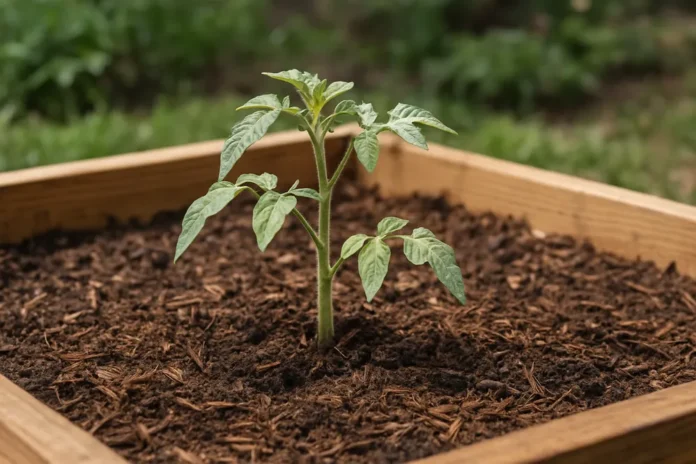
A tomato plant usually stops growing because it is stressed by cold weather, weak light, root problems, inconsistent watering, or nutrient imbalance. Pests, disease, and transplant shock can also slow growth dramatically.
A tomato plant that seems healthy enough to stay green but is not growing can be frustrating, especially when you were expecting fast summer growth. Tomatoes are vigorous plants when their basics are in place, so stalled growth usually means something in the environment is holding the plant back.
In most home gardens, the problem comes down to temperature, sunlight, water, nutrients, root restriction, or stress after transplanting. Sometimes the plant is not actually dying at all. It is just stuck, conserving energy until conditions improve.
The good news is that stunted tomatoes often recover well once you correct the main issue. The key is figuring out whether the slowdown is caused by weather, soil, roots, feeding, or a hidden pest or disease problem.
What Normal Tomato Growth Should Look Like
Tomatoes should put on steady new growth during warm weather, especially after they settle in after transplanting. A healthy plant develops larger leaves, thicker stems, and visible height or branching every week during active growth. Indeterminate varieties keep stretching and flowering over a long season, while determinate types stay more compact but should still size up steadily.
If your tomato has stayed the same size for 10 to 14 days during good weather, that is a sign something is off. Slow growth is most concerning when you also see pale leaves, purpling, drooping, very small new leaves, or roots circling in a pot.
- Healthy new leaves should emerge regularly from the growing tip.
- Stems should slowly thicken rather than remain thin and weak.
- Leaf color should be medium to deep green, not pale yellow or dull gray-green.
- Flowering may pause during stress, but vegetative growth should resume once conditions improve.
Cool Temperatures Are a Very Common Cause
Tomatoes love warmth. If daytime temperatures are mild but nights are still cool, plants often sit almost motionless. Growth can slow sharply when nighttime temperatures drop below about 55 degrees F, and it may nearly stop in prolonged cool spells.
Cold soil matters just as much as cool air. Even if the plant looks alive, roots in chilly soil do not take up water and nutrients efficiently. This often leads to purpling on leaf undersides, slow top growth, and a general lack of vigor.
Signs That Cold Is the Problem
- Plant has looked stalled since transplanting outdoors
- Leaves are not badly damaged but new growth is minimal
- Stems and leaf undersides have a purple tint
- Weather has included cool nights, wind, or cold rain
Once temperatures consistently warm up, tomatoes often take off without much intervention. In cooler regions, black plastic mulch, fabric covers, or simply waiting for warmer soil can make a major difference.
Transplant Shock Can Pause Growth for Days or Weeks
Tomatoes often stop growing temporarily after being moved from a nursery pot into a garden bed, raised bed, or larger container. This is especially common when the plant was rootbound, planted on a hot sunny day, or not hardened off properly before transplanting outdoors.
A shocked plant may droop, hold still, and refuse to put out new leaves while it rebuilds roots. This can last several days in ideal conditions or a couple of weeks if weather and watering are inconsistent.
Common Transplant Shock Triggers
- Moving indoor seedlings outside too quickly
- Damaging roots while removing the plant from its pot
- Planting into cold soil
- Letting the root ball dry out right after transplanting
- Sudden exposure to strong sun and wind
If the stem remains firm and the leaves are not collapsing from disease, patience is often part of the fix. Stable moisture, warm temperatures, and a little time usually help a healthy tomato reestablish itself.
Too Little Sunlight Limits Energy for New Growth
Tomatoes need a lot of sun to grow vigorously. Less than six hours of direct sun usually leads to weak, slow plants, and even six hours can be marginal in some climates. For best growth, most tomatoes perform best with at least eight hours of direct sunlight.
A plant in partial shade may stay alive but never really size up. It may produce long, thin stems that stretch toward light, with fewer flowers and smaller leaves than expected.
Clues That Light Is Too Low
- Stems are tall, thin, and floppy
- Plant leans strongly toward one direction
- New growth is sparse and weak
- Nearby trees, fences, or buildings cast afternoon shade
Container tomatoes can sometimes be moved to a brighter location. In the ground, pruning back overhanging plants or planning a sunnier site next season may be the best solution.
Watering Problems Can Stunt Roots and Tops
Both too little water and too much water can make a tomato stop growing. Underwatering forces the plant to conserve energy, while overwatering reduces oxygen around the roots and can lead to root stress or rot.
The tricky part is that both problems can cause drooping. Dry soil usually comes with limp leaves and a lightweight container, while soggy soil often causes a heavy pot, yellowing, and a plant that looks dull rather than crisp.
How Poor Watering Shows Up
- Dry cycles can cause wilting, blossom drop, and halted growth
- Waterlogged soil can cause yellow leaves, edema, and root decline
- Frequent shallow watering keeps roots near the surface instead of growing deep
- Mulch-free beds lose moisture quickly and heat up fast
Tomatoes usually grow best with deep, even watering that keeps the root zone moist but not saturated. In containers, drainage holes are essential because trapped water quickly stresses roots.
Poor Soil and Nutrient Imbalance Slow Growth
Tomatoes are fairly heavy feeders, but more fertilizer is not always better. A plant may stall because the soil is too poor, because nutrients are unavailable due to pH issues, or because excess fertilizer has damaged roots or pushed soft growth without strong development.
Nitrogen deficiency often causes pale older leaves and overall slow growth. Phosphorus problems can contribute to purpling and poor early root development, especially in cool soil. Potassium shortages may show up as weak growth and leaf edge discoloration later on.
When Fertilizer May Be Part of the Problem
- Plant is pale and small in unfed garden soil
- Growth stopped after applying a strong synthetic fertilizer
- Container mix has been used for a long time without replenishing nutrients
- Soil pH is far outside the ideal range of about 6.0 to 6.8
Tomatoes usually do best in fertile, well-drained soil enriched with compost and fed with a balanced tomato fertilizer according to label directions. In containers, nutrients wash out faster, so regular feeding becomes more important.
Root Problems Often Hide Below the Surface
A tomato plant cannot grow well if the roots are cramped, damaged, overheated, or unable to expand. This is a major reason container tomatoes and recently transplanted seedlings sometimes appear frozen in place.
Rootbound plants may keep circling in their original root shape instead of spreading into surrounding soil. Compacted garden soil can also prevent roots from moving outward. In very small containers, roots hit the walls quickly and growth stalls because the plant has nowhere to go.
Root-related Causes to Consider
- Pot is too small for the variety
- Drainage is poor and roots are staying wet
- Soil is hard and compacted
- Roots were torn badly during transplanting
- Black nursery pots are overheating in strong sun
Most full-size tomato varieties need large root zones. Many gardeners underestimate container size, but small pots frequently lead to chronic stunting, irregular watering, and disappointing production.
Pests Can Sap Energy Even Before Damage Looks Severe
Tiny pests can quietly slow a tomato before obvious chewing appears. Aphids, spider mites, thrips, whiteflies, and flea beetles feed on plant tissue and reduce the plant's ability to grow. Heavy infestations are especially hard on small or recently transplanted tomatoes.
Sap-feeding pests often cause curling, stippling, sticky residue, distorted new growth, or a dull, tired look. Because these insects tend to cluster under leaves or around tender growing tips, they are easy to miss at first glance.
Pest Symptoms Linked to Slow Growth
- Sticky leaves or ants climbing the plant
- Tiny speckles or bronzing on leaves
- Curled or twisted new growth
- Small holes in leaves from flea beetles
- Visible insects under leaves or near stems
Early treatment matters because a stressed tomato has less energy to replace damaged tissue. In many cases, strong water sprays, insecticidal soap, or neem can help when used correctly and at the right time of day.
Disease and Herbicide Injury Can Mimic Stunting
Some tomato diseases cause obvious spotting and collapse, but others start with subtle stunting. Viral diseases, bacterial issues, and root rots may all slow growth before dramatic symptoms appear. If the plant remains small, distorted, or discolored despite decent care, disease becomes more likely.
Herbicide drift is another possibility, especially if new growth is twisted, narrow, or fern-like. Tomatoes are highly sensitive to lawn weed killers and drift from nearby spraying. Even compost or mulch contaminated with persistent herbicides can affect growth.
Warning Signs That Point Beyond Basic Care
- New leaves are severely twisted or cupped
- Plant is misshapen rather than simply slow
- Lower stem or roots appear dark and unhealthy
- Spots, cankers, or mosaic-like leaf patterns are present
- Nearby plants show similar distortion after spraying
When disease or herbicide exposure is the cause, recovery depends on the specific problem. Mild stress may improve, but severely infected or contaminated plants often never become productive.
Container Tomatoes Have a Few Extra Challenges
Tomatoes grown in pots are more prone to stunting than those planted in well-prepared ground because every condition changes faster in a container. Soil heats up faster, dries out faster, cools down faster, and runs out of nutrients sooner.
A container that is too small is one of the biggest reasons a tomato stays tiny. Determinate patio types can handle smaller pots, but standard slicing or heirloom tomatoes usually need a much larger container than beginners expect.
- Use a large container with drainage holes
- Choose a quality potting mix rather than garden soil
- Water deeply and consistently
- Feed regularly because nutrients leach from pots
- Protect dark containers from overheating in intense sun
How to Get a Stalled Tomato Growing Again
The fastest way to help a stalled tomato is to correct the biggest stress factor instead of making several random changes at once. Tomatoes respond best when conditions become warm, bright, evenly moist, and nutritionally balanced.
Simple Recovery Steps
- Make sure the plant is getting full sun for most of the day.
- Keep soil consistently moist, not bone dry and not soggy.
- Wait for warmer weather if nights are still cool.
- Feed lightly with a balanced tomato fertilizer if the plant is pale or has been in a pot for a while.
- Inspect undersides of leaves and growing tips for pests.
- Add mulch around in-ground plants to steady soil moisture and temperature.
- Up-pot container plants that are rootbound or crowded.
Avoid overcorrecting. Heavy fertilizer, constant watering, or repeated handling can create more stress. Once you remove the main limitation, look for fresh green growth at the tip over the next week or two.
When Slow Growth Is Probably Not a Problem
Not every short tomato is unhealthy. Some patio, dwarf, and determinate varieties naturally stay compact. A recently flowering plant may also direct more energy toward blossoms and fruit set for a short period, so height gain can slow temporarily.
If leaves are green, stems are sturdy, and new growth is still appearing, the plant may simply be growing at the pace expected for its variety and current weather. Compare it with the mature size listed on the plant tag or seed packet before assuming something is wrong.
FAQ
How Long Does Transplant Shock Last in Tomato Plants?
Mild transplant shock often improves in a few days, but tomatoes can take one to two weeks to resume strong growth, especially in cool weather or after root disturbance.
Can Overwatering Make a Tomato Plant Stop Growing?
Yes. Waterlogged soil deprives roots of oxygen, which can stunt the plant, yellow the leaves, and lead to root problems that slow top growth.
Will a Tomato Plant Recover After Cold Weather?
Usually yes, if the plant was chilled rather than frozen. Once soil and nighttime temperatures warm up, many tomatoes restart growth and catch up quickly.
Why Is My Tomato Plant Green but Not Getting Bigger?
A green but stalled plant often points to limited sun, cool soil, root restriction, or mild transplant shock. It has enough resources to stay alive but not enough to grow vigorously.
How Much Sun Does a Tomato Need to Grow Well?
Most tomatoes need at least six hours of direct sun, and eight or more hours is better for strong growth, flowering, and fruit production.
Can a Pot Be Too Small for a Tomato Plant?
Absolutely. Small containers restrict root growth, dry out fast, and make nutrient management harder, all of which can leave a tomato plant permanently stunted.
Should I Fertilize a Tomato Plant That Is Not Growing?
Only if poor nutrition is likely. If the plant is pale or has been in a container without feeding, light fertilizing can help, but fertilizer will not fix cold, shade, or soggy roots.
Need the right fix fast? Read our tomato care guides and compare the best fertilizers, cages, and pest treatments to get stalled plants growing again.
