

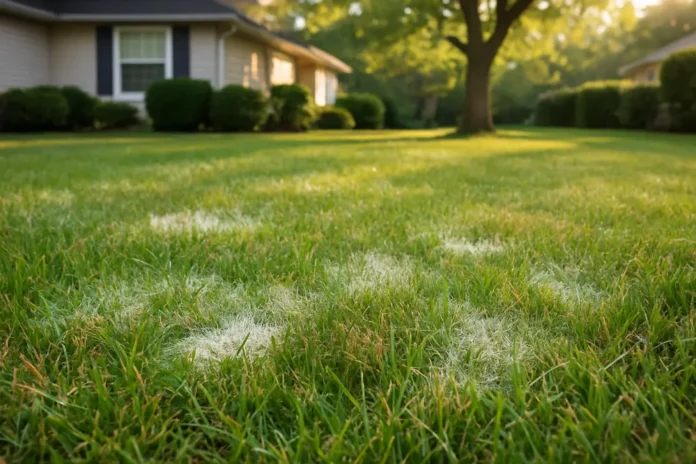
White spots on grass are most often caused by fungal diseases like powdery mildew or dollar spot, but they can also come from mineral residue, sap-sucking insects, or chemical injury. The exact cause depends on whether the spots look fuzzy, bleached, crusty, or tied to a clear lawn-care pattern.
Seeing grass covered with white spots can be alarming, especially when the rest of the lawn looked normal just days earlier. In many cases, the white color points to a surface problem such as fungal growth, residue, or bleaching rather than simple drought stress alone.
The tricky part is that several lawn issues can create a similar pale or chalky look. Some white spots appear as fuzzy patches on the blades, some look like bleached straw, and others leave behind a crusty film after watering or treatment. Once you match the appearance to the likely cause, the solution becomes much easier.
What White Spots on Grass Usually Mean
White spots on grass are a symptom, not a diagnosis. The color change may be sitting on the leaf surface, happening inside the blade tissue, or affecting entire patches of turf. That difference matters because a fungal coating needs a very different response than irrigation residue or herbicide splash.
In home lawns, the most common explanations are fungal disease, especially in humid or shaded conditions, powdery mildew, dollar spot, dried mineral deposits from hard water, insect-related white flecking, or bleaching from lawn products. Pet urine, fertilizer burn, and mowing stress usually cause yellowing or browning first, but they can leave grass looking pale white after the tissue dies.
- A fuzzy or dusty white coating often points to powdery mildew.
- Small tan-to-white patches in the lawn can suggest dollar spot or another turf fungus.
- A crusty or chalky film may be mineral residue from irrigation water or a product left on the blades.
- Grass that looks bleached or washed out may have chemical injury or sun-scald after treatment.
- Fine white stippling on blades can be linked to insect feeding, especially in stressed turf.
Fungal Diseases That Can Make Grass Look White
Powdery Mildew
Powdery mildew is one of the most recognizable causes of white spots on grass. It creates a dusty, gray-white coating on leaf blades that can look like flour or ash. This fungus is most common in shaded lawns with poor airflow, especially where grass stays damp for long periods but the soil is not necessarily soggy.
Cool-season grasses such as Kentucky bluegrass and fescue are especially prone to powdery mildew when they grow in deep shade. Overfertilizing with nitrogen can make the problem worse by pushing soft, lush growth that the fungus easily colonizes.
Dollar Spot and Other Patch Diseases
Dollar spot usually starts as small straw-colored spots, but under certain light or moisture conditions the damaged blades can look pale white from a distance. In the early morning, you may also notice a fine web-like fungal growth on affected grass. Patches can stay small at first, then merge into larger discolored areas.
Other fungal diseases, including snow mold, leaf spot, and certain blights, may leave bleached-looking grass behind after infection. The white color is often dead tissue rather than active fungus. If the lawn has gone through a period of cool damp weather, heavy dew, poor drainage, or frequent evening watering, fungus becomes much more likely.
- Fungal issues are more likely when spots spread during humid weather.
- Disease often appears where airflow is poor, shade is heavy, or watering is too frequent.
- Morning dew that lingers for hours creates ideal conditions for many turf fungi.
- Grass weakened by compacted soil or nutrient imbalance is more susceptible.
Non-disease Causes of White Spots
Hard Water and Mineral Residue
If your irrigation water contains a high level of minerals, especially calcium, lime, or salts, white residue can collect on grass blades and nearby hardscape. This often looks chalky or crust-like rather than fuzzy. The grass itself may still be healthy at first, but repeated buildup can interfere with blade appearance and soil balance over time.
Chemical Overspray or Lawn Product Residue
Some fertilizers, herbicides, fungicides, and hose-end treatments can dry on the lawn as a pale film if they are overapplied or not watered in correctly. In other cases, the product may bleach the leaf tissue and leave distinctly lighter spots. This is especially common when liquids are sprayed during hot sunny weather or mixed too strongly.
Insect Feeding Damage
Sap-sucking insects and certain mites can cause tiny white specks or stippling on grass blades. Up close, the spots may look pinprick-sized rather than patchy. Severe feeding can make the lawn appear silvery, faded, or lightly dusted. While this cause is less common than fungal disease, it should not be ruled out if you also notice thinning turf or active insects.
Sunscald and Stress Bleaching
Grass can sometimes look whitish after intense heat, reflected light, drought stress, or sudden exposure following tree pruning. This is not a true white spot disease, but a bleaching effect on weakened leaf tissue. It often shows up in scattered areas that receive the harshest afternoon sun.
How to Tell Which Cause You Are Dealing With
The appearance of the spots gives the best clue. Look closely at a few individual blades rather than only viewing the lawn from standing height. A coating that rubs off on your fingers suggests mildew or residue. Tissue that stays white after rubbing is more likely dead or bleached grass.
- Dusty and soft: likely powdery mildew.
- Chalky and crusty: often mineral residue or dried lawn product.
- Small round lawn patches: often dollar spot or another fungal issue.
- Tiny flecks on many blades: may be insect feeding damage.
- Sharp-edged pale streaks or spray-pattern spotting: often chemical overspray.
- Bleached areas in the hottest spots: heat or sun-related stress is more likely.
Timing also helps. White spots that appear after several cool humid mornings point strongly toward fungal disease. Spots that show up right after treatment, irrigation changes, or a spell of extreme heat are more likely related to residue or stress. If the lawn sits in deep shade and stays damp, mildew jumps higher on the suspect list.
What to Do for Fungal White Spots
If the white spots are caused by fungus, start by changing the lawn conditions that allow disease to spread. Turf fungi thrive when blades stay wet too long, airflow is limited, and grass is weak from stress. Cultural fixes often matter as much as fungicide.
- Water early in the morning so grass dries quickly after sunrise.
- Reduce watering frequency and avoid light daily sprinkling.
- Mow at the proper height for your grass type and never remove too much at once.
- Improve airflow by pruning nearby shrubs or low tree branches where possible.
- Bag clippings temporarily if disease is active and severe.
- Avoid heavy nitrogen feeding until the lawn is growing normally again.
For powdery mildew, increasing sunlight and airflow is often the most effective long-term improvement. For dollar spot, correcting low nitrogen and reducing leaf wetness can make a big difference. If the disease is spreading quickly or covering large areas, a lawn fungicide labeled for the specific disease may be warranted. Always follow label directions exactly and confirm it is approved for your grass type.
Do not keep applying fungicide blindly if the problem is actually residue or chemical injury. Misidentifying the issue can waste time and money while the lawn keeps declining for a different reason.
What to Do if the White Spots Are Residue or Chemical Damage
When the white spotting is coming from residue, the goal is to remove the buildup and prevent it from returning. If the lawn still feels healthy and the discoloration sits on the blade surface, a deep morning watering may help rinse off dried product or dust. In severe hard-water situations, recurring deposits may require adjusting irrigation practices or addressing water quality.
If bleaching followed a recent lawn treatment, the affected blades may not recover their color. Grass often has to grow out of the damage. Keep the lawn evenly watered, avoid additional stress, and hold off on extra products unless you know they are needed. Piling on fertilizer after chemical burn can make the injury worse.
- Rinse off fresh residue as soon as you notice it.
- Calibrate spreaders and sprayers so products are applied evenly.
- Do not spray lawn chemicals during the hottest part of the day.
- Follow label dilution rates carefully.
- Use overlap patterns carefully to avoid double coverage.
Lawn Care Conditions That Make White Spots More Likely
White spots rarely happen in isolation. They usually show up when the lawn is already dealing with conditions that favor disease or stress. Understanding those conditions helps prevent repeat problems, even after the current spots fade.
Too Much Shade
Shaded turf grows slowly, dries slowly, and is more prone to powdery mildew and thinning. If a lawn receives only a few hours of direct sun, some grass varieties will struggle no matter how carefully you water or fertilize.
Poor Airflow
Fences, dense shrubs, and crowded planting beds can trap humidity around the lawn. That humid pocket encourages fungal growth and keeps morning dew on the blades longer.
Overwatering
Grass needs deep, infrequent watering more than constant moisture. When the surface stays wet every day, fungal pathogens gain an easy foothold, and roots may stay too shallow to handle stress well.
Incorrect Mowing
Scalping weakens turf and exposes crowns to heat and stress, while dull mower blades shred leaf tips and create openings for disease. Keeping your mowing height and blade sharpness in range is a simple but important prevention step.
How to Prevent White Spots From Coming Back
A healthy lawn is much less likely to develop persistent white spotting. Prevention mostly comes down to keeping grass vigorous without creating the damp, lush conditions that fungi love.
- Water early and deeply instead of shallow evening watering.
- Match fertilizer timing and rate to your grass species and season.
- Aerate compacted soil so roots can grow more deeply.
- Overseed thin, shady areas with grass types better suited to lower light if appropriate for your region.
- Keep mower blades sharp and mow at the recommended height.
- Reduce shade where practical by selective pruning.
- Treat recurring fungal issues promptly before large patches form.
- Clean sprayers and spreaders so leftover products do not create accidental spotting.
If a certain area develops white spots year after year, the site conditions may be the real issue. A heavily shaded, damp side yard may never support the same lawn quality as an open sunny area. In those cases, a shade-tolerant groundcover, mulch bed, or landscape redesign may work better than fighting the problem every season.
When White Spots Mean the Lawn May Need Professional Help
Some lawn problems look similar enough that a close diagnosis matters. If the spots are spreading quickly, returning despite good care, or affecting a large portion of the yard, it may be worth getting a local extension office or lawn professional involved.
- The white spotting is spreading week by week.
- The grass is thinning badly or dying in patches.
- You have already changed watering and mowing without improvement.
- The lawn was recently treated and you suspect herbicide or fertilizer injury.
- You are not sure whether the issue is fungal, chemical, or insect-related.
- The same area develops the same symptoms every year.
A professional diagnosis can save time because the treatment for fungus, insects, and product injury is not interchangeable. Applying the wrong fix may delay recovery and increase costs.
FAQ
Can White Spots on Grass Go Away on Their Own?
Sometimes. Surface residue may rinse away, and minor fungal outbreaks can fade when weather dries out, but the underlying conditions often remain and the problem can return.
Is Powdery Mildew on Grass Serious?
It is usually not as destructive as some turf diseases, but it can weaken grass, reduce vigor, and make shaded lawns look poor for long periods if conditions do not improve.
Will Fungicide Fix All White Spots on a Lawn?
No. Fungicide only helps if a fungal disease is the actual cause. It will not correct hard-water residue, insect stippling, or chemical bleaching.
Can Hard Water Leave White Spots on Grass?
Yes. Irrigation water with high mineral content can leave a chalky white film on grass blades and nearby surfaces, especially after repeated watering.
Why Does My Grass Look White After Spraying Weed Killer?
The grass may have been bleached or burned by overspray, heat, incorrect mixing, or double application. In many cases, the damaged blades must grow out before color returns.
Do Insects Cause White Spots on Grass Blades?
They can. Certain insects and mites create tiny pale specks or stippling by feeding on the blades, though this is less common than fungal or residue-related causes.
Should I Mow Grass That Has White Fungal Spots?
You can mow if the lawn needs it, but avoid mowing when the grass is very wet, use a sharp blade, and clean equipment afterward to reduce stress and limit spread.
Need the right fix fast? Read our lawn disease treatment guide and compare the best fungicides, sprayers, and recovery products for a greener lawn with less guesswork.
