

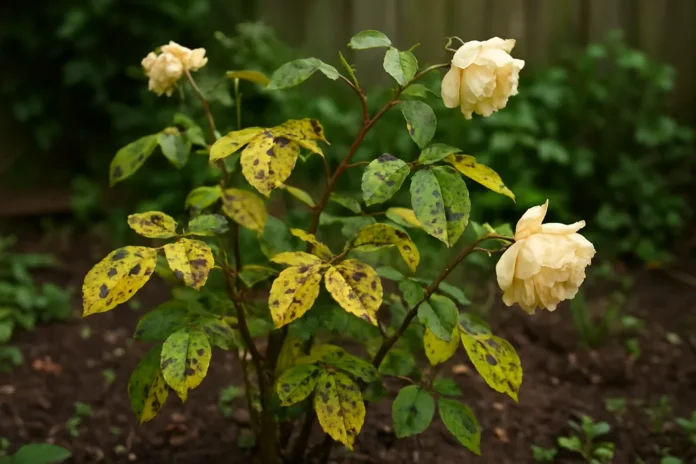
A rose plant usually starts dying because of water stress, disease, pest damage, root problems, or harsh growing conditions. Roses often decline when several stresses happen at the same time.
Seeing a rose decline can be frustrating, especially when it seemed healthy just weeks ago. A dying rose plant may drop leaves, develop black or yellow foliage, produce weak canes, stop blooming, or suddenly wilt from the top down.
In most cases, roses do not die from one mysterious cause. They usually decline because of a few overlapping problems such as too much or too little water, fungal disease, insect feeding, damaged roots, poor drainage, or weather extremes. The good news is that many of these issues can be recognized early and corrected before the whole plant is lost.
This guide walks through the most common reasons a rose plant looks like it is dying, what the warning signs usually look like, and which situations are most likely to cause fast decline versus slow decline over a full growing season.
Signs Your Rose Is Dying Instead of Just Stressed
Roses can look rough for a short time after transplanting, during a heat wave, or right after a hard prune. That does not always mean the plant is dying. A truly declining rose usually shows worsening symptoms over days or weeks, not a temporary slump that improves after weather changes or watering.
- Canes turning brown or black from the tips downward
- Leaves yellowing and dropping across much of the plant
- Wilted growth that does not recover by evening or the next morning
- Little to no new growth during the active season
- Blackened stems near the crown or a soft, rotting base
- Dead canes mixed with weak, spindly new shoots
- Flower buds drying up before opening
If the damage is limited to a few outer leaves or one cane, the rose may still be very recoverable. If most of the canes are dead, the crown is damaged, or the plant is collapsing from the base, the problem is more serious.
Watering Problems Are a Leading Cause of Rose Decline
Underwatering and Drought Stress
A rose that does not get enough water often develops dry soil, drooping leaves, crispy brown edges, small blooms, and bud drop. In hot summer weather, container roses and newly planted roses can decline quickly because their root systems are not deep enough to handle long dry stretches.
Severe drought stress can make canes shrivel and leaves fall early. If this continues, the plant cannot support healthy new growth and may appear to die back from the top.
Overwatering and Soggy Roots
Too much water can be even more dangerous than too little. Roses need moisture, but they also need oxygen around the roots. In constantly wet soil, roots begin to rot and lose the ability to take up water and nutrients. That creates a confusing symptom pattern where the plant looks wilted even though the soil is wet.
- Yellowing leaves across the plant
- Wilting in wet soil
- Soft, dark roots instead of firm white roots
- Slow growth and poor flowering
- Blackening near the crown or lower stems
Roses do best with deep watering followed by a slight dry-down near the surface, not daily shallow watering that keeps the root zone constantly saturated.
Poor Drainage and Root Damage Can Kill a Rose From Below
Even if your watering routine is reasonable, the planting site itself may be causing the problem. Heavy clay, low spots in the yard, compacted soil, or pots without enough drainage holes can trap water around the roots for too long. When roots stay wet, fungal root rot becomes much more likely.
Root damage can also happen after transplanting, digging nearby, vole activity, or winter heaving. A rose with a reduced root system may leaf out weakly in spring, then collapse once warm weather raises its water demand.
- The plant rocks loosely in the ground
- Growth is sparse even when leaves are green
- The soil smells sour or swampy
- The rose declines fast after rain
- Roots appear brown, mushy, or broken when inspected
Fungal Diseases Often Make Roses Look Like They Are Dying
Black Spot
Black spot is one of the most common rose diseases in the U.S. It causes dark, round leaf spots with yellow halos, followed by heavy leaf drop. A rose rarely dies from black spot alone in one season, but repeated defoliation weakens it badly and leaves it vulnerable to winter injury, pests, and general decline.
Powdery Mildew
Powdery mildew shows up as a pale, dusty coating on leaves, buds, and tender shoots. Infected leaves may curl, distort, and stop growing normally. Mild cases are mostly cosmetic, but heavy infections can stress the plant enough to reduce vigor and flowering.
Cane Cankers and Stem Dieback
When canes begin turning brown, purple-black, or sunken, stem canker may be involved. These infections often enter through pruning cuts, winter injury, or damaged tissue. Dieback can move down the cane and eventually affect the whole plant if it reaches the crown.
Botrytis and Bud Blight
In cool, damp weather, buds may fail to open and instead turn brown or moldy. While this usually does not kill the whole rose, it is a sign that air circulation is poor and moisture is lingering on the plant, which can support other diseases too.
Pests Can Weaken Roses Until They Collapse
Insect damage is not always dramatic at first, but steady feeding can drain a rose over time. Small pests reproduce quickly, especially during warm weather, and weakened plants become more vulnerable to disease and heat stress.
Aphids, Spider Mites, and Thrips
These sap-feeding pests remove plant fluids from tender growth. Aphids cluster on buds and shoots, spider mites cause stippling and bronzing, and thrips can scar petals and deform blooms. Heavy infestations reduce photosynthesis and stunt growth.
Rose Slugs and Japanese Beetles
Rose slugs skeletonize leaves, while Japanese beetles chew flowers and foliage. A healthy mature rose can tolerate some chewing, but repeated defoliation during summer can push an already stressed plant into decline.
Borers and Hidden Stem Pests
Less commonly, borers can tunnel into canes and cause sudden dieback above the damaged section. If a single cane dies unexpectedly while the rest of the plant seems normal, inspect for small entry holes or hollowed stems.
Nutrient Issues and Soil Imbalance May Be Part of the Problem
Roses are heavy feeders, but too little fertilizer and too much fertilizer can both cause trouble. Nutrient deficiencies usually show up as pale leaves, weak stems, and fewer blooms. Excess fertilizer can burn roots, cause leaf edge browning, or trigger soft growth that is more disease-prone.
Soil pH matters too. Roses generally perform best in slightly acidic soil. If pH is too high or too low, nutrients may be present in the soil but unavailable to the plant, leading to yellowing and poor vigor.
- Nitrogen deficiency often causes overall pale green or yellow leaves
- Iron deficiency usually shows yellow leaves with greener veins, especially on new growth
- Fertilizer burn may cause brown margins and root stress
- High salt buildup in containers can damage roots over time
If a rose has been in the same container or bed for years without soil improvement, the root zone may simply be depleted or chemically unbalanced.
Sun, Heat, Cold, and Wind Can Push a Rose Past Its Limits
Roses generally need full sun, but extreme weather still takes a toll. In hot regions, reflected heat from walls, driveways, or rocks can scorch leaves and dry the root zone faster than expected. During prolonged heat waves, even established roses may wilt, stop blooming, and shed leaves.
Cold injury is another common reason a rose appears dead. Harsh winters can kill cane tissue above the snow line, damage the graft union on grafted roses, or crack stems during freeze-thaw cycles. In spring, the rose may leaf out from the base only, or not at all if the crown was killed.
Strong drying wind can also burn foliage, break canes, and increase water loss, especially in exposed sites or on rooftop and patio containers.
Planting Depth, Crowding, and Poor Air Flow Create Long-term Problems
A rose planted too deeply can struggle with crown rot and weak growth. A rose planted too high may dry out quickly and suffer root exposure. Location matters just as much as care. Crowded planting reduces air circulation, keeps leaves wet longer, and encourages fungal disease.
If nearby shrubs or trees have gradually shaded the rose, reduced sunlight may be a hidden reason for fewer flowers, longer weak stems, and general decline. Roses that once thrived in a sunny bed can deteriorate as the garden matures around them.
- Less than 6 hours of direct sun can reduce vigor
- Dense surrounding plants hold moisture around leaves
- Competition from tree roots can steal water and nutrients
- Mulch piled against the crown can trap moisture and promote rot
Herbicide Drift and Chemical Damage Are Often Overlooked
Roses are sensitive to weed killers and some lawn treatments. Herbicide drift from a nearby spray application can distort leaves, twist new growth, scorch foliage, and slow the plant for weeks or months. In severe cases, the entire shrub may decline.
This type of injury is often mistaken for disease because the leaves look misshapen or burned. If the symptoms appeared suddenly after a lawn or fence-line treatment, chemical exposure should be considered.
Rose Rosette Disease Is a Serious Possibility in Some Regions
Rose rosette disease is a destructive viral-like disease spread by tiny eriophyid mites. It is especially important to watch for in many parts of the eastern and central U.S. Infected roses often develop strange red, excessive thorny growth, broom-like clusters of shoots, distorted leaves, and overall decline.
Unlike common fungal issues, rose rosette disease does not improve with better watering or routine fungicide sprays. Infected plants usually continue to decline and eventually die. Early recognition matters because the disease can spread to nearby roses.
When a Rose Is Dying in a Pot
Container roses often fail for slightly different reasons than in-ground roses. Pots heat up faster, dry out faster, and accumulate salts more quickly from fertilizer and hard water. At the same time, poorly draining potting mixes can stay wet at the bottom and rot roots.
- Roots circling tightly and becoming pot-bound
- Water running straight through without soaking the root ball
- Soil shrinking from the sides of the pot
- White salt crust on the soil surface or rim
- Winter root kill in exposed containers
A rose in a small or aging container may look chronically thirsty, stunted, or yellow simply because the root zone can no longer support healthy top growth.
How to Tell Whether Your Rose Can Recover
A rose still has a fair chance of recovery if the crown is firm, some canes remain green inside when lightly scratched, and new basal shoots are forming. Even if the top looks rough, living tissue near the base usually means the plant is still fighting.
Recovery is less likely when the entire crown is blackened or mushy, all canes are brittle brown to the base, or the root system is extensively rotted. Grafted roses may also send up growth from below the graft after the top dies, but that regrowth may be from the rootstock rather than the desired variety.
- Green tissue under the bark is a positive sign
- Firm roots and a stable crown support recovery
- Sudden collapse with blackened base suggests severe root or crown failure
- Odd red witches'-broom growth points toward rose rosette disease rather than simple stress
The Most Common Combinations That Lead to Rose Death
Roses often die from a chain reaction rather than a single issue. For example, a shrub planted in heavy soil may stay too wet in spring, develop root stress, lose leaves to black spot, and then fail during summer heat. Another rose may suffer winter cane injury, then become infected through damaged tissue and slowly decline.
The most common high-risk combinations include poor drainage plus overwatering, black spot plus repeated defoliation, drought plus spider mites, and winter injury plus cane canker. When more than one of these pressures is happening at once, decline can accelerate fast.
FAQ
Can a Rose Look Dead and Still Come Back?
Yes. Many roses lose leaves, suffer cane dieback, or appear dead after winter or drought, yet regrow from living tissue near the base. If the crown is firm and some canes are still green inside, recovery is possible.
Why Are My Rose Leaves Turning Yellow Before the Plant Dies?
Yellow leaves often point to overwatering, poor drainage, nutrient problems, black spot, or root stress. When yellowing spreads across the plant and is followed by leaf drop, the rose is becoming too weak to support healthy growth.
How Do I Know if I Am Overwatering My Rose?
A rose that is overwatered may wilt in wet soil, develop yellow leaves, grow slowly, and show blackening near the lower stems. Consistently soggy soil and a sour smell in the root zone are major warning signs.
Can Black Spot Kill a Rose Bush?
Black spot usually does not kill a healthy rose in a single season, but repeated infections can weaken the plant badly. Severe defoliation reduces energy, increases stress, and makes the rose more vulnerable to heat, cold, and other diseases.
Why Is My Potted Rose Dying Faster than My Garden Roses?
Container roses dry out faster, overheat more easily, and can develop root problems quickly if the pot drains poorly or the plant becomes root-bound. Salt buildup from fertilizer is also more common in pots.
What Does Rose Rosette Disease Look Like?
Rose rosette disease often causes excessive thorny growth, distorted leaves, clusters of red shoots, and broom-like branching. The plant gradually becomes misshapen and declines rather than returning to normal growth.
Can Too Much Fertilizer Kill a Rose?
Yes. Excess fertilizer can burn roots, cause leaf browning, and create weak, overly soft growth. In containers, fertilizer salts can build up and steadily damage the root system.
Need the right fix fast? Read our rose disease and pest treatment guides to choose the best sprays, soil amendments, and care tools before your plant declines further.
