

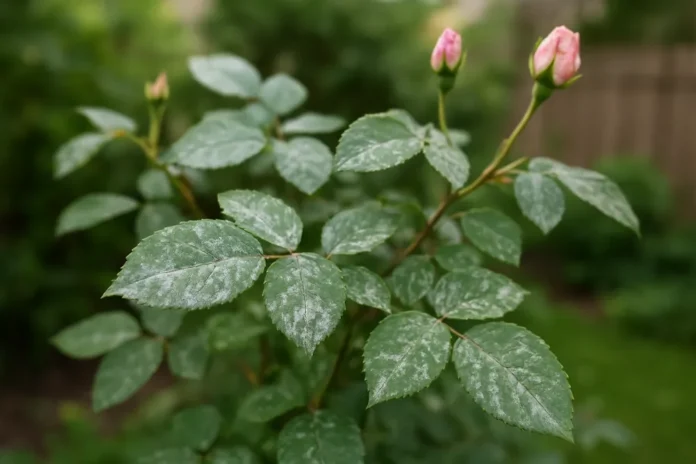
The white powder on your rose leaves is usually powdery mildew, a common fungal disease. It forms a dusty coating on leaves, buds, and stems, especially when air circulation is poor and humidity is high.
If you see white powder on your rose leaves, the most likely cause is powdery mildew. This common fungal disease looks like someone dusted the plant with flour or baby powder, and it often shows up on new growth, tender shoots, and flower buds before spreading across the plant.
Powdery mildew is frustrating because roses can look healthy one week and suddenly develop a noticeable white coating the next. The good news is that it is usually manageable for home gardeners. With a quick diagnosis and the right care, you can slow the spread, protect new growth, and help your rose recover.
What Powdery Mildew Looks Like on Roses
Powdery mildew is a fungal disease that creates a pale gray or white, dusty film on rose foliage. Early on, you may notice small white patches on the upper surface of leaves. As the disease progresses, those patches join together and can cover leaves, stems, buds, and even sepals.
Unlike many leaf diseases, powdery mildew does not need standing water on the leaf to infect the plant. That is one reason it can surprise gardeners. A rose can develop it even when the weather has seemed fairly dry.
Common Signs
- White or light gray powdery patches on leaves
- Young leaves that curl, twist, or look distorted
- Flower buds that stay small or fail to open normally
- New shoots with a dusty coating
- Leaves that yellow, dry out, or drop early in severe cases
On roses, new growth is often hit first because it is tender and more vulnerable. If left untreated, the plant may keep growing, but it can look stunted, stressed, and much less attractive through the blooming season.
Why Roses Get White Powdery Growth
Powdery mildew thrives when conditions favor fungal spores. Roses are especially prone to it during mild days, cool nights, high humidity, and periods when air movement is poor. The fungus spreads by spores carried on wind, tools, hands, or nearby infected plants.
Conditions That Encourage Powdery Mildew
- Crowded plants with poor airflow
- Shade or limited morning sun
- Warm days followed by cool, damp nights
- Heavy nitrogen fertilizing that pushes soft new growth
- Overhead watering late in the day
- Planting susceptible rose varieties in mildew-prone spots
A common misconception is that powdery mildew only appears in constantly wet weather. In reality, high humidity around the plant is often enough. Dense plantings, fences, walls, and surrounding shrubs can trap still air and create a pocket where the fungus thrives.
Why Some Years Are Worse than Others
Weather patterns play a big role. Springs with cool nights and rapid flushes of new growth often bring more mildew. If you had a mild winter or a wet, slow spring, fungal spores may also survive and build up earlier than usual. Even the same rose bush can look clean one season and heavily infected the next depending on weather and surrounding plant growth.
How to Tell if It Is Powdery Mildew or Something Else
White residue on rose leaves is usually powdery mildew, but it is worth ruling out a few other possibilities. The right treatment depends on knowing whether you are dealing with a disease, insect activity, or harmless residue.
Powdery Mildew Vs Spray Residue
Hard water spots, dried fertilizer spray, or leftover foliar product can sometimes leave a pale film on leaves. Residue tends to look more spotty or crusty and usually appears evenly wherever the spray landed. Powdery mildew looks fuzzy or dusty and often spreads in irregular patches that grow over time.
Powdery Mildew Vs Downy Mildew
Downy mildew is a different disease and is generally more serious on roses. It often causes red, purple, or dark blotches on leaves, with grayish growth mostly on the undersides. Powdery mildew is more likely to create obvious white coating on the upper leaf surface and on shoots.
Powdery Mildew Vs Pests
Some insects leave behind white materials, but they usually look different. Mealybugs appear as small cottony clumps clustered along stems or leaf joints. Spittlebugs create foamy masses. Spider mite damage causes stippling and fine webbing rather than a flour-like coating.
A Quick Visual Check
- If it rubs off like dust, powdery mildew is likely
- If leaves are twisting or new buds are deformed, mildew is even more likely
- If the white material is clumped around stems or insects are visible, suspect pests
- If the leaf has dark blotches or purple patches, consider another disease
How to Treat White Powder on Rose Leaves
The best treatment depends on how advanced the infection is. Mild cases can often be controlled by pruning, sanitation, and improving growing conditions. Heavier outbreaks may need a fungicide labeled for powdery mildew on roses.
Start with Simple Cleanup
- Remove the worst infected leaves and soft shoots.
- Prune out crowded interior growth to improve airflow.
- Rake up fallen leaves and discard them rather than composting if disease pressure is high.
- Clean pruners between cuts if you are removing a lot of infected material.
Do not strip the plant bare unless the infection is severe. Roses still need enough healthy foliage to keep growing. Focus first on the most coated leaves, distorted tips, and badly affected buds.
Use a Labeled Fungicide when Needed
For active outbreaks, home gardeners often use fungicides containing sulfur, potassium bicarbonate, neem oil, horticultural oil, or other ingredients labeled for powdery mildew control on roses. Read the label carefully and make sure the product is approved for ornamental plants and specifically for powdery mildew.
Coverage matters. Spray upper and lower leaf surfaces, young stems, and buds according to label directions. Most products work best when applied at the first sign of disease and repeated as directed. They protect clean growth better than they erase heavy damage that is already there.
Important Spraying Tips
- Spray in the early morning or evening if the label allows, especially during hot weather
- Do not mix products unless the label says it is safe
- Avoid spraying stressed plants during extreme heat
- Follow reapplication timing exactly for the best control
- Test any new product on a small area first if label guidance suggests it
What Not to Do
Avoid throwing every homemade remedy at the plant at once. Some DIY sprays can burn rose foliage or interfere with other treatments. Also avoid heavy fertilizing while the plant is actively infected. Too much quick nitrogen can push soft new growth that gets infected just as fast as it appears.
How to Prevent Powdery Mildew From Coming Back
Once powdery mildew appears, prevention becomes just as important as treatment. The goal is to keep roses dry, airy, and growing steadily without forcing lush, weak growth.
Give Roses the Conditions They Prefer
- Plant roses where they get at least six hours of sun, with good morning light if possible
- Space plants so air can move freely around and through them
- Prune annually to open the center and reduce congestion
- Water at the base rather than overhead when practical
- Apply mulch to help stabilize soil moisture and reduce plant stress
Good culture makes a major difference. A rose that dries quickly after cool nights and has plenty of airflow is less likely to support a heavy mildew outbreak than one crammed against a fence in still, humid air.
Feed Without Overdoing It
Roses bloom best with regular nutrition, but overfertilizing can backfire. Fast, tender growth is often the first growth infected. Use a balanced rose fertilizer at the recommended rate and time your feeding to support healthy growth rather than constant soft flushing.
Choose Resistant Varieties when Possible
Some roses are simply less prone to powdery mildew than others. If you are repeatedly battling disease in the same spot, consider replacing highly susceptible varieties with modern disease-resistant shrubs or landscape roses. That one change can reduce spraying and cleanup dramatically.
Stay Ahead of Repeat Outbreaks
If powdery mildew hits your garden every year, preventive fungicide applications early in the season may be worthwhile. Begin before the plant is heavily coated and continue only as label directions recommend. Preventive treatment is usually more effective than trying to rescue a rose after mildew has spread to most of the new growth.
Will Powdery Mildew Kill a Rose?
Powdery mildew rarely kills an established rose by itself, but it can weaken the plant and reduce flowering. Repeated infections can cause leaf drop, poor bud development, reduced vigor, and more stress during summer heat or winter dormancy.
Young roses, container roses, and plants already stressed by drought, poor soil, or pests can suffer more. A severe infection does not usually mean the plant is doomed, but it does mean the rose needs attention so it can keep enough healthy foliage to fuel recovery.
When to Be More Concerned
- Most new shoots are coated and distorted
- Flower buds stop developing
- Large portions of the plant are defoliating
- The rose also has black spot, cane dieback, or pest pressure
- A newly planted rose is struggling to establish
If the plant is declining despite basic treatment, step back and look at the whole growing environment. Chronic mildew often points to a location problem, a highly susceptible variety, or a broader stress issue that needs to be corrected.
When to Remove Leaves, Prune Harder, or Replace the Plant
Most roses recover well from light to moderate powdery mildew with regular care. Still, there are times when stronger action makes sense. If a rose is repeatedly infected season after season and spends more time diseased than blooming, replacement may be the best long-term solution.
Remove Leaves When
- Only a limited number of leaves show obvious white coating
- New growth is infected but the rest of the plant is still healthy
- You want to reduce spores before a labeled spray treatment
Prune Harder When
- The center of the plant is dense and humid
- Many shoot tips are deformed or heavily coated
- Airflow is poor and light cannot reach inner growth
Consider Replacement When
- The rose gets severe mildew every year despite good care
- Its planting spot stays shaded and still, and cannot be improved
- You want a lower-maintenance landscape rose with stronger disease resistance
For many home gardeners, the easiest fix is not a stronger spray. It is better spacing, better sun, and a more resistant rose variety. Those changes reduce disease pressure season after season and make the plant much easier to enjoy.
FAQ
Can I Just Wipe the White Powder Off My Rose Leaves?
You can wipe or rinse some of it off, but that will not solve the disease by itself. Powdery mildew spreads through spores and often remains on new growth unless you improve conditions and use treatment if needed.
Is White Powder on Roses Harmful to People or Pets?
Powdery mildew on roses is mainly a plant problem, not a serious hazard to people or pets. The bigger concern is plant health and the spread of spores to other susceptible ornamentals nearby.
Should I Remove All Infected Leaves at Once?
No, not usually. Remove the worst leaves and affected shoot tips, but leave enough healthy foliage for the rose to keep growing unless the infection is extremely severe.
Does Rain Wash Powdery Mildew Away?
Rain may knock some visible growth off, but it usually does not eliminate the disease. Powdery mildew can persist and return quickly when conditions remain favorable.
Can Overwatering Cause White Powder on Rose Leaves?
Overwatering does not directly create powdery mildew on leaves, but excess moisture, dense growth, and poor airflow can make fungal problems worse. Watering late in the day and crowding plants can also contribute.
What Is the Best Homemade Spray for Powdery Mildew on Roses?
Many gardeners try homemade remedies, but results are inconsistent and some mixtures can damage rose foliage. A labeled fungicide for powdery mildew on roses is usually safer and more reliable.
Will Powdery Mildew Spread to Other Plants?
Yes, powdery mildew spores can spread through the air and infect other susceptible plants. The exact fungus may favor certain hosts, but nearby ornamentals can still be at risk.
Can a Rose Recover After Severe Powdery Mildew?
Yes, many roses recover if you remove the worst growth, improve airflow, and manage the disease early enough. Recovery is faster when the plant is otherwise healthy and not dealing with drought, pests, or other diseases.
Need the right fix fast? Read our guide to the best rose fungicides and care products so you can stop powdery mildew early and keep blooms coming.
