

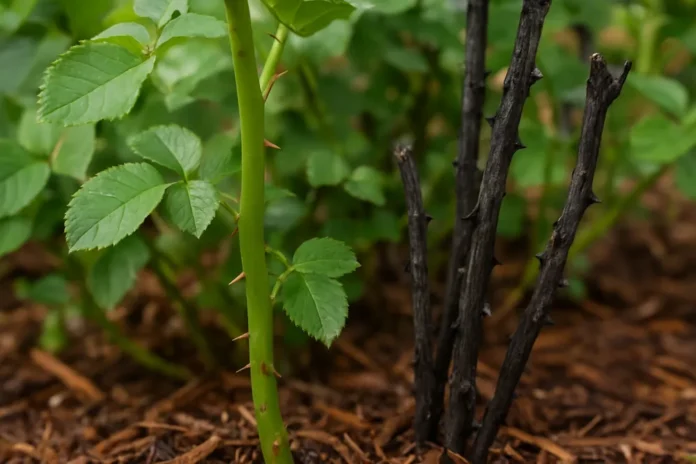
Rose stems usually turn black because the cane tissue has died from cold damage, disease, rot, or physical stress. In many cases, black stems are a sign of dieback or canker rather than a simple cosmetic problem.
When rose stems are turning black, it usually means part of the cane has been damaged or has already died. Sometimes the problem starts after a hard freeze, rough pruning cut, or a long stretch of wet weather. Other times, blackened stems are tied to cane canker, stem rot, or a graft issue near the base of the plant.
The good news is that black rose stems do not always mean the entire bush is lost. Roses often recover well when you remove dead wood promptly, improve air flow, and correct the stress that triggered the damage. The key is figuring out whether the blackening is limited to the tip, spreading down the cane, or starting near the crown or roots.
What Black Rose Stems Usually Mean
Healthy rose canes are usually green on the outside when young and may mature to reddish, tan, or woody brown depending on the variety. When a stem turns black, that tissue is no longer functioning normally. The black color may appear dry and shriveled, soft and mushy, or sunken and blotchy. Each pattern suggests a different cause.
Blackening often means the cane has stopped moving water and nutrients. Once that happens, leaves above the damaged area may wilt, yellow, or dry up. Buds may fail to open, and new shoots may die back before they mature.
- A dry black tip often points to winter kill or dieback after pruning.
- A sunken black lesion may suggest cane canker or another stem infection.
- A soft black stem near the base can point to crown rot or root-related decline.
- A blackened area after flowering or pruning may indicate damage entering through a wound.
Common Causes of Black Rose Stems
Winter Injury and Cold Damage
One of the most common reasons rose stems turn black is cold injury. A sudden freeze, drying winter wind, or repeated thaw-freeze cycles can kill cane tissue. This is especially common on hybrid teas, floribundas, and newly planted roses that have not fully hardened off. Damage may not show up right away. In spring, stems that looked fine can gradually darken from the tip downward.
Cane Dieback After Pruning
Roses sometimes develop black tips after pruning, deadheading, or storm breakage. This is called cane dieback. The cut itself is not always the problem. It is often a sign that the cane was already weak, the cut was made into unhealthy tissue, or disease organisms entered through the wound. Dieback can move from the cut end farther down the stem if the tissue is not removed back to healthy wood.
Cane Canker and Fungal Infection
Several fungal pathogens can infect rose canes and cause dark brown or black lesions. These infections may look like streaks, patches, or sunken rings around the stem. Cankers often develop on stressed roses, especially after winter injury, insect damage, or poor pruning cuts. Once a canker girdles the cane, everything above it begins to fail.
Excess Moisture and Rot
When blackening starts low on the plant, wet soil or poor drainage may be involved. Roots that sit in water cannot function well, and the crown area may begin to rot. This can cause canes to turn dark at the base, feel soft, and collapse. Roses dislike constantly soggy soil, especially in heavy clay or poorly drained beds.
Mechanical Damage and Sunscald
Physical injury from string trimmers, staking ties, pets, hail, or cracking from weather can create damaged spots that later darken. In some climates, canes can also be injured by intense winter sun followed by freezing nights. The tissue dries out or splits, then blackens as it dies.
Graft or Crown Problems
If the blackening begins near the graft union or crown, the problem may be more serious. A damaged graft, crown gall, or advanced root decline can reduce water movement to all upper growth. In that case, multiple canes may blacken at once, and recovery depends on whether healthy tissue remains below the damage.
How to Tell Which Cause Is Most Likely
The location and texture of the blackened stem tell you a lot. Start by looking at where the discoloration begins, how quickly it is spreading, and whether the tissue feels dry or soft. Also note whether the problem affects one cane or the whole plant.
- If only the tips are black and dry, winter damage or pruning dieback is likely.
- If you see dark sunken patches on otherwise green stems, cane canker is more likely.
- If lower stems or the crown are black and soft, suspect rot or poor drainage.
- If several canes fail at once and leaves are sparse, look at root stress or graft damage.
- If blackening follows a fresh cut or broken cane, wound-related dieback is a strong possibility.
You can also make a small test cut on the stem. Healthy rose cane tissue is green or creamy white inside. Dead tissue is brown to black inside and will not recover. Always use clean pruners when making diagnostic cuts so you do not spread disease.
What to Do Right Away
Prune Back to Healthy Wood
The first step is to remove blackened stems or cut them back to living tissue. Make each cut slightly above an outward-facing bud if possible, and keep cutting lower until the center of the cane is green or white. If the cane is black all the way to the base, remove it entirely.
Disinfect Tools Between Cuts
When disease may be involved, wipe pruners between cuts with rubbing alcohol or a disinfecting solution appropriate for garden tools. This lowers the chance of moving pathogens from one cane to another.
Remove and Discard Infected Material
Do not leave black, diseased, or rotting cane pieces around the base of the rose. Bag them and throw them away. Avoid composting clearly infected stems unless you maintain a hot compost system that reliably kills pathogens.
Adjust Water if Soil Stays Wet
If the ground is soggy, reduce irrigation and improve drainage around the plant. Roses need deep watering, but they should not stay constantly saturated. Let the top few inches of soil dry slightly between waterings in most situations.
- Cut away all blackened tip growth until you reach healthy tissue.
- Remove entire canes that are fully black, hollow, or mushy.
- Clean up fallen leaves and prunings around the plant.
- Hold fertilizer until you see active healthy regrowth.
When Disease Is the Problem
Fungal stem diseases are more likely when roses are crowded, frequently wet, or already stressed by cold or drought. Cane canker often enters through injured tissue. Blackened lesions may expand slowly and kill the stem above them. Good sanitation and pruning are the main first-line treatments.
A fungicide may help protect healthy new growth in some cases, but it will not bring dead black cane tissue back to life. If your roses have a history of fungal problems, choose a product labeled for roses and stem diseases, and follow the label exactly. Coverage and timing matter more than one heavy application.
- Increase spacing or thin nearby growth to improve air movement.
- Water at the soil line rather than overhead whenever possible.
- Prune out weak, crossing, and injured canes promptly.
- Avoid excess nitrogen that pushes soft, disease-prone growth.
When Black Stems Point to Root or Crown Trouble
If stems are blackening from the bottom up, do not focus only on the canes. Problems in the roots or crown often show above ground as dark, failing stems. Roses planted too deep in heavy soil, sitting in a low wet spot, or growing in a container without good drainage are especially vulnerable.
Signs of deeper trouble include multiple canes declining at once, poor leaf size, yellowing, very slow spring growth, and a crown that feels soft or smells sour. In severe rot cases, the plant may not be salvageable. If some roots are still healthy and the crown remains firm, improving drainage and removing dead growth may allow recovery.
Warning Signs That the Whole Plant May Be Failing
- Blackening starts at the base rather than the tip.
- Canes feel soft, water-soaked, or collapse easily.
- New shoots wilt even when soil is moist.
- The graft union looks damaged, cracked, or rotten.
- Most of the plant shows decline at the same time.
How to Prevent Rose Stems From Turning Black Again
Prevention comes down to reducing stress and limiting the conditions that let disease take hold. Roses are much more likely to develop blackened canes when they are weakened by winter injury, wet roots, poor air flow, or repeated mechanical damage.
Improve Winter Protection
In colder parts of the U.S., stop fertilizing in late summer so plants can harden off before winter. After the ground begins to freeze, mound soil or mulch around the base of tender roses if that is recommended for your region. Avoid encouraging late soft growth that will be easily damaged by frost.
Prune with Timing and Cleanliness in Mind
Major pruning is usually best done at the proper seasonal window for your rose type and climate, often around late winter to early spring when buds begin to swell. Clean cuts heal better than torn ones. Remove dead or damaged wood promptly any time you see it.
Keep the Root Zone Evenly Moist, Not Soggy
Deep, less frequent watering is generally better than frequent shallow watering. Mulch helps regulate moisture and temperature, but keep it slightly away from the crown so the base of the plant stays drier and better ventilated.
Choose Disease-resistant Varieties when Possible
If you are replacing struggling roses, look for varieties noted for strong disease resistance and winter toughness in your region. A rose well suited to your climate is less likely to suffer the stress that leads to canker, dieback, and blackened stems.
When to Replace the Rose
Some roses rebound after losing one or two canes, especially if the crown is healthy and new basal shoots appear. But if nearly every cane is black, the crown is compromised, and no healthy tissue remains after pruning, replacement may be the better option.
Before pulling the plant, check for green tissue low on the canes or signs of new shoots emerging from above the graft. If all wood is brown or black inside and the base is soft or rotten, the rose is unlikely to recover well. In that case, remove the plant, improve the site, and replant only after addressing drainage or disease issues.
FAQ
Can a Black Rose Stem Turn Green Again?
No. Once stem tissue has turned black and died, it will not recover. You need to prune back to healthy green or creamy white wood.
Should I Cut Off Black Rose Stems?
Yes. Remove blackened stems or cut them back until the inside of the cane is healthy. Leaving dead tissue in place can encourage more dieback and disease.
Why Are My Rose Stems Black After Winter?
Winter injury is a very common cause. Freezing temperatures, drying winds, and repeated thaw-freeze cycles can kill cane tissue that later turns black in spring.
Are Black Stems on Roses Caused by Too Much Water?
Sometimes. Overly wet soil and poor drainage can lead to root stress or crown rot, especially when blackening begins near the base of the plant and stems feel soft.
Can Pruning Cause Rose Stems to Turn Black?
Yes. Improper timing, dull tools, torn cuts, or cutting into weak tissue can lead to cane dieback. Disease can also enter through pruning wounds if the plant is stressed.
Do I Need Fungicide for Black Rose Stems?
Not always. Pruning out affected canes and improving air flow are the most important steps. Fungicide may help protect healthy tissue if a labeled rose stem disease is present, but it will not fix dead black wood.
How Do I Know if the Whole Rose Bush Is Dying?
If multiple canes blacken from the base, the crown is soft, new growth fails, and no green tissue remains after pruning, the plant may be beyond recovery.
Need the right tools and treatments for rose problems? See our guide to the best rose fungicides, pruners, and soil fixes so you can stop dieback and get healthy blooms faster.
