

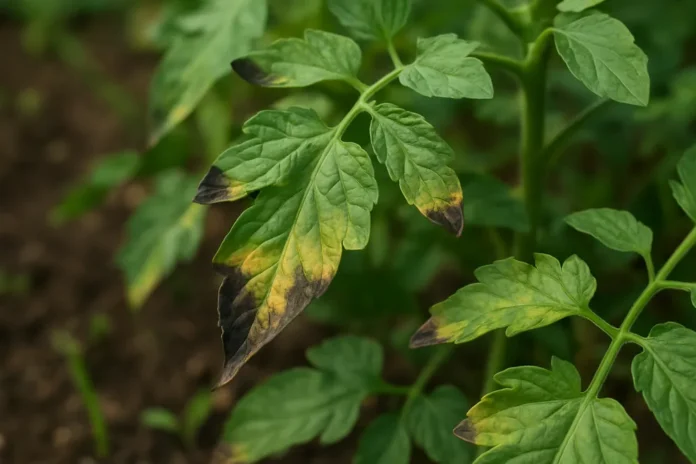
Tomato leaf tips usually turn black because the plant is under stress from watering problems, fertilizer or salt buildup, disease, or weather damage. The blackening is often dead tissue at the leaf edge rather than a stand-alone disease.
Seeing tomato leaf tips develop black tips can be alarming, especially when the rest of the plant still looks mostly healthy. In many cases, blackened tips are a sign that leaf tissue has died after the plant went through stress, not proof of one specific disease on its own.
Tomatoes are sensitive to uneven moisture, excess fertilizer, root trouble, and sudden swings in heat, sun, or wind. The pattern of damage matters a lot. Black tips on older leaves often suggest salt or nutrient stress, while blackening paired with spots, wilting, or stem lesions can point to a disease problem.
The good news is that you can usually narrow the cause down by looking at where the blackening starts, how fast it spreads, and what has changed recently in watering, feeding, or weather. Once you match the symptom to the cause, the right fix is much easier.
What Black Leaf Tips Usually Mean on Tomatoes
When a tomato leaf tip turns black, that part of the leaf is no longer functioning. The tissue has been damaged enough to die, a condition gardeners often call necrosis. Blackening at the very end of the leaf usually happens after stress moved through the plant's water or nutrient system, or after a pathogen damaged the leaf.
Leaf tip blackening is a symptom, not a diagnosis. It may stay limited to a few leaves, or it may spread if the underlying problem continues. Your goal is to decide whether the issue is mostly environmental, nutritional, root-related, or disease-related.
- If tips look dry, crisp, and dark, watering stress or salt buildup is common.
- If edges and tips blacken after feeding, fertilizer burn is a strong possibility.
- If black areas are tied to spots, yellow halos, fuzzy growth, or stem damage, suspect disease.
- If only exposed leaves are damaged after extreme weather, sun and heat injury may be involved.
Watering Problems Are One of the Most Common Causes
Underwatering and Drought Stress
Tomatoes need consistent moisture to move water and nutrients into their leaves. When soil dries too much between waterings, the farthest points of the leaf, especially tips and margins, are the first to suffer. Those areas may turn brown first and then look very dark brown or black as they dry out completely.
This is especially common in containers, raised beds during heat waves, and plants with lots of fruit. A tomato can look wilted in the afternoon, recover in the evening, and still develop tip damage over time if that cycle keeps repeating.
Overwatering and Poor Drainage
Too much water can cause similar symptoms from the opposite direction. Saturated soil pushes oxygen out of the root zone, and stressed roots cannot supply the foliage properly. Leaves may yellow, curl, and develop darkened tips because the roots are effectively suffocating.
In soggy beds or pots without enough drainage, black tips often show up along with limp growth, slow development, and a generally unhealthy plant. If the lower leaves are yellowing and the soil stays wet for days, excess water is a likely contributor.
- Water deeply and consistently instead of giving frequent shallow sprinkles.
- Let the top inch of container soil dry slightly before watering again, but do not allow the whole root ball to dry out.
- Mulch around in-ground tomatoes to reduce rapid moisture swings.
- Improve drainage if water stands around roots after rain or irrigation.
Fertilizer Burn and Salt Buildup Can Blacken Leaf Tips
One of the classic causes of black or scorched leaf tips is excess fertilizer. Tomato plants are heavy feeders, but too much synthetic fertilizer or too many concentrated liquid feedings can pull water out of root tissues and damage the leaves. The ends and edges of leaves are where that injury often shows first.
Salt buildup is especially common in containers, grow bags, and self-watering planters where minerals accumulate over time. It can also happen if you use softened household water, apply fertilizer too often, or mix at stronger-than-label rates.
Signs That Point to Fertilizer or Salt Injury
- Leaf tips turn brown, then black, and may look burned or crispy.
- Older leaves are often affected first.
- Symptoms appear soon after feeding.
- White crusts may appear on the soil surface or around the pot rim.
- Plant growth may look lush at first, then suddenly stressed.
If fertilizer burn is the issue, stop feeding temporarily and flush the root zone with plain water, especially in containers. Going forward, feed at a moderate rate and follow label directions closely. Tomatoes perform better with steady nutrition than with large, irregular doses.
Root Stress Can Show Up First at the Leaf Tips
Healthy leaves depend on healthy roots. If roots are cramped, damaged, diseased, or exposed to extreme temperatures, the leaves may respond with yellowing, curling, and blackened tips. This can happen even when watering and fertilizer seem reasonable.
Common Root-related Triggers
- Root-bound tomatoes in small pots
- Transplant shock after planting out
- Compacted garden soil that limits root spread
- Root rot from overly wet conditions
- Mechanical injury during staking, digging, or weeding
- Cold spring soil or overheated container soil in midsummer
If the plant is in a pot, check whether roots are circling densely around the container edge. A plant that dries out every day or seems stalled may need a larger container. In beds, avoid cultivating too close to the stem, since tomato feeder roots are often near the soil surface.
Leaf Diseases Can Also Cause Blackened Tips
Early Blight and Septoria Leaf Spot
Several common tomato diseases can make leaf tips look black, especially once spots merge and larger sections of tissue die. Early blight often starts with brown lesions that develop concentric rings, while Septoria begins as many small spots on lower leaves. As damage expands, the ends of leaves may darken and collapse.
Bacterial Diseases
Bacterial speck, bacterial spot, and bacterial canker may all lead to dark lesions on foliage. In some cases, leaf margins and tips become scorched or blackened as the infection progresses. These problems are more likely when weather is warm and wet, and when leaves stay damp for long periods.
Late Blight and Severe Fungal Issues
Late blight can cause dark, water-soaked lesions that rapidly become brown to black. Under humid conditions, you may also see pale or fuzzy growth on the undersides of affected leaves. This disease tends to move quickly and can affect stems and fruit as well as foliage.
Disease is more likely than simple stress when black tips come with spotting patterns, spreading lesions, yellow halos, stem cankers, or fast-moving decline. Remove badly affected leaves, avoid overhead watering, improve spacing for airflow, and use a tomato-labeled fungicide or bactericide only when the disease pattern fits and product labels allow.
Sun, Heat, Wind, and Chemical Exposure May Be to Blame
Tomato leaves can blacken at the tips after sudden environmental shocks. Plants moved abruptly from indoor conditions to full sun, or transplants set out during hot, windy weather, may develop scorched tips. Tissue can start pale or papery and later turn dark as it dies.
Heat stress is especially tough on tomatoes in dark containers, against heat-reflecting walls, or in patios where air movement is poor. Wind can worsen the problem by increasing water loss through the leaves. In these cases, tip blackening may be worst on the most exposed side of the plant.
Herbicide Drift and Spray Injury
Tomatoes are also very sensitive to herbicides. Drift from lawn weed killers or nearby spraying can distort leaves, curl new growth, and sometimes cause darkened tips and edges. Some insecticidal soaps, foliar feeds, or homemade sprays can also burn foliage if applied in strong sun or at too high a concentration.
- Harden off transplants gradually before full outdoor exposure.
- Water early so plants face heat with hydrated roots.
- Use light afternoon shade in extreme heat, especially for potted tomatoes.
- Avoid foliar spraying during the hottest part of the day.
- Keep herbicide products far from tomatoes and watch for drift from neighbors or lawn treatments.
Less Common Nutrient Issues That Can Contribute
True nutrient deficiencies are not the most common reason for black leaf tips, but imbalances can contribute to stress and necrosis. Potassium deficiency, for example, may cause scorching along leaf edges and tips, especially on older leaves. Calcium issues are better known for blossom end rot on fruit, but poor calcium movement can also reflect broader moisture inconsistency in the plant.
Before adding more fertilizer, remember that symptoms that look like deficiency can actually come from roots being unable to take nutrients up. Overwatering, compacted soil, high pH, and salt buildup can all block uptake even when nutrients are present.
If your tomatoes have not been fed at all and older leaves are showing edge scorch without disease spotting, a balanced tomato fertilizer may help. If you have already been feeding regularly, more fertilizer is unlikely to be the answer and may make the problem worse.
How to Tell Which Cause Is Most Likely
Use the pattern on the plant to narrow things down. Tomato symptoms rarely need to be guessed at blindly when you compare where the damage appears, what the leaf feels like, and what changed in the last week or two.
- Dry, crispy black tips on older leaves: often fertilizer burn, salt buildup, or repeated underwatering.
- Soft or dark tips with yellowing and limp growth: often overwatering, poor drainage, or root rot.
- Blackening with many spots or ringed lesions: often fungal or bacterial leaf disease.
- Damage mainly on exposed upper leaves after hot weather: often heat, sun, or wind injury.
- Distorted new growth with odd curling and burn: possible herbicide or spray injury.
It is also helpful to look at the whole plant. If fruit looks normal and new growth is healthy, the issue may be temporary stress on older leaves. If stems are darkening, the plant is wilting despite moist soil, or symptoms are spreading quickly upward, act quickly and consider disease or root failure.
What to Do Right Now to Help the Plant Recover
Blackened leaf tips will not turn green again, but the plant can still recover well if the underlying cause is corrected. Focus on stabilizing care rather than forcing growth with extra products.
- Adjust watering so the soil stays evenly moist, not bone dry and not waterlogged.
- Pause fertilizer if you have been feeding heavily or recently applied a strong product.
- Flush container soil with plain water if salt buildup or fertilizer burn is likely.
- Remove only the worst damaged leaves, especially if they are mostly dead or clearly diseased.
- Increase airflow by spacing plants properly and pruning lightly if foliage is very crowded.
- Protect the plant from severe afternoon heat or drying wind while it rebounds.
- Inspect stems, leaf undersides, and the soil surface for signs of disease, pests, or drainage problems.
Avoid overreacting by adding multiple treatments at once. Many tomato problems become worse when a stressed plant is hit with extra fertilizer, extra water, and repeated sprays all in the same week.
How to Prevent Black Leaf Tips on Future Growth
Prevention mostly comes down to consistency. Tomatoes are productive plants, but they respond quickly when moisture, feeding, and weather conditions swing too far.
- Use a large enough container, usually at least 10 to 15 gallons for indeterminate varieties.
- Mulch in-ground plants to hold moisture and moderate soil temperature.
- Water at the base instead of wetting leaves overhead whenever possible.
- Feed lightly and regularly rather than heavily and irregularly.
- Choose well-draining soil and containers with good drainage holes.
- Rotate tomato planting areas when possible to reduce disease carryover.
- Clean up fallen leaves and avoid handling plants when foliage is wet.
- Harden off seedlings before planting them into full outdoor sun.
Once new growth remains healthy for a week or two, you can usually treat the issue as resolved. Existing black tips are cosmetic damage, but the condition of fresh leaves tells you whether the plant is truly recovering.
FAQ
Should I Cut Off Tomato Leaves with Black Tips?
If only the tips are damaged and the rest of the leaf is still useful, you can leave it on the plant. Remove leaves that are mostly dead, heavily spotted, or clearly diseased so the plant can direct energy to healthy growth.
Can Black Leaf Tips Spread to the Rest of the Plant?
The blackened tissue itself will not recover or spread like a stain, but the underlying cause can continue damaging new leaves. Ongoing watering stress, salt buildup, or disease can make symptoms appear elsewhere.
Will Epsom Salt Fix Black Leaf Tips on Tomatoes?
Usually not. Black leaf tips are more often caused by watering stress, fertilizer burn, salts, or disease than by magnesium deficiency, and unnecessary Epsom salt can worsen mineral imbalance.
Can Too Much Tomato Fertilizer Cause Black Tips?
Yes. Excess fertilizer is a common cause of scorched leaf edges and tips, especially in containers where salts build up quickly.
Are Black Tomato Leaf Tips a Sign of Blight?
They can be, but not always. Blight is more likely when blackening comes with distinct spots, yellowing, stem lesions, or rapid spread through the plant.
Why Are Only the Lower Tomato Leaves Getting Black Tips?
Lower leaves are often the first to show stress from salt buildup, irregular watering, and early fungal disease. They are older, closer to splashing soil, and less vigorous than new upper growth.
Can Hot Weather Turn Tomato Leaf Tips Black?
Yes. Extreme heat, hot wind, and intense sun can scorch leaf tips, especially on container tomatoes or recently transplanted plants.
Need help choosing the right tomato fertilizer, mulch, or disease treatment? Read our tomato care guides and product roundups to find the best fix before the damage spreads.
