

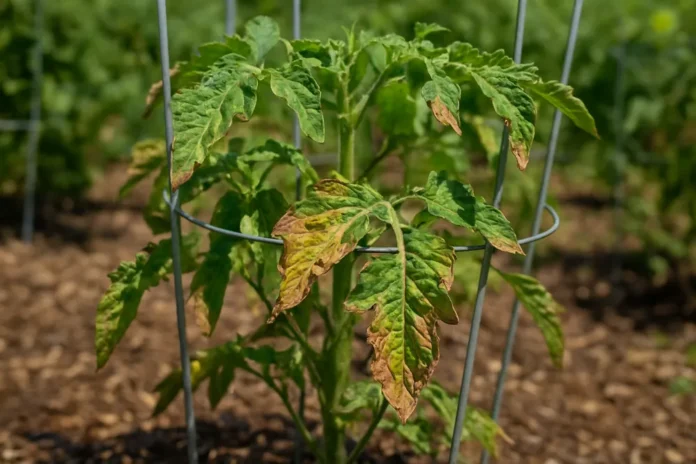
Tomato leaves usually develop brown edges because the plant is under stress from inconsistent watering, excess fertilizer, heat, salt buildup, or disease. The leaf margins dry out first when roots cannot supply water and nutrients evenly.
Seeing tomato leaves with brown edges can be frustrating, especially when the rest of the plant still looks fairly healthy. In many cases, browned leaf margins are an early stress signal rather than a sign that the whole plant is doomed.
Tomatoes are fast-growing, heavy-feeding plants that react quickly when watering swings, fertilizer levels, heat, or root conditions get out of balance. Brown edges often appear first on older leaves, but they can also show up on newer growth if the problem is severe or ongoing.
The good news is that this symptom usually narrows the problem down to a manageable list of likely causes. Once you understand what tends to dry out leaf edges first, it becomes much easier to match the pattern on your plant to the real issue.
What Brown Leaf Edges Usually Mean on Tomatoes
Brown edges on tomato leaves are often a form of leaf scorch. The margins of the leaf lose moisture or become damaged faster than the center, so the outer edge turns tan, crispy, or dark brown. This can happen because the plant is not getting water steadily, because salts or fertilizer are burning the tissue, or because disease is interfering with normal leaf function.
The exact look matters. Crispy, dry edges usually point more strongly to water stress, heat, wind, or fertilizer burn. Brown edges with yellow halos may suggest a nutrient issue or a developing disease. If the damage starts at the tips and then spreads along the margins, that often hints at salt stress or inconsistent watering.
- Dry, crisp margins often indicate water loss or salt burn
- Browning that follows a recent feeding may point to excess fertilizer
- Damage that appears during hot weather may be heat or wind stress
- Spotted leaves with edge browning may involve fungal or bacterial disease
- Widespread scorch after transplanting can come from root disturbance
Inconsistent Watering Is the Most Common Cause
By far, the most common reason tomato leaves get brown edges is inconsistent moisture. Tomatoes need evenly moist soil, not constantly wet soil and not repeated drought cycles. When the soil gets too dry, the plant cannot keep enough water moving to the leaf edges, so those thin outer tissues dry out first.
This often happens when plants are watered deeply one day and then allowed to dry too much before the next watering. Containers are especially prone to this because potting mix heats up and dries much faster than garden soil. Raised beds can also swing quickly during hot, windy weather.
Signs That Watering Swings Are the Problem
- Leaf edges look dry or papery before the whole leaf turns yellow
- Plants wilt in the afternoon but recover somewhat by evening
- Fruit may develop blossom end rot at the same time
- Lower leaves are affected first
- The soil is very dry a couple of inches down between waterings
Overwatering can create similar symptoms too. Waterlogged soil suffocates roots, and damaged roots cannot absorb water efficiently. That means a tomato can show drought-like browning even when the soil feels wet. If leaves have brown edges but the plant also looks droopy in constantly damp soil, root stress from overwatering is very possible.
Fertilizer Burn and Salt Buildup Can Scorch Leaf Margins
Tomatoes are heavy feeders, but too much fertilizer can damage them quickly. Excess fertilizer raises salt levels around the roots. When salts build up, roots have a harder time taking in water, and the leaf edges may brown and crisp up from the stress.
This is especially common with synthetic water-soluble fertilizers mixed too strong, frequent feeding in containers, or repeated use of manure-based products that are richer than expected. It can also happen when hard irrigation water leaves mineral salts behind over time.
Clues That Fertilizer or Salts Are Involved
- Browning begins soon after feeding
- Leaf tips and edges burn first
- A white crust appears on the soil surface or around the pot rim
- The plant is growing in a container and has been fertilized often
- New growth may look stressed even though the plant has been fed regularly
Nitrogen excess does not always show as edge burn, but it can push soft, fast growth that is more vulnerable to stress. Potassium-related problems can also contribute because potassium helps regulate water movement in plants. Still, true brown edge scorch after feeding often points first to salt injury rather than a simple deficiency.
Heat, Sun, and Wind Can Dry Out the Leaf Edges
Tomato plants can handle sun, but extreme heat combined with low humidity or drying winds can overwhelm them. When water evaporates from leaves faster than roots can replace it, the edges and tips are the first parts to scorch.
This tends to happen during hot afternoons, in exposed raised beds, on patios where containers reflect heat, or after a sudden weather shift. Plants that were recently transplanted are particularly vulnerable because their roots are not fully established yet.
- Damage appears after a heat wave
- Sun-facing leaves look worse than shaded inner leaves
- Leaves may curl upward along with browning
- Containers dry out very fast in full afternoon sun
- Plants near walls, fences, or pavement may show more scorch
Root Stress Can Show Up as Brown Leaf Margins
Anything that injures tomato roots can reduce water uptake and lead to brown edges on leaves. Root-bound plants, compacted soil, poor drainage, transplant shock, cultivation damage, or root diseases can all create the same top growth symptom.
If the plant was recently moved, planted into cold soil, or set into a bed that stays soggy after rain, root stress deserves close attention. Tomatoes depend on an active, healthy root system to support large leaf area and fast fruiting growth. When the roots lag behind, the leaves often pay the price first.
When Root Problems Are More Likely
- The plant stopped growing after transplanting
- Soil stays wet for long periods
- The pot is packed with circling roots
- Leaves droop even when the soil is not dry
- There was recent digging or hoeing close to the stem
Nutrient Deficiencies Can Contribute, Especially Potassium Issues
Although brown leaf edges are often caused by watering or salt stress, nutrient deficiencies can also be part of the picture. Potassium deficiency is the classic one associated with yellowing and browning around leaf margins, especially on older leaves first. The edges may start pale, then turn scorched-looking as the deficiency worsens.
Magnesium, calcium, and overall poor nutrient uptake can also create stressed foliage, but potassium problems are more strongly linked with edge burn. Sometimes the soil contains enough nutrients, but roots cannot access them because the pH is off, the soil is too wet, or salts are interfering.
What Deficiency-related Edge Browning Often Looks Like
- Older leaves show yellowing before turning brown at the edges
- Browning is more gradual than sudden fertilizer burn
- Plants are growing slowly or fruiting poorly
- The issue keeps spreading despite regular watering
- Garden soil is depleted or plants have not been fed in a long time
Disease Can Cause Brown Edges Too
Several tomato diseases can include brown leaf margins, though they usually bring other symptoms too. Early blight, bacterial speck, bacterial canker, Septoria leaf spot, and some wilt-related issues may eventually cause leaf tissue to yellow, spot, and die back from the edges.
Disease is more likely when the browning is accompanied by distinct spots, concentric rings, dark lesions, yellow halos, stem damage, or rapid spread through the plant. Lower leaves often show symptoms first because they stay wetter longer and get splashed with soil during rain or watering.
Signs the Problem May Be Disease Rather than Simple Stress
- Spots appear before the edges turn brown
- Leaves yellow and develop patterned lesions
- Symptoms spread quickly from leaf to leaf
- Stems show streaking, cankers, or dark patches
- Wet weather has been frequent
If the leaf edges are brown but also soft, blotchy, or surrounded by spotting, disease moves higher on the suspect list. If the edges are mostly dry and crisp with little spotting, environmental stress remains more likely.
How to Tell Which Cause Is Most Likely
The fastest way to sort out brown leaf edges is to look at the full pattern instead of one damaged leaf. Think about what changed recently. Tomatoes respond quickly to weather swings, feeding mistakes, and watering inconsistency, so timing matters.
- If browning appeared after hot, dry weather, suspect moisture stress or heat scorch.
- If it showed up soon after fertilizer application, suspect salt burn.
- If older leaves yellowed at the margins first, suspect potassium deficiency or chronic stress.
- If the soil stays wet and plants droop anyway, suspect root problems.
- If leaves have spots, halos, or lesions along with browning, suspect disease.
Also consider where the plant is growing. Container tomatoes run into watering and salt issues far more often than in-ground plants. Garden tomatoes in heavy clay are more likely to struggle with drainage and root stress. A plant in full reflected heat near concrete may scorch even when another tomato a few feet away looks fine.
What to Do to Stop Tomato Leaf Edges From Turning Brown
The best fix depends on the cause, but the overall goal is the same: restore steady root function and reduce stress on the foliage. Existing brown tissue will not turn green again, but you can often stop the symptom from spreading to healthy leaves.
Helpful Corrections for the Most Common Causes
- Water deeply and consistently so the root zone stays evenly moist, not bone dry and not soggy.
- Add mulch around in-ground tomatoes to moderate soil temperature and slow moisture loss.
- Flush container soil with plain water if fertilizer salts may have built up.
- Pause feeding for a bit if plants were recently fertilized heavily.
- Move containers away from reflected afternoon heat if possible.
- Improve drainage or repot root-bound plants when roots are the problem.
- Use a balanced tomato fertilizer at label rate instead of frequent heavy feeding.
- Remove badly diseased lower leaves if spotting diseases are present and avoid wetting foliage.
If only a few older leaves are affected and new growth looks healthy after conditions improve, the plant will usually recover well. If new leaves continue to brown at the edges despite better care, the problem is likely deeper than a one-time watering miss.
How to Prevent Brown Edges on Tomato Leaves in the Future
Prevention comes down to consistency. Tomato plants do best when their roots stay in a stable environment with dependable moisture, enough nutrition, good drainage, and as little avoidable stress as possible.
- Water on a schedule that matches weather and soil type rather than watering randomly
- Mulch plants once the soil has warmed
- Use containers large enough to support root growth and moisture retention
- Fertilize lightly but regularly according to label directions
- Avoid piling on extra products just because plants look stressed
- Space plants for airflow to reduce foliar disease pressure
- Keep foliage off the soil and water near the base of the plant
- Watch for symptoms early on older leaves before stress spreads
Tomatoes are productive plants, but they are not very forgiving of repeated swings in moisture and feeding. When you keep the basics steady, brown leaf edges become much less common.
FAQ
Should I Cut Off Tomato Leaves with Brown Edges?
If only the margins are brown and most of the leaf is still functioning, you can leave it for now. Remove leaves that are mostly dead, badly diseased, or crowding airflow near the base of the plant.
Can Tomato Leaves with Brown Edges Turn Green Again?
No. Damaged leaf tissue does not recover its green color. The goal is to correct the stress so new growth stays healthy and the browning does not keep spreading.
Do Brown Edges Always Mean My Tomato Plant Is Dying?
No. Brown leaf margins are often an early stress symptom and many tomato plants recover well once watering, feeding, or root conditions improve. It becomes more serious when new growth is also declining or disease is involved.
Can Too Much Epsom Salt Cause Brown Edges on Tomato Leaves?
Yes. Overusing Epsom salt can contribute to salt buildup and nutrient imbalance, especially in containers. More is not better, and unnecessary applications may worsen leaf stress.
Why Do Only the Lower Tomato Leaves Have Brown Edges?
Lower leaves are older and usually show stress first. They are also more exposed to soil splash, inconsistent moisture, and early disease pressure near the ground.
Are Brown Edges on Tomato Leaves Caused by Overwatering or Underwatering?
Either one can cause it. Underwatering dries the leaf margins directly, while overwatering damages roots so they cannot supply water properly, leading to similar edge scorch.
Can Hot Weather Alone Cause Brown Edges on Tomato Leaves?
Yes. High heat, low humidity, and wind can scorch leaf edges, especially in containers or recently transplanted tomatoes. Heat stress is even more likely when soil moisture is inconsistent.
Need the right fix fast? Explore our tomato care guides and top-rated fertilizers, mulches, and disease treatments to stop leaf damage and keep plants producing.
