

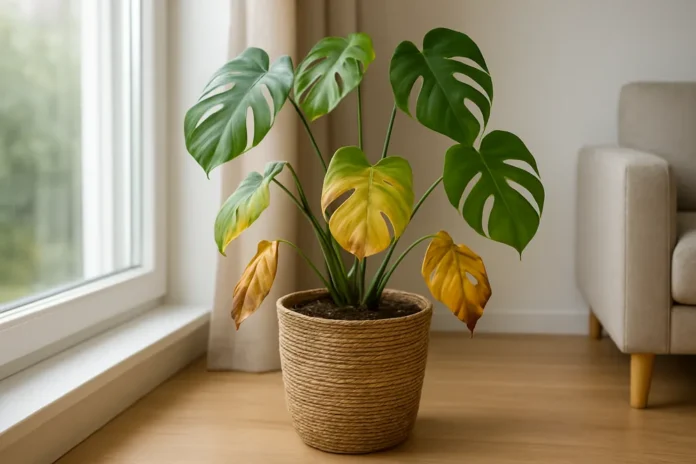
A monstera usually starts dying because its roots are stressed by overwatering, underwatering, poor drainage, low light, pests, or temperature shock. In many cases, the decline is caused by more than one stress happening at the same time.
If your monstera looks limp, yellow, droopy, brown, or stalled out, it is usually reacting to stress in its roots, light, or environment. A plant that seems to be dying is often not beyond saving, but the sooner you identify the cause, the better the odds of recovery.
Monsteras are forgiving houseplants, yet they can decline quickly when watering habits, drainage, humidity, temperature, or pests get out of balance. The visible symptoms often overlap, so a yellowing plant is not always overwatered, and crispy leaves do not always mean it is too dry.
The key is to look at the whole pattern: leaves, stems, soil, roots, pot type, location, and recent changes. Once you match the symptoms to the cause, you can usually correct the problem and help your monstera start pushing healthy new growth again.
What a Dying Monstera Usually Looks Like
A monstera rarely declines all at once without warning. Most plants show a combination of stress signals first, and those signals can help narrow down the problem.
- Leaves turning yellow, especially several at a time
- Brown crispy edges or large brown patches
- Drooping or limp stems that do not perk back up
- Blackened stems or mushy areas near the soil line
- Soil staying wet for many days after watering
- A sour smell coming from the potting mix
- No new leaves for a long period during active growing season
- Leaf curl, pale growth, or sudden leaf drop
One yellow leaf at the bottom is not always a crisis. Older leaves naturally age out. A monstera is more likely to be in serious trouble when several symptoms happen together, especially yellowing plus drooping, mushy stems, or persistently wet soil.
Overwatering and Root Rot Are the Most Common Causes
If home gardeners say a monstera is dying, overwatering is often the first issue to consider. That does not just mean watering too often. It can also mean the plant sits in heavy soil, a pot without enough drainage, or a dim room where the mix dries too slowly.
How Overwatering Damages the Plant
Monstera roots need both moisture and oxygen. When potting mix stays wet too long, the roots cannot breathe properly. Weak roots then begin to rot, and once roots are damaged, the leaves can no longer take up water and nutrients efficiently. That is why an overwatered monstera can look droopy even though the soil is wet.
Signs That Point to Root Rot
- Yellow leaves that spread upward through the plant
- Drooping leaves with wet soil
- Mushy, black, or soft stems near the base
- A musty or rotten smell from the pot
- Roots that look brown or black instead of firm and pale
A plant in trouble from root rot often declines faster after watering, not better. That is one of the clearest clues that the problem is below the soil line.
Underwatering Can Make a Monstera Collapse Too
Although overwatering is more common, letting a monstera get bone dry too often can also make it look like it is dying. Monsteras use a lot of moisture during warm, bright months, especially when they are large, rootbound, or near sunny windows.
Typical Underwatering Symptoms
- Dry, lightweight soil that pulls away from the pot edges
- Leaves drooping but feeling thin or papery
- Brown crispy tips and margins
- Slow growth and smaller new leaves
- Soil that resists water because it has become too dry and compacted
A severely dry root ball can actually repel water at first, so the top may seem damp while the center remains dry. Repeated drought stress weakens the plant and makes it more vulnerable to pests and transplant shock.
Poor Drainage and the Wrong Potting Mix Keep Roots Stressed
Many monstera problems come down to the growing setup rather than the watering schedule alone. A peat-heavy houseplant mix in a large decorative pot can stay soggy for far too long, especially in winter or low light.
Why the Pot Matters
A pot that is too large holds extra wet mix around a root system that cannot use it fast enough. Pots without drainage holes trap water at the bottom, and cachepots can hide standing water after watering.
What Monstera Roots Prefer
Monsteras grow best in a chunky, airy mix that drains well but still holds some moisture. A blend with ingredients like bark, perlite, and coco coir or quality potting mix gives roots a better balance of air and water than dense soil alone.
- Use a container with drainage holes
- Avoid oversized pots when repotting
- Empty saucers and outer pots after watering
- Choose a loose mix instead of compact, muddy soil
Low Light Slowly Weakens a Monstera
Monsteras tolerate moderate indoor light, but they do not thrive in dark corners for long. In low light, the soil dries more slowly, the plant uses less water, and growth weakens. That combination often leads to a chain reaction of overwatering, yellow leaves, and decline.
Symptoms of Insufficient Light
- Leggy growth with long gaps between leaves
- Small new leaves with little or no fenestration
- Pale green color and slow development
- Potting mix staying damp for too long
- General decline during winter in a dim room
A healthy monstera usually wants bright, indirect light. Gentle morning sun is often fine, but very harsh afternoon sun through hot glass can scorch leaves, especially if the plant has been growing in lower light.
Too Much Direct Sun Can Scorch the Leaves
Sunburn does not usually kill a monstera by itself, but severe leaf scorch can push an already stressed plant over the edge. This is most common after suddenly moving the plant outdoors or placing it in intense direct sun indoors.
- Bleached, faded, or tan patches on exposed leaves
- Crispy brown areas that appear quickly
- Damage concentrated on the side facing the window
- Leaf edges curling after a sudden location change
Sun damage can resemble drought stress, but the pattern matters. If the affected leaves are mostly on the bright side of the plant and appeared soon after a move, excess sun is a likely factor.
Temperature Swings and Dry Air Can Trigger Decline
Monsteras are tropical plants and dislike chilly drafts, heater blasts, and sudden environmental swings. While they adapt to average indoor humidity, very dry air and unstable temperatures can cause leaf damage and slow recovery from other stresses.
Common Environmental Stressors
- Cold windows in winter
- Air conditioning vents blowing directly on the leaves
- Hot, dry air from heating systems
- Drafty exterior doors
- Temperatures dropping below about 55 degrees Fahrenheit
Cold damage can cause blackened patches, limp leaves, and sudden collapse after a chilly night. Dry air usually causes browning at the edges and tips, though it rarely acts alone as the main reason a monstera is dying.
Pests Can Drain the Plant Over Time
A pest outbreak does not always look dramatic at first. Spider mites, thrips, mealybugs, and scale can quietly weaken a monstera by feeding on leaves and stems, reducing vigor until the plant starts yellowing, spotting, or dropping foliage.
Pests to Watch For
- Spider mites, which cause tiny stippling, dull leaves, and fine webbing
- Thrips, which leave silvery scarring and distorted new growth
- Mealybugs, which appear as white cottony clusters in leaf joints
- Scale, which look like small bumps stuck to stems or leaf undersides
Pest damage often looks patchy rather than uniform. If your watering and light seem reasonable but the plant keeps declining, inspect both sides of the leaves, the leaf nodes, and any new unfurling growth.
Diseases and Stem Problems Can Cause Rapid Collapse
Fungal and bacterial issues are less common than cultural problems, but they can turn serious quickly. These problems often develop when the plant stays too wet, airflow is poor, or damaged tissue becomes infected.
Warning Signs of Disease
- Mushy stems or petioles
- Black or water-soaked spots that expand
- Foul odor in the soil or at the crown
- Leaf spots with yellow halos
- Fast decline despite recent watering
Stem rot and crown rot are especially dangerous because they interrupt water movement through the plant. Once the base becomes soft and dark, immediate action is usually needed to save healthy sections.
Repotting Stress and Rootbound Conditions Can Both Look Like Dying
A monstera may droop after repotting, especially if roots were disturbed heavily or the plant was moved into a much larger container. At the same time, a severely rootbound plant can dry out too quickly and become chronically stressed.
Clues the Plant Is Rootbound
- Roots circling densely around the root ball
- Water running straight through the pot
- The plant drying out unusually fast
- Slow growth despite regular feeding and decent light
Repotting into a container only slightly larger than the root ball is usually safest. A giant pot may seem helpful, but it often leaves too much wet mix around the roots.
Nutrient Problems Can Contribute, but They Are Rarely the Only Cause
A starving monstera can look weak, pale, or slow, but true fertilizer deficiency is not usually the main reason a healthy plant suddenly seems to be dying. More often, root stress prevents normal nutrient uptake, so deficiency symptoms are secondary.
If a monstera has not been repotted or fertilized for a long time, older leaves may yellow gradually and growth may become smaller. Excess fertilizer can also damage roots, causing brown tips, crust on the soil surface, and wilting that resembles drought.
- Pale green leaves can suggest low nutrition
- Brown tips with white crust may point to salt buildup
- Weak growth is often worse in spring and summer if feeding is absent
- Nutrient issues are more likely when roots are otherwise healthy
How to Tell Which Problem Is Most Likely
Because many symptoms overlap, use the soil and root condition as your starting point. A drooping monstera in soggy soil usually has a very different problem from a drooping monstera in dry, shrunken soil.
- Yellow leaves plus wet soil usually point to overwatering or root trouble
- Brown crispy edges plus very dry soil usually point to underwatering or dry air
- Pale, slow growth plus damp soil often suggests low light
- Silvery streaks, speckling, or sticky residue suggest pests
- Mushy black tissue suggests rot or cold damage
- Sudden scorch patches on exposed leaves suggest sunburn
Think about recent changes too. A move to a new room, repotting, missed watering, seasonal light drop, heater use, or a vacation can all help explain why the plant suddenly started failing.
When a Monstera Can Still Recover
A monstera has a good chance of recovery if it still has firm stems, at least some healthy roots, and intact growth nodes. Even a plant that has lost several leaves can rebound if the underlying stress is corrected before rot reaches the whole root system or main stem.
Plants with minor root damage, drought stress, pest issues, or low-light decline often recover well over time. Recovery is slower when damage has spread through the crown, the roots are mostly mushy, or the plant suffered severe cold injury.
Better Signs
- Firm green stems
- Roots that are still partly white or tan and solid
- Leaves that are drooping but not black or mushy
- Visible nodes that could produce new growth
How to Prevent Future Decline
Prevention is usually simpler than recovery. Most monsteras stay healthy when their care is based on how fast the mix dries in your home rather than a rigid calendar.
- Water when the top layer of the mix feels dry instead of on a fixed schedule
- Keep the plant in bright, indirect light
- Use a chunky, well-draining mix and a pot with drainage holes
- Avoid letting the plant sit in standing water
- Inspect leaves regularly for pests, especially undersides and new growth
- Keep it away from cold drafts and heating vents
- Repot only when needed and increase pot size gradually
- Fertilize lightly during active growth rather than heavily year-round
A stable setup solves many recurring problems. Once you match watering, light, and potting conditions to the plant's environment, your monstera is much less likely to slide into decline again.
FAQ
Can a Monstera Come Back After Losing Most of Its Leaves?
Yes, if the stems and roots are still alive. A monstera can regrow from healthy nodes even after major leaf loss, but recovery may be slow.
Should I Cut Off Yellow Monstera Leaves?
You can remove fully yellow leaves because they will not turn green again. If a leaf is only partly yellow, many gardeners leave it until the plant reabsorbs some resources.
How Often Should I Water a Monstera Indoors?
There is no universal schedule because light, pot size, soil mix, and season all change how fast the plant dries. Most indoor monsteras do best when watered after the top portion of the mix has dried.
Why Is My Monstera Drooping Even Though the Soil Is Wet?
That usually suggests root stress, often from overwatering or poor drainage. Damaged roots cannot move water properly, so the plant wilts even while sitting in wet mix.
Do Brown Spots Mean My Monstera Is Dying?
Not always. Brown spots can come from sunburn, dry air, pest damage, inconsistent watering, or disease, and the meaning depends on the size, texture, and pattern of the spots.
Is Tap Water Killing My Monstera?
Tap water is usually not the main problem, but highly mineralized or softened water can contribute to brown tips and salt buildup over time. The bigger issue is usually watering frequency, drainage, or root health.
Can I Save a Monstera with Root Rot?
Often yes, if some roots and stems are still healthy. The chances are better when rot is caught early before it spreads through the crown or main stem.
Need the right fix fast? Read our detailed monstera care and troubleshooting guides to choose the best soil, pots, lights, and treatments before your plant declines further.
