

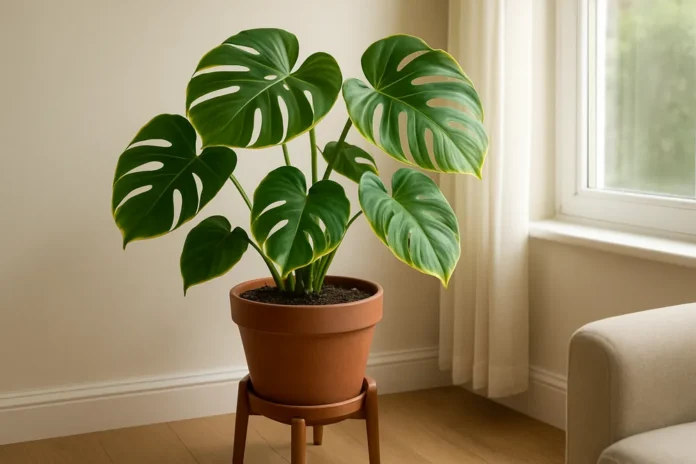
Monstera leaves usually develop yellow edges from watering stress, dry air, fertilizer salt buildup, or too much direct sun. Less often, yellow margins can come from root problems, pests, or an underlying nutrient imbalance.
If your monstera leaves have yellow edges, the plant is telling you that something in its growing conditions is off. In most homes, the most common triggers are inconsistent watering, low humidity, excess fertilizer salts, or light that is too harsh for the leaf tissue.
The good news is that yellow margins do not always mean your plant is in serious trouble. Monsteras often recover well once the main stress is corrected, especially if the centers of the leaves are still green and the roots remain healthy.
The key is to look at the pattern. Crisp yellowing around the outer edge points to different problems than soft yellowing, spotted damage, or yellowing that starts across the whole leaf.
What Yellow Edges Usually Mean On A Monstera
Yellow edges are a classic stress symptom rather than a diagnosis by themselves. The leaf margin is often the first place where moisture imbalance, salt buildup, or tissue damage shows up because the outer edge is more exposed and tends to dry out faster than the center.
On a Monstera, edge yellowing can look different depending on the cause. Sometimes the border turns pale yellow and stays soft. In other cases, the yellow edge later becomes tan or brown and crispy. The color, texture, and speed of change help narrow down what is happening.
- Soft yellow edges often suggest overwatering, root stress, or nutrient imbalance.
- Crispy yellow edges more often point to underwatering, low humidity, salt buildup, or sun scorch.
- Yellow edges on older leaves first can happen with normal aging or a mobile nutrient issue such as potassium deficiency.
- Yellow edges on many leaves at once usually signal an environmental or care problem rather than natural leaf aging.
Most Common Causes Of Yellow Leaf Margins
Inconsistent Watering
Monsteras prefer evenly moist soil that is allowed to dry slightly between waterings. If the potting mix swings from very dry to soggy, the roots struggle to supply water consistently to the leaf edges. That often shows up as yellowing along the margins before the rest of the leaf declines.
Underwatering tends to produce dry, thin, and sometimes curled edges. Overwatering can also cause yellow margins, but the leaf usually feels softer, and the soil stays wet longer than it should.
Low Humidity
While Monsteras adapt to average indoor conditions better than some tropical plants, very dry air can still stress the leaf perimeter. This is especially common in winter when heating systems lower indoor humidity. The result is often a yellow outline that later turns brown and papery.
Low humidity damage is more likely when the plant sits near a heat vent, radiator, sunny window with hot afternoon exposure, or an air conditioner that blows dry air across the leaves.
Too Much Direct Sun
Monsteras like bright, indirect light. Strong direct sun, especially through a hot west or south window, can bleach or burn tender leaf tissue. In early stages, the margins may fade to yellow. Later, scorched sections can turn tan, beige, or brown.
Sun-related yellowing often appears on the side of the plant facing the light source. It may affect the most exposed leaves first rather than the oldest ones.
Fertilizer Salt Buildup
When fertilizer is applied too often, mixed too strongly, or allowed to accumulate in the potting mix, salts can build up around the roots. This interferes with water uptake and can burn leaf edges, causing a yellow rim that later turns brown.
Salt damage is especially common in container plants that have not been flushed with plain water for a long time. It is also more likely in plants growing in smaller pots with less soil volume to dilute minerals.
Poor Drainage And Root Stress
A dense potting mix, a pot without drainage holes, or a saucer that stays full of water can keep roots too wet. Oxygen-starved roots stop functioning well, and the leaves may respond with yellow margins, general yellowing, drooping, or slow growth.
If root rot starts, the problem can escalate quickly. You may notice a stale smell from the potting mix, black mushy roots, or leaves that yellow and decline even when the soil is wet.
Nutrient Imbalance
A true nutrient deficiency is less common than watering or root issues in houseplants, but it can happen. Yellow leaf edges may appear when the plant lacks potassium or when pH and salt levels prevent normal nutrient uptake. The effect is often stronger on older leaves first because the plant shifts mobile nutrients to newer growth.
Nutrient problems can also happen if the plant has been in the same exhausted potting mix for too long without repotting or feeding during active growth.
Pests
Spider mites, thrips, and other sap-feeding pests can distort leaf color and weaken leaf edges. Their damage does not always produce a clean yellow border, but a heavy infestation can create patchy yellowing near the margins, stippling, and a dull, tired look.
Pest pressure is more common when a Monstera is already stressed by dry air, weak light, or inconsistent watering.
How To Tell Which Cause Fits Your Plant
Because several problems can produce similar yellow edging, it helps to compare the leaf symptoms with the soil, location, and recent care routine. Small details usually point to the best answer.
- If the soil is bone dry, the pot feels unusually light, and the edges are crisp, underwatering or low humidity is likely.
- If the soil stays wet for many days, the leaves look soft or limp, and yellowing spreads inward, overwatering or root stress is more likely.
- If yellowing is strongest on the window-facing side, especially after brighter weather, too much direct sun is a strong possibility.
- If there is a white crust on the soil surface or around the pot rim, and the plant has been fertilized regularly, salt buildup is a likely cause.
- If older leaves show edge yellowing while new growth is smaller or weaker, nutrient imbalance may be contributing.
- If you see speckling, tiny moving insects, silvery streaks, or fine webbing, pests may be involved.
Also think about timing. Yellow edges that appear soon after repotting may come from transplant stress or a mix that holds too much water. Yellowing that appears in winter often links back to dry indoor air, lower light, and slower water use.
How To Fix Yellow Edges On Monstera Leaves
Adjust Watering First
Start with the most common issue: watering. Let the top 1 to 2 inches of potting mix dry before watering again, but do not allow the entire root ball to stay dry for long periods. Water thoroughly until excess drains out, then empty the saucer so roots are not left sitting in water.
If the mix is drying out too fast, the plant may be root-bound or the room may be very warm and dry. If it stays wet too long, the potting mix may be too dense or the light too low.
Improve Humidity Around The Plant
If your home is dry, aim for moderate humidity rather than tropical extremes. Grouping plants together, using a humidifier, or moving the Monstera away from forced-air vents can reduce edge stress. Pebble trays help a little, but they are usually less effective than a humidifier in very dry rooms.
Avoid frequent misting as your main strategy. It does not raise humidity for long, and wet leaves can occasionally encourage spotting if air circulation is poor.
Move It Out Of Harsh Sun
Place the plant in bright, indirect light. An east-facing window or a few feet back from a bright south or west window usually works well. If you love the current spot, use a sheer curtain to soften direct rays during the hottest part of the day.
Sun-damaged tissue will not turn green again, but new leaves should emerge clean if the lighting is corrected.
Flush Excess Salts
If fertilizer buildup is the problem, run plain room-temperature water through the pot several times to help wash out excess salts. Make sure the container drains well, and do not fertilize again until the plant is actively growing and showing recovery.
Going forward, feed lightly during spring and summer instead of using strong doses. Many houseplant problems come from overfeeding rather than underfeeding.
Check The Roots If Problems Persist
If yellow edges continue despite better watering and light, inspect the roots. Healthy roots are firm and pale. Rotten roots are dark, mushy, and may smell sour. Trim damaged roots with clean scissors and repot into a chunky, well-draining aroid mix with drainage holes in the pot.
A good Monstera mix often contains potting soil plus bark, perlite, or pumice to improve air flow. Roots need both moisture and oxygen.
Treat Pests Promptly
If pests are present, isolate the plant and wipe both sides of the leaves. Then treat with insecticidal soap or another houseplant-safe control labeled for the pest you found. Repeat treatments as directed, because eggs and hidden insects can survive a single application.
Pest damage often improves only after new growth appears, so focus on stopping the infestation rather than expecting damaged leaf edges to recover.
Should You Trim Off Yellow Edges?
Yellow tissue does not turn green again, so trimming is mostly cosmetic. If only the margins are affected and most of the leaf is still healthy, you can leave it in place. The leaf is still helping the plant photosynthesize.
If the edges are brown, dry, and distracting, you can trim just the damaged part with clean scissors, following the natural shape of the leaf. Do not cut into large areas of green tissue. If an entire leaf is mostly yellow and declining, it is reasonable to remove it at the base of the petiole.
- Trim only after you have corrected the underlying issue.
- Sterilize scissors before and after cutting.
- Leave partially damaged leaves if the plant does not have many leaves overall.
When Yellow Edges Are Part Of A Bigger Problem
Sometimes yellow leaf margins are just the first visible symptom of a broader care issue. If you also see drooping, stalled growth, black stems near the soil line, fungus gnats, or a sour smell in the pot, focus on root health first. Root problems can mimic nutrient deficiencies, dehydration, and general leaf stress all at once.
Likewise, if many leaves are developing yellow edges at the same time after a heat wave, a move, or a sudden change in light, the plant may be reacting to environmental shock. Monsteras do best when changes happen gradually.
If only one or two of the oldest lower leaves show mild yellowing while the rest of the plant looks strong, it may simply be age-related turnover. A Monstera does not keep every leaf forever.
How To Prevent Yellow Edges In The Future
Prevention comes down to consistency. Monsteras are forgiving, but they respond best when water, light, and humidity stay within a steady range. Sudden swings create the kind of stress that shows up along leaf edges.
- Use a pot with drainage holes and a chunky, fast-draining mix.
- Water when the top layer of soil dries instead of on a rigid calendar.
- Keep the plant in bright, indirect light.
- Protect it from hot direct afternoon sun, heaters, and AC drafts.
- Feed lightly during active growth, and flush the soil occasionally.
- Inspect leaves regularly for early pest signs.
- Repot when roots become crowded or the mix has broken down.
For many indoor growers, the biggest improvement comes from matching watering to season. Your Monstera typically needs less water in winter and more in spring and summer when light and growth increase.
FAQ
Can Yellow Edges on Monstera Leaves Turn Green Again?
No. Damaged yellow tissue does not usually recover its green color. The goal is to stop the problem so new growth comes in healthy.
Is Low Humidity Enough to Cause Yellow Edges by Itself?
Yes, especially in winter or in homes with forced-air heat. Dry air often causes yellow margins that later become brown and crispy.
Should I Water More when I See Yellow Edges?
Not automatically. Yellow edges can come from both too little and too much water, so the soil moisture level matters more than the symptom alone.
Do Fertilizer Spikes or Strong Liquid Feeds Cause Yellow Leaf Margins?
They can. Overfertilizing may create salt buildup around the roots, which often shows up as yellow or brown edge burn.
Why Are Only the Older Monstera Leaves Getting Yellow Edges?
Older leaves are often first to show stress from inconsistent care, nutrient imbalance, or normal aging. If new leaves look healthy, the issue may be mild or age-related.
Can Tap Water Cause Yellow Edges on Monstera?
Sometimes. Hard water and mineral-heavy water can contribute to salt buildup over time, especially if the potting mix is never flushed.
When Should I Repot a Monstera with Yellow Edges?
Repot if the plant is root-bound, the mix stays soggy too long, drainage is poor, or you find damaged roots. If the current mix and roots are healthy, adjust care before repotting.
Need the right fix fast? Read our guide to the best Monstera soil mixes, fertilizers, and humidity tools so you can stop leaf damage and get healthier new growth.
