

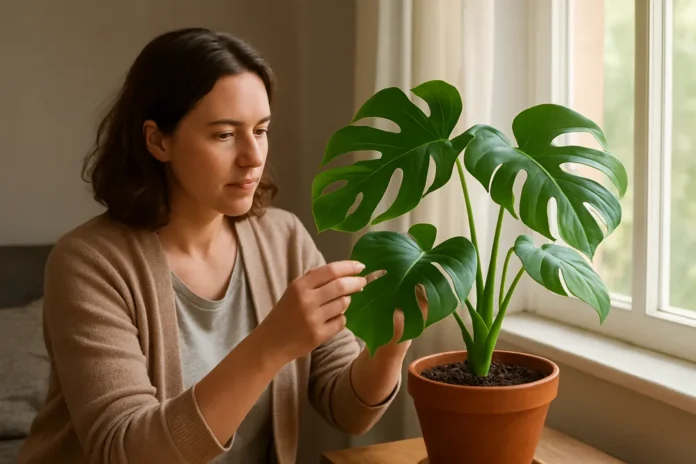
Monstera leaves usually curl because the plant is stressed by too little water, low humidity, temperature extremes, root problems, or pests. Curling is the plant’s way of reducing water loss and protecting damaged tissue.
If your Monstera leaves are curling, the plant is usually reacting to stress rather than showing a random cosmetic issue. Curling is a common warning sign that something in the growing environment is off, especially moisture, humidity, temperature, or root health.
The good news is that Monsteras often recover well once the main cause is corrected. In many cases, newer leaves return to a normal shape after you adjust care, though badly stressed older leaves may stay curled or slightly misshapen.
What Curling Leaves Usually Mean on a Monstera
Leaf curling is a defense response. When a Monstera cannot move or hold water properly, or when it is exposed to harsh conditions, the leaf edges and surfaces may curl inward to reduce moisture loss. That is why curling often appears before yellowing, browning, or leaf drop.
A curled leaf does not always point to one single problem. The same symptom can come from underwatering, overwatering, dry indoor air, root crowding, fertilizer buildup, cold drafts, intense direct sun, or pests like spider mites and thrips. Looking at the soil, recent care routine, and any other leaf symptoms helps narrow it down.
- Curling with dry, crispy edges often points to underwatering or low humidity.
- Curling with yellowing and soggy soil often suggests overwatering or root stress.
- Curling with bleached patches can happen after too much direct sun.
- Curling with fine stippling or distorted new growth may indicate pest damage.
Underwatering Is One of the Most Common Causes
A thirsty Monstera often curls its leaves to conserve water. If the potting mix has gone bone dry and the plant stays dry for too long between waterings, the cells in the leaves lose turgor pressure. The leaf then folds or curls instead of staying broad and flat.
Signs That Your Monstera Is Too Dry
- Soil pulls away from the sides of the pot
- Leaves feel limp or papery
- Brown, crisp tips or margins
- Drooping stems along with curling leaves
- Pot feels very light when lifted
Monsteras generally like evenly moist soil, not constant dryness. Water thoroughly until excess drains from the bottom, then wait until the top 2 to 3 inches of soil are dry before watering again. In brighter light and warmer rooms, your plant will dry faster and may need water more often.
If the soil has become so dry that water runs straight through the pot, it may be hydrophobic. In that case, water slowly in stages or soak the pot briefly so the mix can rehydrate evenly.
Overwatering and Root Stress Can Also Cause Curling
Curling is not only a sign of dryness. A Monstera with constantly wet soil can develop stressed or rotting roots, and damaged roots cannot absorb water properly. The plant then acts thirsty even though the pot is wet, which confuses many growers.
Clues That Overwatering May Be the Issue
- Soil stays wet for many days after watering
- Yellowing leaves along with curling
- A musty smell from the pot
- Soft stems or blackened roots
- Gnats hovering around the soil
Monsteras need an airy, fast-draining mix and a container with drainage holes. If you water on a fixed schedule without checking soil moisture first, or if the plant sits in a decorative cachepot full of trapped water, the roots may stay too wet. That leads to oxygen starvation and eventually root rot.
If you suspect root trouble, slide the root ball out and inspect it. Healthy roots are firm and pale. Rotten roots are dark, mushy, or have a sour smell. Trim damaged roots, repot into fresh chunky mix, and water only when the upper soil has partially dried.
Low Humidity Is a Frequent Indoor Trigger
Monstera is a tropical plant, so very dry indoor air can make the foliage curl, especially in winter when heating systems run constantly. Dry air pulls moisture out of the leaves faster than the roots can replace it, and the leaf edges respond by curling inward.
Low humidity is especially likely if the plant sits near a heat vent, radiator, fireplace, or sunny window with dry air movement. New leaves may also unfurl more slowly or emerge slightly crinkled when humidity is too low.
Ways to Improve Humidity Around a Monstera
- Use a room humidifier to keep humidity in a moderate range
- Group plants together to create a more humid microclimate
- Move the plant away from forced-air heat or AC vents
- Place it in a brighter bathroom or kitchen if the light is adequate
Misting is usually not enough to solve chronic dry air. It raises humidity only briefly, so it should not be your main strategy if curling is caused by consistently low indoor moisture.
Temperature Swings and Drafts Can Make Leaves Curl
Monsteras prefer stable, warm household temperatures. Sudden cold drafts from doors, drafty windows, or air conditioning can shock the foliage and cause curling. Extreme heat can do the same by increasing water loss faster than the plant can compensate.
This issue often shows up after a seasonal change, a move to a new room, or shipping stress from a recently purchased plant. Leaves closest to the draft or heat source are usually affected first.
- Keep Monsteras away from cold windows in winter
- Do not place them directly in front of HVAC vents
- Avoid exposing them to temperatures below about 55 degrees Fahrenheit
- Protect them from blasts of hot afternoon sun through glass
Too Much Direct Sun Can Curl and Scorch Foliage
Monsteras like bright, indirect light. When exposed to strong direct sun, especially in a south- or west-facing window, the leaves can lose moisture quickly and curl as a protective response. You may also see faded patches, tan scorch marks, or crispy edges.
A plant that was growing in lower light can burn more easily if moved suddenly into intense sun. Even a healthy Monstera should be acclimated gradually to brighter conditions.
Light Conditions That Usually Work Best
- Bright room with filtered light from a sheer curtain
- A few feet back from a strong west or south window
- Near an east window with gentle morning sun
- Supplemental grow lights placed at an appropriate distance
Pests Can Distort and Curl Monstera Leaves
Sap-sucking pests damage leaf tissue and interfere with normal growth. Spider mites, thrips, aphids, and mealybugs are the most common culprits. They feed on plant juices, which can cause curling, puckering, stippling, dull foliage, and deformed new leaves.
What Pest Damage Often Looks Like
- Tiny pale dots or silvery streaks on the leaves
- Fine webbing on undersides or between stems
- Sticky residue or black sooty mold
- New leaves that unfurl twisted or misshapen
Check both sides of the leaves, along the midrib, and inside emerging foliage. Early infestations are easy to miss. If pests are present, isolate the plant and treat with insecticidal soap, horticultural oil, or another houseplant-safe control labeled for the specific pest.
Repeated treatments are often necessary because eggs and hidden insects survive the first application. Cleaning the leaves and improving humidity can also help reduce spider mite pressure.
Rootbound Plants and Poor Soil Structure Limit Water Uptake
A Monstera that has outgrown its pot may start curling leaves because the roots have taken over most of the container and the soil dries too quickly. In other cases, old potting mix breaks down, compacts, and stops draining or aerating well. Both situations interfere with healthy water movement.
If roots circle densely around the pot or emerge from drainage holes, your Monstera may need repotting. Move it to a container only 1 to 2 inches wider than the current one and use a chunky mix with ingredients like bark, perlite, coco coir, or peat-based potting soil.
- Repot in spring or early summer when possible
- Loosen tightly circling roots gently before replanting
- Avoid jumping to an oversized pot that stays wet too long
- Refresh old soil if it has become dense or sour-smelling
Fertilizer Buildup and Water Quality Can Contribute
Too much fertilizer can burn roots and cause curling, browning, or stalled growth. Salt buildup in the soil makes it harder for roots to absorb water, even when moisture is present. This can mimic both drought stress and root disease symptoms.
Hard water or softened water can also contribute to leaf stress over time in some homes. White crust on the soil surface or pot rim is a clue that minerals or fertilizer salts are accumulating.
How to Reduce Salt Stress
- Fertilize lightly during active growth rather than year-round
- Flush the pot periodically with plain water to wash out excess salts
- Pause feeding if the plant is stressed or newly repotted
- Use filtered or rainwater if your tap water is very hard
How to Tell Which Cause Is Most Likely
The fastest way to identify the real problem is to look at curling together with the soil condition and other leaf changes. A dry pot points in a different direction than a wet, sour-smelling one. Pest speckling tells a different story than sunburn or cold damage.
- Dry soil plus crisp edges usually means underwatering or low humidity
- Wet soil plus yellowing suggests overwatering or root damage
- Bleached patches and warm window exposure suggest sun stress
- Distorted new growth and stippling suggest pests
- Sudden curling after a cold night or draft points to temperature stress
Also consider timing. If curling started right after repotting, a move, a heat wave, or missed watering, that recent change is often the key clue.
How to Fix Curling Monstera Leaves
Correct the cause rather than trying random treatments. Once the plant is back in favorable conditions, healthy new leaves should emerge normally. Older curled leaves may improve somewhat, but severe damage often remains.
Practical Recovery Steps
- Check the soil 2 to 3 inches down before watering. Water thoroughly if it is dry, and hold off if it is still moist.
- Move the plant into bright, indirect light if it is sitting in harsh direct sun or a dim corner.
- Keep it away from vents, heaters, drafty doors, and cold windows.
- Raise humidity if your home is dry, especially during winter.
- Inspect leaves and stems closely for mites, thrips, or other pests.
- Examine the roots if the plant stays wet too long, smells sour, or continues to decline despite careful watering.
- Repot if the plant is severely rootbound or the mix has become compacted.
Avoid pruning every curled leaf right away. Damaged leaves still help the plant photosynthesize unless they are mostly dead. Remove only leaves that are badly yellowed, brown, or diseased.
Can Curled Monstera Leaves Uncurl?
Sometimes, yes. Mildly curled leaves caused by temporary thirst, slight humidity stress, or recent environmental shock may relax once the plant recovers. However, leaves that have been curled for a long time, scorched by sun, damaged by pests, or deformed while unfurling may never return fully to their original shape.
The best sign of success is not always the old leaf flattening out. It is often the appearance of healthy new foliage with normal size, texture, and unfurling.
How to Prevent Curling in the Future
Consistent care prevents most curling problems. Monsteras do best when their environment stays relatively stable and their watering routine matches the season, light level, and pot size.
- Water based on soil dryness, not the calendar
- Use a well-draining, chunky potting mix
- Provide bright, indirect light
- Keep humidity moderate and avoid very dry air
- Inspect the plant regularly for pests
- Repot before the plant becomes severely rootbound
- Feed lightly during spring and summer growth
A Monstera that gets stable moisture, good airflow, and appropriate light is far less likely to curl than one that bounces between extremes.
FAQ
Should I Cut Off Curled Monstera Leaves?
Not necessarily. If the leaf is still mostly green, leave it in place because it still helps the plant. Remove it only if it is badly damaged, yellow, brown, or diseased.
Can Low Humidity Alone Make Monstera Leaves Curl?
Yes. Very dry indoor air can cause leaves to curl, especially during winter or near heating vents. Low humidity is even more likely when curling appears with dry edges or slow unfurling.
Do Curled Leaves Mean My Monstera Needs Water Right Away?
Sometimes, but not always. Curling can come from dry soil, but it can also happen when roots are waterlogged and unable to absorb moisture. Check the soil before watering.
Why Are Only the New Monstera Leaves Curling?
Curled new leaves often point to low humidity, pest damage, inconsistent watering, or stress while the leaf was unfurling. Thrips and spider mites are especially important to rule out when new growth is distorted.
Can Too Much Sun Curl Monstera Leaves?
Yes. Strong direct sun can cause heat and moisture stress, which leads to curling, faded patches, and scorched spots. Monsteras usually perform best in bright, indirect light.
How Long Does It Take a Monstera to Recover From Curling?
Mild stress can improve within days to a couple of weeks after conditions are corrected. Full recovery is usually judged by healthy new growth, since older damaged leaves may not return completely to normal.
Will Repotting Fix Curled Leaves?
Repotting helps only if the plant is rootbound, sitting in broken-down soil, or dealing with root rot. If the cause is dry air, pests, or direct sun, repotting alone will not solve the problem.
Want to stop Monstera problems before they spread? Read our guide to the best Monstera soils, humidifiers, and pest treatments so you can choose the right fix fast.
