

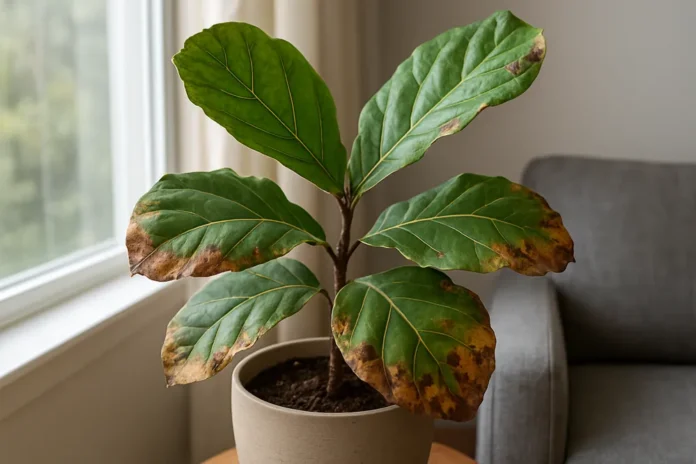
Fiddle leaf fig leaves usually turn brown because of inconsistent watering, dry air, root stress, too much direct sun, or disease. Browning happens when leaf tissue dries out, burns, or begins to rot.
When a fiddle leaf fig starts declining, one of the first signs is often leaves turning brown. The browning may show up as crispy edges, tan patches, dark soft spots, or whole leaves that slowly discolor and drop.
This symptom is common because fiddle leaf figs react quickly to stress from watering mistakes, poor drainage, dry indoor air, sudden light changes, and root problems. The exact pattern matters. Dry brown edges often suggest dehydration or low humidity, while dark mushy areas are more often linked to overwatering or disease.
The good news is that brown leaves do not always mean the plant is doomed. Once you match the browning pattern to the most likely cause, you can usually stop the damage and help your plant push healthy new growth.
What Browning Patterns Usually Mean
Before changing care, look closely at where the brown color starts and what it feels like. Fiddle leaf fig leaves give useful clues through texture, color, and location.
- Crispy brown edges or tips often point to underwatering, dry air, salt buildup, or irregular watering.
- Dark brown or black soft patches are more commonly tied to overwatering, root rot, or bacterial and fungal issues.
- Tan or bleached brown spots on exposed leaves can mean sun scorch after a sudden move into harsh direct light.
- Small scattered brown spots with yellow halos may suggest leaf spot disease or ongoing moisture on foliage.
- Lower leaves browning and dropping first often happen with root stress, drainage problems, or normal age combined with stress.
- New leaves with browning or distortion can point to severe dryness, pest feeding, or root damage affecting fresh growth.
A single damaged leaf may never turn green again, even after you fix the problem. What matters most is whether the browning continues to spread and whether new growth starts coming in healthy.
Overwatering and Root Rot
Why Too Much Water Causes Brown Leaves
Overwatering is one of the most common reasons fiddle leaf fig leaves turn brown indoors. These plants like evenly moist soil, but they do not like sitting in soggy potting mix. When roots stay wet too long, oxygen drops around the root zone and roots begin to suffocate. Damaged roots cannot move water properly, so leaves develop dark brown spots, yellowing, and eventual drop.
Signs That Overwatering Is the Issue
- Soil stays wet for many days after watering
- The pot feels heavy most of the time
- Brown spots are dark, soft, or spreading
- Lower leaves yellow before turning brown
- The plant smells musty near the soil line
- Roots look brown, mushy, or stringy instead of firm and pale
Many gardeners think overwatering means giving too much water at one time. More often, it means watering too frequently or growing the plant in a potting mix that dries too slowly. A decorative cachepot without drainage can create the same problem.
How to Correct It
Let the top few inches of soil dry before watering again, and always empty any saucer or outer pot that traps runoff. If the mix is compacted or the roots are already rotting, repot into a chunky, fast-draining indoor plant mix with a container that has drainage holes. Trim only clearly mushy roots and avoid fertilizing until the plant starts recovering.
Underwatering and Inconsistent Moisture
How Dryness Shows Up on Fiddle Leaf Figs
Fiddle leaf figs also brown when they stay too dry for too long. In this case, the plant loses water faster than the roots can replace it, and leaf edges or tips dry out first. Browning from underwatering is usually crisp, papery, and lighter brown than rot-related spots.
- Leaf edges turn tan or medium brown and feel dry
- Leaves droop before they crisp
- Soil pulls away from the sides of the pot
- The pot feels unusually light
- Older leaves may drop after repeated dry spells
Inconsistent moisture is especially hard on fiddle leaf figs. If the soil cycles from bone dry to soaking wet, roots are stressed both ways. This can create mixed symptoms like brown edges, yellowing, and leaf drop at the same time.
How to Correct It
Water thoroughly when the top 2 to 3 inches of soil are dry, then let excess water drain completely. If the root ball has become very dry and water runs straight through, rehydrate slowly by watering in stages until the mix is evenly moist. The goal is a steady rhythm, not a strict calendar.
Low Humidity and Dry Indoor Air
Although fiddle leaf figs tolerate average indoor conditions better than many tropical plants, very dry air can still brown the margins and tips. This is especially common in winter when heating systems run constantly and indoor humidity drops sharply.
- Browning starts at tips and outer edges
- Leaves feel dry and brittle rather than soft
- Damage worsens near heat vents, radiators, or drafty windows
- New growth may be smaller or more delicate than usual
Low humidity alone does not always cause severe damage, but it makes underwatering and light stress worse. In many homes, browning is caused by a combination of dry soil and dry air rather than one factor by itself.
Move the plant away from hot or cold air blasts, group it with other houseplants, or use a humidifier if your indoor air is consistently very dry. Misting gives only brief relief and usually does not raise humidity enough to solve the problem.
Too Much Direct Sun and Leaf Scorch
Fiddle leaf figs like bright light, but they can scorch if they are moved too quickly into strong afternoon sun. Leaves that formed in lower light are not prepared for intense direct exposure, so the tissue burns and turns tan, beige, or brown.
- Brown patches appear on the side facing the window
- Spots may look faded, bleached, or papery before turning brown
- Damage shows up soon after moving the plant outdoors or into a sunnier room
- The rest of the plant may still look healthy
Sunburn damage will not heal, but it should stop once the plant is moved to bright indirect light or acclimated more gradually. East-facing light often works well indoors. South- or west-facing windows may need sheer curtains, especially during summer.
Poor Drainage, Pot Size, and Compacted Soil
Sometimes the real issue is not how often you water but what happens after the water goes in. Heavy peat-based mixes, pots without drainage, or oversized containers can keep the root zone wet much too long. On the other hand, a severely root-bound plant may dry so fast that the leaves brown between waterings.
When the Container Setup Causes Trouble
- Water pools on top of the soil before soaking in
- The soil stays soggy in the middle of the pot
- Roots circle tightly and leave little room for fresh mix
- The plant dries out a day or two after watering because roots fill the entire pot
- A nursery pot sits inside a decorative pot that traps runoff
Repot only when there is a clear reason. Choose a container just 1 to 2 inches wider than the current root ball and use a mix designed for good aeration. A blend that includes bark, perlite, or coarse material helps prevent the chronic wetness that often leads to brown leaves.
Temperature Stress and Drafts
Fiddle leaf figs dislike abrupt environmental swings. Cold drafts from winter windows, blasts from air conditioners, or hot dry air from vents can all trigger leaf browning. The plant may respond with dry patches, curling, or sudden leaf drop after a temperature shock.
- Leaves touching a cold window develop damaged brown areas
- Browning appears after the plant is moved between rooms
- Damage is worse on the side facing a vent or draft source
- Symptoms show up fast after a heat or cold event
Try to keep temperatures relatively steady, ideally in a normal indoor comfort range, and avoid placing the plant where it gets repeated bursts of hot or cold air.
Fertilizer Buildup and Nutrient Stress
Brown leaf tips and edges can also result from excess fertilizer or a buildup of mineral salts in the potting mix. This is more likely when a plant is fed often, watered lightly instead of deeply, or grown in an area with hard water.
- Browning appears mainly at tips and margins
- A white crust forms on the soil surface or pot rim
- The plant was recently fertilized heavily
- Roots seem dry and burnt rather than mushy
Flush the pot thoroughly with plain water to wash out excess salts, then let it drain well. Going forward, feed only during active growth and use a balanced houseplant fertilizer at a moderate rate. Never fertilize a plant that is already drought-stressed or root-damaged.
Leaf Spot Disease and Other Infections
If brown spots are small, numerous, and sometimes bordered by yellow, a pathogen may be involved. Fungal and bacterial leaf spots are more likely when leaves stay wet, air circulation is poor, or the plant has been chronically overwatered.
Signs of a Disease-related Problem
- Spots are scattered across the leaf rather than mainly at the edges
- Some spots have a yellow halo
- The affected tissue may look water-soaked at first
- New spots continue appearing even when watering seems normal
Remove badly affected leaves if the plant has enough healthy foliage left, avoid splashing water onto leaves, and improve airflow around the plant. Correcting overwatering is often the biggest step. Chemical treatment is not always needed for a houseplant if the cultural issue is addressed early.
Pests That Can Lead to Brown Damage
Spider mites, thrips, scale, and mealybugs can stress fiddle leaf figs enough to cause browning, especially on weakened plants. Pest damage is not always obvious at first. Feeding can create stippling, dullness, distorted new leaves, and eventually brown patches where tissue dries out.
- Fine webbing may indicate spider mites
- Sticky residue can point to scale or mealybugs
- Silvery scarring or distorted new growth can suggest thrips
- Leaves look dusty, speckled, or faded before browning
If pests are present, isolate the plant and treat promptly with a suitable houseplant method such as insecticidal soap or horticultural oil, following the label. Severe infestations often combine with low humidity or watering stress, so fix both the pests and the underlying care issue.
How to Diagnose the Cause on Your Plant
When several care issues overlap, diagnosis is easier if you work through the plant from roots to leaves rather than guessing from color alone.
- Feel the soil 2 to 3 inches down to see whether it is soggy, evenly moist, or bone dry.
- Check the pot for drainage holes and look for trapped water in any outer container or saucer.
- Review recent changes such as a move to brighter light, a cold snap, repotting, or missed waterings.
- Inspect the leaves for texture. Crispy suggests dryness or scorch, while soft dark spots suggest excess moisture or disease.
- Look under leaves and along stems for pests, webbing, sticky residue, or scale bumps.
- If the problem is severe, slide the root ball partly out of the pot and inspect root color and smell.
This simple process usually narrows the issue quickly. Most fiddle leaf fig browning comes down to water management, root health, or a recent environmental change.
Can Brown Leaves Turn Green Again?
No. Brown tissue is dead tissue, so damaged parts of the leaf will not turn green again. If the spot is small and stable, you can leave the leaf in place so the plant continues using the remaining healthy green area.
If a leaf is mostly brown, mushy, or unattractive, you can prune it off with clean shears. Avoid removing too many leaves at once, especially if the plant is already stressed, because it still needs foliage to photosynthesize and recover.
How to Prevent Future Browning
- Water based on soil dryness, not a fixed weekly schedule
- Use a pot with drainage holes and a fast-draining indoor plant mix
- Keep the plant in bright indirect light and acclimate slowly to stronger sun
- Protect it from vents, drafts, and sudden temperature swings
- Flush the soil occasionally if you fertilize regularly or use hard water
- Inspect leaves often so pests or disease are caught early
- Repot only when root crowding or drainage problems make it necessary
Fiddle leaf figs do best with consistency. Stable light, steady moisture, and good drainage solve far more problems than frequent changes in products or care routines.
FAQ
Should I Cut Off Brown Fiddle Leaf Fig Leaves?
Remove leaves that are mostly brown, mushy, or badly damaged. If only a small section is brown, you can leave the leaf so the green portion still helps feed the plant.
How Often Should I Water a Fiddle Leaf Fig with Brown Leaves?
Water when the top 2 to 3 inches of soil feel dry, not on a rigid schedule. The exact timing changes with pot size, season, light, and indoor temperature.
Can Low Humidity Alone Make Fiddle Leaf Fig Leaves Turn Brown?
Yes, especially at the tips and edges, but it is often part of a bigger pattern that also includes dry soil or heat from vents. Severe browning usually has more than one contributing factor.
Why Are Only the Bottom Leaves on My Fiddle Leaf Fig Turning Brown?
Lower leaf browning often points to root stress from overwatering, poor drainage, or natural aging made worse by inconsistent care. If many lower leaves are affected at once, look closely at soil moisture and roots.
Do Brown Spots Mean My Fiddle Leaf Fig Has Root Rot?
Not always. Dark soft spots can suggest root rot, but crisp edges, tan scorch marks, pest damage, and disease can also cause browning. Root rot is more likely when the soil stays wet and the roots smell sour or look mushy.
Will a Brown Fiddle Leaf Fig Leaf Recover?
No, brown tissue will not turn green again. Recovery means the browning stops spreading and new leaves grow in healthy.
Is Tap Water Causing My Fiddle Leaf Fig Leaves to Turn Brown?
It can contribute if your water is very hard or high in salts, especially when combined with frequent fertilizer use. Flushing the soil and watering deeply can help reduce buildup.
Need help dialing in houseplant care? Read our guide to the best soil mixes, pots, and watering tools for fiddle leaf figs so you can prevent brown leaves before they start.
