

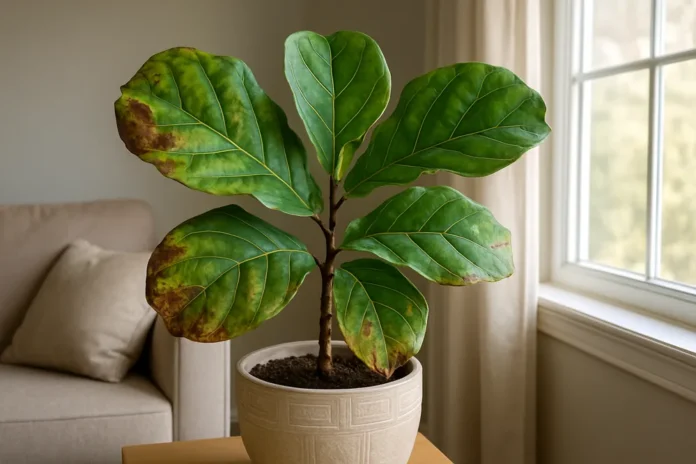
Brown spots on a fiddle leaf fig usually happen because of watering problems, root stress, low humidity, sun scorch, or leaf disease. The exact cause often depends on whether the spots are dry, crispy, soft, dark, or spreading.
Brown spots on a fiddle-leaf fig can look alarming, especially when they show up on otherwise large, glossy leaves. In many homes, brown spots are a sign that something in the plant's environment is off, but they do not always mean the plant is beyond saving.
The most common causes are inconsistent watering, soggy soil, dry indoor air, too much direct sun, and root stress. Sometimes the pattern of damage tells the story. Small dry spots often point to moisture or humidity problems, while dark mushy spots can suggest overwatering or disease.
If you know what the spots look like, where they appear, and how quickly they are spreading, you can usually narrow down the cause and make the right correction before more leaves are affected.
What Brown Spots Usually Mean On A Fiddle Leaf Fig
Brown spotting is a symptom, not a single diagnosis. Your fiddle leaf fig is reacting to stress, and the appearance of the spots gives you clues about what kind of stress it is dealing with.
- Dry, tan, crispy spots often relate to underwatering, low humidity, or sun scorch.
- Dark brown or blackish spots can point to overwatering, root rot, or bacterial problems.
- Brown edges or margins commonly happen when the plant dries out too much between waterings or sits in very dry air.
- Spots in the center of the leaf may come from physical damage, sunburn, or disease.
- New leaves with spotting often suggest recent care changes, water stress, or humidity issues during leaf development.
- Old lower leaves with a few spots can sometimes be normal aging, especially if the rest of the plant looks healthy.
The goal is to match the symptom pattern with your recent care habits. Think about watering frequency, pot drainage, light exposure, indoor humidity, fertilizer use, and whether the plant has recently been moved.
Overwatering And Root Stress
Why Too Much Water Causes Spots
One of the most common reasons fiddle leaf fig leaves develop brown spots is overwatering. When the soil stays wet too long, roots cannot get enough oxygen. Stressed roots stop taking up water and nutrients properly, and the leaves begin to show damage.
Overwatered plants often get dark brown spots that may look soft, water-soaked, or surrounded by yellowing tissue. If the problem continues, leaves can drop and the stem base may start to soften.
Signs This Is the Likely Cause
- Spots are dark, irregular, and sometimes mushy.
- Lower leaves are affected first.
- Soil feels damp for many days after watering.
- The pot has poor drainage or a saucer that stays full.
- Leaves may yellow before turning brown.
What to Do
- Let the top few inches of soil dry before watering again.
- Empty drainage saucers so roots do not sit in water.
- Check that the pot has drainage holes.
- If soil is dense or sour-smelling, repot into a chunky, fast-draining indoor potting mix.
- Trim off severely damaged leaves if they are mostly brown and no longer useful to the plant.
If the roots are black, mushy, or foul-smelling during repotting, root rot may already be present. In that case, removing damaged roots and replanting in fresh soil is often necessary.
Underwatering And Dry Soil
A fiddle leaf fig that gets too dry can also develop brown spots. When the root ball dries out too far, the plant cannot keep leaf tissue hydrated, and cells begin to die. This often shows up as crisp brown patches, especially along the edges or tips.
How Underwatering Spots Look
- Spots are light brown or tan rather than black.
- The damaged tissue feels dry and papery.
- Leaf edges may curl or crisp.
- The potting mix pulls away from the sides of the pot.
- Leaves may droop but perk up after watering.
Why Inconsistent Watering Makes It Worse
Fiddle leaf figs struggle when they swing between bone dry and soaking wet. That cycle weakens the roots and creates repeated stress, which can lead to scattered brown spots even if each watering seems generous. Consistency matters more than following a rigid schedule.
What to Do
- Water thoroughly until excess drains from the bottom.
- Do not water again until the top 2 to 3 inches of mix feel dry.
- If the root ball has become extremely dry, water slowly so the mix can rehydrate evenly.
- Use a potting mix that holds some moisture without staying soggy.
Low Humidity And Indoor Stress
Fiddle leaf figs are tropical plants, and many homes are much drier than they prefer, especially in winter when heating systems run constantly. Low humidity does not always create large dramatic spots, but it can cause brown patches, crispy margins, and weak new growth.
Humidity stress is especially likely if the plant sits near a heating vent, radiator, fireplace, or frequently used exterior door. Dry air pulls moisture from the leaves faster than the roots can replace it.
Clues Humidity Is Part of the Problem
- Browning starts at the edges or tips.
- New leaves emerge smaller or tear while unfurling.
- Damage gets worse during winter.
- The plant is near forced-air heat or strong air conditioning.
What to Do
- Move the plant away from vents and heat sources.
- Use a room humidifier if your indoor air is very dry.
- Group houseplants together to create a slightly more humid microclimate.
- Keep watering consistent so dry air does not combine with drought stress.
Too Much Direct Sun Or Sudden Light Changes
Fiddle leaf figs like bright light, but intense direct sun can scorch leaves, especially if the plant was previously in lower light. Sunburn usually creates pale brown, tan, or bleached patches on the side of the plant facing the window.
This is common after moving a plant closer to a south- or west-facing window without giving it time to adjust. The leaf tissue essentially burns and cannot recover.
How Sun Scorch Differs From Water Issues
- Spots are often larger and flatter looking.
- Damaged areas may appear faded before turning brown.
- The worst spotting is on the brightest side of the plant.
- The soil may actually be fine, with no sign of chronic wetness or severe dryness.
What to Do
- Shift the plant slightly back from harsh afternoon sun.
- Use a sheer curtain if the window gets intense direct exposure.
- Acclimate the plant gradually when increasing light.
- Leave lightly damaged leaves in place if most of the leaf is still green.
Fungal And Bacterial Leaf Spot
Although care issues are more common, true leaf spot diseases can also cause brown spotting on fiddle leaf figs. Fungal and bacterial problems often develop when leaves stay wet, air circulation is poor, and the plant is already stressed.
What Disease Spotting May Look Like
- Small dark spots that enlarge over time.
- Spots with yellow halos around them.
- Clusters of lesions rather than a single scorched patch.
- Damage that continues to spread even after watering is corrected.
Bacterial spots can look especially dark and water-soaked. Fungal spots may start small and circular, then merge into larger dead patches.
What to Do
- Remove badly affected leaves with clean pruners.
- Avoid wetting the foliage when watering.
- Increase airflow around the plant.
- Do not crowd it tightly against other houseplants.
- If the problem keeps spreading, consider a houseplant-safe fungicide labeled for leaf spot diseases.
Always sanitize pruning tools before and after cutting diseased tissue so you do not spread the problem to healthy leaves or other plants.
Pests, Fertilizer Burn, And Other Less Common Causes
Brown spots are not always caused by watering or disease. A few other issues can create similar symptoms, especially when the plant is already under stress.
Pests
Spider mites, scale, and thrips can damage leaf tissue and leave behind stippling, bronzing, or small brown scars. Pest damage is usually accompanied by other clues like webbing, sticky residue, tiny moving insects, or distorted new growth.
Fertilizer Burn
Too much fertilizer can damage roots and lead to brown tips or spots. This is more likely if you fertilize during winter, apply more often than recommended, or feed a plant that is already dry.
Cold Drafts and Physical Damage
Cold window glass, winter drafts, rubbing against walls, or leaves being bent during moving can also leave brown patches. These spots usually stay localized and do not keep spreading.
What to Look For
- Pests on leaf undersides or along stems.
- White crust on the soil from fertilizer salts.
- Damage appearing soon after feeding.
- Spots on leaves that touched a cold window or were bruised.
How To Tell Which Cause Is Most Likely
If you are unsure what is causing the brown spots, combine the look of the damage with the plant's recent history. One symptom alone can be misleading, but several clues together usually point in the right direction.
- If spots are dark and soft and the soil stays wet, overwatering is likely.
- If spots are tan and crispy and the mix gets very dry, underwatering or dry air is more likely.
- If spots are flat and bleached on the sunny side, sun scorch is a strong possibility.
- If spots have yellow halos or keep spreading, disease may be involved.
- If the plant also has webbing, stippling, or sticky residue, inspect for pests.
Also consider timing. Brown spots that appear right after repotting, moving, or a major light change often reflect environmental shock. Spots that build slowly over months are more often tied to chronic watering or humidity problems.
Can Brown-Spotted Leaves Recover?
The brown part of a leaf will not turn green again. Once that tissue dies, it stays damaged. What recovery looks like is the plant stopping the spread of spots and producing healthy new growth.
If a leaf has only a small spot and is otherwise healthy, keep it on the plant. It still helps with photosynthesis. If a leaf is mostly brown, mushy, diseased, or unattractive enough that you do not want to keep it, you can prune it off cleanly at the stem.
- Keep lightly damaged leaves if most of the surface is green.
- Remove leaves that are badly diseased or mostly dead.
- Expect improvement to show first in new leaves, not old damage.
How To Prevent Brown Spots In The Future
Prevention comes down to giving your fiddle leaf fig steady conditions. These plants dislike dramatic swings in moisture, light, and temperature.
- Use a pot with drainage holes and a loose indoor plant mix.
- Water deeply, then wait until the top layer of soil dries before watering again.
- Place the plant in bright, indirect light or gentle morning sun.
- Protect it from harsh afternoon rays unless it has been acclimated.
- Keep it away from heat vents, cold drafts, and sudden temperature swings.
- Inspect leaves regularly for pests and remove problem leaves early.
- Fertilize moderately during active growth, not heavily year-round.
When conditions stay stable, fiddle leaf figs are much less likely to develop new spotting. Most recurring problems happen when one stress stacks on top of another, such as wet soil combined with low light or dry air combined with missed waterings.
FAQ
Should I Cut Off Fiddle Leaf Fig Leaves with Brown Spots?
Only remove leaves that are mostly damaged, mushy, or clearly diseased. If a leaf has a small brown spot but is mostly green, leave it on the plant so it can still support growth.
Do Brown Spots on Fiddle Leaf Fig Leaves Mean Root Rot?
Not always. Root rot is one possible cause, especially when spots are dark and the soil stays wet, but dry soil, sunburn, low humidity, pests, and disease can also create brown spotting.
Can I Reverse Brown Spots on a Fiddle Leaf Fig?
No, the damaged tissue will not turn green again. The goal is to stop new spots from forming and help the plant produce healthy new leaves.
How Often Should I Water a Fiddle Leaf Fig with Brown Spots?
Water based on soil dryness rather than a fixed calendar. In most homes, that means watering thoroughly when the top 2 to 3 inches of potting mix feel dry.
Are Brown Spots From Misting My Fiddle Leaf Fig?
They can be if leaves stay wet and air circulation is poor. Repeated moisture on the foliage may encourage leaf spot diseases, so watering the soil directly is usually safer.
Why Are Only the Lower Leaves Getting Brown Spots?
Lower leaves often show stress first when roots are overwatered, the plant is aging naturally, or light levels are too low. If the spots are dark and spreading, check drainage and soil moisture first.
Can Too Much Sun Cause Brown Spots on Fiddle Leaf Fig Leaves?
Yes. Sudden exposure to strong direct sun can scorch the leaves and create tan or brown patches, especially on the window-facing side of the plant.
Want to fix leaf damage fast and keep your plant thriving? Read our guide to the best fiddle leaf fig soils, pots, and watering tools so you can prevent brown spots before they spread.
