

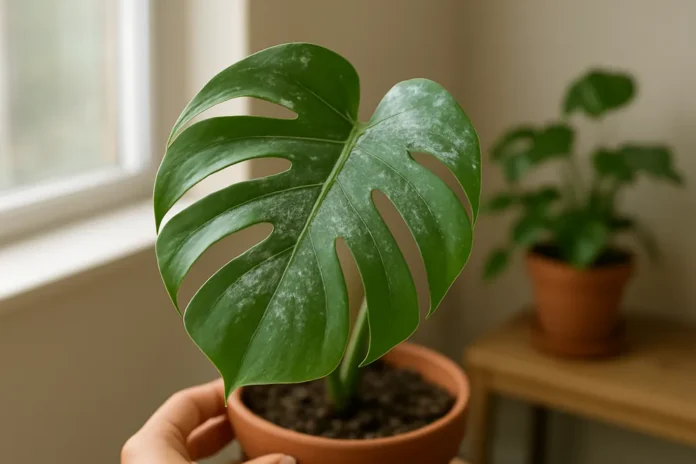
White stuff on Monstera leaves is most often mealybugs, hard water residue, dust, or powdery mildew. The exact cause depends on whether it looks fuzzy, chalky, cottony, or wipes off easily.
Seeing white stuff on your Monstera can be alarming, especially if it seems to appear overnight or starts spreading across the leaves. In many cases, the cause is not serious, but the appearance can look similar whether the problem is dust, mineral buildup, mildew, or a pest infestation.
The key is to look closely at the texture, location, and pattern. White residue that wipes away with a damp cloth points to a different issue than sticky cottony clumps tucked into leaf joints. Once you know what you are dealing with, treatment is usually straightforward and your plant can often recover quickly.
What the White Material Usually Is
White material on Monstera leaves usually falls into one of a few categories: pest activity, fungal growth, mineral or fertilizer residue, natural dust buildup, or occasional guttation residue. Some are cosmetic, while others can weaken the plant if ignored.
- Cottony or fluffy white clumps often point to mealybugs.
- Fine white powder can be powdery mildew, especially if it spreads in patches.
- Chalky spots or streaks are often hard water deposits or dried guttation minerals.
- Crusty white residue on soil and leaf edges can come from excess fertilizer salts.
- A dull, dusty film may simply be household dust settling on large leaves.
Because Monsteras have broad, glossy foliage, any residue tends to show up clearly. That makes the problem easy to spot, but not always easy to diagnose at first glance.
Mealybugs Are a Very Common Cause
How Mealybugs Look
Mealybugs are small sap-sucking insects covered in a white, waxy coating. On a Monstera, they often look like bits of cotton stuck along leaf stems, in creases where the petiole meets the leaf, on the undersides of leaves, or near new growth.
Unlike simple dust or mineral residue, mealybugs tend to cluster in protected spots. You may also notice sticky honeydew on the leaves, slowed growth, leaf yellowing, or black sooty mold growing on the sugary residue they leave behind.
How to Treat Mealybugs
- Isolate the Monstera from other houseplants.
- Wipe visible bugs away with a cotton swab dipped in 70 percent isopropyl alcohol.
- Clean both sides of the leaves and inspect every stem joint.
- Follow up with insecticidal soap or neem oil labeled for indoor plant use.
- Repeat treatment every 7 to 10 days until no new bugs appear.
A single cleaning is rarely enough. Mealybugs hide well, especially in split leaves, folded new growth, and tight stem areas, so consistent follow-up matters.
Powdery Mildew Can Leave a Dusty White Coating
What Powdery Mildew Looks Like
Powdery mildew is a fungal disease that appears like white or pale gray powder sprinkled across the leaf surface. It often starts as small blotches and can expand into larger patches. The coating looks more flat and dusty than the fluffy tufts caused by mealybugs.
While powdery mildew is more common outdoors, it can appear on indoor plants when air circulation is poor, humidity is uneven, and leaves stay crowded. It may be more likely if your Monstera is in a dim corner or pressed close to other plants.
How to Treat Powdery Mildew
- Remove the most affected leaves if the problem is severe.
- Improve airflow around the plant.
- Avoid wetting the foliage late in the day.
- Use a houseplant-safe fungicide, potassium bicarbonate spray, or neem product according to label directions.
- Keep the plant in bright indirect light to support stronger growth.
Do not confuse powdery mildew with harmless residue. If the white coating keeps returning and slowly spreads, fungus is more likely than dust or hard water spotting.
Hard Water and Mineral Residue Are Often Harmless
If you mist your Monstera, wipe leaves with tap water, or have hard water in your home, the white stuff may simply be dried mineral deposits. Calcium and magnesium can leave pale dots, rings, or cloudy patches after water evaporates.
This kind of residue usually feels chalky rather than fuzzy. It often wipes off with a damp microfiber cloth, especially if you use distilled water. The spots are usually most visible on the upper leaf surface where droplets dried.
How to Clean Mineral Buildup
- Wipe leaves gently with a soft cloth dampened in distilled or filtered water.
- For stubborn buildup, use a very diluted mix of water with a small splash of white vinegar.
- Wipe again with plain water so no cleaning residue remains.
- Dry the leaves with a clean cloth.
Avoid leaf shine products. They can clog the leaf surface and attract more dust, making the problem look worse over time.
Guttation and Fertilizer Salts Can Leave White Crusts
Monsteras sometimes release excess moisture through tiny pores, a process called guttation. When those droplets dry, they can leave small white mineral marks along the edges or tips of leaves. This is usually not harmful and is more likely when the soil is very moist and the plant is actively growing.
Fertilizer salts can create a similar white residue, especially if you feed frequently or use stronger-than-recommended doses. In that case, you may also see a white crust on the potting mix or around the inside rim of the pot.
When Salt Buildup Becomes a Problem
- Leaf tips turn brown or crispy.
- Growth slows even during the warm season.
- White crust forms on the soil surface.
- Water seems to run through the pot too quickly without soaking in well.
If excess salts are the cause, flush the soil thoroughly with water and cut back on feeding. In more severe cases, repotting into fresh mix may be the better option.
Dust, Residue, and Indoor Grime Can Mimic Disease
Large Monstera leaves act like shelves for dust. In dry homes, near vents, or in rooms with cooking residue, the leaf surface can collect a pale film that looks suspicious at first. This is especially common on older leaves that have not been cleaned in a while.
Dust buildup usually appears evenly across broad areas rather than in clusters or active patches. It wipes off easily and does not leave sticky residue behind. Cleaning the leaves improves appearance and also helps the plant photosynthesize more efficiently.
Safe Leaf-cleaning Routine
- Support each leaf from underneath while wiping.
- Use a soft, damp cloth rather than rough paper towels.
- Clean both the top and bottom of each leaf.
- Do not scrub hard enough to damage the cuticle.
- Check for pests while you clean.
How to Tell the Difference Quickly
Texture is your best clue. A cottony tuft in a leaf joint is very different from a flat powder across the whole blade or a chalky ring left by water. Looking closely under bright light usually narrows it down fast.
- Fluffy and clumped: likely mealybugs.
- Flat and powdery: likely powdery mildew.
- Chalky spots after misting or wiping: likely hard water residue.
- Small crusty deposits near tips or edges: likely guttation minerals or fertilizer salts.
- Even dull film over older leaves: likely dust.
If you are still unsure, wipe a small area with a damp cloth. If it lifts off cleanly and does not return quickly, residue or dust is most likely. If it smears, clings, or comes back as new growth expands, look more closely for pests or fungal disease.
What Conditions Make the Problem More Likely
Several common indoor growing conditions can make white buildup more likely on Monstera leaves. Some create ideal conditions for pests or mildew, while others simply increase harmless residue.
- Low air circulation around dense foliage
- Overcrowding with other houseplants
- Frequent misting with hard tap water
- Overfertilizing during active growth
- Very damp soil combined with poor drainage
- Stress from low light, irregular watering, or temperature swings
A healthy Monstera in bright indirect light with steady care is less likely to develop serious white fungal or pest problems. Stressed plants are easier targets.
How to Prevent White Buildup on Monstera Leaves
Prevention is mostly about consistent plant care and regular inspection. White residue from dust or minerals can be controlled with routine cleaning, while mealybugs and mildew are easier to stop early than to eliminate once established.
- Inspect leaf undersides and stem joints every week.
- Wipe the leaves clean every few weeks with filtered or distilled water.
- Avoid heavy misting if your tap water leaves mineral spots.
- Keep the plant in bright indirect light.
- Give the foliage enough space so air can move around it.
- Fertilize at the recommended rate, not more.
- Quarantine new plants before placing them near your Monstera.
These simple habits catch most problems before they become serious and keep the foliage looking glossy and healthy.
When the White Stuff Means You Should Act Fast
Not every white mark is urgent, but some signs mean it is time to intervene right away. Pests can spread to nearby plants, and fungal growth can weaken foliage if allowed to build.
- The white material is spreading from leaf to leaf.
- You see sticky residue, webbing, or active insects.
- Leaves are yellowing, curling, or dropping.
- New growth is distorted or stunted.
- The white coating returns soon after cleaning.
If several of these signs show up together, the issue is probably more than cosmetic. Early treatment gives you the best chance of protecting the plant and avoiding spread to the rest of your indoor collection.
FAQ
Can I Just Wipe the White Stuff Off My Monstera Leaves?
Yes, if it is dust, hard water spotting, or harmless residue. If it comes back quickly or looks cottony, powdery, or sticky, the cause may be pests or fungus and needs treatment beyond simple wiping.
Is White Stuff on Monstera Leaves Always a Pest?
No. Many cases are just mineral deposits, dried guttation residue, fertilizer salts, or dust. Mealybugs are common, but they are not the only possibility.
What Does Mealybug Damage Look Like on a Monstera?
You may see white cottony clusters, sticky honeydew, yellowing leaves, weak growth, and sometimes black sooty mold. The bugs often hide in leaf joints and around new growth.
Can Hard Water Hurt My Monstera Leaves?
The residue itself is usually cosmetic, but frequent mineral buildup can dull the leaf surface and make the plant look unhealthy. Using filtered or distilled water for cleaning helps prevent spotting.
Should I Remove Leaves with Powdery Mildew?
Remove badly affected leaves if only a few are infected and the plant has enough healthy foliage left. If the mildew is light, you can often treat it without heavy pruning.
Why Is There White Crust on the Soil and the Leaves?
That often points to excess fertilizer salts or mineral-heavy water. Flush the soil thoroughly and reduce fertilizer strength or frequency if the buildup keeps returning.
Can I Use Neem Oil on My Monstera?
Yes, neem oil can help with mealybugs and some fungal issues when used according to the label. Test a small area first and avoid applying it in harsh direct sun.
Need the right fix fast? Read our guide to the best houseplant pest treatments and leaf-cleaning products so you can protect your Monstera before the problem spreads.
