

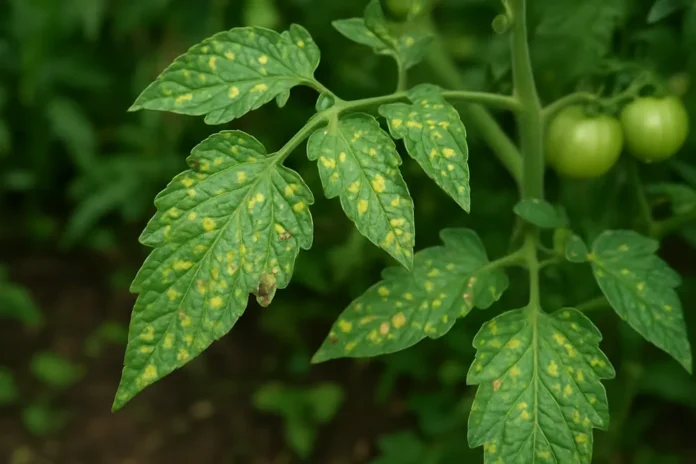
Yellow spots on tomato leaves are most often caused by fungal or bacterial disease, spider mites, nutrient stress, or watering issues. The exact cause usually depends on whether the spots stay small, develop dark centers, spread quickly, or appear with other symptoms.
Seeing tomato leaves with yellow spots can be alarming, especially when your plants looked healthy just a few days earlier. In many cases, yellow spotting is an early warning sign that something is stressing the plant rather than a sign that the whole tomato is lost.
The most common reasons tomato leaves develop yellow spots include fungal disease, bacterial infection, sap-sucking pests, nutrient problems, and uneven moisture. The good news is that the spot pattern, where it starts on the plant, and whether the leaves also curl, brown, or drop can tell you a lot about the real cause.
Once you know what you are looking at, treatment gets much easier. Some problems call for better airflow and drier foliage, while others need pest control, improved feeding, or simple changes to your watering routine.
What Yellow Spots on Tomato Leaves Usually Mean
Yellow spotting is a symptom, not a diagnosis. Tomato leaves can turn spotted yellow when tissue is damaged by disease organisms, when insects remove cell contents, or when the plant cannot move nutrients and water efficiently. Looking at the shape, size, and location of the spots is the fastest way to narrow it down.
- Small yellow dots or stippling often point to spider mites or other tiny sap-feeding pests.
- Yellow spots with dark brown or black centers often suggest fungal or bacterial leaf spot diseases.
- Yellowing between veins can be tied to nutrient deficiencies, especially magnesium or iron.
- Spots that begin on lower leaves and move upward often happen with soil-borne splash diseases or age-related nutrient stress.
- General mottling with leaf distortion may indicate a viral problem, especially if growth is stunted.
On tomatoes, the oldest leaves often show trouble first because they are closest to the soil and because the plant will redirect nutrients from older growth when it is under stress. If your spotting started low and moved up after rainy weather or overhead watering, disease is more likely. If it appeared during hot, dry conditions with fine webbing, think pests first.
Common Diseases That Cause Yellow Spots
Septoria Leaf Spot
Septoria leaf spot is one of the most common tomato diseases behind yellow-spotted foliage. It usually begins on lower leaves as many small circular spots with tan or gray centers and darker borders. As the infection expands, tissue around the spots turns yellow and the leaf may eventually brown and fall off.
This disease thrives in warm, humid weather and spreads when water splashes spores from the soil onto leaves. Plants with dense foliage and poor airflow are especially vulnerable. Fruit is usually not spotted early on, but heavy defoliation can reduce yield and expose tomatoes to sunscald.
Early Blight
Early blight can also create yellow halos around brown leaf lesions. The spots are often larger than septoria spots and may show target-like rings. Lower leaves are usually hit first, then the problem moves upward if conditions stay warm and wet.
Yellowing around these lesions is common because the surrounding leaf tissue is stressed or dying. If you notice dark spots with concentric circles and yellowing around them, early blight becomes a strong suspect.
Bacterial Speck and Bacterial Spot
Bacterial diseases can cause tiny dark lesions surrounded by yellow tissue. These spots may look greasy or water-soaked at first, especially after humid weather. On tomato, bacterial speck tends to produce smaller spots, while bacterial spot often creates slightly larger lesions and can affect fruit as well.
Bacterial problems spread through splashing water, infected seed, contaminated tools, and plant handling when leaves are wet. They are harder to stop once established, so sanitation and moisture control are very important.
Leaf Mold in Humid Gardens
Leaf mold is more common in greenhouses and very humid gardens. It can begin as pale green or yellow patches on the upper surface of leaves, while the underside develops olive or gray fuzzy growth. This often starts on older leaves in crowded plants where air movement is poor.
Pests That Leave Yellow Spotting or Stippling
Spider Mites
Spider mites are a classic cause of fine yellow stippling on tomato leaves. These pests feed by piercing leaf tissue and sucking out cell contents, which leaves behind many tiny pale or yellow dots. As feeding continues, leaves may look bronzed, dry, or dusty, and you may see fine webbing on leaf undersides or between stems.
Mites become especially troublesome in hot, dry weather. They often explode after plants are stressed by drought or after broad-spectrum insecticides reduce beneficial insects that normally help keep mite numbers down.
Thrips and Other Sap Feeders
Thrips can also create pale yellow or silvery speckling on leaves. Their damage is usually more irregular than mite stippling, and leaves may become distorted if feeding is heavy. Aphids and whiteflies are less likely to create neat yellow spots, but they can contribute to mottled yellowing and leaf decline.
- Look for fine webbing if you suspect spider mites.
- Check the undersides of leaves for tiny moving pests or cast skins.
- Tap a leaf over a white sheet of paper to spot very small insects.
- Watch for sticky residue or sooty mold, which can accompany aphids or whiteflies.
Nutrient Problems That Can Look Like Spotting
Not every yellow mark is caused by disease or pests. Tomatoes are heavy feeders, and when nutrients are out of balance, leaves may develop yellow patches or interveinal chlorosis that gardeners sometimes describe as spots.
Magnesium Deficiency
Magnesium deficiency often shows up on older leaves first because magnesium moves from old growth to new growth when the plant is short on supply. Leaves can develop yellowing between veins while the veins stay greener. At first, this may look like scattered yellow spotting, but it usually becomes a broader marbled pattern over time.
Iron and Manganese Issues
Iron deficiency is more common on newer leaves, which turn yellow while veins remain green. Manganese deficiency can also create interveinal yellowing with tiny necrotic specks. These problems are sometimes tied less to a lack of fertilizer and more to high soil pH or root stress that prevents nutrient uptake.
Fertilizer Imbalance and Salt Stress
Too much fertilizer, especially in containers, can burn roots and cause irregular yellowing or spotting on leaves. Excess salts interfere with water uptake and can mimic drought or deficiency symptoms. If plants were recently fed heavily and then started spotting, root stress may be part of the picture.
Watering and Weather Stress Can Trigger Yellow Spots Too
Tomatoes like evenly moist soil, not constant saturation and not repeated dry-downs. When moisture swings back and forth, leaves can become stressed, nutrient uptake suffers, and opportunistic diseases gain ground. The result may look like yellow spots even when the underlying issue began at the roots.
- Overwatering can suffocate roots and limit nutrient uptake.
- Underwatering can trigger mite outbreaks and scorch stressed leaves.
- Overhead watering keeps foliage wet long enough for leaf spot diseases to spread.
- Rain splash can move fungal spores and bacteria from soil to lower leaves.
Weather matters too. Extended humidity, warm nights, and crowded cages create ideal conditions for fungal and bacterial spotting. By contrast, long stretches of heat and dust often lean more toward pest injury, especially spider mites.
How to Tell Which Cause Is Most Likely
A close look at the plant will usually give you strong clues. You do not need a lab test to narrow the problem to the most likely category.
Signs That Point to Disease
- Spots have dark centers, borders, or ring patterns.
- Yellowing starts on lower leaves and moves upward.
- Symptoms spread after rain, heavy dew, or overhead irrigation.
- Leaves eventually turn brown and drop.
Signs That Point to Pests
- Spots are very fine, pale, or evenly stippled.
- You can find pests or webbing on leaf undersides.
- Damage is worse during hot, dry weather.
- Leaves may look bronzed rather than dotted with dark lesions.
Signs That Point to Nutrient or Root Stress
- Yellowing follows the veins or appears between them.
- There are few or no true dead spots with dark centers.
- The plant was recently fertilized, transplanted, or waterlogged.
- New growth or old growth shows a clear pattern tied to nutrient mobility.
What to Do About Yellow Spots on Tomato Leaves
Treatment depends on the cause, but a few basic steps help in nearly every case. Start by removing the worst affected leaves, especially if they are low on the plant and heavily covered in spots. Dispose of them in the trash rather than composting if disease is suspected.
If Disease Is the Likely Cause
- Prune lower foliage so leaves are not touching the soil.
- Mulch around the base to reduce splash-up from rain or watering.
- Water at the soil line early in the day instead of wetting leaves.
- Space and support plants for better airflow.
- Use a labeled tomato fungicide, such as copper or chlorothalonil where allowed, if spotting is spreading quickly.
If Pests Are the Likely Cause
- Rinse leaf undersides with a firm spray of water to knock pests back.
- Use insecticidal soap or horticultural oil, making sure to coat the undersides of leaves.
- Repeat applications as directed on the product label.
- Avoid spraying during the hottest part of the day to reduce plant stress.
If Nutrients or Watering Are Involved
- Keep soil evenly moist rather than alternating between soggy and bone dry.
- Use a balanced tomato fertilizer according to label directions.
- Consider a soil test if yellowing is widespread or recurring.
- Check container plants for salt buildup and flush the potting mix if needed.
Do not expect damaged leaves to turn fully green again. The goal is to stop new spotting and protect healthy growth. Improvement is measured by cleaner new leaves and slower spread, not by perfect recovery of leaves that are already marked.
How to Prevent Yellow Spotting Later in the Season
Prevention is far easier than trying to reverse a severe outbreak. Tomatoes stay healthier when routine care reduces leaf wetness, stress, and overcrowding.
- Rotate tomatoes to a new spot each year if possible.
- Plant disease-resistant varieties when available.
- Mulch early to keep soil from splashing onto lower leaves.
- Stake or cage plants so foliage dries faster after rain.
- Water deeply at the base instead of sprinkling overhead.
- Remove yellowing lower leaves promptly during humid weather.
- Clean tools and avoid handling plants when leaves are wet.
- End the season by removing old tomato debris from the garden.
If you garden in a humid part of the U.S., spacing may matter more than fertilizer. If you garden in a hot, dry region, spider mites and irrigation consistency may be the bigger focus. Prevention works best when it matches your local conditions.
When Yellow Spots Are Serious Enough to Worry About
A few spotted leaves are not unusual in mid to late season, especially after weather swings. The problem becomes serious when a large portion of the plant is affected, the spotting is moving rapidly up the canopy, or new leaves are emerging already damaged.
- More than a quarter of the foliage is affected.
- Leaves are dropping quickly and exposing fruit.
- Spots are appearing on stems or fruit as well as leaves.
- The plant is stunted, wilted, or producing poorly.
- Several nearby tomato plants are developing the same symptoms.
In those cases, fast sanitation and targeted treatment matter. Severe defoliation can cut fruit quality and yield, even if the tomatoes themselves are not infected at first.
FAQ
Can Yellow Spotted Tomato Leaves Turn Green Again?
Usually no. Damaged leaf tissue rarely returns to normal, but if you correct the cause, new growth should come in healthier.
Should I Remove Leaves with Yellow Spots?
Yes, if the leaves are heavily spotted, especially on the lower part of the plant. Removing badly affected leaves helps reduce disease spread and improves airflow.
Are Yellow Spots on Tomato Leaves Always a Disease?
No. Spider mites, thrips, nutrient deficiencies, fertilizer stress, and watering problems can all create yellow spotting or mottled yellowing.
Is It Safe to Eat Tomatoes From a Plant with Yellow Spotted Leaves?
In most cases, yes, if the fruit itself is healthy and undamaged. Discard fruit that is rotting, badly spotted, or otherwise compromised.
What Does Spider Mite Damage Look Like on Tomato Leaves?
Spider mites usually cause very fine yellow stippling across the leaf surface. In heavier infestations, leaves may bronze, dry out, and develop fine webbing.
Why Do the Lower Tomato Leaves Get Yellow Spots First?
Lower leaves are closer to soil where fungal spores and bacteria splash up during watering or rain. They are also older leaves, so nutrient-related stress often shows there first.
Will Neem Oil Help Yellow Spots on Tomato Leaves?
Neem oil may help if the problem is caused by certain pests or mild fungal pressure, but it will not fix nutrient deficiencies or every disease. It works best when matched to the actual cause and used according to label directions.
Need the right fix fast? Read our tomato disease and pest treatment guides to choose the best spray, soap, or prevention strategy before the spotting spreads.
