

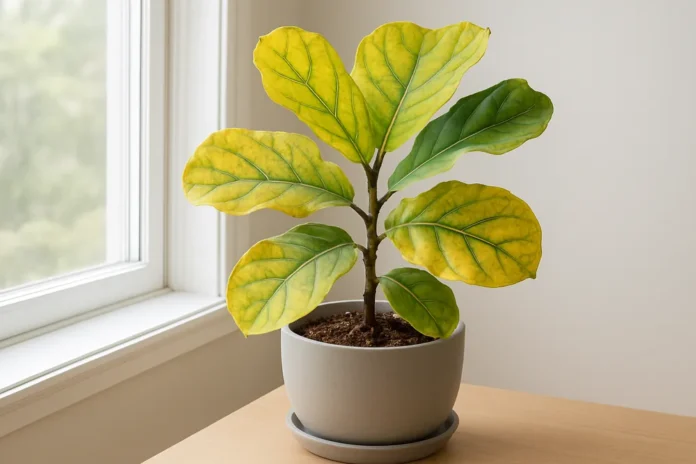
Chlorosis in fiddle leaf figs is most often caused by watering problems, poor drainage, root stress, or nutrient deficiencies that prevent leaves from making enough chlorophyll. It can also develop when compacted soil, low light, cold drafts, or alkaline conditions interfere with nutrient uptake.
Chlorosis in a fiddle leaf fig shows up when the plant's leaves lose their rich green color and turn pale, yellow, or yellow between the veins. This kind of chlorosis is a symptom, not a disease by itself, and it usually means the plant cannot produce or hold enough chlorophyll.
For home gardeners, the most common triggers are overwatering, roots sitting in soggy soil, drainage problems, nutrient deficiency, or nutrient lockout caused by poor soil conditions. A fiddle leaf fig can also fade when light is too low, temperatures swing too much, or the root system has become cramped and stressed.
The pattern matters. New leaves that yellow first can point to iron or manganese issues, while older leaves often fade first when nitrogen or magnesium is lacking. Looking at where the yellowing starts, how quickly it spreads, and what your recent care routine has been will usually narrow down the real cause.
What Chlorosis Looks Like on a Fiddle Leaf Fig
Chlorosis is a loss of green pigment. On fiddle leaf figs, it may appear as an overall pale cast, yellow leaf tissue with greener veins, blotchy fading, or leaves that emerge weak and light colored. In some cases, the leaf stays structurally firm at first. In others, yellowing is followed by browning, crisping, or leaf drop.
- Older leaves yellowing first often suggests a mobile nutrient issue such as nitrogen or magnesium deficiency.
- New leaves yellowing first can point to iron, manganese, or sulfur problems, especially when veins stay greener than the surrounding tissue.
- Yellowing with brown edges may indicate root stress, salt buildup, or inconsistent watering.
- Pale, washed-out leaves across the whole plant often happen when light is too low or roots are not functioning well.
Because several problems can cause similar yellowing, chlorosis should be treated as a clue. The best answer comes from matching leaf symptoms with soil moisture, drainage, light exposure, pot size, and feeding history.
Overwatering and Poor Drainage Are the Most Common Causes
For most indoor fiddle leaf figs, the biggest chlorosis trigger is too much water around the roots. When potting mix stays wet for too long, roots cannot get enough oxygen. That stress limits nutrient uptake and can quickly lead to yellow leaves. If the situation continues, roots may begin to rot, and chlorosis often spreads.
How Soggy Roots Cause Yellowing
Healthy roots need both moisture and air. In a dense or constantly wet mix, air pockets disappear. Even when fertilizer is present in the soil, stressed roots cannot absorb nutrients efficiently. The leaves then lose color because the plant cannot support normal chlorophyll production.
- Leaves turn pale yellow across large sections
- Soil stays damp for many days after watering
- The pot feels heavy most of the time
- Lower leaves yellow and drop
- A sour smell comes from the potting mix
- Black or mushy roots appear during repotting
Poor drainage can come from several sources, including a pot without drainage holes, a cachepot that traps runoff, compacted potting mix, or watering on a schedule instead of by soil dryness. Any of these can create chronic root stress and chlorosis even when the plant looks fine from a distance.
Underwatering and Inconsistent Moisture Can Also Trigger Chlorosis
Although overwatering gets more attention, underwatering can also make fiddle leaf fig leaves yellow. When the root ball becomes too dry, roots stop functioning normally and nutrient flow slows down. Repeated cycles of bone-dry soil followed by heavy watering are especially stressful.
This type of chlorosis often appears with drooping, dry potting mix that pulls away from the container, and brown crispy margins. Some leaves may yellow and then fall quickly. Unlike overwatering, the pot will usually feel very light, and the mix may resist absorbing water at first.
- Dry lower leaves with yellowing before they crisp
- Wilting that improves soon after watering
- A root ball that shrinks away from the pot sides
- Patchy yellowing after missed waterings
- New growth that stays small or stalls
Nutrient Deficiencies That Cause Pale or Yellow Leaves
True nutrient deficiency can cause chlorosis, but it is less common than watering and root-zone problems. Still, a fiddle leaf fig growing in exhausted potting mix or left unfertilized for a long period may show clear nutrient-related yellowing.
Nitrogen Deficiency
Nitrogen supports leafy green growth. When it is lacking, older leaves often become uniformly pale green to yellow first because the plant moves nitrogen into newer growth. The whole plant may look weak and less vigorous.
Magnesium Deficiency
Magnesium is central to chlorophyll production. A deficiency often causes interveinal chlorosis on older leaves, meaning the tissue between veins yellows while veins remain greener. This can gradually spread and may be confused with general fading.
Iron Deficiency
Iron deficiency usually affects new leaves first. Young leaves may emerge very pale yellow with somewhat greener veins. In houseplants, this often reflects not a lack of iron in the soil but poor uptake due to waterlogged roots, high pH, or compacted mix.
Manganese and Sulfur Issues
Less commonly, manganese or sulfur shortages can also cause chlorosis in newer leaves. These are usually connected to root-zone chemistry, depleted mix, or prolonged use of unsuitable water and fertilizer practices rather than a simple absence of nutrients.
Nutrient Lockout Can Mimic Deficiency
A plant can show chlorosis even when nutrients are technically present in the pot. This happens when the roots cannot access them. Home gardeners often call this nutrient lockout, and it is common in houseplants kept too wet, grown in old compacted media, or watered with mineral-heavy water over time.
If fertilizer has been applied regularly but yellowing still appears, the issue may be root function or soil chemistry rather than a lack of feeding. High pH can reduce availability of iron, manganese, and other micronutrients. Salt accumulation from fertilizer can also damage roots and interfere with uptake.
- White crust on the soil surface or pot rim
- Yellow new growth despite recent fertilizing
- Compacted, old potting mix that drains poorly
- Roots circling tightly with little fresh soil left
- Use of softened or very hard tap water over long periods
Root Problems Often Sit Behind Persistent Chlorosis
When yellowing keeps returning no matter how you water or feed, inspect the roots. Fiddle leaf figs rely on an active, well-aerated root system. If roots are rotted, pot-bound, physically damaged, or trapped in depleted mix, the leaves will often show chlorosis before more dramatic decline appears.
Root Rot
Rotting roots are dark, soft, and often smell unpleasant. Because these roots cannot move water and nutrients, the plant can look both overwatered and dehydrated at the same time. Yellowing may spread quickly, especially on lower or mid-level leaves.
Root Binding
A severely root-bound fiddle leaf fig may develop chlorosis because there is too little fresh mix left to hold moisture and nutrients evenly. Water may run through quickly, fertilizer can build up, and the root mass may struggle to support large leaves.
Cold-damaged Roots
Roots exposed to cold floors, chilly windows, or cold water can become less effective. Even short periods of cold stress can reduce uptake and lead to pale foliage, particularly in winter when growth slows.
Low Light and Environmental Stress Can Reduce Leaf Greening
Fiddle leaf figs need bright light to maintain strong green foliage. In lower light, the plant cannot photosynthesize efficiently, and leaves may fade, look dull, or yellow gradually. This is especially common in winter or in rooms where the plant sits far from a bright window.
Environmental stress can intensify chlorosis even if it is not the only cause. Sudden moves, cold drafts, blast from heating vents, and temperature swings can all stress the plant enough to disrupt normal nutrient use. New growth may emerge weak or pale when the plant is struggling to adjust.
- Leggy growth with larger spaces between leaves
- Leaves that look pale rather than richly green
- Yellowing after moving the plant to a darker corner
- Stress symptoms near drafty doors or windows
- Winter decline despite no obvious watering change
Water Quality and Soil pH Can Play a Hidden Role
Some fiddle leaf figs develop chlorosis because of what is in the water rather than how often the plant is watered. Hard water can leave mineral deposits in the mix. Over time, this may raise pH or contribute to salt buildup, both of which can limit micronutrient uptake.
Softened water can also be problematic because it often contains sodium, which is not helpful for most houseplants and may stress roots over time. If new growth is pale and fertilizer has not solved it, water quality is worth considering, especially in homes with consistently hard municipal water.
A slightly acidic to near-neutral potting environment usually supports better nutrient availability for fiddle leaf figs. When the mix drifts too alkaline, iron-related chlorosis becomes more likely.
How to Tell Which Cause Is Most Likely
The fastest way to narrow down chlorosis is to compare the leaf pattern with recent care conditions. Yellowing alone is not enough. Where it starts, how fast it spreads, and what the soil feels like usually tell the story.
- Older leaves yellow first and the plant has not been fed in months: likely nitrogen or magnesium shortage, or a depleted root zone.
- New leaves emerge pale with greener veins: likely iron-related chlorosis, often tied to root stress or high pH.
- Lower leaves yellow while soil stays wet for long periods: likely overwatering or poor drainage.
- Leaves yellow after dry spells and become crispy: likely underwatering or inconsistent moisture.
- Yellowing continues despite fertilizer: likely root damage, nutrient lockout, salt buildup, or poor light.
If several conditions apply at once, start with the root zone. In houseplants, chlorosis is very often the visible result of a root problem first and a nutrient problem second.
What Fixes Chlorosis in Fiddle Leaf Figs
The right fix depends on the cause, but successful recovery usually begins with correcting watering and root conditions. Severely yellow leaves may not turn fully green again, but healthy new growth is a good sign that the plant is recovering.
Adjust Watering Practices
Water only when the upper portion of the potting mix has dried to an appropriate depth for the pot size. Then water thoroughly until excess drains out. Do not let the pot sit in collected water.
Improve Drainage and Potting Mix
If the mix stays soggy, repot into a chunky, well-draining indoor plant mix and use a container with drainage holes. If roots are rotted, trim damaged portions before repotting into fresh media.
Feed Appropriately
During active growth, use a balanced fertilizer formulated for houseplants or foliage plants at a sensible rate. Avoid overfertilizing, which can worsen salt stress and chlorosis.
Flush Salt Buildup when Needed
If mineral crust or fertilizer residue is present, flushing the pot with clean water can help remove excess salts. This works best only when drainage is good.
Increase Light and Stabilize Conditions
Move the plant to bright indirect light or a spot with gentle direct morning sun if appropriate for your space. Keep it away from cold drafts, heating vents, and abrupt temperature changes.
When Chlorosis Is a Sign of a Bigger Problem
Chlorosis should be taken more seriously when it spreads rapidly, affects most of the plant at once, or appears alongside mushy stems, persistent wilting, leaf drop, or blackened roots. Those combinations suggest major root failure rather than a mild feeding issue.
A plant that has lost many leaves can still recover, but only if the underlying cause is corrected. Continuing to add fertilizer to a stressed, waterlogged plant usually makes things worse. In many cases, the best intervention is improving root conditions, not increasing feeding.
FAQ
Can Yellow Fiddle Leaf Fig Leaves Turn Green Again?
Mild chlorosis sometimes improves slightly, but badly yellowed leaves usually do not return to a deep healthy green. The better sign of recovery is strong new growth with normal color.
Is Chlorosis the Same as Overwatering?
No. Chlorosis means loss of green pigment in the leaf. Overwatering is one common cause, but nutrient deficiency, root damage, low light, and pH issues can also lead to chlorosis.
Why Are the Veins Still Green on My Fiddle Leaf Fig Leaves?
Green veins with yellow tissue between them is called interveinal chlorosis. It often points to iron, magnesium, or manganese issues, though root stress and high pH are frequently the real reason those nutrients are not being absorbed.
Should I Fertilize a Chlorotic Fiddle Leaf Fig Right Away?
Not always. If the soil is soggy, compacted, or the roots are damaged, fertilizer may not help and can add stress. Correcting drainage and watering problems usually matters more than feeding first.
Can Tap Water Cause Chlorosis in Fiddle Leaf Figs?
Yes. Hard water can contribute to mineral buildup and higher pH over time, which may interfere with nutrient uptake. Softened water can also be problematic because of sodium content.
Do Fiddle Leaf Figs Get Chlorosis From Low Light?
Yes. In dim conditions, leaves may lose their rich green color and the plant may struggle to use water and nutrients efficiently. Low light often worsens chlorosis caused by other issues.
How Long Does It Take a Fiddle Leaf Fig to Recover From Chlorosis?
It depends on the cause and how quickly it is corrected. New healthy growth may appear within a few weeks during active growing season, while full recovery of the plant can take several months.
Want the right fix faster? See our guide to the best soils, fertilizers, and drainage supplies for fiddle leaf figs so you can stop yellowing and support healthy new growth.
