

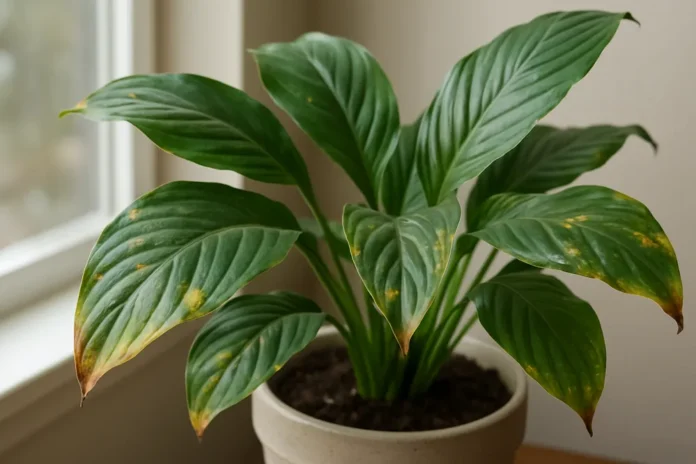
Peace lily leaves usually get yellow spots from watering stress, harsh light, pest feeding, mineral buildup, or occasional disease. The exact cause often depends on whether the spots are dry, soft, scattered, or spreading.
Seeing yellow spots on peace lily leaves can be frustrating, especially when the rest of the plant still looks mostly healthy. In many cases, spotted leaves are an early warning sign rather than a sign that the whole plant is failing.
Peace lilies are fairly expressive houseplants. They react to too much water, too little water, intense direct sun, dry indoor air, pests, and even tap water minerals by marking their foliage. The good news is that yellow spotting is often reversible once you identify the cause and make a few care adjustments.
The pattern matters. Small pale speckles suggest one problem, larger bleached patches suggest another, and soft yellow areas with browning edges point in a different direction entirely. Once you learn what those visual clues mean, it becomes much easier to help your plant recover.
What Yellow Spots on Peace Lily Leaves Usually Mean
Yellow spots are not a single diagnosis. They are a symptom that can come from stress, injury, pests, or infection. Peace lily leaves are broad and tender, so they show damage quickly and clearly.
Start by looking at the size, texture, and location of the spots. Dry, bleached spots often come from sun scorch. Fine stippling or tiny yellow dots often comes from spider mites or other sap-sucking pests. Soft yellow patches can signal overwatering or root stress. Spotting that expands and turns tan or brown may point to a fungal or bacterial issue.
- Scattered tiny yellow specks: often pests such as spider mites or thrips
- Large pale or bleached patches: usually too much direct sun
- Yellow areas with brown tips or edges: often watering inconsistency or salt buildup
- Spots that spread or look water-soaked: possible leaf spot disease
- Older leaves spotting first: common with root stress, age, or nutrient imbalance
Overwatering and Root Stress
Overwatering is one of the most common reasons peace lily leaves develop yellow spotting. These plants like evenly moist soil, but they do not like to sit in soggy mix for long periods. When roots stay too wet, they struggle to absorb oxygen. That stress can show up as yellow blotches, dull foliage, drooping, and eventually browning.
The spots from excess moisture are often not crisp or sharply defined. Instead, the leaf may look patchy, weak, or soft in places. If the pot feels heavy for days after watering, or the soil smells stale, the roots may be under stress.
Signs the Roots Are Staying Too Wet
- Leaves droop even though the soil is still damp
- Yellow spotting appears on multiple leaves at once
- Lower leaves yellow first
- Potting mix stays wet more than a week indoors
- There is a sour or swampy smell near the root zone
If you suspect overwatering, let the top inch or two of soil dry before watering again. Make sure the pot has drainage holes, and do not let the plant sit in a saucer full of water. If the soil is dense and compacted, repotting into a loose indoor plant mix with bark or perlite can make a major difference.
Underwatering and Uneven Moisture
Peace lilies are famous for wilting dramatically when dry. If that cycle happens repeatedly, leaves can develop yellow flecks, dry patches, or mottled discoloration. Even if you water eventually, repeated drought stress can leave lasting marks on the foliage.
Underwatering spots tend to feel dry rather than mushy. Tips may turn brown, and the leaf surface can look papery in the damaged areas. A peace lily that swings between bone dry and soaking wet often shows more spotting than one that is slightly dry on occasion.
How to Correct Dry-soil Stress
- Water thoroughly until excess drains from the bottom.
- Empty the saucer after drainage so the roots do not sit in water.
- Check moisture before watering again instead of using a rigid calendar.
- Aim for evenly moist soil, not constant saturation or repeated complete drying.
If the potting mix has become very dry and is shrinking away from the sides of the pot, water may be running straight through instead of soaking in. In that case, water slowly in stages or bottom-water briefly so the root ball can rehydrate evenly.
Too Much Direct Sun and Leaf Scorch
Peace lilies prefer bright, indirect light. They can tolerate lower light better than strong sun. When placed in a hot south- or west-facing window, the leaves may develop yellow or pale white spots where the tissue has been scorched.
Sunscald usually appears on the side of the plant facing the window. The spots may start as faded yellow areas and later turn tan or brown. Unlike watering-related yellowing, sun damage often looks sharper and more localized.
Clues That Light Is the Problem
- Spots appear mostly on the exposed upper leaves
- The damaged area looks bleached or washed out
- The plant sits in direct afternoon sun
- Newer leaves near the window are affected more than shaded ones
Move the plant a few feet back from a bright window, or filter strong light with a sheer curtain. Damaged spots will not turn green again, but new growth should come in clean if the lighting is corrected.
Pests That Cause Yellow Speckling
Small yellow spots or fine stippling are often caused by pests feeding on the leaf surface. Spider mites are especially common on peace lilies kept in dry indoor air. Thrips and scale can also create yellow spotting, though the pattern may look a bit different.
These insects and mites feed by piercing plant tissue and sucking out juices. That feeding leaves tiny pale or yellow marks that may merge over time. If the infestation continues, leaves can look dusty, faded, or silvery.
What Common Pest Damage Looks Like
- Spider mites: very fine yellow specks, webbing under leaves, dusty-looking foliage
- Thrips: silvery streaks, tiny dark specks of waste, distorted new growth
- Scale: yellow spots near raised brown bumps on stems or leaves
- Mealybugs: sticky residue, cottony masses, generalized yellowing and weakening
Check the undersides of leaves, the midrib, and where leaves emerge from the crown. A magnifying glass helps. Wipe foliage with a damp cloth, isolate the plant, and treat with insecticidal soap or neem according to label directions if pests are present. Repeat treatments are often necessary because eggs can hatch later.
Tap Water Minerals and Fertilizer Salt Buildup
Peace lilies can be sensitive to chemicals and dissolved minerals in tap water, especially fluoride, chlorine, and excess salts. Over time, those substances can build up in the soil and stress the roots. One result is spotting, yellowing, and brown tips.
This problem often shows up gradually rather than all at once. The plant may continue to grow, but the foliage starts looking less clean and more blotchy. Fertilizer applied too often can create a similar pattern because roots are irritated by excess salts.
When to Suspect Water or Fertilizer Issues
- Brown tips accompany the yellow spotting
- A white crust appears on the soil surface or pot rim
- You fertilize frequently or at full strength
- The plant improved after using filtered, distilled, or rainwater
Flush the pot thoroughly with room-temperature water every few months to wash out accumulated salts. If your tap water is hard or heavily treated, try filtered or distilled water for a few weeks and watch new growth. Fertilize lightly during active growth, usually at half strength or less.
Leaf Spot Disease and Bacterial Issues
Although cultural stress is more common, peace lilies can also develop fungal or bacterial leaf spots. These spots often begin yellow, then turn brown, tan, or black as the tissue dies. Some may have a halo effect, with a yellow ring around a darker center.
Disease is more likely when leaves stay wet for long periods, airflow is poor, and the plant is crowded among other houseplants. Water splashing from leaf to leaf can spread pathogens.
Signs Spotting May Be Infectious
- Spots enlarge over several days
- Centers turn dark while edges stay yellow
- Leaves look water-soaked or greasy at first
- Several plants in the same area show similar symptoms
Remove badly affected leaves with clean scissors and discard them. Water the soil rather than the foliage, improve air circulation, and avoid overcrowding. If the spotting spreads rapidly despite better care, a houseplant-safe fungicide may help for fungal issues, but bacterial problems are usually managed by sanitation and environmental improvement rather than sprays.
Temperature Stress, Drafts, and Low Humidity
Peace lilies prefer stable indoor conditions. Cold drafts from windows, blasts from air conditioning vents, or heat from nearby registers can all stress the leaves. Sudden temperature swings sometimes cause mottled yellow patches, especially on tender newer growth.
Low humidity usually causes brown tipping first, but it can contribute to yellow spotting when combined with dry soil, bright light, or pest pressure. Homes with forced air heating in winter often create exactly those conditions.
- Keep peace lilies away from heating and cooling vents
- Avoid placing them against cold winter glass
- Aim for typical indoor temperatures around 65 to 80 degrees Fahrenheit
- Increase humidity modestly with a pebble tray, humidifier, or grouping plants together
Natural Aging and Minor Physical Damage
Not every yellow spot means a major care problem. Older peace lily leaves naturally decline over time, and small blemishes can result from rubbing, shipping damage, accidental bruising, or a leaf getting bent while unfurling.
If only one older leaf has a few spots and the rest of the plant looks vigorous, this may simply be normal wear. New, healthy growth is a better indicator of current plant health than an isolated damaged leaf.
Trim off leaves that are more damaged than attractive, but do not remove too much healthy foliage at once. Peace lilies rely on those leaves to produce energy for recovery.
How to Tell Which Cause Is Most Likely
The fastest way to narrow down the cause is to combine leaf clues with care history. Think about what changed recently. Did you move the plant to a brighter spot, water more often, start fertilizing, or notice drier indoor air?
Use This Quick Pattern Guide
- Tiny yellow dots plus webbing usually means spider mites.
- Large faded patches on window-facing leaves usually mean sun scorch.
- Soft yellow blotches with drooping often point to overwatering.
- Dry yellow patches with crispy edges often suggest underwatering or very low humidity.
- Yellow spots with brown centers that keep spreading may mean leaf spot disease.
- Yellow spotting with brown tips across several leaves can suggest salt or mineral buildup.
You do not need to rescue the old damaged tissue to know you are on the right track. Focus on whether new leaves emerge healthy and whether the spotting stops spreading.
What to Do Right Now to Help Your Peace Lily Recover
Once yellow spots appear, your goal is to stop the underlying stress. The damaged areas will usually remain visible, but the plant can still recover well and produce fresh healthy foliage.
- Move the plant into bright, indirect light if it is in direct sun.
- Check the soil and adjust watering so it stays lightly moist but never soggy.
- Inspect the undersides of leaves for spider mites, thrips, scale, or mealybugs.
- Flush the soil if you suspect fertilizer or mineral salt buildup.
- Remove badly spotted leaves with sterilized scissors.
- Keep the plant away from drafts, heaters, and air conditioners.
- Watch the next few leaves for improvement instead of expecting old damage to disappear.
If the plant is severely overwatered, root-bound, or in exhausted potting mix, repotting may be the best next step. Choose a pot only slightly larger than the current root ball, and use a well-draining houseplant mix.
How to Prevent Yellow Spots in the Future
Prevention comes down to stable care. Peace lilies are not difficult plants, but they respond best when conditions stay fairly consistent. Most spotting problems begin when moisture, light, or air conditions swing too far.
- Water when the top inch of soil begins to dry, not on a fixed schedule
- Use a pot with drainage holes and empty excess water promptly
- Provide bright, indirect light instead of strong direct sun
- Use filtered, rain, or distilled water if your tap water is harsh
- Fertilize lightly during spring and summer only
- Wipe leaves occasionally to remove dust and help you catch pests early
- Keep humidity moderate and indoor temperatures steady
A healthy peace lily should produce deep green foliage with only occasional aging leaves yellowing naturally. When your plant's environment is balanced, yellow spotting becomes much less common.
FAQ
Will Yellow Spots on Peace Lily Leaves Turn Green Again?
Usually no. Damaged leaf tissue does not recover its original color. The goal is to correct the cause so new leaves grow in healthy.
Should I Cut Off Peace Lily Leaves with Yellow Spots?
If a leaf is heavily spotted, brown, or unattractive, you can trim it off at the base with clean scissors. If the damage is minor, you can leave it so the leaf continues helping the plant photosynthesize.
Can Tap Water Cause Yellow Spots on Peace Lilies?
Yes. Peace lilies can react to fluoride, chlorine, hard water minerals, and fertilizer salts. These often cause brown tips along with yellow spotting or general leaf decline.
Do Spider Mites Cause Yellow Spots on Peace Lily Leaves?
Yes. Spider mites commonly cause tiny yellow speckles or stippling, especially on the undersides of leaves. Fine webbing is another strong clue.
Can Too Much Sun Cause Yellow Spots on a Peace Lily?
Yes. Direct sun can bleach and scorch the leaves, leaving pale yellow or whitish patches that later turn tan or brown.
How Often Should I Water a Peace Lily with Spotted Leaves?
Water based on soil moisture rather than a strict schedule. In most homes, watering when the top inch of soil feels dry works better than keeping the soil constantly wet.
Are Yellow Spots a Sign of Root Rot?
They can be, especially when the spots come with drooping, soft leaves, and persistently wet soil. Yellow spotting alone does not confirm root rot, but it can be an early warning sign of root stress.
Need the right fix fast? Explore our peace lily care guides and top-rated houseplant pest treatments to restore clean, glossy leaves and prevent spotting from coming back.
