

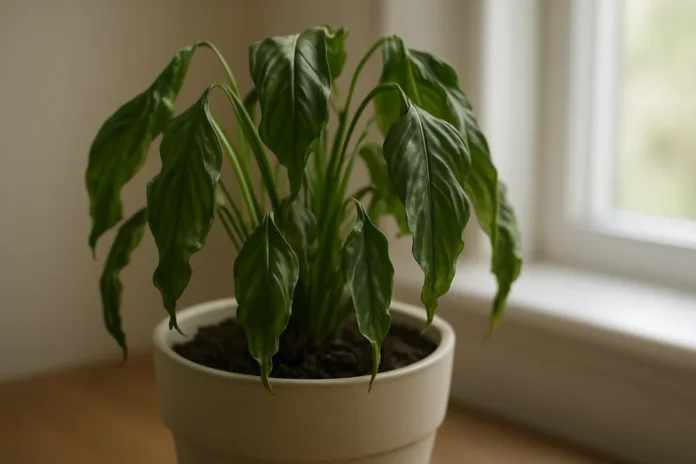
Peace lily leaves usually shrivel when the plant is losing water faster than it can replace it. The most common reasons are dry soil, damaged roots, low humidity, temperature stress, or pest activity.
peace lily leaves can go from lush and glossy to thin, curled, and limp surprisingly fast. When leaves start shriveling, the plant is usually dealing with a moisture imbalance, which can come from too little water, too much water, root trouble, dry indoor air, or environmental stress.
The tricky part is that several different problems can cause a similar look. A peace lily that is bone dry may shrivel, but so can one sitting in soggy soil with roots that can no longer absorb water properly. Looking at the soil, pot, light, room conditions, and the pattern of damage on the foliage will usually point you in the right direction.
The good news is that peace lilies often bounce back well once the underlying issue is corrected. If you catch the problem early, you can usually restore healthy new growth and prevent more leaves from collapsing or drying out.
What Shriveling Leaves Usually Mean
Shriveling is a sign that leaf tissue is losing firmness and moisture. Instead of staying broad and smooth, the leaf may wrinkle, curl inward, feel thin, or look collapsed along the edges or entire blade. In peace lilies, this most often happens when the roots are not delivering enough water to support normal leaf function.
That does not always mean the plant simply needs more water. In some cases, the soil is dry and the roots are thirsty. In others, the soil is too wet, roots are damaged, and the plant is effectively dehydrated even though the pot is damp. This is why peace lily diagnosis always starts with the root zone and recent care conditions.
- Leaves look thin, wrinkled, or folded
- Leaf edges curl inward or become crisp
- Foliage droops and does not spring back quickly
- Older leaves may yellow before drying
- New growth may emerge weak, narrow, or distorted
Underwatering Is the Most Common Cause
How Dry Soil Causes Shriveling
Peace lilies are famous for dramatic wilting when they get too dry. If the potting mix stays dry too long, the roots cannot supply enough moisture to the leaves. The foliage first droops, then begins to wrinkle or shrivel as cells lose internal water pressure. This can happen quickly in warm rooms, near sunny windows, or when the plant is rootbound.
Signs Underwatering Is the Problem
- Soil feels dry several inches down
- The pot feels unusually light when lifted
- Leaves and stems droop at the same time
- Leaf tips or edges turn brown and crispy
- The plant perks up within a day after thorough watering
If your peace lily has repeatedly gone bone dry, some roots may die back, making future water uptake less efficient. That is why a plant can continue to look rough for a little while even after you water it. Recovery often comes in stages, with damaged leaves staying imperfect while new growth improves.
Overwatering Can Cause the Same Symptom
Why Wet Soil Can Lead to Dehydrated Leaves
It sounds backward, but too much water can also make peace lily leaves shrivel. When potting soil stays saturated, air spaces around the roots disappear. Roots need oxygen to function, and without it they begin to weaken or rot. Once that happens, the plant cannot move water into the foliage properly, so the leaves start to wilt, curl, or wrinkle even in wet soil.
Clues Pointing to Overwatering
- Soil remains wet for many days after watering
- The pot feels heavy all the time
- Leaves are limp but the soil is damp or soggy
- Yellowing appears along with shriveling
- There is a sour or swampy smell from the pot
- Lower leaves decline first
Peace lilies like evenly moist soil, not constant saturation. A decorative cachepot without drainage, an oversized container, or a dense mix that holds too much water can all create the conditions that damage roots and trigger shriveled foliage.
Root Problems Often Sit at the Center of the Issue
Root Rot
Root rot is a common consequence of chronic overwatering. Healthy peace lily roots are usually light colored and firm. Rotting roots turn brown or black, feel mushy, and may slough off when touched. Once enough roots are lost, the plant cannot hydrate the leaves well, so they shrivel, yellow, or collapse.
Rootbound Stress
A severely rootbound peace lily can also develop shriveling leaves. When roots fill most of the pot, there is less soil available to hold moisture. Water runs through quickly, and the plant dries out faster than expected. In tight pots, roots may also circle densely enough to reduce efficient uptake.
How to Tell Which Root Problem You Have
- Root rot is more likely if the mix stays wet, smells bad, and leaves yellow while shriveling
- Rootbound stress is more likely if water drains fast, the plant wilts often, and roots crowd the pot edges
- Healthy roots are pale and firm
- Damaged roots are dark, mushy, brittle, or sparse
Low Humidity Can Dry the Foliage
Peace lilies are tropical plants that prefer moderate to high humidity. In many U.S. homes, especially in winter, indoor air becomes very dry. When humidity drops, leaves lose moisture faster through transpiration. If root uptake cannot keep up, the leaf margins and thinner leaf tissue may start to curl, wrinkle, or shrivel.
Humidity alone usually causes a milder, slower form of shriveling than severe watering problems. You may notice brown tips, crisp edges, or leaves that look slightly puckered while the soil moisture seems otherwise reasonable. The issue is often worse near heating vents, fireplaces, or frequently running air conditioning.
- Most affected areas are tips and edges
- Damage is worse in winter or in air conditioned rooms
- The plant sits near a vent or draft
- Soil moisture seems normal but foliage still looks dry
Temperature Stress and Drafts Can Trigger Leaf Collapse
Peace lilies prefer stable indoor temperatures, generally in the range most people find comfortable. Cold drafts from windows or doors, blasts from air conditioners, and hot dry air from heaters can all stress the plant. Rapid swings make it harder for the roots and leaves to maintain a steady moisture balance, which can lead to curling and shriveling.
Cold damage may cause leaves to look limp, darkened, or water soaked before they dry down. Heat stress more often leads to drooping, fading, and crisp shriveled margins, especially if the plant is also getting too much direct sun.
- Leaves worsened suddenly after a weather change
- The plant sits close to a heater, vent, or cold glass
- Only the side facing the draft looks damaged
- Shriveling is paired with scorched or blackened patches
Too Much Direct Sun Can Dehydrate the Leaves
Peace lilies grow best in bright, indirect light. While they tolerate lower light than many houseplants, they do not enjoy strong direct sun for long periods. Intense sunlight heats the leaves and speeds water loss. If the roots cannot compensate, the foliage may droop and shrivel, and pale tan or brown scorch marks can appear.
Sun stress is especially common when a peace lily is moved from a dim corner to a south or west facing window without gradual adjustment. The plant may look fine for a short time, then suddenly develop wrinkled leaves, browning patches, and dry edges.
- Damage is strongest on the window side
- Leaves show bleached, yellowed, or tan burned areas
- The soil dries much faster than before
- Problems started after moving the plant into brighter light
Pests Can Make Leaves Look Thin and Shriveled
Sap sucking pests feed by piercing plant tissue and removing moisture and nutrients. On peace lilies, spider mites, thrips, mealybugs, and scale are the most likely culprits. These pests weaken the leaves over time, leading to curling, wrinkling, stippling, or a dry collapsed appearance.
Spider Mites
Spider mites are especially common in dry indoor conditions. They often gather on the undersides of leaves and cause fine pale speckling before leaves lose vigor and shrivel. Light webbing may appear when infestations are advanced.
Thrips, Scale, and Mealybugs
Thrips can distort new growth and leave silvery scarring. Scale appears as small bumps attached to stems or leaves. Mealybugs look like bits of white cotton near leaf joints. Any of these pests can contribute to weak, dehydrated looking foliage if left unchecked.
- Tiny moving dots, webbing, or cottony clusters
- Sticky residue on leaves or nearby surfaces
- Silver streaking, stippling, or distorted new leaves
- Shriveling that affects some leaves more than others
Water Quality and Fertilizer Buildup Can Add Stress
Peace lilies can be somewhat sensitive to salts, chlorine, fluoride, and fertilizer accumulation in the potting mix. When mineral salts build up, roots may have trouble absorbing water normally. That can mimic mild drought stress, even when you water on schedule.
This issue usually shows up as brown tips, marginal burn, slowed growth, and leaves that seem less plump than they should. It is more likely if you fertilize heavily, never flush the soil thoroughly, or use softened water with high sodium content.
- White crust on the soil surface or pot rim
- Leaf tips brown first, then larger dry areas develop
- The plant declines gradually rather than all at once
- Recent heavy feeding was followed by leaf stress
How to Narrow Down the Cause Quickly
Because shriveling can come from opposite watering problems, a quick process of elimination helps. Start by feeling the soil several inches down, checking the pot for drainage, and noting how long the plant takes to dry after watering. Then look for yellowing, browning pattern, pests, root crowding, and changes in light or temperature.
- Check whether the soil is dry, evenly moist, or soggy.
- Lift the pot to gauge whether it feels unusually light or heavy.
- Look for drainage holes and signs that water may be trapped in an outer pot or saucer.
- Inspect both sides of the leaves for mites, mealybugs, scale, or thrips damage.
- Note whether the plant is near direct sun, vents, heaters, air conditioners, or cold windows.
- If needed, slide the root ball partly out of the pot to inspect root color, smell, and crowding.
Usually, one pattern stands out once you connect the leaf symptoms with soil moisture and environment. That lets you respond appropriately instead of watering more and more when the actual problem is root rot, or repotting unnecessarily when the plant only needed a thorough drink.
What Helps a Peace Lily Recover
If the Plant Is Too Dry
Water thoroughly until excess drains from the bottom, then let the pot drain completely. If the mix has become very dry and is pulling away from the pot edge, water may run straight through without soaking in. In that case, rewet the soil slowly or bottom water briefly until the root ball is evenly moist again.
If the Plant Is Too Wet
Let the soil dry moderately before watering again. Empty standing water from saucers or cachepots. If the mix is compacted, sour smelling, or roots are rotting, repot into a fresh, airy houseplant mix in a container with drainage and remove obviously dead roots.
If Humidity or Temperature Is the Trigger
Move the plant away from heating and cooling vents, cold drafts, and intense afternoon sun. A more stable location with bright, indirect light helps the plant hold moisture in its leaves. A room humidifier often works better than occasional misting.
If Pests Are Involved
Isolate the plant from others and treat based on the pest present. Repeated applications are often needed for spider mites and thrips. Clean leaves gently and monitor new growth, since recovery is usually seen there first.
Do not expect badly shriveled leaves to become perfect again. Once tissue is damaged, it often stays wrinkled or browned. Judge progress by whether the plant stops declining and begins producing healthy new leaves.
How to Prevent Future Shriveling
- Water when the top inch or two of soil starts to dry, not on a rigid calendar
- Use a pot with drainage holes
- Choose a loose, well draining indoor potting mix
- Keep the plant in bright, indirect light
- Protect it from hot sun, heater blasts, air conditioning, and cold drafts
- Increase humidity during very dry seasons
- Check regularly for pests, especially on leaf undersides
- Repot when the plant becomes heavily rootbound
- Fertilize lightly during active growth and flush the soil occasionally
Peace lilies are not difficult plants, but they do respond quickly when conditions drift too far in either direction. Consistent moisture, good drainage, and a stable indoor environment go a long way toward keeping the leaves full and healthy.
FAQ
Can Shriveled Peace Lily Leaves Become Normal Again?
Mildly droopy leaves may improve once the plant is rehydrated or stress is corrected, but badly wrinkled or browned tissue usually does not return to a perfect appearance. Watch new growth for the clearest sign of recovery.
Should I Cut Off Shriveled Peace Lily Leaves?
If a leaf is mostly brown, crispy, or permanently collapsed, you can prune it off with clean scissors. If it still has plenty of green surface, leaving it in place can help the plant continue photosynthesizing while it recovers.
How Often Should I Water a Peace Lily to Prevent Shriveling?
There is no single weekly schedule that fits every home. Water when the top inch or two of soil feels dry, and adjust for season, pot size, light level, and indoor temperature.
Why Is My Peace Lily Shriveling Even Though the Soil Is Wet?
Wet soil plus shriveling often points to root stress from overwatering, poor drainage, or rot. Damaged roots cannot move water into the leaves properly, so the plant looks dehydrated even in damp potting mix.
Do Peace Lilies Need Higher Humidity?
Yes, peace lilies generally prefer moderate to higher humidity than many homes provide, especially in winter. Low humidity can contribute to dry tips, curled edges, and mild leaf shriveling.
Can Too Much Sunlight Make Peace Lily Leaves Shrivel?
Yes. Strong direct sun can overheat the leaves and speed water loss, leading to drooping, wrinkling, and scorched patches, especially if the plant was moved suddenly into brighter exposure.
Is a Rootbound Peace Lily More Likely to Shrivel?
Yes, a rootbound peace lily can dry out much faster because there is less soil to hold moisture. If the plant wilts frequently and roots are circling the pot, repotting may help.
Need the right fix fast? Explore our peace lily care guides and top-rated potting mix, humidifier, and pest treatment picks to help your plant recover and stay healthy.
