

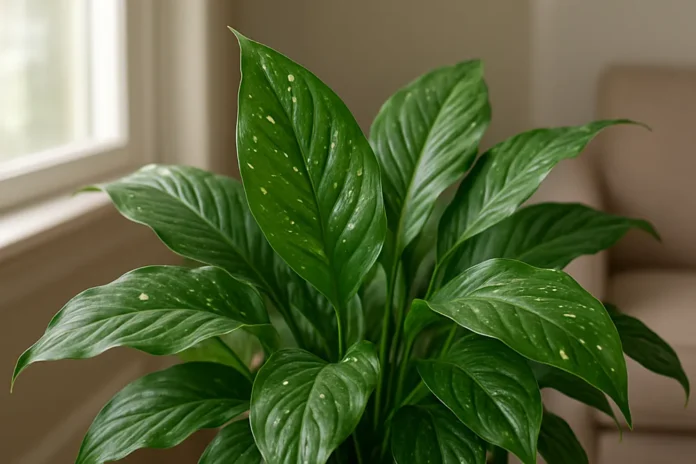
White spots on peace lily leaves are most often caused by sap-sucking pests, powdery mildew, hard water residue, or physical leaf damage. The exact cause depends on whether the spots look powdery, raised, bleached, or stuck to the leaf surface.
Peace lily problems can be frustrating because the plant usually looks healthy until the foliage starts showing obvious damage. When peace lily leaves develop white spots, the cause can range from something harmless, like dried mineral residue, to a more serious issue such as pests or disease.
The good news is that white spotting is usually diagnosable by appearance. Spots that wipe off, fuzzy patches, tiny raised bumps, silvery scarring, or pale bleached areas each point toward a different source, and peace lilies often recover well once the underlying problem is corrected.
In most homes, the most common culprits are spider mites, mealybugs, powdery mildew, hard water deposits, fertilizer salts, and light or moisture stress that damages the leaf surface. Looking closely at where the spots appear and how they feel is the fastest way to narrow it down.
What White Spots on Peace Lily Leaves Usually Mean
White spots are a symptom, not a diagnosis. On peace lilies, they often show up when something is sitting on the leaf surface, feeding from the leaf, or damaging leaf tissue enough to bleach it. The texture and pattern matter as much as the color.
- Powdery or dusty white patches often suggest powdery mildew or residue from hard water or sprays.
- Tiny cottony clusters usually point to mealybugs.
- Fine pale stippling or silvery flecks can come from spider mites or thrips feeding.
- Raised white or tan bumps may indicate scale insects.
- Flat bleached spots can be caused by sunscald, chemical burn, or old mechanical damage.
- Crusty white edges or spotting after watering often come from mineral or fertilizer salt buildup.
Because peace lilies are commonly grown indoors, environmental conditions also play a big role. Dry air, poor airflow, overfertilizing, and frequent overhead misting can all set up the kind of leaf surface problems that later show as white spotting.
Common Causes of White Spots on Peace Lily Leaves
Mealybugs
Mealybugs are one of the most recognizable causes of white spotting. They look like tiny bits of cotton tucked along veins, at leaf joints, and where leaves emerge from the crown. As they feed, they weaken the plant and leave behind sticky honeydew that can later attract sooty mold.
- White spots look fluffy, cottony, or clumped rather than flat.
- Insects often gather on leaf undersides and in crevices.
- Leaves may also yellow, curl, or look dull over time.
Spider Mites
Spider mites are tiny and easy to miss, but the feeding damage is not. Instead of obvious cottony blobs, they cause lots of tiny pale or white specks called stippling. Heavier infestations can make leaves look dusty, faded, or bronzed, and fine webbing may appear between leaves.
Spider mites are especially common when indoor air is warm and dry. A peace lily that sits near a heater vent or in a very low-humidity room is more vulnerable.
Scale Insects
Scale can be mistaken for random white spots because the insects attach themselves firmly to stems and leaves. Depending on the species, they may appear white, tan, or waxy. Unlike mildew or residue, they do not wipe away cleanly because they are actual insects protected by a shell-like covering.
Powdery Mildew
Powdery mildew is less common on indoor peace lilies than pests or residue, but it can happen, especially when leaves stay damp and airflow is poor. It looks like a fine white powder dusted across the leaf surface. In early stages it may appear as separate spots before expanding into larger patches.
- Spots look soft or powdery, not crusty.
- The coating may spread across several leaves.
- Humid rooms with stagnant air make it more likely.
Hard Water Residue
If you mist your peace lily or splash the leaves while watering, minerals from hard tap water can dry into chalky white spots. These usually sit on top of the leaf rather than inside the tissue. They may be more obvious after the water evaporates and often appear where droplets landed.
This is one of the easiest causes to confuse with disease. The difference is that mineral spots usually do not spread on their own, and the leaf tissue underneath often remains healthy.
Fertilizer Salts
Excess fertilizer can leave a white crust in the soil and sometimes contribute to white spotting or edge damage on the leaves. Peace lilies are not heavy feeders, so frequent fertilizing can stress the roots and cause visible leaf symptoms. You may also notice brown tips paired with the white spotting.
Sunscald or Chemical Injury
Peace lilies prefer bright, indirect light. If a plant is exposed to direct sun, leaf tissue can bleach into pale white or tan patches, especially on the side facing the window. Foliar sprays, leaf shine products, or soap solutions mixed too strongly can also leave light spots or residue that resembles disease.
How to Tell Which Cause You Are Dealing With
A close inspection usually reveals the difference. Use natural daylight and check both the upper and lower leaf surfaces. Look at the texture, location, and whether the spots can be wiped off.
- If the spot is fuzzy or cotton-like, suspect mealybugs.
- If the spotting is very fine and widespread, suspect spider mites.
- If the patch is powdery and smearable, suspect powdery mildew.
- If the spot is chalky and tied to droplet patterns, suspect hard water residue.
- If the area is flat and bleached, suspect sunburn or spray damage.
- If the spot is raised and stuck on firmly, suspect scale.
It also helps to ask what changed recently. A move to a brighter window, a new fertilizer routine, winter heat, a recent misting habit, or a newly purchased houseplant nearby can all explain why symptoms suddenly appeared.
What to Do for Each Type of White Spot
Treating Mealybugs and Scale
Isolate the plant first so pests do not spread. Wipe visible insects away with a cotton swab dipped in rubbing alcohol, then clean the leaves thoroughly. Follow up with insecticidal soap or neem oil labeled for houseplants, repeating as directed until no new pests appear.
- Move the peace lily away from other houseplants.
- Remove heavily infested leaves if practical.
- Wipe insects from leaves, petioles, and the crown area.
- Apply a houseplant-safe treatment according to the label.
- Recheck weekly because eggs and hidden insects often survive the first round.
Treating Spider Mites
Spider mites respond well to physically washing the plant. Rinse both sides of the leaves with lukewarm water, then use insecticidal soap or horticultural oil if the infestation is active. Raising humidity modestly and keeping the leaves clean can also make conditions less favorable for mites.
Treating Powdery Mildew
Remove the most affected leaves if the outbreak is limited. Improve airflow around the plant, avoid wetting the foliage, and use a houseplant-safe fungicide if needed. Do not crowd the plant against others or trap it in a corner with constantly damp leaves.
Removing Mineral Residue
Wipe the leaves with a soft damp cloth. If the residue is stubborn, use distilled water or a very dilute vinegar solution on the cloth, then wipe again with plain water so nothing harsh remains on the foliage. Going forward, avoid misting with hard tap water or leaving water droplets to dry on the leaves.
Correcting Fertilizer Salt Issues
Pause feeding for a while and flush the potting mix with water to carry excess salts out through the drainage holes. If the soil has a heavy white crust or drains poorly, repotting into fresh mix may be the better option. Resume feeding lightly only during active growth.
Addressing Sunscald and Spray Burn
Move the plant out of direct sun into bright, indirect light. Stop using leaf shine products or any homemade sprays that may be too strong. Damaged tissue will not turn green again, but new growth should emerge clean once the stress is removed.
When White Spots Are Not the Only Symptom
Peace lilies often show more than one clue at a time. Looking at the full symptom set helps separate a cosmetic issue from a health problem affecting the whole plant.
- White spots plus sticky leaves usually suggest mealybugs or scale because of honeydew.
- White spots plus webbing strongly suggests spider mites.
- White spots plus brown tips often points to fertilizer salts, dry air, or inconsistent watering.
- White spots plus mushy stems or wilting may indicate root stress happening alongside leaf symptoms.
- White spots plus leaf bleaching on the window side points toward too much sun.
- White spots plus fuzzy spread across multiple leaves is more consistent with mildew.
If the plant is also drooping, yellowing, or declining overall, do not focus only on the leaf spots. Root health, watering frequency, drainage, and potting mix condition may also need attention.
Peace Lily Care Issues That Can Lead to Spotting
Watering Habits
Peace lilies like evenly moist soil but not constant sogginess. Overwatering weakens roots and reduces the plant's ability to resist pests and disease, while severe drying can stress the leaves and make damage more visible. Water when the top inch of soil begins to dry, then let excess water drain away.
Humidity and Airflow
These plants appreciate moderate humidity, but stale, wet air is not the same thing as healthy humidity. Rooms with little air movement can encourage mildew, while very dry air favors spider mites. Aim for balanced indoor conditions instead of extremes.
Light Exposure
Bright, indirect light is ideal. A peace lily placed in harsh direct afternoon sun may bleach or scorch, while one in very dim light may struggle to grow vigorously and recover from pest damage.
Cleaning Practices
Dusty leaves are harder to inspect and more inviting to mites. Gently wiping leaves every so often keeps the foliage attractive and lets you catch white spots early before they spread or multiply.
How to Prevent White Spots From Coming Back
Most repeat problems happen because the underlying growing conditions did not change. Once you know the cause, prevention becomes much easier.
- Keep peace lilies in bright, indirect light rather than direct sun.
- Water thoroughly but do not leave the pot sitting in standing water.
- Use a pot with drainage and a loose indoor potting mix.
- Inspect new houseplants before placing them near your peace lily.
- Wipe leaves periodically to remove dust and catch pests early.
- Avoid heavy fertilizing and flush the soil occasionally to reduce salt buildup.
- Skip routine misting if your tap water leaves residue or if mildew has been an issue.
- Maintain reasonable airflow around indoor plants.
Preventive care is especially important after a pest outbreak. Mealybugs, mites, and scale often return if even a few survivors remain hidden in the crown or on nearby plants.
When to Trim Damaged Leaves or Repot the Plant
Not every spotted leaf needs to be removed. If a leaf is still mostly green and functional, keeping it can help the plant continue photosynthesizing while it recovers. Trim leaves when they are heavily infested, badly mildewed, severely scorched, or mostly discolored.
Repot if the soil is compacted, salty, foul-smelling, or staying wet too long. Fresh potting mix can reduce root stress and make aftercare much easier, especially when fertilizer buildup or poor drainage contributed to the problem.
- Use clean scissors or pruners.
- Cut the leaf stem near the base without injuring the crown.
- Do not remove too much foliage at once unless pest pressure is severe.
- Choose a container only slightly larger if repotting.
FAQ
Can White Spots on Peace Lily Leaves Go Away on Their Own?
Existing spots usually do not disappear, especially if they are caused by bleaching, scarring, or dried residue. What improves is the new growth after the underlying issue is fixed.
Are White Spots on Peace Lily Leaves Caused by Overwatering?
Overwatering does not usually create white spots by itself, but it can weaken the plant and make it more vulnerable to pests, disease, and general leaf stress.
How Do I Know if the White Spots Are Just Hard Water Residue?
Hard water spots usually sit on the leaf surface in droplet-shaped patterns and can often be wiped or softened off. They do not behave like spreading disease and do not look like insects.
Can I Use Neem Oil on a Peace Lily?
Yes, neem oil can be used on peace lilies if the label allows indoor ornamental use and the product is diluted correctly. Always test a small area first and avoid applying it in direct sun.
Do Spider Mites Make Peace Lily Leaves Look White?
Yes, spider mites often cause tiny pale or white specks across the leaf surface. Heavy feeding can make leaves look faded, dusty, or silvery.
Should I Cut Off Leaves with Powdery Mildew?
If only a few leaves are affected, removing them can help reduce spread. If many leaves are involved, combine selective pruning with better airflow and a houseplant-safe fungicide.
Can Direct Sun Cause White Patches on Peace Lily Leaves?
Yes, direct sun can bleach the leaf tissue and leave pale white or tan patches. Peace lilies do best in bright, indirect light.
Is Misting a Peace Lily a Good Idea if It Has White Spots?
Usually not. Misting can leave mineral deposits on the leaves and may worsen fungal issues if the foliage stays damp for long periods.
Still troubleshooting your plant? Read our peace lily care and recovery guide to fix watering, light, humidity, and pest problems before more leaves decline.
