

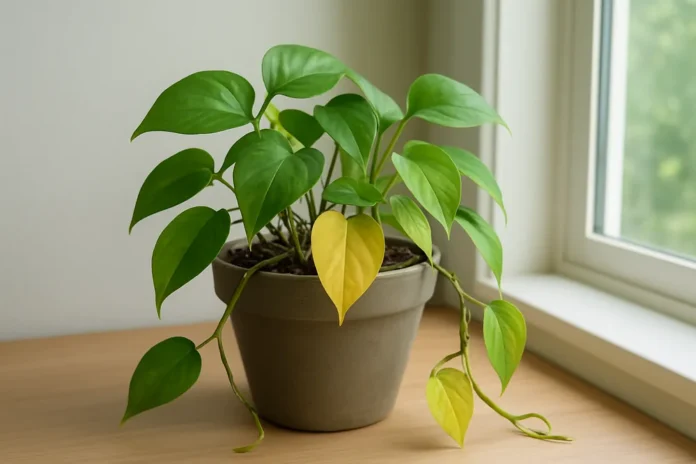
Pothos leaves usually turn yellow from overwatering, poor drainage, low light, natural leaf aging, or sudden stress. Less often, yellowing comes from underwatering, nutrient imbalance, pests, or temperature shock.
Seeing pothos leaves turning yellow can be frustrating, especially when this usually easygoing houseplant has looked healthy for months. In many cases, yellow leaves are your plant's way of signaling stress from watering, light, drainage, or a recent change in its environment.
The good news is that yellowing does not always mean your pothos is dying. Sometimes it is as simple as an older leaf aging out, but widespread yellow leaves usually point to a care issue you can correct. Once you match the yellowing pattern to the cause, it becomes much easier to stop the problem and help your plant push out healthy green growth again.
Below, you will find the most common reasons pothos leaves turn yellow, how to tell them apart, and what to do for each one.
What Yellow Leaves Usually Mean on Pothos
A yellow pothos leaf is not a disease by itself. It is a symptom. The real cause depends on how many leaves are affected, where they are on the vine, how wet the soil feels, and whether the plant has recently been moved, repotted, fertilized, or exposed to drafts.
If only one or two older leaves near the base are yellow, your pothos may simply be shedding aging foliage. If many leaves are turning yellow at once, especially along several vines, that usually points to stress. The most common cause is too much water around the roots, but low light, compacted soil, and root trouble can create a similar look.
- A few lower yellow leaves can be normal aging.
- Soft yellow leaves with wet soil often suggest overwatering.
- Crispy yellowing with very dry soil often suggests underwatering.
- Pale yellow leaves and stretched vines often point to low light.
- Yellow leaves with spots, stippling, or webbing may indicate pests.
Overwatering and Poor Drainage
Overwatering is the leading reason pothos leaves turn yellow indoors. Pothos likes evenly moist soil, but it does not like sitting in soggy potting mix. When the roots stay wet too long, they cannot access oxygen properly. That stress quickly shows up as yellow leaves.
Signs Your Pothos Is Staying Too Wet
- Several leaves yellowing at the same time
- Soil that stays damp for a week or longer
- A pot with no drainage hole
- Leaves that feel limp or soft rather than dry and crisp
- Brown or black mushy roots if you inspect the root ball
- A sour or swampy smell from the pot
Many gardeners assume overwatering means giving too much water in one session, but it often means watering too often. A thorough soak is fine if the excess drains away and the top part of the soil is allowed to dry before the next watering.
How to Fix It
- Let the top 1 to 2 inches of soil dry before watering again.
- Empty any saucer or cachepot after watering so roots are not sitting in runoff.
- Move the plant into a container with a drainage hole if it does not already have one.
- If the soil is dense or stays wet too long, repot into a chunky indoor mix with potting soil, perlite, and bark.
- Trim off badly rotted roots if you find mushy sections during repotting.
Underwatering and Dry Soil Stress
Although overwatering is more common, underwatering can also make pothos leaves yellow. When the plant stays dry too long, it cannot move moisture and nutrients through the foliage efficiently. Leaves may first droop, then yellow, then develop brown crispy edges.
Clues That Your Pothos Is Too Dry
- Potting mix pulling away from the sides of the pot
- Leaves curling, drooping, or feeling thin
- Yellowing paired with brown crunchy margins
- Very lightweight pot when lifted
- Dry soil deeper than 2 inches below the surface
Pothos usually recovers well from occasional dryness, but repeated drought cycles weaken the plant. If the root ball becomes bone dry, water can run down the sides of the pot without soaking in well.
To correct this, water thoroughly until excess drains from the bottom. If the mix has become hydrophobic, set the pot in a bowl or sink with a few inches of water for 15 to 30 minutes so the root ball can rehydrate evenly. After that, return to a steady schedule based on soil dryness rather than the calendar.
Low Light Can Cause Pale Yellowing
Pothos tolerates low light better than many houseplants, but tolerance is not the same as thriving. In rooms that are too dim, growth slows, soil stays wet longer, and leaves may become pale or yellowish. Variegated varieties are especially likely to lose color in poor light.
How Low Light Yellowing Looks
- Long, stretched vines with wider gaps between leaves
- Small new leaves
- Paler overall color, sometimes with yellowing
- Slow growth even in spring and summer
- Persistently damp soil because the plant uses water slowly
Bright, indirect light is ideal for pothos. A spot near an east-facing window or a few feet back from a bright south- or west-facing window often works well. If natural light is limited, a basic grow light can help maintain stronger color and growth.
Too Much Direct Sun Can Scorch Leaves
Pothos likes bright conditions, but harsh direct sun can bleach or scorch the leaves. Sun stress may appear as yellow patches, faded areas, or tan and brown dry spots on the side facing the window.
This is most likely when a pothos is suddenly moved from a dim room to a sunny windowsill, especially in summer. Glass can intensify afternoon light and heat, leaving tender foliage damaged.
- Yellowing concentrated on the brightest side of the plant
- Bleached-looking patches rather than uniform yellowing
- Dry, papery areas that later turn brown
- Damage appearing soon after a move to stronger light
Move the plant slightly back from the window or filter the light with a sheer curtain. Damaged leaves will not turn green again, but new growth should look normal once light levels are corrected.
Natural Aging of Older Leaves
Sometimes a yellow leaf is just an old leaf. Pothos naturally sheds older foliage, especially near the base of long vines. If the rest of the plant looks healthy and only an occasional lower leaf turns yellow, there is usually no major problem.
This type of yellowing tends to be gradual and isolated. The leaf will yellow evenly, then dry up or release easily with a gentle tug. New leaves at the tips should still be green and healthy.
You can simply remove the yellow leaf for appearance. If many older leaves are dropping at once, look at watering, light, or root crowding as the more likely trigger.
Nutrient Deficiency and Fertilizer Problems
Pothos is not a heavy feeder, but plants kept in the same soil for a long time can run short on nutrients. This may lead to pale foliage, weak growth, and yellowing, especially during active growing months. On the other hand, too much fertilizer can burn roots and also cause yellow leaves.
When Nutrient Issues Are More Likely
- The plant has not been repotted in years
- Growth has slowed despite decent light
- Leaves look light green to yellow rather than richly colored
- White crust is visible on the soil or pot rim from fertilizer salts
- Yellowing started soon after a strong fertilizer application
If your pothos has been in the same potting mix for a long time, feed lightly during spring and summer with a balanced houseplant fertilizer diluted to half strength. If you suspect fertilizer burn, flush the soil thoroughly with water and pause feeding for several weeks.
Fresh potting mix often solves mild deficiencies on its own. Repotting also helps if the old soil has broken down into a dense, airless mass that traps water and stresses the roots.
Root Bound Plants and Compacted Soil
A pothos can tolerate being somewhat root bound, but eventually crowded roots and worn-out soil start to interfere with water uptake. That can lead to yellow leaves, wilting between waterings, and weak new growth.
If roots are circling heavily around the inside of the pot or pushing out of drainage holes, it may be time to move up one container size. Soil that has compacted over time can also become a problem even if the plant is not severely root bound.
Repotting Tips
- Choose a pot only 1 to 2 inches wider than the current one.
- Use a well-draining indoor plant mix rather than garden soil.
- Gently loosen circling roots before replanting.
- Water after repotting to settle the soil, then let the surface start drying before watering again.
Temperature Stress and Drafts
Pothos prefers stable indoor temperatures, generally between 65 and 85 degrees Fahrenheit. Cold drafts, blasts from air conditioners, heating vents, or sudden temperature swings can shock the plant and trigger yellow leaves.
Damage from temperature stress may appear quickly after the plant is placed near a drafty window or vent. Leaves can yellow, droop, or develop limp patches. In colder conditions, pothos may also stop growing and become more vulnerable to watering problems.
Keep your plant away from exterior doors, drafty winter windows, and direct airflow from heating or cooling systems. Consistent conditions help pothos recover more predictably.
Pests That Can Make Leaves Yellow
Spider mites, mealybugs, scale, and thrips can all cause pothos leaves to yellow. These pests feed on plant sap, which weakens the leaves and can leave them pale, speckled, or distorted.
Signs Pests Are Involved
- Fine webbing, especially under leaves or at leaf joints
- Tiny moving dots on leaf undersides
- Cottony white clumps from mealybugs
- Sticky residue from sap-sucking insects
- Yellow stippling rather than solid yellowing
- Misshapen new growth
Isolate the plant if you suspect pests. Wipe leaves, rinse the foliage, and treat with insecticidal soap or horticultural oil according to the label. Repeat treatments are often needed because eggs and hidden pests can survive the first application.
Diseases and Root Rot
Pothos does not commonly suffer from serious disease indoors, but root rot is a major exception. Root rot usually starts when the roots stay waterlogged and oxygen-starved. As roots decay, the plant can no longer take up water properly, even though the soil is wet.
The result is confusing for many gardeners. Leaves yellow and droop, so the plant looks thirsty, but adding more water makes things worse. If you slide the plant from the pot and find black, mushy, or foul-smelling roots, root rot is likely.
Cut away rotten roots with clean scissors, repot in fresh well-draining mix, and reduce watering until the plant starts recovering. Remove some yellow leaves as needed so the plant can focus energy on new root growth.
How to Tell Which Cause Is Most Likely
When pothos leaves turn yellow, the fastest way to narrow it down is to look at the pattern. Not every yellow leaf means the same thing, and one or two details often point to the real cause.
- Wet soil plus soft yellow leaves usually means overwatering or root trouble.
- Dry soil plus crispy yellow leaves usually means underwatering.
- Pale leaves plus stretched vines often means low light.
- Yellow patches on the sun-facing side often mean sun scorch.
- Only an older lower leaf or two is often natural aging.
- Yellow stippling, webbing, or sticky residue often points to pests.
- Yellowing after feeding may mean fertilizer stress.
If more than one issue is present, treat the root-zone problem first. Pothos can usually outgrow minor leaf damage once watering, drainage, and light are back on track.
How to Help Your Pothos Recover
Yellow leaves will not turn fully green again, so focus on stopping new yellowing. Once the underlying problem is corrected, a healthy pothos usually rebounds with fresh green growth over the next several weeks.
- Remove fully yellow leaves with clean scissors or by gently pinching them off.
- Adjust watering so the top 1 to 2 inches of soil can dry between waterings.
- Make sure the pot has drainage and the mix is loose and well aerated.
- Place the plant in bright, indirect light.
- Inspect stems and leaf undersides for pests.
- Hold off on fertilizer until the plant is actively growing and no longer stressed.
Recovery is rarely instant. Expect damaged leaves to remain damaged, but watch the newest leaves. If those emerge healthy and green, your pothos is headed in the right direction.
How to Prevent Yellow Leaves in the Future
Prevention comes down to stable care. Pothos is forgiving, but it performs best when its roots are not repeatedly stressed by too much water, too little light, or abrupt environmental changes.
- Water based on soil dryness, not a fixed weekly schedule.
- Use pots with drainage holes.
- Repot every couple of years or when the soil breaks down.
- Provide bright, indirect light whenever possible.
- Keep the plant away from strong drafts and temperature extremes.
- Check leaves regularly for pests so problems are caught early.
- Feed lightly during active growth instead of using heavy fertilizer doses.
With the right routine, pothos usually stays lush, vigorous, and green for years.
FAQ
Should I Cut Off Yellow Pothos Leaves?
Yes. Once a pothos leaf turns fully yellow, it will not turn green again. Removing it helps the plant look better and lets you monitor whether new leaves are still yellowing.
Can Yellow Pothos Leaves Turn Green Again?
Usually no. Mildly pale leaves may improve a little if the problem is caught early, but fully yellow leaves are generally done. Focus on preventing additional yellowing.
How Often Should I Water Pothos to Prevent Yellow Leaves?
There is no perfect schedule for every home. Water when the top 1 to 2 inches of soil feels dry, then water thoroughly and let excess drain away.
Why Is Only One Pothos Leaf Turning Yellow?
A single yellow leaf is often normal aging, especially if it is lower on the vine and the rest of the plant looks healthy. It is usually not a major concern unless the pattern spreads.
Do Pothos Leaves Turn Yellow From Low Light?
Yes. In very dim conditions, pothos may grow slowly, become leggy, and develop pale or yellowish leaves. Low light also keeps soil wet longer, which can add root stress.
Can Too Much Fertilizer Make Pothos Leaves Yellow?
Yes. Excess fertilizer can burn roots and lead to yellow leaves, browning tips, or salt buildup on the soil surface. Use diluted fertilizer and only during active growth.
Is Yellowing on Pothos a Sign of Root Rot?
It can be, especially if the soil stays wet, the plant droops, and roots smell sour or feel mushy. Root rot is most likely when yellowing is paired with overwatering or poor drainage.
What Kind of Light Does Pothos Need to Stay Green?
Pothos stays healthiest in bright, indirect light. It can tolerate lower light, but growth is stronger and foliage color is usually better when the plant receives steady filtered brightness.
Want a healthier, fuller houseplant collection fast? Read our guide to the best pothos fertilizers, potting mixes, and grow lights so you can choose the right setup with confidence.
