

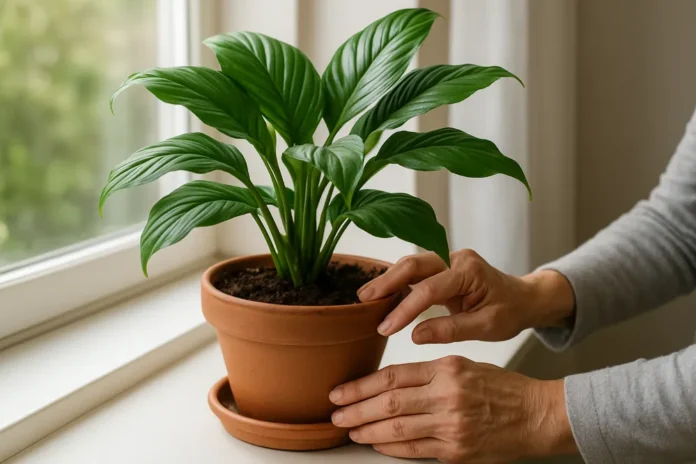
A peace lily usually stops growing new leaves because it is not getting enough light, has watering or root stress, or is growing very slowly from cool temperatures or low nutrients. Healthy plants can also pause new growth for part of the year, especially in dim indoor conditions.
If your peace lily looks alive but is not pushing out fresh growth, the problem is usually related to light, roots, watering, or seasonal slowdown. Leaf growth is one of the best clues this plant gives, and a pause in growth often means conditions are just good enough for survival but not good enough for active growth.
In many homes, a peace lily not growing new leaves is not a sign of one dramatic issue. It is more often a mix of dim light, compacted soil, a pot that stays too wet, or roots that have run out of room. The good news is that peace lilies usually respond well once the main stress is corrected.
Below, you will learn the most common reasons new leaves stop appearing, how to tell which one is affecting your plant, and what helps a peace lily start growing again.
What Normal Peace Lily Growth Looks Like
A healthy peace lily grows in cycles rather than at a perfectly steady pace. Indoors, it may produce several new leaves during spring and summer, then slow down in fall and winter when days are shorter. New leaves usually emerge tightly rolled from the crown near the base of the plant, then unfurl over several days.
If your plant still looks green, firm, and generally healthy, a pause in new growth does not always mean something is badly wrong. The concern becomes more serious when growth has stalled for many months, older leaves are declining, or the plant also shows drooping, yellowing, brown tips, or a sour-smelling potting mix.
- Active growth is most common in bright, indirect light.
- Slower growth is normal in winter or in cooler rooms.
- A mature plant may grow more slowly than a young, vigorous plant.
- A recently repotted or recently moved plant may pause before resuming growth.
Low Light Is the Most Common Reason
Peace lilies are known for tolerating low light, but tolerance is not the same as thriving. In dim corners, they often hold onto existing foliage without producing much new growth. The plant may remain green for a while, which can make the light problem easy to miss.
Signs Your Peace Lily Needs More Light
- No new leaves for months during spring or summer
- Long gaps between leaves or small new leaves
- Leaning strongly toward a window
- Weak stems or floppy overall growth
- Few or no blooms even during the growing season
The best placement is usually near an east-facing window or a few feet back from a bright south- or west-facing window where direct sun is filtered. Too much direct afternoon sun can scorch leaves, but too little light will keep the plant in maintenance mode instead of growth mode.
If natural light is poor, a grow light can help. Peace lilies often respond within several weeks to better light, although strong new growth may take longer if the plant has been struggling for a long time.
Watering Stress Can Stall New Leaves
Peace lilies dislike extremes. Soil that stays soggy weakens roots and reduces oxygen, while repeated bone-dry periods force the plant to conserve energy. Either condition can stop new leaves from forming.
What Overwatering Looks Like
- Persistent drooping even when soil is wet
- Yellowing older leaves
- A heavy pot that stays wet for many days
- Musty or sour smell from the soil
- Blackened or mushy roots if you inspect the root ball
What Underwatering Looks Like
- Dramatic wilting that improves after watering
- Crispy brown edges or tips
- Soil pulling away from the sides of the pot
- Very lightweight potting mix
- Stalled growth after repeated dry-downs
The goal is evenly moist soil, not constantly wet soil. Water when the top inch feels dry, then water thoroughly until excess drains out. Empty saucers or cachepots so the roots are not left sitting in water.
If your peace lily has had long-term watering stress, do not expect instant leaf production. Once the roots recover and the plant rebuilds energy, new leaves usually resume gradually.
Root Problems Often Hide Below the Soil Line
When a peace lily stops growing despite decent light and careful watering, the roots are the next place to look. Plants with crowded roots, compacted mix, or root rot often cannot support fresh foliage.
Rootbound Plants Can Slow Down
A peace lily that has filled its pot may still survive, but growth often slows because the roots dry out faster and have less room to expand. You might see roots circling the pot, poking from drainage holes, or a plant that needs water far more often than before.
Repotting into a container that is only 1 to 2 inches wider than the current pot is usually enough. Oversized pots can hold too much moisture and create a new problem.
Compacted Soil Reduces Oxygen
Old potting mix breaks down over time. When it turns dense and muddy, roots struggle to breathe and expand. Even if you are not overwatering, compacted mix can stay wet too long and suppress new leaf growth.
Root Rot Can Stop Growth Completely
If roots are brown, mushy, and foul-smelling, the plant is using its energy to survive rather than to grow. In that case, trimming damaged roots and repotting into fresh, airy mix is often necessary before new leaves will appear again.
Nutrient Shortages and Salt Buildup Both Affect Growth
Peace lilies are not heavy feeders, but they still need basic nutrients to produce fresh foliage. If a plant has been in the same potting mix for a long time with no fertilizer, it may simply be running low on what it needs.
At the same time, too much fertilizer can damage roots and cause slow growth, brown tips, or crusty white deposits on the soil surface. This is especially common when strong liquid feed is used too often.
When Low Nutrients Are More Likely
- The plant has not been repotted for years
- You have never fertilized during active growth
- New leaves are absent and older foliage looks pale
- Growth used to be steady but has gradually slowed
During spring and summer, a balanced houseplant fertilizer at a reduced rate can support growth. Feeding every 4 to 6 weeks during active growth is usually plenty. Do not fertilize a stressed, waterlogged, or badly damaged plant until its basic care issues are corrected.
If you suspect salt buildup, flush the pot thoroughly with clean water and let it drain well. In severe cases, repotting into fresh mix gives the plant a cleaner root environment.
Temperature, Humidity, and Season Matter More than Many Growers Realize
Peace lilies are tropical plants, so growth slows when conditions are cool, dry, or inconsistent. Indoor environments in winter can be especially limiting because of shorter days, heating vents, and cold drafts near windows or doors.
- Best growth usually happens around 65 to 85 degrees Fahrenheit.
- Cold drafts can stress foliage and pause growth.
- Very dry air can contribute to brown tips and weak new growth.
- Winter often brings a natural slowdown, even in healthy plants.
If your plant is healthy but not producing much in late fall or winter, the issue may be timing rather than a care mistake. Many peace lilies resume stronger growth once light levels improve in spring.
Pests and Disease Can Quietly Weaken the Plant
A peace lily with hidden pest pressure may stop making new leaves because so much of its energy is being drained. Spider mites, mealybugs, scale, and fungus gnats are the most common indoor offenders.
Clues That Pests Are Involved
- Sticky residue on leaves
- Tiny webs or speckled foliage
- Cottony white clusters in leaf joints
- Small bumps on stems or leaf undersides
- Clouds of tiny gnats near very wet soil
Disease problems are less common indoors but can follow chronic overwatering. If the crown or roots stay wet for too long, the plant may decline slowly and stop producing new growth well before obvious collapse occurs.
Transplant Shock and Recent Changes Can Pause Growth
If you recently repotted, divided, moved, or bought your peace lily, some temporary slowdown is normal. Plants often need time to adjust to a new light level, watering rhythm, humidity, or root environment.
A newly repotted peace lily may spend several weeks settling in before pushing fresh leaves. Minor drooping or slower growth during that adjustment period is common, especially if roots were disturbed.
The key is to keep conditions stable. Frequent changes in placement, watering habits, or fertilizer use often prolong the recovery period.
How to Get a Peace Lily Growing Again
Once you know the likely cause, recovery is usually straightforward. Peace lilies respond best to a few consistent improvements rather than lots of quick fixes applied at once.
- Move the plant to bright, indirect light.
- Water when the top inch of soil feels dry, then drain excess water fully.
- Check whether the potting mix is compacted, soggy, or rootbound.
- Repot into a breathable indoor potting mix if roots are crowded or damaged.
- Feed lightly during spring and summer if the plant has not been fertilized in a long time.
- Keep it away from cold drafts, heater blasts, and sudden environmental changes.
- Inspect leaves and soil for pests and treat early if needed.
Do not expect the plant to produce a flush of leaves overnight. In most cases, you will first see improved posture, better color, and stronger overall vigor. New leaves tend to follow after the plant feels secure in its environment again.
When Lack of New Leaves Is a Serious Warning Sign
A temporary slowdown is usually manageable, but a complete halt in growth paired with decline means the plant needs attention soon. The longer root or crown problems continue, the harder it becomes for the peace lily to rebound.
- No new growth for many months during bright growing season conditions
- Continuous yellowing or browning of older leaves
- Persistent wilting that does not match soil moisture
- Mushy stems, blackened roots, or bad odor from the pot
- Heavy pest infestations or obvious crown rot
If several of these symptoms are present at the same time, root inspection and repotting are often more helpful than continuing to adjust watering from the outside.
FAQ
How Long Can a Peace Lily Go Without Growing New Leaves?
A peace lily may pause for several weeks, especially in winter or after a move. If it goes through most of spring and summer with no new leaves, conditions are probably limiting growth.
Can a Peace Lily Survive in Low Light Even if It Is Not Growing?
Yes, peace lilies can survive in low light for quite a while. They often stay alive but produce little to no new foliage until light improves.
Should I Repot My Peace Lily if It Stopped Growing?
Repot only if the roots are crowded, the mix is compacted, or there are signs of root damage. If the plant is simply in very low light, repotting alone will not solve the problem.
Will Fertilizer Make My Peace Lily Grow New Leaves Faster?
Fertilizer helps only if nutrients are part of the problem. If the plant has root rot, poor light, or watering stress, feeding it can make things worse instead of better.
Why Is My Peace Lily Green but Still Not Making New Leaves?
That usually points to light levels that are adequate for survival but not strong enough for active growth. It can also happen when roots are crowded or the plant is in a normal seasonal slowdown.
Does Winter Make Peace Lilies Stop Growing?
Yes, many peace lilies slow down significantly in winter because indoor light is weaker and temperatures may be cooler. Growth often improves again in spring.
Can Overwatering Stop a Peace Lily From Producing Leaves?
Yes, overwatering is a major cause of stalled growth. Saturated soil deprives roots of oxygen and can lead to rot, which prevents the plant from supporting fresh foliage.
Need the right fix faster? Explore our peace lily care guides and top-rated indoor plant soils, fertilizers, and grow lights to get healthier growth with less guesswork.
