

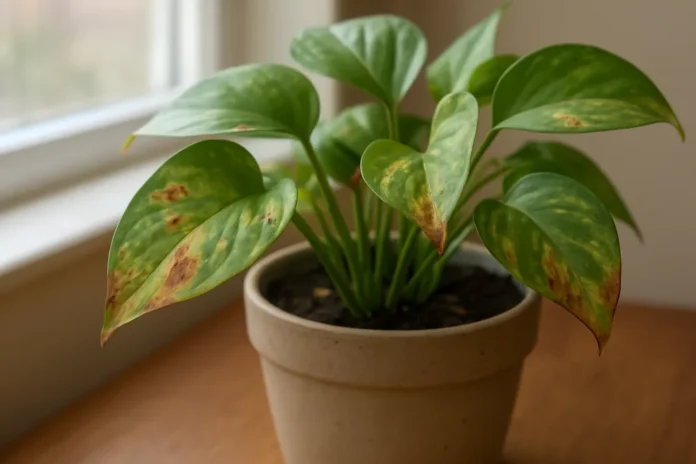
Pothos usually develops brown spots from watering stress, too much direct sun, dry air, fertilizer salt buildup, pests, or leaf diseases. The exact cause depends on whether the spots look dry, mushy, crispy, bleached, or spreading.
Seeing pothos leaves develop brown spots can be frustrating, especially on a plant that is usually easygoing and forgiving. In most cases, these spots are your plant's way of showing stress from moisture problems, harsh light, dry indoor air, fertilizer buildup, or a pest or disease issue.
The pattern of the spotting matters. A few crisp brown patches near a sunny window often suggest sun scorch, while soft dark spots can point to overwatering or leaf disease. Once you match the look of the damage with the plant's growing conditions, it becomes much easier to stop new spots from forming.
What Brown Spots on Pothos Usually Mean
Brown spots are not one single problem. They are a symptom. On pothos, the most common causes are inconsistent watering, overwatering that stresses roots, too much direct sun, low humidity, temperature shock, excess fertilizer salts, tap water sensitivity, pests, and fungal or bacterial leaf spot.
The texture and location of the spots give useful clues. Dry, tan, or crispy spots often come from sunburn, underwatering, or dry air. Dark brown or blackened spots with a soft or wet feel are more often tied to overwatering, rot, or disease. Tiny speckles can suggest pests, while larger irregular patches may point to physical damage or scorch.
- Crispy brown edges or patches often indicate dry conditions, missed watering, or light scorch.
- Soft dark spots often indicate excess moisture, poor drainage, or infection.
- Small scattered spots can come from pest feeding or splash-related disease.
- Bleached spots that turn tan or brown are classic signs of direct sun damage.
Watering Problems Are the Most Common Cause
Overwatering and Soggy Soil
Pothos likes lightly moist soil but does not like to sit in wet potting mix for long stretches. If the roots stay waterlogged, they cannot pull in oxygen properly, and stressed roots start to fail. That often shows up as brown or black spots on leaves, yellowing, limp stems, and a pot that stays heavy and damp for many days.
Overwatering is not just about frequency. It can also happen when the pot is too large, the drainage hole is blocked, the mix is too dense, or the plant is sitting in a saucer of water. Even if you water only once a week, the plant can still stay too wet if the soil drains poorly.
Underwatering and Drought Stress
If pothos gets too dry, leaf tissue can dehydrate and die back in patches. This usually creates crisp brown edges, dry spots, curling leaves, and a wilted appearance. The potting mix may shrink away from the sides of the pot, making it hard to rewet evenly.
Inconsistent watering can be just as damaging as chronic dryness. When the plant repeatedly swings from very dry to very wet, the roots and leaves are stressed, and brown spotting may appear even if the plant survives the cycle.
- Water pothos when the top 1 to 2 inches of soil feels dry.
- Always use a pot with drainage.
- Empty saucers and cachepots after watering.
- If the soil has become hard and bone dry, water slowly until the root ball is fully rehydrated.
Too Much Direct Sun Can Scorch the Leaves
Pothos grows best in bright, indirect light. While it can tolerate lower light, it does not handle intense direct afternoon sun very well, especially through a hot west-facing window. Sunburn often starts as pale, faded, or bleached areas that later turn tan or brown and feel papery.
Variegated pothos cultivars can be even more sensitive because the lighter leaf sections have less chlorophyll. A leaf pressed against hot glass may also develop a sharply outlined brown patch where the tissue overheated.
- Move the plant a few feet back from strong windows.
- Filter bright sun with a sheer curtain.
- Aim for bright indirect light for the healthiest growth and best color.
- Remove only badly damaged leaves, since lightly spotted leaves can still support the plant.
Low Humidity and Indoor Air Stress Can Leave Leaves Crispy
Pothos is adaptable, but very dry indoor air can still cause trouble, especially in winter when heating systems run constantly. Brown spots caused by dry air tend to be crisp rather than mushy, and they often appear along tips, edges, or thinner parts of the leaf.
Low humidity becomes more damaging when paired with underwatering, warm drafts, or direct sun. The combined stress can cause isolated brown patches even when the rest of the leaf still looks green.
- Keep pothos away from heating vents and strong air blasts.
- Group houseplants together to raise local humidity slightly.
- Use a humidifier if your indoor air is consistently very dry.
- Maintain steadier soil moisture so dry air does not hit the plant as hard.
Fertilizer Salts and Water Quality Can Damage Leaf Tissue
Too Much Fertilizer
Pothos does not need heavy feeding. If you fertilize too often or use too strong a concentration, salts can build up in the potting mix and burn the roots. Root burn often shows up as brown spots, crispy edges, yellowing, or slowed growth. You may also see a white crust on the surface of the soil or around the rim of the pot.
Tap Water Issues
Some houseplants react to minerals, fluoride, or chlorine in tap water, though pothos is less sensitive than some others. Still, if your water is especially hard or heavily treated, it can contribute to tip burn and spotty browning over time, especially when combined with fertilizer residue.
- Fertilize lightly during active growth, usually spring and summer.
- Skip feeding if the plant is stressed, recently repotted, or growing slowly in winter.
- Flush the soil thoroughly every so often to wash out excess salts.
- If your tap water is very hard, try filtered or distilled water for a while and watch for improvement.
Pests Can Create Spotting, Stippling, and Damaged Patches
Several common houseplant pests can leave pothos with brown or rusty-looking spots. Spider mites, thrips, scale, and mealybugs all feed on plant tissue and can leave behind stippling, silvery scarring, distorted leaves, or small brown lesions that expand as tissue dies.
Thrips are especially good at causing irregular brown scars and patchy damage, while spider mites often create fine speckling before leaves bronze or dry out. Pest problems are more likely when the plant is already stressed by dry air or weak light.
- Check leaf undersides, stems, and new growth for tiny insects or webbing.
- Isolate the plant from others if you suspect pests.
- Wipe leaves and rinse the plant to remove light infestations.
- Use insecticidal soap or neem-based treatments according to the label for persistent issues.
Leaf Spot Diseases and Rot Can Spread if Moisture Stays on the Leaves
Fungal and bacterial leaf spot can also cause brown areas on pothos. These spots are often dark, circular to irregular, and may have a yellow halo around them. In more advanced cases, the spots enlarge, merge together, or look wet and sunken.
Disease is more likely when the foliage stays wet for long periods, air circulation is poor, and the plant is crowded with others. Splashing water from one leaf to another can spread pathogens, especially in warm conditions.
- Avoid wetting the leaves when you water.
- Prune off heavily infected leaves with clean scissors.
- Increase airflow around the plant.
- If the soil smells sour or stems are soft, inspect roots for rot and repot into fresh, well-draining mix if needed.
Temperature Shock and Physical Damage Can Mimic Disease
Sometimes brown spots are caused by sudden cold, heat, or rough handling rather than a deeper care issue. Pothos dislikes cold drafts, chilly windows, and abrupt temperature swings. Leaves exposed to cold can develop dark, water-soaked spots that later turn brown.
Bruising from bending, rubbing against a surface, or getting pinched during moving can also leave isolated brown patches. These spots usually stay localized and do not spread once the damage is done.
- Keep pothos in temperatures roughly between 65 and 85 degrees Fahrenheit.
- Avoid placing it near AC vents, exterior doors, and cold windowpanes.
- Do not panic over one or two damaged leaves if new growth looks healthy.
- Focus on whether the spots are spreading or appearing on multiple leaves.
How to Tell Which Cause Is Most Likely
The easiest way to diagnose pothos brown spots is to combine visual clues with recent care history. Ask yourself what changed in the last few weeks. Did the plant move to a sunnier spot, go too long between waterings, get fertilized heavily, or spend time near a heater or cold draft?
- Dry, crisp spots on exposed leaves usually suggest sun scorch or dry conditions.
- Brown spots with yellowing and soggy soil usually suggest overwatering or root stress.
- Tiny scars or speckles with insects present point to pests.
- Dark wet-looking spots with halos or spread are more suspicious for disease.
- Tip and edge browning after feeding often points to fertilizer salt buildup.
If you are unsure, start with the basics. Correct the watering routine, improve drainage, move the plant into bright indirect light, and inspect closely for pests. Those changes solve the majority of pothos spotting problems without drastic intervention.
How to Fix Pothos with Brown Spots
Brown tissue will not turn green again, but you can stop the problem from spreading and encourage healthy new leaves. The right fix depends on the cause, yet a few general steps help almost every stressed pothos recover.
- Trim off badly damaged leaves or sections with clean scissors.
- Check the soil moisture before watering again and adjust your schedule to the plant's actual drying time.
- Make sure the pot drains freely and the mix is loose enough to dry at a reasonable pace.
- Move the plant out of hot direct sun and into bright indirect light.
- Pause fertilizer until the plant is actively growing and showing recovery.
- Inspect leaves and stems carefully for pests, especially on the undersides.
- Repot only if the soil stays soggy, smells bad, or roots are clearly rotting.
After making corrections, watch the newest leaves. Recovery is measured by healthy new growth, not by old spots disappearing. If fresh leaves come in clean and firm, you are on the right track.
How to Prevent Brown Spots From Coming Back
Prevention is mostly about consistency. Pothos tolerates a range of home conditions, but it performs best when light, watering, and temperature stay fairly steady. Most spot issues return when the plant cycles through stress again.
- Water based on soil dryness, not a rigid calendar.
- Use a chunky, well-draining houseplant mix in a pot with drainage holes.
- Keep the plant in bright indirect light.
- Avoid overfertilizing and flush the soil occasionally.
- Check for pests regularly, especially if you bring home new plants.
- Protect the plant from harsh afternoon sun, cold drafts, and very dry heating air.
FAQ
Should I Cut Off Pothos Leaves with Brown Spots?
If a leaf is mostly damaged or looks diseased, go ahead and remove it with clean scissors. If the spotting is minor, you can leave the leaf in place since it can still photosynthesize.
Can Brown Spots on Pothos Go Away on Their Own?
No, damaged tissue stays damaged. The goal is to fix the cause so new leaves grow in healthy and the spotting stops spreading.
Do Brown Spots Mean My Pothos Has Root Rot?
Not always. Brown spots can come from dryness, sunburn, fertilizer burn, pests, or disease too. Root rot is more likely if the soil stays wet, the stems are soft, and the plant is yellowing or wilting despite moist soil.
Can Direct Sun Really Burn Pothos Leaves?
Yes. Pothos prefers bright indirect light, and strong direct sun can bleach and scorch the leaves. The damaged areas often turn tan or brown and feel dry or papery.
Is Misting a Good Way to Stop Brown Spots on Pothos?
Misting gives only a brief humidity boost and can sometimes keep leaves wet too long. A humidifier, better watering habits, and keeping the plant away from heating vents usually help more.
What Kind of Soil Is Best for Pothos with Spotting Issues?
A loose, well-draining potting mix is best. A standard indoor potting mix amended with materials like perlite or orchid bark helps prevent soggy roots and improves airflow around the root zone.
How Often Should I Water Pothos to Avoid Brown Spots?
There is no perfect schedule for every home. Water when the top 1 to 2 inches of soil feel dry, then let excess water drain completely.
Want healthier, glossier pothos growth with fewer care mistakes? Read our guide to the best pothos soils, pots, and plant care tools so you can choose the right setup fast.
