

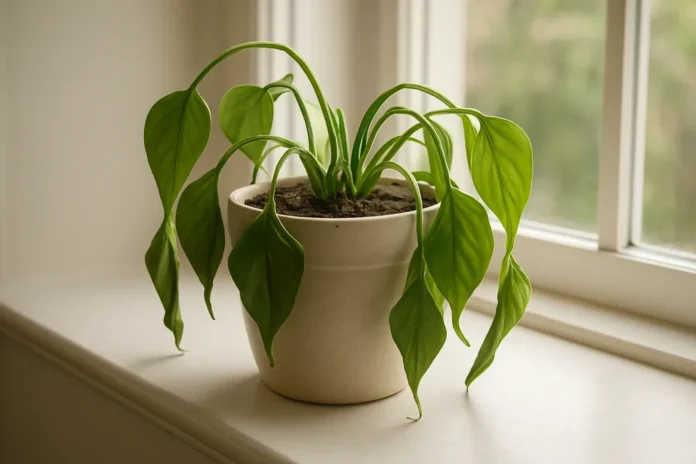
Pothos leaves usually droop because the plant is stressed by too little water, too much water, root damage, or sudden environmental changes. Weak light, temperature extremes, and a pot that no longer supports healthy roots can also make the leaves hang limp.
If your pothos has gone from full and perky to limp and sagging, the problem is usually stress rather than a mystery disease. Leaves on pothos lose their firmness when the plant cannot move water properly through its stems and roots, or when growing conditions suddenly shift.
Drooping can happen after missed waterings, overly wet soil, poor drainage, transplant shock, chilly drafts, or root rot. The good news is that pothos is forgiving, and once you match the symptom to the real cause, it often rebounds quickly.
The key is to look at the whole plant instead of the droop alone. Soil moisture, pot size, root health, light exposure, and recent changes in your home all give clues about what your pothos is trying to tell you.
What Drooping Means in a Pothos Plant
Drooping is a loss of leaf and stem tension. In a healthy pothos, cells are filled with water pressure that keeps vines and leaves lifted. When that pressure drops, the foliage softens, bends, and hangs downward.
That does not always mean the plant is dry. A pothos can droop when it is thirsty, but it can also droop when roots are sitting in soggy soil and beginning to suffocate. In both cases, the plant struggles to move moisture where it needs to go.
- Leaves feel thin, soft, or floppy
- Vines look less upright than usual
- The whole plant appears limp instead of just one leaf
- Drooping may be paired with yellowing, curling, browning, or mushy stems depending on the cause
Underwatering Is One of the Most Common Causes
A thirsty pothos often droops dramatically, especially if the soil has become very dry from top to bottom. Because pothos stores only a limited reserve of moisture in its tissues, leaves lose firmness when the roots cannot take up enough water.
Signs the Plant Is Too Dry
- Potting mix feels dry several inches down
- The pot feels much lighter than usual
- Leaves may curl slightly inward or feel papery at the edges
- Some older leaves may turn yellow and drop after repeated dry spells
If drooping appeared quickly and the soil is bone dry, underwatering is a strong possibility. Pothos usually perks back up within a day after a thorough watering when dryness is the only issue. If it does not improve, another problem is likely involved.
Overwatering Can Look Surprisingly Similar
Many gardeners assume drooping always means a plant needs water, but too much water causes the same limp look. When soil stays wet too long, roots cannot get enough oxygen. They weaken, then the plant cannot absorb water efficiently even though moisture is sitting all around them.
Clues That Wet Soil Is the Problem
- Soil stays damp for many days after watering
- Leaves droop and may also turn yellow
- Stems near the soil line feel soft or dark
- The pot has poor drainage or no drainage hole
- A musty smell comes from the potting mix
This kind of drooping tends to linger rather than resolve quickly. The plant may look tired all the time, and new growth often slows. If wet conditions continue, overwatering can lead to root rot.
Root Rot Is a Serious Reason Leaves Hang Limp
Root rot happens when roots remain in overly wet, airless conditions long enough for them to decay. Healthy pothos roots are firm and light colored. Rotting roots become brown or black, soft, and sometimes slimy.
Once roots are damaged, the plant cannot support its foliage well. You may see drooping, yellow leaves, blackening stems, or sections of the vine collapsing. A badly rotted pothos can still have wet soil while acting like it is thirsty.
Situations That Commonly Lead to Root Rot
- Frequent watering on a fixed schedule instead of watering by need
- Dense potting mix that drains slowly
- Decorative cachepots that trap runoff water
- Cool indoor temperatures that slow drying
- A pot that is far too large for the root system
Light Problems Can Weaken Leaf Posture
Pothos tolerates lower light better than many houseplants, but that does not mean it thrives in dark corners. In insufficient light, the plant photosynthesizes less efficiently and may develop stretched vines, smaller leaves, and a generally limp appearance.
Very harsh direct sun can also create stress. If a pothos that was in moderate light is suddenly placed in hot afternoon sun, leaves may droop from heat and moisture loss. Sun-stressed foliage may also show pale patches, crisp edges, or scorched spots.
- Too little light often causes slow growth, long bare spaces between leaves, and an overall weak look
- Too much direct sun often causes drooping during the hottest part of the day, along with scorch marks or faded color
Temperature and Humidity Swings Can Trigger Drooping
Pothos prefers stable indoor conditions. Sudden cold drafts from doors, air conditioning vents, or chilly windows can make leaves droop almost overnight. The same can happen when the plant sits near a heater or in very dry air that speeds up moisture loss.
Most pothos grows best between about 65 and 85 degrees Fahrenheit. Prolonged exposure below 55 degrees can cause visible stress. Low humidity alone usually does not cause dramatic collapse, but combined with dry soil or heat, it can contribute to limp foliage.
A Rootbound Plant May Start Drooping More Often
When pothos outgrows its pot, roots begin circling tightly and filling most of the container. At that point, the plant dries out faster and may droop soon after watering because there is not enough soil left to hold moisture evenly.
Signs Your Pothos May Be Rootbound
- Roots are visible through drainage holes
- Water runs straight through the pot very quickly
- The plant wilts more often than it used to
- Growth has slowed even during the active season
- The root ball slides out in a dense mass with little loose soil
A rootbound pothos does not always droop constantly, but it often becomes harder to keep evenly moist. That repeated stress shows up first in the leaves.
Recent Repotting or Relocation Can Cause Temporary Stress
If your pothos started drooping right after repotting, moving, or pruning, mild transplant shock may be to blame. Disturbed roots need time to settle back in and resume normal water uptake. A new room with different light, drafts, or temperatures can also trigger drooping.
This kind of droop is often short-lived if the roots were not badly damaged and the new potting mix drains well. The plant should begin adjusting within several days to a couple of weeks.
Pests and Disease Are Less Common but Still Possible
Pothos is fairly resilient, but sap-sucking pests can weaken it enough to cause drooping over time. Mealybugs, spider mites, and scale insects feed on plant tissues and reduce vigor. Heavy infestations are more likely to cause drooping when the plant is already stressed by watering or low light.
Look closely along stems, leaf undersides, and where leaves join the vine. Fine webbing, cottony clusters, sticky residue, or small shell-like bumps all deserve attention. Disease is less common indoors, but fungal issues may appear if leaves stay wet and air circulation is poor.
How to Tell Which Cause Is Most Likely
The fastest way to diagnose drooping is to combine the leaf symptom with the condition of the soil and roots. One clue alone is rarely enough. A pothos with dry soil and crisp edges tells a different story than a pothos with yellow leaves and a sour-smelling pot.
Quick Symptom Matching Guide
- Dry soil + limp leaves + lightweight pot usually points to underwatering
- Wet soil + yellowing leaves + soft stems often points to overwatering or root rot
- Long weak vines + small leaves + dim room suggests insufficient light
- Drooping after a move or repot suggests environmental or transplant stress
- Frequent wilting despite regular watering may mean the plant is rootbound
- Drooping with visible pests suggests insects are draining plant energy
What Helps a Drooping Pothos Recover
Recovery depends on correcting the underlying stress rather than treating the droop itself. Pothos usually responds well once conditions improve, but the timeline varies. A thirsty plant may recover in hours, while a plant with root damage may need weeks to send out healthy new growth.
Best Recovery Approaches by Cause
- For underwatering, rehydrate the potting mix thoroughly and let excess water drain away
- For overwatering, allow the mix to dry appropriately and improve drainage or pot size if needed
- For root rot, remove damaged roots, refresh the mix, and replant in a container with drainage
- For low light, move the plant to bright indirect light
- For heat or cold stress, place it in a stable room away from vents, heaters, and drafty windows
- For a rootbound plant, repot one size up into fresh, airy potting mix
- For pests, isolate the plant and treat the infestation before it spreads
Avoid fertilizing a severely stressed pothos right away. Extra feeding does not fix drooping caused by damaged roots or poor watering habits, and it can make stress worse. Wait until the plant is actively recovering and producing healthy new growth.
How to Prevent Pothos Leaves From Drooping Again
The best prevention is consistency. Pothos does not need perfect care, but it does better when watering, light, and temperature stay within a comfortable range. Most repeat drooping problems come from cycles of extreme dryness followed by heavy watering, or from soil that never dries enough.
- Water when the top inch or two of soil feels dry rather than on a strict calendar
- Use a pot with a drainage hole every time
- Choose a loose, well-draining indoor potting mix
- Keep pothos in bright, indirect light for stronger growth and steadier moisture use
- Rotate the plant occasionally for even growth
- Repot before the root ball becomes severely crowded
- Keep it away from cold drafts and blasting heat
- Inspect leaves and stems regularly for pests
Once you learn how quickly your pothos dries in your home, drooping becomes much easier to avoid. A simple habit of checking soil moisture before watering prevents both the too-dry and too-wet extremes that cause most problems.
FAQ
Will Drooping Pothos Leaves Go Back to Normal?
Yes, if the underlying cause is corrected early. A mildly underwatered pothos often perks up quickly, while recovery from overwatering or root damage takes longer.
How Do I Know if My Pothos Is Drooping From Too Much Water or Too Little Water?
Check the soil and the overall condition of the plant. Dry, lightweight soil points to thirst, while wet soil, yellowing leaves, and soft stems point to overwatering.
Should I Water My Pothos as Soon as the Leaves Droop?
Not automatically. Drooping can also come from soggy soil and root problems, so watering without checking moisture first can make the issue worse.
Can Low Light Make Pothos Leaves Droop?
Yes. In very low light, pothos growth weakens and vines can look stretched and limp, though the drooping is often less sudden than with watering stress.
Do Pothos Leaves Droop After Repotting?
They can. Minor transplant shock is common after roots are disturbed, but the plant should begin adjusting if the new mix drains well and watering is kept moderate.
Can a Rootbound Pothos Look Droopy Even when I Water It?
Yes. A crowded root ball dries out quickly and may not hold moisture evenly, so the plant can wilt sooner and more often than expected.
Does Pothos Droop in Cold Rooms?
Yes. Chilly drafts, cold windows, and temperatures below its comfort range can stress pothos and cause limp, unhappy foliage.
Still seeing limp vines or yellowing leaves? Read our guide to the best houseplant soil mixes and drainage pots so you can fix root stress fast and keep pothos thriving.
