

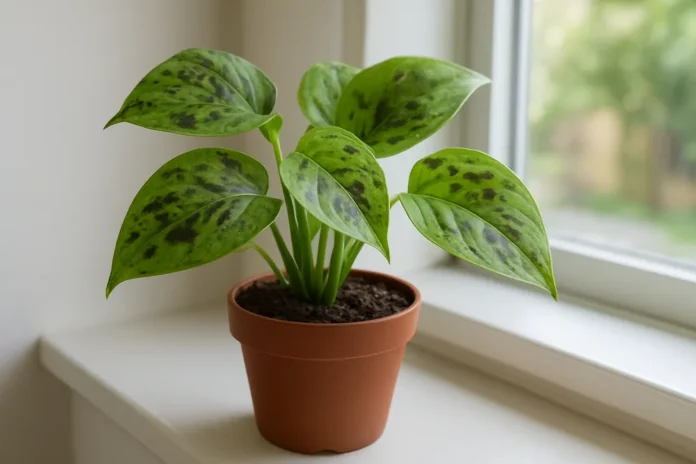
Pothos leaves develop black spots most often from overwatering, fungal or bacterial leaf problems, cold injury, or damaged tissue that has started to rot. In some cases, harsh sun, low airflow, or water sitting on leaves can also trigger spotting.
Seeing pothos with black spots can be alarming, especially when the rest of the plant seemed healthy just days earlier. These dark marks may show up as tiny specks, mushy patches, crisp edges, or larger blotches, and the pattern often tells you a lot about what is going wrong.
In most homes, black spotting on pothos comes down to a short list of issues: too much water, leaf disease, cold exposure, physical damage, or stress from the environment. The good news is that pothos is usually forgiving. If you catch the problem early and correct the cause, the plant often recovers well and pushes out healthy new growth.
What Black Spots on Pothos Usually Mean
Black spots are not a single problem. They are a symptom of plant tissue that has died or is dying. On pothos, that can happen because roots stayed too wet, leaves were exposed to chilling temperatures, fungal or bacterial pathogens entered damaged tissue, or the leaf surface was stressed by sun or moisture.
The look and feel of the spot matters. A soft, wet-looking black patch points more toward rot or disease. Dry, crisp blackened areas can suggest scorch, cold damage, or older physical injury. Small pinpoint spots that expand may be an early sign of leaf spot disease, especially if humidity is high and airflow is poor.
- Soft, mushy black spots often indicate overwatering, rot, or bacterial issues.
- Dry black or dark brown spots can come from sun stress, cold injury, or old damage.
- Spots with yellow halos are commonly linked to fungal or bacterial leaf spot.
- Blackened edges or tips may be tied to inconsistent watering, salt buildup, or environmental stress.
- Spots on only one or two damaged leaves may simply be bruising or contact injury.
Overwatering and Root Stress Are the Most Common Causes
For indoor pothos, overwatering is the most common reason black spots appear. When potting mix stays soggy for too long, roots cannot breathe normally. Stressed roots begin to decline, and the leaves may develop dark spots, turn yellow, or become limp. If root rot starts, the black areas can spread quickly.
Overwatering does not only mean watering too often. It can also mean a pot without drainage, a dense soil mix that stays wet for days, a cachepot that traps runoff, or a plant sitting in low light where it uses water slowly. In all of these cases, the root zone remains too wet, and leaf symptoms follow.
Signs the Plant Is Staying Too Wet
- Soil feels damp several inches down for many days after watering
- Leaves look limp or yellow along with the dark spots
- Spots feel soft instead of crisp
- The pot smells sour or swampy
- Roots appear brown, black, or mushy instead of firm and pale
If your pothos has black spots and the soil is consistently wet, treat excess moisture as the leading suspect. The faster you correct watering conditions, the better your chances of stopping further leaf damage.
Fungal and Bacterial Leaf Spot Can Spread on Stressed Plants
Pothos can also develop black spots from fungal or bacterial leaf spot diseases. These problems are more likely when leaves stay wet, humidity is high, plants are crowded, or damaged leaves are left in place. Disease often takes hold more easily when the plant is already stressed from overwatering or low light.
Leaf spot infections often begin as small dark specks that enlarge over time. Some spots develop a yellow border. Others merge into larger irregular patches. Bacterial problems may look water-soaked at first, while fungal spots can appear more dry or target-like depending on the organism involved.
Conditions That Favor Leaf Spot Problems
- Water sitting on leaves for long periods
- Poor air circulation around the plant
- Cool, damp rooms
- Repeated misting that keeps foliage wet
- Splashing water from plant to plant
- Old infected leaves remaining on the vine or soil surface
Houseplant leaf spot does not always require heavy treatment, but it does require cleaner conditions. Removing the most affected leaves, keeping the foliage dry, and improving airflow often helps stop minor outbreaks before they spread.
Cold Damage Can Turn Leaves Dark Very Quickly
Pothos is a tropical plant and reacts poorly to cold drafts, chilly windows, air conditioner blasts, and sudden temperature drops. When leaves are exposed to cold, the damaged tissue may first look water-soaked and then turn brown or black. This kind of spotting can show up overnight.
Cold injury often affects the side of the plant closest to a drafty window or door. It may also happen after bringing a plant home in winter, transporting it in a cold car, or leaving it too close to an uninsulated glass pane.
- Black spots appear suddenly after a cold night
- Damage is concentrated on exposed outer leaves
- Spots may be larger blotches instead of tiny speckles
- The rest of the plant may still look fairly healthy
Once tissue has been chilled badly enough to turn black, that part will not recover. The key is preventing repeat exposure and allowing the plant to replace damaged leaves with new growth.
Too Much Direct Sun or Heat Can Scorch Pothos Leaves
Although pothos tolerates bright indoor conditions, intense direct sun can damage its leaves. Sunscald usually starts as pale, bleached, tan, or brown patches, but severely damaged areas can darken over time and look almost black, especially as the tissue dries out.
This is more common when a pothos is moved suddenly from low light to a hot south- or west-facing window. Heat from glass can intensify the problem. Leaves pressed against a sunny window can also develop localized dark injury.
Clues That Point to Sun Scorch
- Spots are on the side facing the light source
- Affected areas look dry or papery rather than wet
- Damage followed a move to brighter light
- Lighter bleached patches may be present near the dark areas
Physical Damage and Bruising Can Leave Isolated Black Marks
Sometimes the cause is simple. Pothos leaves can bruise when bent, pinched, rubbed, or packed tightly during shipping. A damaged leaf may later develop a black spot where the tissue was crushed. This is especially common on tender new growth and larger mature leaves.
Bruising tends to stay limited to a specific spot and does not spread much once the damage has dried. If only one or two leaves are affected and the rest of the plant looks healthy, mechanical injury is a strong possibility.
Water Quality, Fertilizer Salts, and Moisture on Leaves Can Contribute
Black spotting is less commonly tied to water quality or fertilizer issues, but these factors can add stress and make leaves more vulnerable. A buildup of salts from frequent fertilizing can injure roots and edges of leaves. Hard water residue is more likely to leave white spotting, but chronic stress from poor watering habits and salts can still lead to darkened, damaged tissue.
Water left on leaves for long periods is another issue. Pothos does not need misting, and constantly wet foliage creates ideal conditions for spotting diseases. If droplets sit on leaves in a cool room with low airflow, small black lesions can follow.
How to Tell Which Cause Is Most Likely
Because several problems can create similar black spots, it helps to compare the plant's recent conditions with the appearance of the damage. You do not need a lab diagnosis to narrow it down. A few practical observations usually point you in the right direction.
Look at the Spots Themselves
- Soft and wet-looking usually means rot or bacterial trouble
- Dry and crisp often means scorch, cold, or old injury
- Tiny spots that enlarge can indicate fungal or bacterial leaf spot
- Large irregular blotches can be linked to cold or severe tissue damage
Look at the Pot and Soil
- Wet soil for too long suggests overwatering or poor drainage
- Compacted mix points to root stress
- A pot without drainage raises the risk of rot
Look at Recent Changes
- Moved near a cold window or draft points to chilling injury
- Moved into stronger direct sun points to scorch
- Recently misted or overhead watered often points to leaf spot issues
- A recent bump, bend, or transport event points to bruising
What to Do to Fix Pothos Black Spots
Blackened leaf tissue will not turn green again, so the goal is to stop new spots from forming. Start by correcting the underlying condition rather than removing every blemished leaf at once. Once the plant is stable, you can prune damaged leaves for appearance.
Adjust Watering and Drainage
Let the top inch or two of the mix dry before watering again, depending on pot size and indoor conditions. Always use a container with drainage. Empty any outer decorative pot or saucer after watering so roots are not left standing in water.
If the mix stays soggy for a week or more, repot into a lighter houseplant mix with better aeration. If you inspect the roots and find mushy black sections, trim those away with clean scissors before repotting.
Remove Badly Affected Leaves
Prune leaves that are heavily spotted, mushy, or collapsing. Use clean shears and discard the material rather than composting it indoors. This improves appearance and reduces the chance that disease organisms remain on the plant.
Keep Foliage Dry
Water the soil directly instead of wetting the leaves. Stop misting if you have been doing it regularly. If you occasionally shower the plant to remove dust, let it dry quickly in a warm room with decent airflow.
Improve the Environment
Place pothos in bright, indirect light. Move it away from cold drafts, heating vents, and harsh afternoon sun. Good light helps the plant use water efficiently and recover faster from stress.
Use Treatments Only when Needed
Most indoor cases improve with better watering, sanitation, and airflow. If spotting continues to spread rapidly despite those changes, a houseplant-safe fungicide or copper-based product may help with some leaf spot issues. Follow label directions carefully and avoid overapplying treatments indoors.
How to Prevent Black Spots From Coming Back
Prevention is mostly about steady care. Pothos handles average indoor life well when the roots are not waterlogged and the leaves are kept in stable conditions.
- Water only when the potting mix has partially dried
- Use a fast-draining indoor potting mix and a pot with drainage holes
- Provide bright, indirect light instead of intense direct sun
- Keep the plant away from cold windows, exterior doors, and AC drafts
- Avoid frequent misting and prolonged wet foliage
- Trim damaged or diseased leaves promptly
- Fertilize lightly during active growth and flush excess salts occasionally
- Give vining plants enough space for airflow
If your pothos has had repeated moisture problems, consider downsizing to a pot only slightly larger than the root ball. Oversized pots hold extra wet soil, which often leads to recurring black spots and slower recovery.
When Black Spots Are Serious
A few isolated black spots are usually manageable. The problem becomes more serious when spots spread quickly, multiple stems start yellowing or collapsing, or the base of the plant turns soft. That pattern suggests significant root rot or an aggressive disease issue.
If much of the root system is compromised, your best option may be to salvage healthy cuttings from unaffected vines and restart the plant. Pothos roots easily from cuttings, so even a plant with severe lower stem or root problems can often be saved in part.
FAQ
Should I Cut Off Pothos Leaves with Black Spots?
Yes, if the spots are large, mushy, or spreading. Removing heavily damaged leaves helps the plant look better and can reduce disease pressure, but mild cosmetic spots on otherwise healthy leaves are not always urgent.
Can Overwatering Cause Black Spots Without Yellow Leaves?
Yes. Black spots can appear before widespread yellowing, especially if root stress is just starting or if only part of the root zone has stayed too wet.
Will Black Spots on Pothos Go Away on Their Own?
No. Damaged leaf tissue does not heal back to green. The plant recovers by producing healthy new growth after the underlying problem is corrected.
Is Misting Bad for Pothos Leaves?
Occasional moisture is not always harmful, but frequent misting can keep leaves wet too long and encourage spotting diseases. Pothos generally does better with dry foliage and normal indoor humidity.
Can a Pothos Recover From Root Rot?
It can if the problem is caught early. Trim away rotted roots, repot into fresh well-draining mix, and adjust watering. If damage is advanced, propagate healthy cuttings as backup.
Do Black Spots Mean My Pothos Has a Fungus?
Not always. Black spots can also come from overwatering, cold injury, bruising, or sun damage. Fungal disease is only one possible cause.
Why Does My Pothos Have Black Spots After Being Near a Window?
A nearby window can cause trouble in two ways. Cold glass or drafts can chill the leaves, while intense direct sun through the glass can scorch them.
Still troubleshooting pothos problems? Read our guide to the best indoor plant soils and watering tools so you can fix root stress faster and keep new leaf damage from spreading.
