

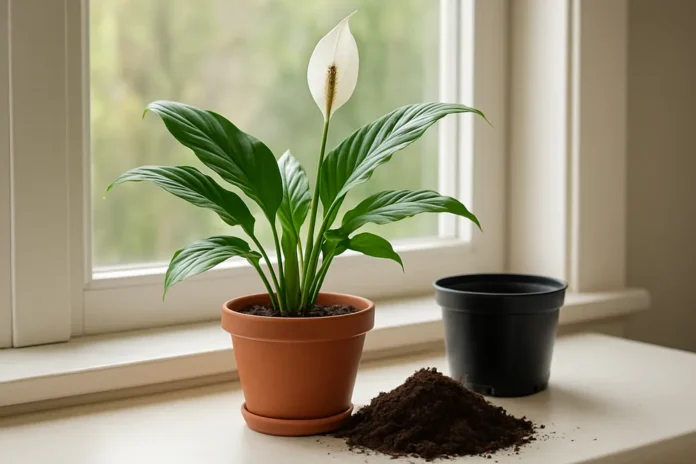
A peace lily usually stops growing because it is getting too little light, staying too wet or too dry, or struggling with root and soil problems. Slow growth can also happen when temperatures are cool, humidity is low, or the plant is dormant.
A peace lily that looks healthy enough to survive but never seems to put out new leaves can be frustrating. When a plant is not growing, it is usually reacting to one or more conditions that are slowing its metabolism, limiting root function, or reducing its ability to make energy.
In most homes, peace lilies stall because light is too dim, watering is inconsistent, or the roots are cramped, damaged, or sitting in tired potting mix. Growth can also slow naturally in winter, so the key is figuring out whether your plant is in a normal resting phase or stuck in conditions that keep it from actively growing.
The good news is that peace lilies usually respond well once their care is corrected. With the right light, moisture, temperature, and root space, they often begin producing fresh foliage again within a few weeks to a couple of months.
What Normal Peace Lily Growth Looks Like
Peace lilies are not fast growers compared with many tropical houseplants. Even in good conditions, they tend to grow in cycles. You may see a flush of new leaves in spring and summer, then much slower growth in fall and winter. A mature plant may also grow more slowly than a young one because it has already filled out much of its pot.
Healthy growth usually appears as tightly rolled new leaves emerging from the base and gradually unfurling. If your peace lily looks green, firm, and stable but is simply producing fewer leaves during the cooler months, that may be normal. If it has not produced any new growth for a long time, or if the leaves are small, pale, drooping, or damaged, there is likely a care issue involved.
- Active growing season is usually spring through early fall.
- Growth naturally slows in winter, especially in lower indoor light.
- Older plants often grow slower than younger, recently established plants.
- A healthy plant should still maintain firm leaves and good color, even when growth slows.
Low Light Is the Most Common Cause
Peace lilies are famous for tolerating low light, but tolerating low light is not the same as growing well in it. In a dark corner, the plant may survive for a long time while producing little to no new foliage. Growth slows because the plant cannot photosynthesize enough to support active development.
The best growth usually happens in bright, indirect light. A spot near an east-facing window, or a few feet back from a bright south- or west-facing window filtered by a curtain, often works well. Too much direct sun can scorch leaves, but too little light leads to stagnation, smaller leaves, and weak growth.
Signs Your Peace Lily Needs More Light
- No new leaves for months during spring or summer
- Very slow or stunted growth
- Leaves that stay small compared with older ones
- A stretched or leaning plant reaching toward a window
- Fewer blooms or no blooms at all
If lighting is the main problem, moving the plant to a brighter location can make a dramatic difference. Just avoid sudden exposure to harsh afternoon sun, which can burn the foliage.
Watering Problems Can Stall Growth
Peace lilies like evenly moist soil, but they do not like to sit in soggy potting mix. Both overwatering and underwatering can slow growth. When roots stay too wet, they struggle to take up oxygen. When the soil gets bone dry too often, the plant cannot maintain steady growth and may shut down new leaf production to conserve energy.
What Overwatering Does
Overwatering is not just about how often you add water. It also depends on pot size, drainage, room temperature, light, and soil texture. In heavy or poorly draining soil, roots can stay wet too long. That leads to stress, yellowing leaves, and sometimes root rot, which quickly affects growth.
What Underwatering Does
Peace lilies often droop dramatically when thirsty, then perk back up after watering. If that cycle happens often, the plant may survive but grow poorly. Repeated drought stress can damage fine roots and reduce the plant's ability to support new growth.
- Water when the top inch of soil feels slightly dry, not on a rigid calendar.
- Use a pot with drainage holes so excess water can escape.
- Empty saucers or cachepots after watering so roots do not sit in standing water.
- Reduce watering frequency in winter when growth naturally slows.
Root Problems Often Hide Below the Soil Line
If your peace lily has adequate light and reasonable watering but still is not growing, root trouble may be the missing piece. Peace lilies can become root-bound, especially when kept in the same pot for several years. They can also suffer from rot if the roots have been kept too wet.
When a Plant Is Root-bound
A root-bound peace lily may dry out quickly, stop producing larger leaves, and seem stuck in place. Roots circling tightly inside the pot can limit water and nutrient uptake. While peace lilies do not mind being slightly snug, severe crowding can slow growth noticeably.
When Roots Are Rotting
Rotting roots cannot absorb water and nutrients efficiently, even if the soil is wet. The plant may look wilted, yellow, or limp, and growth often stops completely. If roots are dark, mushy, and foul-smelling when you inspect them, rot is likely part of the problem.
Clues That Point to Root Issues
- Roots growing heavily out of drainage holes
- Water rushing straight through the pot without soaking in well
- Soil staying soggy for many days
- Persistent drooping despite proper watering
- No new growth after months of otherwise decent care
Repotting into fresh, airy potting mix can help if the plant is crowded or the soil has broken down. If rot is present, damaged roots should be removed before replanting.
Old Soil and Nutrient Depletion Can Limit New Leaves
Houseplants rely on their potting mix for physical support, moisture balance, and nutrients. Over time, potting mix breaks down and compacts. That reduces airflow around the roots and can make the soil stay too wet or dry unevenly. Nutrients also get used up or washed out over time, especially if the plant has not been repotted in a long time.
A peace lily growing in exhausted soil may stay alive but fail to produce vigorous new foliage. New leaves may come in smaller, paler, or less frequent than before. If your plant has been in the same mix for two to three years, tired soil may be contributing to the slowdown.
How Fertilizing Fits In
Peace lilies are not heavy feeders, but they do benefit from light feeding during active growth. Too little fertilizer can contribute to sluggish growth, while too much can burn roots and create salt buildup that causes its own problems. A balanced houseplant fertilizer at a diluted rate during spring and summer is usually enough.
- Repot every couple of years if the mix is compacted or depleted.
- Use a loose indoor potting mix that drains well but holds some moisture.
- Feed lightly during the growing season rather than heavily all at once.
- Skip fertilizing if the plant is stressed, recently repotted, or in winter dormancy.
Temperature and Humidity Matter More than Many Gardeners Expect
Peace lilies are tropical plants, so they grow best in warm, stable indoor conditions. If the room is too cool, especially below about 60 degrees Fahrenheit, growth can slow sharply. Cold drafts from windows, air conditioners, or exterior doors can also stress the plant and keep it from actively producing new leaves.
Low humidity does not always stop growth on its own, but it can increase stress, especially in winter when indoor heating dries the air. Dry air can lead to brown leaf tips, slower unfurling, and a less vigorous plant overall.
- Ideal temperatures are generally 65 to 80 degrees Fahrenheit.
- Keep the plant away from heater vents, cold glass, and sudden drafts.
- Moderate humidity supports better leaf health and steadier growth.
- Group plants together or use a humidifier if indoor air is very dry.
Pests and Disease Can Quietly Drain Plant Energy
A peace lily that is not growing may be dealing with a hidden pest problem, especially if the plant has sticky leaves, tiny webbing, speckled foliage, or distorted new growth. Common indoor pests include spider mites, mealybugs, aphids, and scale. These pests feed on plant sap and can weaken the plant enough to slow or stop new development.
Diseases are less common indoors but can follow chronic overwatering and poor airflow. Root rot is the most important one to watch for because it directly affects the plant's ability to grow.
Signs to Look For
- Fine webbing under leaves or between stems
- Cottony white clusters in leaf joints
- Sticky residue on leaves or nearby surfaces
- Tiny bumps on stems or leaf undersides
- Distorted, weak, or discolored new growth
Catching pests early matters because even a mild infestation can keep a peace lily from putting energy into healthy new foliage.
Seasonal Dormancy and Transplant Recovery Can Mimic a Problem
Not every pause in growth is a sign that something is wrong. Peace lilies often slow down in late fall and winter because days are shorter and indoor light is weaker. As long as the plant still looks generally healthy, slower growth at that time can be normal.
Likewise, a recently repotted or recently moved peace lily may take time to adjust. Plants often pause while rebuilding roots and adapting to a new environment. During this recovery window, the best approach is stable care rather than frequent changes.
- Winter slowdown is common, even in healthy plants.
- Repotting can temporarily delay new top growth.
- A move to a new room or home may trigger short-term stress.
- Patience matters if the foliage remains firm and green.
How to Get Your Peace Lily Growing Again
Once you know the likely cause, the fix is usually straightforward. Peace lilies recover best when conditions improve steadily rather than drastically. The goal is to create an environment that supports strong roots, even moisture, and enough light for active growth.
Best Actions to Take
- Move the plant to bright, indirect light if it has been sitting in a dim location.
- Adjust watering so the soil stays lightly and evenly moist, never waterlogged.
- Inspect the pot and roots if the plant has been in the same container for years or shows signs of root stress.
- Repot into fresh, well-draining mix if the soil is compacted, sour-smelling, or heavily root-bound.
- Keep temperatures warm and stable and protect the plant from cold drafts.
- Feed lightly during spring and summer if the plant is actively growing and not under stress.
- Check leaf undersides and stems for pests and treat promptly if you find any.
Do not expect instant results. After care is corrected, many peace lilies need several weeks before they resume visible growth. If the root system was stressed, recovery may take longer, but a healthy environment usually leads to stronger new leaves over time.
Mistakes That Keep Peace Lilies Stuck
Sometimes the issue is not one major problem but a series of small habits that keep the plant from improving. Peace lilies are forgiving, but they do best with consistent care.
- Leaving the plant in a very dark room because it still looks alive
- Watering on a schedule without checking the soil first
- Using decorative pots with no drainage and letting water collect at the bottom
- Repotting into a much larger pot, which can keep the soil wet too long
- Fertilizing heavily in hopes of forcing growth
- Ignoring winter drafts or hot, dry air from vents
- Assuming drooping always means the plant needs more water
If your peace lily has been stalled for a while, correcting these basics gives you the best chance of seeing steady improvement.
FAQ
How Long Can a Peace Lily Go Without Growing Before I Should Worry?
A peace lily can naturally slow down for a few months in winter. If it shows no new growth through spring and summer, or it also has yellowing, drooping, or undersized leaves, a care issue is more likely.
Do Peace Lilies Like Small Pots?
They usually tolerate being slightly snug in a pot, but they do not thrive when severely root-bound. If roots are circling densely or pushing out of drainage holes, growth may improve after repotting.
Can Low Light Completely Stop Peace Lily Growth?
Yes. Peace lilies can survive in low light for a long time, but very dim conditions often prevent active growth and blooming.
Should I Fertilize a Peace Lily That Is Not Growing?
Only if the plant is in active growing season and otherwise seems healthy. If it is stressed from poor light, root rot, drought, or cold, fertilizer can make things worse instead of helping.
Why Is My Peace Lily Green but Still Not Growing?
That often points to light levels that are just high enough for survival but too low for vigorous growth. It can also happen during winter dormancy or when the plant is mildly root-bound.
Will Repotting Make My Peace Lily Grow Faster?
It can help if the plant is root-bound or in old, compacted soil. Repotting into fresh mix improves root conditions, though the plant may pause briefly before new growth resumes.
Can Tap Water Affect Peace Lily Growth?
In some homes, yes. Heavy mineral content or chemical residues can contribute to leaf tip burn and stress over time, though light, watering, and root health are usually bigger reasons for stalled growth.
Want your peace lily to bounce back faster? Read our houseplant care guide and compare the best indoor plant fertilizers and potting mixes for stronger, healthier growth.
