

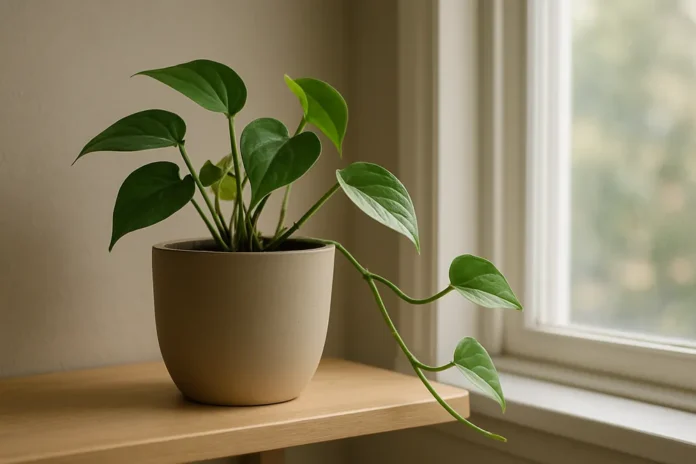
A pothos usually stops growing because it is not getting enough light, its roots are stressed, or growing conditions are too cool, dry, or inconsistent. Slow growth can also happen when the plant is rootbound, overwatered, underfed, or simply in its natural slower season.
If your pothos seems healthy enough but is not putting out new leaves or longer vines, the problem is usually tied to its environment rather than age alone. Not growing can mean growth has slowed to a crawl, leaves are staying the same size, or the plant has completely stalled for weeks or months.
Pothos is known for being forgiving, but it still needs the right balance of light, water, warmth, root space, and nutrients to actively grow. Once one of those basics is off, the plant often responds by pausing new growth to conserve energy.
The good news is that a stalled pothos is often easy to turn around. In most cases, once the main stress is corrected, you will start seeing fresh leaves and longer stems again within a few weeks during the active growing season.
What Normal Pothos Growth Looks Like
Before assuming something is wrong, it helps to know what normal growth looks like. Pothos grows fastest in spring and summer, especially when days are long and indoor temperatures stay comfortably warm. In fall and winter, even a healthy plant may slow down a lot.
A healthy, actively growing pothos typically produces new leaves from the vine tips. You may also notice longer spacing between leaves if it is stretching toward light, or tighter, fuller growth if light is bright enough. Some varieties naturally grow slower than others, especially highly variegated types like Marble Queen or N'Joy.
- Fast growth: regular new leaves, longer vines, and firm stems during spring and summer
- Moderate growth: occasional new leaves but slower vine extension in average indoor light
- Seasonal slowdown: little to no visible growth in winter, even if the plant is otherwise healthy
- Problem growth: no new leaves for a long period, tiny leaves, limp stems, or signs of root or leaf stress
Low Light Is the Most Common Reason
The most common reason a pothos stops growing is insufficient light. Pothos tolerates low light better than many houseplants, but tolerance is not the same as thriving. In dim rooms, it may survive for a long time while producing few or no new leaves.
When light is too weak, the plant cannot make enough energy through photosynthesis to support active growth. It may hold onto its existing leaves but stop investing in new ones. Variegated pothos need even more light than solid green types because the lighter leaf areas contain less chlorophyll.
Signs Your Pothos Needs More Light
- No new leaves for weeks during spring or summer
- Long bare stretches between leaves
- Smaller new leaves than older ones
- Loss of variegation in variegated varieties
- Growth leaning strongly toward a window
Bright, indirect light is ideal. A spot near an east window or a few feet back from a bright south or west window often works well. Direct hot afternoon sun can scorch leaves, but too little light is far more often the reason for stalled growth indoors.
Watering Problems Can Stall Growth
Both overwatering and underwatering can slow pothos growth. Roots need a balance of moisture and oxygen. If the soil stays soggy too long, roots struggle to breathe and may begin to rot. If the soil gets bone dry too often, the plant cannot move enough water and nutrients to support new growth.
What Happens with Overwatering
An overwatered pothos often looks dull, limp, or yellowish. Even if the soil feels wet, the roots may be too damaged to function well. Once roots are compromised, the plant typically pauses top growth while trying to recover below the soil.
What Happens with Underwatering
An underwatered pothos may have dry, curling leaves, crispy brown edges, or drooping stems. Repeated cycles of severe dryness can make the plant stop growing because it is constantly recovering from stress rather than building new vines.
A Better Watering Rhythm
Pothos usually does best when watered after the top inch or two of soil has dried out. The exact timing depends on pot size, temperature, humidity, light, and season. Instead of watering on a fixed schedule, water based on how dry the soil actually is.
The Roots May Be Too Crowded or Unhealthy
If your pothos has been in the same pot for a long time, root crowding may be the issue. A rootbound pothos can still survive, but once roots wrap tightly around the pot interior, the plant has less room to take up water and nutrients efficiently. Growth often slows or stops.
On the other hand, unhealthy roots from rot or compacted soil can create the same above-ground symptom. That is why root condition matters more than pot size alone.
Signs of a Root Problem
- Roots circling densely around the root ball
- Water running straight through the pot without soaking in well
- Soil drying out extremely fast
- Persistent drooping even after watering
- A sour smell from the potting mix
- Black, mushy, or slimy roots instead of firm white or tan roots
A healthy pothos usually benefits from repotting every year or two if growth is active. Move up only one pot size at a time. A pot that is too large can stay wet too long and create a new problem.
Old, Compacted, or Poor Soil Can Hold It Back
Pothos needs a loose, airy potting mix that drains well but still holds some moisture. If the mix has broken down into a dense, compact mass, roots may not get enough oxygen. This can happen even when you are watering correctly.
Heavy garden soil is also a common mistake for houseplants. It compacts in containers, drains poorly, and increases the risk of root issues. A peat- or coco-based houseplant mix with perlite and bark is usually a better fit.
- Compacted soil slows root growth and air flow
- Poor drainage increases the chance of overwatering damage
- Exhausted potting mix may no longer provide structure or nutrient buffering
- Refreshing the mix can restart growth if roots are still healthy
Nutrient Deficiencies and Low Feeding Can Slow Growth
Pothos is not a heavy feeder, but it still needs nutrients to make leaves and stems. If it has been in the same potting mix for a long time and has not been fertilized during the growing season, it may simply be running low on the basics it needs.
Nitrogen is especially important for leafy growth. A plant that lacks nutrients may produce very slow growth, pale leaves, or smaller new leaves. However, too much fertilizer can also damage roots and cause stalled growth, so more is not always better.
How to Feed Without Overdoing It
A balanced liquid houseplant fertilizer diluted to half strength every four to six weeks in spring and summer is usually enough. Do not fertilize a severely stressed plant until watering, light, and root health are back on track. Feeding a struggling plant with damaged roots often makes things worse.
Temperature and Humidity Affect Growth More Than People Realize
Pothos grows best in typical indoor temperatures, but it slows down quickly if conditions get too cool. Temperatures below about 55 degrees Fahrenheit can stress the plant, and consistently cool rooms often lead to very slow growth.
Humidity is less critical than light and watering, but very dry air can still reduce growth and lead to smaller leaves or browning edges. This is especially common in winter when heating systems run constantly.
- Ideal temperature range is roughly 65 to 85 degrees Fahrenheit
- Cold drafts from windows or doors can stall growth
- Heating and air conditioning vents can dry foliage and soil too quickly
- Moderate household humidity is usually fine, but very dry air can slow development
Pests Can Drain Energy From the Plant
A pothos with spider mites, mealybugs, scale, or fungus gnats may stop growing because it is under constant stress. Some pests suck sap directly from leaves and stems, reducing the plant's ability to make energy. Others point to chronic moisture problems around the roots.
Common Clues to Watch For
- Fine webbing under leaves or at stem joints
- White cottony clusters from mealybugs
- Brown shell-like bumps from scale
- Tiny flying gnats around constantly wet soil
- Sticky residue on leaves or nearby surfaces
- Leaf discoloration, speckling, or distortion
Even a light infestation can slow growth over time. Indoor pests often spread quietly, so a close inspection of the undersides of leaves and stem nodes is important when a pothos suddenly stalls.
Pruning, Propagation, or Recent Stress Can Cause a Temporary Pause
If you recently pruned your pothos, repotted it, moved it to a new room, or took cuttings for propagation, some short-term slowdown is normal. Plants often redirect energy toward root adjustment or wound repair before pushing new top growth.
This kind of pause is usually temporary if the plant is otherwise healthy. Growth often resumes once the plant settles into stable conditions again. Sudden environmental changes, especially a move from bright light to a darker area, can also trigger a stall.
Some Pothos Grow More Slowly Than Others
Not all pothos varieties grow at the same rate. Golden pothos and jade pothos are usually vigorous and forgiving. Highly variegated selections often grow more slowly because less of each leaf is devoted to photosynthesis.
Plant age and starting size matter too. A small cutting with just a few nodes may need time to build roots before it starts to vine out. A mature plant in a hanging basket may already be allocating energy across many stems, so individual tips can seem slower than expected.
How to Get a Pothos Growing Again
The fastest way to restart growth is to correct the biggest limiting factor rather than changing everything at once. Most stalled pothos improve when they get brighter indirect light, steadier watering, and fresh potting mix if the roots are crowded or stressed.
Simple Recovery Steps
- Move the plant to brighter indirect light if it has been sitting in a dim room.
- Check the soil moisture and adjust watering so the top inch or two dries before watering again.
- Inspect the roots if the plant has been in the same pot a long time or shows signs of stress.
- Repot into a fresh, well-draining houseplant mix if roots are crowded, compacted, or unhealthy.
- Feed lightly during spring and summer once the plant is actively growing again.
- Keep it away from cold drafts, heater vents, and sudden temperature swings.
- Inspect for pests and treat promptly if you find any signs of infestation.
Be patient after making changes. Pothos rarely responds overnight. In good conditions, you may see a new leaf within a couple of weeks in the active season, but fuller recovery can take longer if roots were damaged or light was poor for a long time.
When a Lack of Growth Is a Bigger Concern
Slow growth by itself is not always an emergency, especially in winter. It becomes more concerning when it is paired with yellow leaves, black stems, a foul-smelling pot, severe wilting, mushy roots, or rapid leaf loss. Those signs point to root rot, major watering problems, or advanced pest issues.
If the roots are badly damaged, it may be easier to save healthy vine cuttings and propagate them than to restore the original root system. Pothos roots readily in water or moist propagation mix, which makes it one of the easier houseplants to rescue.
FAQ
How Long Can a Pothos Go Without Growing?
A pothos may show little visible growth for several weeks in winter or in lower light. During spring and summer, a complete lack of new growth for more than a month usually means conditions are limiting it.
Does Pothos Grow Slower in Winter?
Yes. Shorter days, cooler rooms, and lower indoor light commonly cause pothos to slow down or pause growth in winter, even when the plant is healthy.
Can a Rootbound Pothos Stop Growing?
Yes. A severely rootbound pothos can stall because the roots have limited space, the soil dries too fast, and nutrient uptake becomes less efficient.
Will Pothos Grow in Low Light?
Pothos can survive in low light, but growth is usually much slower and less full. Bright, indirect light produces better vine length, leaf size, and overall vigor.
Should I Fertilize a Pothos That Is Not Growing?
Only if other conditions are already in good shape. If poor light, root rot, or watering stress is the real problem, fertilizer alone will not restart growth and can make root stress worse.
Why Is My Pothos Alive but Not Making New Leaves?
That usually means the plant is surviving rather than thriving. Low light, cool temperatures, old soil, root crowding, or inconsistent watering are the most common reasons.
Can I Make Pothos Grow Faster?
Yes. The best way is to provide bright, indirect light, proper watering, warm temperatures, and occasional feeding during the growing season. Healthy roots and fresh potting mix also make a big difference.
Want to fix a stalled houseplant faster? Read our guide to the best indoor plant lights, potting mixes, and fertilizers for pothos so you can choose the right setup with confidence.
