

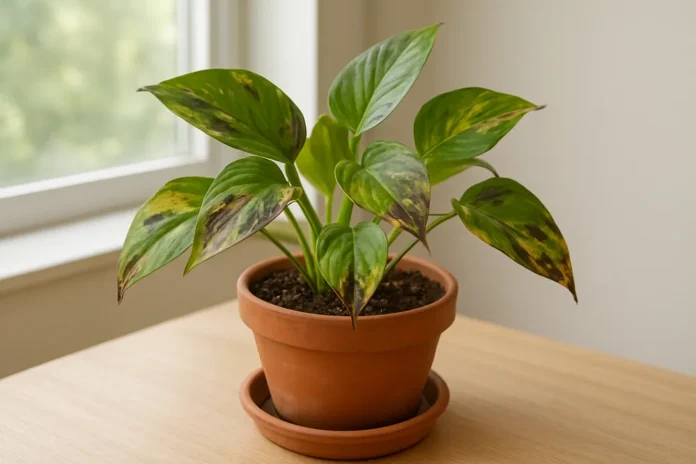
Pothos leaves usually turn black because of overwatering, cold exposure, root rot, sun scorch, or leaf disease. Blackening often starts where plant tissue has been stressed, damaged, or infected.
When pothos leaves turn black, the problem is usually tied to stress that damaged the leaf tissue rather than a simple cosmetic issue. Black areas can show up as soft patches, dry crispy edges, dark spots, or entire leaves collapsing, and each pattern points to a slightly different cause.
The most common reasons are overwatering, poor drainage, cold injury, too much direct sun, and fungal or bacterial problems. In some cases, black leaves also follow fertilizer burn, physical damage, or water sitting on foliage for too long. The good news is that pothos is resilient, and once you identify the cause, it often bounces back well.
What Black Leaves Usually Mean on Pothos
Black leaf tissue means the cells in that part of the plant have died or are in the process of collapsing. Unlike yellowing, which often signals a slower nutritional or watering issue, blackening usually points to more severe stress. The speed of the change matters. A leaf that turns black overnight after a cold draft suggests temperature damage, while black areas that spread gradually from the base of the plant often suggest root trouble.
Look closely at the texture and location. Soft, mushy black areas often go with overwatering or rot. Dry black or brown-black patches can come from sunburn or fertilizer burn. Tiny dark spots with yellow halos may indicate disease. If the newest growth is affected first, environmental stress or bacterial issues may be involved. If the oldest leaves near the soil line are blackening first, root problems are more likely.
- Soft black leaves often point to excess moisture or rot.
- Crispy black edges are more often linked to scorch, salts, or very dry stress after damage.
- Round or irregular black spots can suggest fungal or bacterial leaf issues.
- Entire leaves turning dark after a cold night often indicate chilling injury.
Overwatering and Root Rot Are the Most Common Causes
The most frequent reason pothos leaves turn black is that the roots are staying too wet. Pothos likes evenly moist soil, but it does not like to sit in soggy potting mix for long periods. When oxygen is pushed out of the soil, roots begin to suffocate. That stress weakens the plant and creates conditions where root rot organisms can take hold.
As the roots fail, the plant can no longer move water properly, even though the soil is wet. Leaves may first droop, then yellow, and eventually develop blackened sections or collapse completely. In severe cases, stems near the soil line become soft, dark, and mushy.
Signs Your Pothos Is Too Wet
- Soil stays damp for many days after watering.
- The pot feels heavy most of the time.
- Leaves look limp but the soil is already wet.
- Blackening starts with lower leaves or near the crown.
- Roots smell sour, swampy, or rotten.
- Stems feel soft instead of firm.
Overwatering is not just about how often you water. It can also be caused by a pot without drainage, a cachepot that traps runoff, compact old soil, or a container that is too large for the root ball. Even careful gardeners can trigger root stress when the mix holds too much moisture indoors during winter.
Cold Damage Can Turn Leaves Black Very Quickly
Pothos is a tropical plant, so it reacts badly to cold windows, air conditioning vents, and chilly transport from store to home. Temperatures below about 50 degrees Fahrenheit can injure the leaves, and a brief exposure to colder air can cause dramatic blackening within a day or two.
Cold injury usually looks sudden. Leaves may appear water-soaked at first, then turn dark brown or black and become limp. If only the side facing a cold window is affected, temperature stress is a strong possibility. This kind of damage is common in winter when leaves touch glass or the plant sits near a drafty door.
Clues That Blackening Came From Cold Exposure
- Damage appeared suddenly after a cold snap or transport.
- Leaves are black on the side facing a window or vent.
- The soil moisture seems normal, but the tissue still collapsed.
- Only exposed leaves are affected while sheltered leaves remain healthy.
Too Much Direct Sun Can Scorch Pothos Leaves
Pothos tolerates bright light very well, but harsh direct sun can burn the leaves, especially if the plant was grown in lower light and suddenly moved to a sunny window or outdoors. Scorched tissue may start tan or brown and then darken to brown-black or black at the worst spots.
Sun damage is most likely on the upper surface of leaves or on the side facing strong afternoon sun. The damaged areas are often dry and papery rather than mushy. Variegated pothos cultivars can be especially sensitive because lighter sections contain less protective chlorophyll.
- Damage appears on leaves most exposed to bright direct sun.
- Patches look bleached, tan, or brown before turning darker.
- The spots feel dry or crisp, not wet.
- New damage stops once the plant is moved to bright indirect light.
Leaf Spot Diseases and Bacterial Problems Can Cause Black Patches
If your pothos has distinct black spots rather than entire black leaves, disease may be involved. Fungal leaf spots and bacterial infections are more likely when air circulation is poor, leaves stay wet, and the plant is crowded or stressed. These issues often start as small dark specks and expand into larger lesions.
Bacterial spots often look water-soaked at first, then become dark and soft with a yellow halo around the edge. Fungal spots may be more dry or target-shaped. While a few infected leaves do not always threaten the whole plant, disease can spread if the conditions stay damp and stagnant.
Conditions That Encourage Leaf Disease
- Frequent misting or overhead watering
- Leaves pressed tightly against each other
- Poor airflow in bathrooms or corners
- Splashing contaminated water between plants
- Using dirty pruning tools
Fertilizer Burn, Salt Buildup, and Chemical Injury
Pothos is not a heavy feeder, so too much fertilizer can damage the roots and lead to blackened leaf tips or margins. This usually happens when liquid fertilizer is applied too strongly, feeding happens too often, or salts build up in the potting mix over time. Sensitive roots then struggle to take up water properly.
Leaf damage from fertilizer burn often starts at the tips and edges. It may look dark brown at first and then deepen to nearly black. If the plant is otherwise in bright indirect light and the soil is not staying soggy, recent feeding history becomes more important to consider.
Chemical injury can also happen if leaf shine products, harsh cleaners, or concentrated pesticide sprays contact the foliage. In those cases, the blackened areas often match the places where the product sat on the leaf surface.
Less Common Causes of Black Pothos Leaves
While watering and environmental stress explain most cases, a few other problems can cause black leaves. Mechanical damage, for example, can bruise soft pothos tissue. A folded or crushed leaf may darken later where the injury occurred. Extremely low humidity by itself usually causes brown edges more than black leaves, but combined with heat or salts it can make damage look darker.
Pests are not the top reason pothos leaves turn black, but heavy infestations can weaken the plant and create secondary issues. Sap-sucking insects like scale, spider mites, or mealybugs may lead to general decline. If sooty mold grows on the sticky residue they leave behind, leaves can appear blackened on the surface, though the leaf tissue underneath is not always dead.
- Physical bruising from handling or transport
- Sticky pest residue followed by dark mold growth
- Very old leaves naturally dying back after stress
- Poor-quality water combined with salt accumulation
How to Tell Which Cause Is Most Likely
The pattern of damage gives the best clues. Start by asking whether the black tissue is soft or dry, sudden or gradual, spotted or widespread, and whether it began on older leaves, newer leaves, or one side of the plant. Then compare those details to recent changes in care or environment.
Use This Symptom Guide
- Soft black leaves plus wet soil usually suggest overwatering or root rot.
- Sudden dark limp leaves after a chilly night often suggest cold damage.
- Dry blackened patches on the sunny side of the plant often point to sun scorch.
- Small dark spots with halos often suggest bacterial or fungal leaf spot.
- Black tips and margins after feeding may indicate fertilizer burn or salt buildup.
- Surface black coating with sticky leaves may point to pests and sooty mold.
You may find more than one factor involved. For example, an overwatered pothos placed in a cold room is much more likely to develop severe blackening than a healthy plant in stable conditions.
What to Do Right Now to Help Your Pothos Recover
Recovery starts by removing the stress that caused the damage. Black leaf tissue will not turn green again, so the goal is to stop the spread and support healthy new growth. If only a few leaves are affected, the plant may rebound quickly once conditions improve.
Immediate Recovery Steps
- Trim off badly blackened leaves with clean scissors. Remove whole leaves if more than half the tissue is damaged.
- Check soil moisture before watering again. If the mix is soggy, let it dry appropriately and make sure the pot drains fully.
- Inspect the roots if rot is suspected. Healthy roots are firm and pale. Rotten roots are dark, mushy, or foul-smelling.
- Move the plant away from cold windows, vents, and intense direct afternoon sun.
- Pause fertilizer until you see healthy new growth.
- Keep foliage dry and improve airflow if spotting suggests disease.
If root rot is advanced, repotting may be necessary. Use a fresh, airy indoor plant mix with ingredients that improve drainage, such as perlite or bark. Trim away rotten roots before replanting. After repotting, water thoroughly once and then wait until the top portion of the mix dries before watering again.
How to Prevent Black Leaves in the Future
Prevention comes down to stable care. Pothos does best in bright indirect light, warm indoor temperatures, and soil that dries slightly between waterings. The plant is forgiving, but repeated stress eventually shows up on the foliage.
Best Care Practices for Healthy Pothos Leaves
- Water only when the top inch or two of soil feels dry, depending on pot size.
- Use containers with drainage holes and empty excess water from saucers or cachepots.
- Place pothos in bright indirect light rather than hot direct sun.
- Keep temperatures comfortably above 60 degrees Fahrenheit.
- Avoid placing leaves against cold glass in winter.
- Feed lightly during active growth rather than using strong, frequent fertilizer doses.
- Prune to improve air movement and remove damaged foliage promptly.
- Use clean tools and avoid wetting the leaves late in the day.
If you tend to overwater, a smaller pot, a chunkier soil mix, and a moisture check before watering can make a big difference. If your home has strong seasonal light changes, consider moving pothos a little farther from the window in summer and a little closer in winter.
When Black Leaves Are Not a Major Concern
A single older leaf turning dark after being bent, bruised, or shaded out is usually not a serious problem. Plants naturally retire older foliage, especially after changes in light or after repotting. If the rest of the plant looks firm, the stems are healthy, and new growth continues, isolated damage is often just normal cleanup rather than an emergency.
The issue becomes more urgent when blackening is spreading quickly, stems are soft, roots smell rotten, or many leaves are affected at once. In those cases, the plant is telling you that the root zone or growing conditions need attention right away.
FAQ
Should I Cut Off Black Pothos Leaves?
Yes. Black leaf tissue will not recover, so removing badly damaged leaves helps the plant focus on healthy growth and can reduce disease spread.
Can Overwatering Cause Black Leaves Even if the Plant Looks Dry?
Yes. Damaged roots cannot move water well, so an overwatered pothos can droop and look thirsty while the soil is still wet.
Will Black Pothos Leaves Turn Green Again?
No. Once leaf tissue has turned black, that part is dead. Watch for healthy new leaves as the real sign of recovery.
How Often Should I Water Pothos to Prevent Black Leaves?
Water when the top inch or two of soil feels dry rather than on a fixed schedule. Frequency changes with light, temperature, pot size, and season.
Can Cold Window Glass Damage Pothos Leaves?
Yes. Leaves that touch cold glass or sit in a draft can blacken quickly, especially in winter.
Do Black Spots on Pothos Always Mean Disease?
No. Some black spots come from sunburn, bruising, or chemical injury. Disease is more likely when spots spread in damp, poorly ventilated conditions.
Is Misting Helpful for a Pothos with Black Leaves?
Usually not. Misting can keep foliage wet and may worsen leaf spot problems, especially if airflow is limited.
Need the right fix fast? Explore our pothos care and treatment guides to choose the best soil, pots, pruning tools, and plant-safe products for a healthier indoor vine.
