

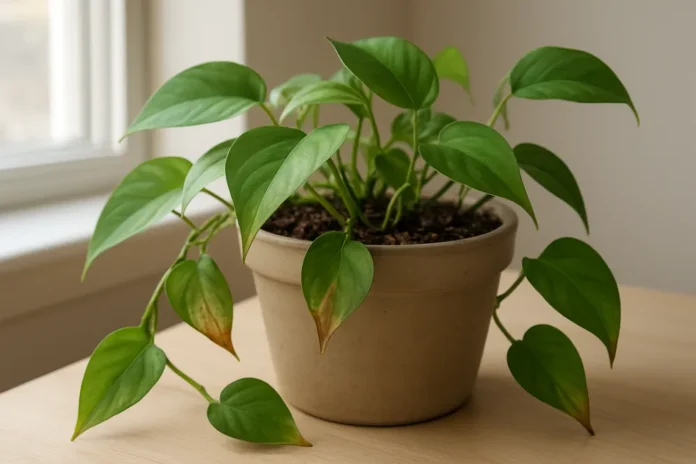
Pothos leaf tips usually turn brown from inconsistent watering, dry indoor air, fertilizer salt buildup, or poor water quality. Root stress from compacted soil, drainage problems, or temperature extremes can cause the same symptom.
Brown tips on pothos are one of the most common houseplant complaints I see, and the good news is that they usually do not mean the plant is dying. In most cases, the problem starts with everyday growing conditions like watering habits, indoor humidity, mineral-heavy tap water, or fertilizer residue building up in the pot.
What makes pothos leaf tips turning brown a little frustrating is that several issues can look almost identical at first. A plant that is too dry, too wet, or sitting in stale, salty soil can all show crispy brown points. I usually look at the rest of the leaf, the feel of the soil, and the overall growth pattern before I decide what is actually going on.
The nice thing about pothos is that it is forgiving. If you catch the cause early, new growth usually returns to normal once conditions improve, even if the old damaged tips never turn green again.
What Brown Tips on Pothos Usually Mean
When a pothos develops brown leaf tips, the plant is telling you that water is not moving through the leaf the way it should. That can happen because the plant is not getting enough moisture, because roots are stressed and cannot absorb it well, or because excess salts and minerals are burning delicate tissue at the ends of the leaves.
The tip of a leaf is often the first part to show stress because it is the furthest point from the root system and the most exposed to dry air. If the damage is limited to the very end of the leaf and the rest still looks healthy, the issue is often environmental rather than a pest or disease outbreak.
- Crispy brown tips with dry soil often point to underwatering or low humidity.
- Brown tips with yellowing leaves and soggy soil often suggest overwatering or root stress.
- Sharp, dry browning on many leaves at once can come from fertilizer salts or mineral-heavy water.
- Tip burn after a cold draft or hot sun exposure may be caused by temperature or light stress.
Inconsistent Watering Is the Most Common Cause
In my experience, most pothos with brown tips are not simply underwatered all the time. They are watered irregularly. The soil gets bone dry, then soaked, then left damp too long, then dry again. That cycle puts stress on the roots and shows up first on the leaf edges and tips.
When the Plant Is Too Dry
If your pothos is staying dry for long stretches, the leaf tips can turn brown and crisp because the plant cannot maintain enough moisture in the outer tissue. You may also notice curling leaves, drooping vines, or potting mix that pulls away from the sides of the pot.
When the Plant Is Too Wet
Overwatering causes brown tips too, but the damage usually comes with softer leaves, yellowing, or a heavy pot that never seems to dry out. Waterlogged roots lose access to oxygen, and once the roots start to decline, the leaves can no longer regulate moisture properly. That often creates brown tips even though the soil is wet.
- Water when the top inch or two of soil feels dry, not by the calendar alone.
- Use a pot with a drainage hole so excess water can leave the root zone.
- Water thoroughly until some drains out, then empty any saucer that collects runoff.
- Adjust your schedule by season. Pothos usually dries more slowly in winter.
Dry Indoor Air Can Crisp the Tips
Pothos tolerates average indoor humidity better than many tropical houseplants, but it still reacts when the air gets very dry. This is especially common in heated homes during winter or in rooms with constant air conditioning. When the air is too dry, the leaf tips lose moisture faster than the roots can replace it.
Humidity-related browning tends to be subtle at first. The plant may still be growing, and the leaves may stay green overall, but the points become dry and tan. I notice this most often on plants hanging near heating vents, drafty windows, or fans.
- Move pothos away from heating vents, radiators, and strong AC airflow.
- Group houseplants together to create a slightly more humid pocket of air.
- Use a small humidifier if your home air is consistently very dry.
- Do not rely on misting alone. It helps very little unless the air is dry only briefly.
Fertilizer Salt Buildup Often Causes Tip Burn
Pothos does not need heavy feeding, so overfertilizing is a common and easy mistake. When too much fertilizer collects in the potting mix, the salts draw moisture away from the roots and can burn the leaf tips. The browning may look sudden, especially after a recent feeding.
This can also happen even if you fertilize lightly but rarely flush the soil. Each watering leaves behind a little residue. Over time, those leftover salts accumulate, especially in small pots or if the plant has been in the same soil for a long time.
Signs Salt Buildup May Be the Problem
- White crust on the soil surface or around the pot rim
- Brown tips appearing on multiple leaves after feeding
- Healthy-looking vines with tip burn but no obvious pest damage
- A plant that has not been repotted in a long time
If this sounds familiar, flush the pot thoroughly with room-temperature water and let it drain well. Going forward, feed less often and at a diluted rate during active growth.
Tap Water Quality Can Damage Sensitive Leaf Edges
Some pothos plants react to minerals, fluoride, chlorine, or other dissolved salts in tap water. Not every home has this issue, but if your watering routine is otherwise good and the tips still keep browning, water quality is worth considering.
Hard water tends to leave visible deposits on pots and soil, and it slowly increases salt levels in the mix. Over time, the plant may show brown tips, dull growth, or leaf edge damage even though you are not overfertilizing.
- Rainwater is often the gentlest option for pothos if you can collect it cleanly.
- Filtered water can help if your tap water is heavily mineralized.
- Letting tap water sit out may reduce some chlorine, but it does not remove hardness.
- Periodic soil flushing helps reduce residue from both fertilizer and tap water.
Root Problems Can Show Up as Brown Tips First
If watering, humidity, and fertilizer seem reasonable, I start thinking about the roots. A pothos with crowded roots, compacted soil, or early root rot may not be able to take up moisture evenly. When that happens, the leaves often show stress before the problem is visible above the soil.
Rootbound Plants
A rootbound pothos dries out quickly and may develop brown tips because the pot no longer holds enough usable soil and moisture. You may see roots circling inside the pot or growing from the drainage holes.
Compacted or Old Potting Mix
Old soil can become dense and hydrophobic. Sometimes water rushes around the root ball instead of soaking in. That leaves the plant acting thirsty even after watering.
Root Rot
Root rot is more serious. If the soil smells sour, stays soggy, and the stems look weak or yellow, damaged roots may be the real cause of the brown tips. Healthy pothos roots are firm and pale. Rotten roots are often brown, mushy, and easy to pull apart.
Light and Temperature Stress Can Contribute
Pothos is adaptable, but it still responds to harsh conditions. Direct hot sun can scorch leaves and leave dry brown areas, including at the tips. Cold drafts from winter windows or sudden temperature swings can do similar damage.
I have also seen brown tips develop after a plant was moved from a dim room into bright direct light too quickly. The change itself can stress the foliage, especially if watering habits do not adjust with the stronger light.
- Bright, indirect light is usually the sweet spot for pothos.
- Avoid prolonged direct afternoon sun, especially in hot rooms.
- Keep the plant away from cold window glass in winter.
- Try to maintain steady indoor temperatures rather than abrupt swings.
Pests and Disease Are Less Common, but Possible
Brown tips on pothos are usually cultural rather than infectious, but pests can sometimes be involved. Spider mites, thrips, and mealybugs all stress the plant by feeding on leaf tissue and sap. In a dry home, spider mites are the ones I am most suspicious of.
If pests are active, tip browning often comes with other signs like stippling, sticky residue, webbing, distorted growth, or small moving insects on stems and leaf undersides. Fungal leaf diseases are less likely to cause simple tip burn by themselves, though root disease from excess moisture certainly can.
- Check the undersides of leaves with good light.
- Inspect new growth, leaf joints, and trailing stems.
- Isolate the plant if you see pests so they do not spread.
- Treat early with insecticidal soap or another houseplant-safe option.
How to Tell Which Cause Fits Your Plant
Because several problems create the same symptom, a quick pattern check is usually more useful than guessing. I like to combine what the soil feels like, where the plant sits, and whether the damage is old or still spreading.
- Dry, crispy tips plus limp vines and very dry soil usually suggest underwatering.
- Brown tips plus yellow leaves and persistently wet soil point more toward overwatering or root rot.
- Brown tips on many otherwise green leaves after feeding often indicate fertilizer burn.
- Minor tip browning near vents or during winter heating is often low humidity.
- Repeated tip burn despite careful watering may be tied to hard tap water or old salty soil.
- Tip damage only on sun-exposed leaves can mean light scorch.
How to Fix Brown Tips on Pothos
Once you identify the likely cause, the fix is usually straightforward. The important thing is to correct the growing conditions rather than just trimming the damage. Brown tips do not heal, so your goal is healthy new growth.
- Adjust watering so the soil stays lightly and evenly moist, not soaked and not bone dry for long periods.
- Improve drainage if the pot lacks holes or if the mix stays wet too long.
- Flush the soil to remove built-up salts, especially if you fertilize regularly or use hard water.
- Repot into fresh, airy potting mix if the roots are crowded, the soil is compacted, or rot is present.
- Move the plant away from direct hot sun, heating vents, and cold drafts.
- Raise humidity modestly if your indoor air is very dry.
- Pause fertilizer for a few weeks if you suspect overfeeding.
Should You Cut Off the Brown Tips
Yes, if the appearance bothers you. Use clean scissors and trim along the natural point of the leaf, leaving a very thin margin of brown so you do not cut into healthy tissue. Cosmetic trimming will not solve the underlying problem, but it can tidy the plant while you work on the real cause.
How to Prevent Brown Tips From Coming Back
Pothos stays attractive with a simple routine. I have found that consistency matters far more than perfection. Plants kept in a stable spot with moderate moisture and occasional soil refreshes are much less likely to show repeated tip burn.
- Use a well-draining potting mix and a container with drainage holes.
- Water based on soil dryness rather than a fixed weekly schedule.
- Feed lightly during spring and summer, then back off in fall and winter.
- Flush the soil every so often to reduce mineral and fertilizer residue.
- Repot when the plant becomes rootbound or the soil structure breaks down.
- Keep pothos in bright, indirect light for steadier growth and easier watering.
FAQ
Will Brown Tips on Pothos Turn Green Again?
No. Once a leaf tip has turned brown, that tissue is dead and will not recover. What you are looking for after making corrections is healthy new growth without fresh browning.
Should I Mist My Pothos to Stop Brown Tips?
Misting is not usually enough to fix persistent brown tips. It can give a brief humidity boost, but a humidifier, better placement, and steadier watering are usually more effective.
Can Too Much Sun Cause Brown Tips on Pothos?
Yes. Direct hot sun can scorch pothos leaves and dry the tips or edges. This is more likely if the plant was moved suddenly from lower light into strong sun.
Does Hard Water Make Pothos Leaf Tips Brown?
It can. Mineral-heavy water contributes to salt buildup in the soil, and sensitive plants may show brown tips over time even if you are not overfertilizing.
How Often Should I Water Pothos to Avoid Brown Tips?
There is no perfect fixed schedule because pot size, light, temperature, and season all matter. A good rule is to water when the top inch or two of soil feels dry and the pot feels lighter.
Should I Repot My Pothos if the Tips Are Browning?
Repotting helps if the plant is rootbound, the soil is old and compacted, or drainage is poor. If the mix is still fresh and the roots have room, the problem is more likely related to watering, humidity, or salt buildup.
Are Brown Tips a Sign of Disease?
Usually not by themselves. Brown tips on pothos are more often caused by watering issues, dry air, fertilizer salts, or root stress than by leaf disease.
Want to keep your pothos lush and glossy? Read our guide to the best pothos potting mixes and watering tools so you can fix tip burn fast and prevent it from coming back.
