

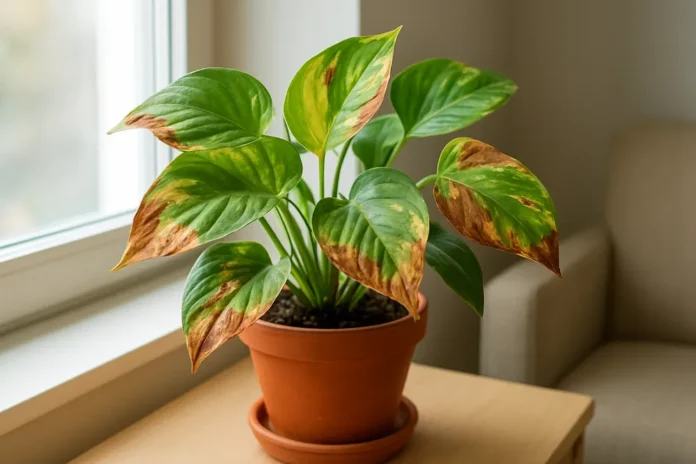
Pothos leaves usually look burnt because they are getting too much direct sun, inconsistent moisture, fertilizer salt buildup, or exposure to heat and dry air. The damaged tissue cannot turn green again, but the underlying cause is often easy to correct.
When a pothos with burnt-looking leaves shows up on a windowsill, the first reaction is usually to blame the sun. Sometimes that is exactly right, but not always. Brown, crispy patches on pothos can also come from watering swings, excess fertilizer, dry air, cold or hot drafts, and even leaf damage that happened while the plant was still tightly unfurling.
I have found that pothos is forgiving, but it is also good at showing stress in a very visible way. A leaf may develop tan spots, dark brown edges, bleached patches, or crisp tips that all get described as burnt. The key is that the pattern of damage usually tells you what happened, and once you read that pattern correctly, the fix is usually straightforward.
The important thing to know up front is that damaged leaf tissue will not heal. Your goal is to stop new leaves from developing the same problem. If fresh growth looks healthy, your plant is already on the way back.
What Burnt Pothos Leaves Usually Look Like
Burnt-looking pothos leaves can show up in a few different ways. Sometimes the leaf has pale yellow or whitish patches that later turn tan and papery. Other times the edges go brown and crisp, or the tips dry out first and then the damage creeps farther in. You may also see irregular brown spots with a dry texture rather than a soft, mushy one.
That dry, crispy feel matters. When the tissue feels brittle or papery, the cause is often related to sun exposure, dehydration, salt buildup, or low humidity. When the damaged area is soft, blackened, or yellow with mushy margins, root problems or rot are more likely than true scorch.
- Light tan or bleached patches often suggest sun scorch
- Brown edges and tips often point to moisture stress or salt buildup
- Crispy spots on leaves nearest a window or grow light often suggest heat or light damage
- Damage on only one or two leaves may come from physical stress, a draft, or a one-time watering mistake
- Widespread browning across many leaves usually means an ongoing care issue
When I diagnose pothos, I look at where the worst leaves are located before I look at the color. Damage concentrated on the window-facing side usually means light or heat, while random browning all over the plant more often points to root-zone stress.
Too Much Direct Sun Is One of the Most Common Causes
Pothos likes bright, indirect light, but harsh direct sun can absolutely scorch the leaves, especially in a south- or west-facing window. The plant may tolerate a little gentle morning sun, yet strong afternoon light can overwhelm the leaf tissue. Variegated varieties often show sun damage faster because the lighter areas have less chlorophyll and less natural protection.
Sun scorch often starts as faded, bleached, or yellowish areas. Those spots then dry out and turn tan or brown. The pattern usually appears on the leaves closest to the light source, especially the ones pressed against hot glass or hanging directly in a sunbeam.
Signs That Sunlight Is the Problem
- Leaves on the brightest side of the plant are most damaged
- Spots look pale or bleached before turning brown
- The damaged areas feel dry and thin, not soft
- The plant sits in direct midday or afternoon sun
- New damage appears after moving the plant to a brighter location
If this sounds like your setup, move the plant a little farther from the window or filter the light with a sheer curtain. Pothos usually recovers well once the light is gentler. The old marks will stay, but new leaves should emerge normally.
Watering Stress Can Make Leaves Look Scorched
Underwatering and overwatering can both create burnt-looking foliage, which is why pothos can confuse people. If the soil gets bone dry for too long, the leaf tips and edges often turn brown and crisp. If the roots stay too wet, they stop supplying moisture efficiently, and the leaves can also develop dry-looking brown patches even though the pot itself feels damp.
Underwatering usually shows up as drooping, curling, dry soil, and crisp brown margins. Overwatering often comes with yellowing leaves, limp stems, a heavy pot, and sometimes a sour smell from the soil. Both situations disrupt how water moves through the plant, and the leaves often show the damage first.
How to Tell Underwatering From Overwatering
- If the soil pulls away from the pot and feels dusty deep down, underwatering is likely
- If the pot stays wet for many days and lower leaves yellow first, overwatering is more likely
- If browning follows a pattern of severe wilt and then recovery after watering, drought stress is the usual cause
- If growth is slow, stems feel weak, and roots smell bad, root stress from excess moisture is likely involved
I do not judge pothos watering by the top half-inch of soil. I check deeper with a finger or a wooden skewer because the surface can look dry while the root zone is still holding plenty of moisture.
The best correction is consistency. Water thoroughly when the top inch or two of soil feels dry, then let the excess drain away. Do not keep the pot constantly wet, and do not let the root ball go so dry that it shrinks hard from the sides.
Fertilizer Buildup Can Burn the Roots and Brown the Leaves
Another common cause of burnt-looking pothos leaves is excess fertilizer or mineral salt buildup in the potting mix. This is especially common when plants are fed frequently, fertilized in winter when growth is slow, or watered with hard water for long periods without occasionally flushing the soil.
When salts build up around the roots, the plant can struggle to take up water properly. That often shows up as brown tips, crisp edges, or scattered dry patches. In some cases you may see a white crust on the soil surface or around the drainage holes.
Clues That Fertilizer Burn Is Involved
- Brown tips appear soon after feeding
- A white crust forms on soil or pot edges
- The plant was fertilized more than monthly during active growth
- Damage appears on many leaves at once without obvious sun exposure
- Soil has not been refreshed or flushed in a long time
If you suspect fertilizer burn, stop feeding for a while and flush the pot with room-temperature water until plenty drains from the bottom. If the soil is old and compacted, repotting into fresh mix can help a lot. After recovery, feed lightly during spring and summer rather than on an aggressive schedule.
Heat, Dry Air, and Drafts Can Damage Tender Foliage
Pothos is adaptable, but it still reacts to harsh indoor conditions. Hot air from a vent, very dry air near a heater, cold blasts from an air conditioner, or leaves pressed against freezing winter glass can all create brown, damaged patches that people describe as burns.
This kind of damage often looks less uniform than nutrient issues. One side of the plant may be affected more than the other, or just the leaves nearest the draft show browning. In winter, I often see crisp edges on pothos that are technically watered well but sit too close to a heating source.
- Browning is worse on the side facing a vent, radiator, or drafty window
- Leaf edges crisp up even though watering seems reasonable
- Damage appears after seasonal temperature changes inside the house
- The plant sits in very dry air for long stretches
Move the plant away from direct blasts of hot or cold air and avoid letting leaves touch window glass. Average household humidity is usually fine, but very dry rooms can still stress pothos. Grouping plants together or using a pebble tray can help a little, though correcting the location usually matters more.
Tap Water Quality and Chemical Sensitivity Can Play a Role
Pothos is not the fussiest houseplant about water, but poor-quality water can still contribute to brown tips and edges over time. Hard water leaves mineral residue in the soil, and some plants react to fluoride, chlorine, or other dissolved salts. This does not usually cause dramatic scorch overnight, but it can slowly create a burnt appearance at the margins.
This cause is more likely when your watering routine is otherwise solid, sunlight is appropriate, and the browning shows up mainly as tip burn rather than large random patches. It is also more likely if you notice crusty deposits on the pot or soil.
If your tap water is very hard, try alternating with filtered water, rainwater, or distilled water for a while. Flushing the soil periodically helps wash away accumulated minerals. You do not need perfect water for pothos, but reducing long-term buildup can noticeably improve leaf quality.
Physical Damage and Unfurling Problems Can Mimic Leaf Burn
Not every brown patch is a care problem. Pothos leaves can tear, crease, or get stuck while unfurling, especially in dry conditions or after rough handling. That injured tissue may later dry into tan or brown areas that look very much like burn marks.
This is especially common on a single new leaf while the rest of the plant looks fine. If the leaf came out twisted, stuck, or nicked, the damage is often cosmetic rather than a sign of serious decline. Pets, moving the plant, or brushing vines repeatedly against a wall can do the same thing.
If only one fresh leaf looks scorched but all the others are healthy, I usually think about mechanical damage before disease. A pothos leaf that got bent while opening often develops a brown patch right along the crease.
You do not need a major intervention here. Keep conditions steady, and watch the next few leaves. If new growth comes in clean, the problem was likely isolated.
Pests and Disease Are Less Common, but Still Possible
True pest or disease problems are lower on the list when pothos leaves look burnt, but they should not be ignored. Spider mites can cause stippling, dullness, and eventual browning, especially in dry indoor air. Bacterial or fungal leaf spots may start dark and expand, sometimes with yellow halos, rather than looking like clean sun scorch.
The biggest difference is that pest and disease damage often keeps spreading in a more active-looking pattern. You may see tiny webbing, speckled leaves, black lesions, or multiple spots with defined borders. Burn from sun or salts usually looks more static once the damage is done.
When to Suspect Pests or Disease
- You see webbing, moving specks, or sticky residue
- Spots have yellow halos or water-soaked margins
- Damage spreads even after light and watering are corrected
- Several nearby houseplants show similar spotting
If you find pests, isolate the plant and treat it promptly. If the spots look wet, black, or infectious rather than dry and scorched, prune the worst leaves, improve air circulation, and avoid wetting the foliage repeatedly.
How to Fix a Pothos with Burnt-looking Leaves
Once a pothos leaf is brown and crispy, that part is gone for good. The fix is not about repairing the damaged tissue. It is about stabilizing the plant so future leaves come in healthy and the overall vine still looks full.
- Move the plant into bright, indirect light if it is getting harsh direct sun.
- Check the soil several inches down and correct your watering rhythm if the root ball is too dry or staying soggy.
- Pause fertilizer if you have been feeding regularly, and flush the soil if salt buildup seems likely.
- Move the plant away from heaters, AC vents, cold drafts, and hot window glass.
- Inspect leaves closely for mites, webbing, or dark spreading spots.
- Trim badly damaged leaves if they bother you, or just remove the brown portions with clean scissors.
If the plant has several long vines with many damaged leaves, a light pruning can improve its appearance and encourage bushier new growth. If the soil is old, dense, or sour-smelling, repotting into a fresh, airy mix may be the reset the plant needs.
Give the plant a few weeks before judging progress. Recovery is measured by healthy new leaves, not by the appearance of older damaged ones. That waiting period matters, because pothos often responds slowly but reliably once conditions improve.
How to Prevent Burnt Leaves in the Future
Prevention is mostly about avoiding extremes. Pothos does best when light is bright but filtered, watering is even, and the potting mix drains well without turning into a soggy sponge.
- Keep pothos out of harsh afternoon sun
- Water when the top inch or two of soil dries, then water thoroughly
- Use a pot with drainage holes
- Feed lightly during active growth rather than heavily year-round
- Flush the soil occasionally to reduce salt buildup
- Protect the plant from vents, radiators, and freezing windows
- Watch new growth after any location change
I also like to rotate pothos every so often so one side does not take all the light and heat exposure. It is a small habit, but it can keep growth more even and make it easier to catch problems before they spread.
FAQ
Should I Cut Off Burnt Pothos Leaves?
You can remove badly damaged leaves if they look unattractive, but it is not always necessary. If only the tips or edges are brown, you can trim those areas with clean scissors and leave the rest of the leaf in place.
Can Burnt Pothos Leaves Turn Green Again?
No. Brown or bleached tissue will not recover. Focus on correcting the cause and watching for healthy new growth.
Can Pothos Recover After Sunburn?
Yes, the plant itself usually recovers well once moved to better light. The damaged leaves stay marked, but new leaves should grow normally if the stress is removed.
Why Are Only the Tips of My Pothos Leaves Brown?
Brown tips are often linked to inconsistent watering, dry air, mineral-heavy water, or fertilizer salt buildup. Tip burn is usually more about root-zone or moisture stress than direct sun.
Does Misting Help Prevent Burnt-looking Pothos Leaves?
Misting offers only temporary humidity and usually does not solve the main issue. Better placement, steadier watering, and avoiding heat or draft stress are more effective.
Can Too Much Fertilizer Really Make Pothos Look Burnt?
Yes. Excess fertilizer can damage roots and cause brown tips, edges, and crispy patches. This is especially likely if the plant is fed often or the soil has not been flushed in a long time.
How Long Does It Take a Pothos to Look Healthy Again?
That depends on the season and growing conditions, but new healthy leaves often appear within a few weeks to a couple of months. The old damage will remain, so improvement is judged by fresh growth.
Want a healthier, fuller pothos fast? Read our pothos care guide and best potting mix roundup to choose the right setup before leaf damage spreads.
