

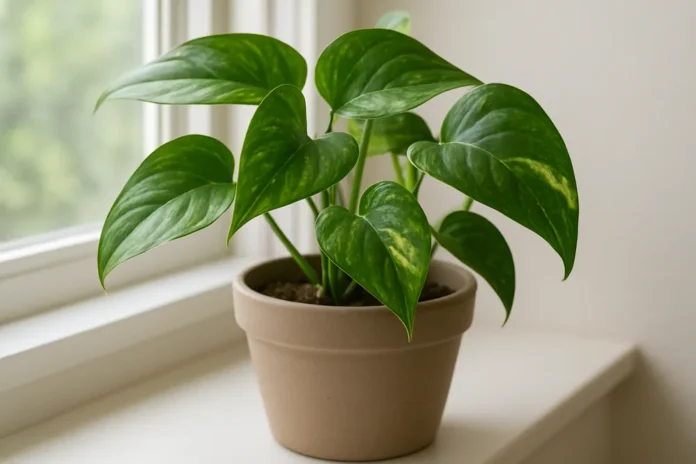
Pothos leaves usually curl because the plant is stressed, most often from underwatering, overwatering, dry air, temperature stress, or pests. Curling is the plant’s way of reducing water loss and coping with damaged roots or leaf tissue.
When I see pothos leaves curling, I take it as an early stress signal. Pothos is forgiving, but it still reacts quickly when something is off with water, roots, temperature, or the growing environment. The good news is that curling often shows up before the plant reaches the point of major leaf drop or widespread yellowing.
In most homes, the cause comes down to a short list: thirsty soil, soggy roots, low humidity, heat or cold stress, or sap-sucking pests. A pothos plant can also curl after a recent repot, a fertilizer mistake, or being moved into a spot with much stronger light. The trick is to look at the whole pattern, not just one curled leaf.
What Curling Leaves Usually Mean on Pothos
Curling is a protective response. The leaf blade folds or cups to reduce stress, especially when the plant is losing water faster than it can replace it. Sometimes that stress starts above the soil line, like dry air or hot sun. Other times it starts below the soil line, where roots are either too dry to function or too waterlogged to supply the foliage properly.
You can narrow the cause down by asking a few simple questions. Are the leaves also limp, crispy, yellow, or spotted? Is the potting mix bone dry, evenly moist, or sour and wet? Is the curling mostly on new leaves, older leaves, or the whole plant? Those clues matter more than the curling itself.
When I diagnose pothos, I do not judge by the single worst leaf. I look at several leaves on different vines, then check the soil and roots. One curled leaf can be old damage, but the overall pattern almost always tells the real story.
Underwatering Is One of the Most Common Causes
A thirsty pothos often curls its leaves inward to conserve moisture. The leaves may feel thinner than usual, look slightly wrinkled, or hang limp instead of lying flat. If the potting mix has pulled away from the sides of the pot or feels dry several inches down, underwatering is a very likely cause.
Pothos prefers to dry slightly between waterings, but not stay dry for long stretches. In a warm room, a small pot can go from perfectly moist to too dry surprisingly fast. Hanging baskets and terra-cotta pots also dry out faster than plastic nursery pots.
- Leaves curl inward or downward and may look soft or droopy
- Soil feels dry well below the surface
- Leaf edges may start turning brown and crisp
- The pot feels noticeably lighter than usual
- Vines may look less full or a little limp overall
If dry soil is the issue, water thoroughly until excess runs out of the drainage holes. If the mix has become so dry that water rushes through without soaking in, let the pot sit in a saucer of water for 15 to 20 minutes, then drain it well. After that, return to a steady routine instead of letting the plant swing from drought to flood.
Overwatering Can Cause Curling Too
Many gardeners expect overwatered pothos to only turn yellow, but curling can happen here too. When roots stay wet too long, they lose access to oxygen and stop working properly. The leaves may curl because the plant is effectively water stressed even though the soil is saturated.
This kind of curling usually comes with heavy soil, slow drying, or a pot that holds too much moisture. You may notice yellowing leaves, mushy stems near the base, a musty smell, or blackened roots if you slide the plant out of the pot. Overwatering is especially common in winter, when pothos uses less water.
- Soil stays wet for many days after watering
- Leaves curl but also yellow or feel weak
- The pot may smell sour or swampy
- Roots may be brown, soft, or sparse instead of firm and pale
- Growth slows even though the plant is being watered often
If you are unsure whether your pothos is dry or overwatered, do not water on a calendar. I wait until the top inch or two is dry, then check deeper with a finger or wooden skewer before deciding.
If the mix is soggy, let it dry partway before watering again. Empty any cachepot or saucer that traps runoff. If the plant is in dense, compacted soil, repot into a chunky indoor mix with better aeration. Severely rotted roots should be trimmed away before repotting.
Low Humidity and Dry Indoor Air Can Make Leaves Cup
Pothos is adaptable, but very dry air can still stress it, especially in winter when heating systems run constantly. Leaves may curl, cup, or develop brown tips while the soil moisture seems otherwise reasonable. This is more common in homes with forced-air heat, near vents, or in sunny windows that heat up during the day.
Humidity stress is usually not the only problem, but it can amplify mild underwatering. A plant that is borderline dry in average humidity may start curling quickly in a dry room. If the leaves are not yellow, the roots seem healthy, and the plant sits near a vent or heater, dry air deserves a close look.
- Brown tips or edges without widespread yellowing
- Curling is worse in winter or near heat sources
- Soil dries faster than expected
- New growth may emerge smaller than normal
Move the plant away from heating or air-conditioning vents and avoid placing it right next to a radiator. Grouping houseplants together can help a bit. A room humidifier works better than misting if your home air is consistently dry.
Too Much Direct Sun or Temperature Stress Can Trigger Curling
Pothos likes bright, indirect light. If it suddenly gets harsh afternoon sun, the leaves can curl as they try to limit moisture loss and heat stress. Sun-stressed leaves may also look faded, bleached, or slightly scorched on the exposed side.
Temperature swings can create similar symptoms. Cold drafts from doors or windows, or hot blasts from vents, can cause foliage to curl and lose its smooth shape. Pothos is happiest in typical indoor temperatures and dislikes extremes at either end.
- Curling appears shortly after moving the plant
- Leaves facing the window are more affected than shaded leaves
- Pale patches, scorch marks, or faded color show on sun-exposed foliage
- The plant sits in a drafty spot or close to a heating source
If bright light is the issue, pull the plant back a few feet from the window or filter the light with a sheer curtain. If drafts are the problem, move it to a stable location with moderate temperatures. Damaged leaves may not flatten again, but healthy new growth should look normal.
Pests Can Curl Pothos Leaves by Damaging Tender Tissue
Spider mites, thrips, mealybugs, and aphids can all lead to curling, especially on newer leaves. These pests feed on plant sap and distort growth as leaves expand. In early infestations, curling may show up before obvious pest clusters are noticed.
Look under leaves, along stems, and around leaf joints. Spider mites often leave fine webbing and stippled foliage. Thrips can cause silvery scarring and twisted new leaves. Mealybugs look like bits of white cotton, while aphids cluster on soft growth.
- Curling is strongest on fresh growth
- Leaves may look speckled, scarred, or sticky
- Tiny insects, webbing, or cottony residue are visible
- Nearby houseplants may also start showing stress
Isolate the plant if you suspect pests. Wipe leaves and stems, rinse the plant thoroughly, and treat with insecticidal soap or neem according to label directions. Repeat treatments as needed, since eggs and hidden pests often survive the first round.
Root Stress After Repotting or Poor Soil Can Lead to Curled Leaves
A pothos that was recently repotted may curl for a week or two while the roots adjust. This is more likely if the roots were disturbed heavily, the plant was moved into a pot much larger than the old one, or the new mix stays too wet. Curling after repotting is usually temporary if the roots remain healthy.
Rootbound plants can curl too. When roots circle densely around the pot and there is very little soil left, water may run straight through or dry out too quickly. In that case, the plant can be both cramped and chronically thirsty.
- Curling starts soon after repotting
- The new pot is much larger than the root ball
- Soil feels dense, compact, or slow to drain
- Roots are tightly circling the pot or pushing out drainage holes
I see more pothos struggle from oversized pots than from being slightly rootbound. A pot that is just one size up usually dries more predictably and keeps the root zone healthier.
Use a pot with drainage holes and a loose indoor mix that drains well but still holds some moisture. If the plant is rootbound, move it up only slightly in size. If it was recently repotted and the roots look sound, keep conditions steady and give it time.
Fertilizer Issues and Tap Water Buildup Are Possible but Less Common
Too much fertilizer can burn roots and stress the leaves, leading to curling, brown edges, or a dull, tired look. This often happens when liquid fertilizer is applied too often or at full strength on already dry soil. Salt buildup from hard tap water can create a similar effect over time.
These cases are less common than watering problems, but worth considering if your care routine seems otherwise solid. A crust on the soil surface or pot rim can be a clue that salts have accumulated.
- Curling begins after a recent feeding
- Leaf edges brown without obvious pest damage
- White crust forms on soil or pot edges
- The plant has not been flushed or repotted in a long time
If you suspect salt buildup, flush the pot thoroughly with water and let it drain well. Cut back fertilizer frequency, especially in low-light months. Feeding lightly during active growth is usually plenty for pothos.
How to Tell Which Cause Is Most Likely
Start with the soil, because watering and root issues cause most curling problems. If the soil is very dry and the leaves are limp, underwatering is the best bet. If the soil is wet for days and the leaves are yellowing or weak, overwatering or root trouble is more likely.
Next, look at the location. Strong direct sun, heating vents, cold drafts, or a very dry room can all push a borderline plant into visible stress. Then inspect the leaves closely for pests, especially on new growth and undersides.
- Check the soil moisture from top to root zone depth
- Smell the potting mix for sour or stagnant odors
- Inspect roots if the plant has been staying wet or declining fast
- Review recent changes such as repotting, moving, fertilizing, or a heat wave
- Examine leaves and stems closely for insects or feeding damage
Try not to correct everything at once. If you change watering, light, humidity, and fertilizer on the same day, you will not know what actually solved the problem. Focus on the most likely cause first and watch the new growth.
What to Do to Help Your Pothos Recover
Recovery depends on stabilizing the environment more than forcing fast growth. Once the underlying stress is fixed, pothos usually bounces back well. Existing curled leaves may improve a little, but badly damaged leaves often stay misshapen.
- Water thoroughly when needed, then let the top inch or two dry before watering again
- Use a pot with drainage and a loose, airy mix
- Keep the plant in bright, indirect light
- Move it away from vents, radiators, and cold drafts
- Raise humidity if your home is very dry
- Check for pests weekly until growth looks normal again
- Hold fertilizer until the plant is actively growing and clearly recovering
Prune off only the worst damaged leaves if they bother you. I usually leave mildly curled leaves in place until the plant has put out healthy new growth, since they still help with photosynthesis. Judge recovery by what happens next, not by whether old leaves become perfect again.
How to Prevent Curling Leaves in the Future
The best prevention is consistency. Pothos likes an even rhythm: bright indirect light, moderate watering, good drainage, and stable room conditions. Most problems start when one of those basics gets pushed too far.
- Check soil before watering instead of following a fixed schedule
- Repot before the plant becomes extremely rootbound, but avoid oversized pots
- Rotate the plant occasionally for even growth
- Wipe leaves and inspect for pests regularly
- Adjust watering seasonally since winter growth is usually slower
- Keep pothos out of harsh direct sun and away from airflow extremes
Once you learn how your pothos behaves in your home, curling becomes easier to interpret. The plant is not being dramatic. It is just giving you an early warning that something in its routine needs adjusting.
FAQ
Will Curled Pothos Leaves Flatten Back Out?
Sometimes slightly curled leaves relax after the stress is corrected, especially if the problem was temporary underwatering. Leaves that were badly damaged by sun, pests, or root problems often stay distorted, so watch new growth for the clearest sign of recovery.
Can Overwatering and Underwatering Both Cause Curling?
Yes. Underwatering causes leaves to curl as they lose moisture, while overwatering damages roots so the plant cannot move water properly. The difference is usually in the soil condition and any extra symptoms like yellowing or a sour smell.
How Often Should I Water a Pothos with Curled Leaves?
There is no perfect weekly rule. Water when the top inch or two of soil is dry and the root zone is no longer evenly moist, then soak the mix thoroughly and let excess drain away.
Do Curled Leaves Mean My Pothos Needs More Humidity?
Not always. Low humidity can contribute, especially in dry heated homes, but watering problems are still more common. Humidity is more likely if the soil care seems right and you also see brown tips or the plant sits near a vent.
Should I Cut Off Curled Pothos Leaves?
Only remove leaves that are badly damaged, yellow, or unattractive to you. Mildly curled leaves can stay on the plant while it recovers, since they still provide some energy.
Can Too Much Sun Make Pothos Leaves Curl?
Yes. Harsh direct sun can heat the leaves, increase moisture loss, and cause curling or cupping. You may also see faded color, bleached patches, or brown scorch marks.
Why Are Only the New Pothos Leaves Curling?
When only new leaves curl, I think first about pests, low humidity, or inconsistent watering during active growth. New tissue is softer and more easily distorted than older leaves.
Want to bring your plant back faster? Read our guide to the best pothos potting mixes, fertilizers, and pest treatments so you can choose the right fix with confidence.
