

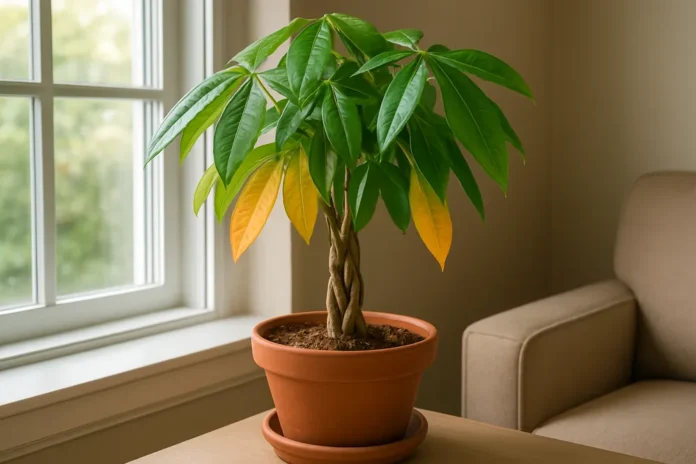
Money tree leaves usually turn yellow because the plant is stressed by too much water, too little light, sudden environmental changes, or root trouble. Older leaves can also yellow and drop naturally as the plant grows.
A money tree with yellowing leaves can be frustrating because the plant often looks healthy one week and tired the next. In my experience, yellow leaves on Pachira aquatica are usually a sign that something in its care routine has drifted out of balance, most often watering, drainage, or light.
The good news is that yellowing does not always mean your plant is dying. Sometimes it is just shedding a few older leaves. Other times, yellow leaves are an early warning that lets you correct the problem before you get root rot, leaf drop, or a thin, struggling canopy. The pattern of the yellowing matters a lot, including whether leaves are soft or crisp, whether the soil stays wet, and whether the damage is limited to older foliage or spread across the whole plant.
Once you match the symptom pattern to the likely cause, the fix is usually straightforward. A money tree recovers best when you correct the root cause instead of trying several changes at once.
What Yellow Leaves Usually Mean on a Money Tree
Yellow leaves are a general stress signal, not a single diagnosis. Money trees respond to root stress, poor lighting, dry indoor air, temperature swings, and pest pressure by slowing down and sacrificing leaves that the plant can no longer support efficiently.
The main clue is how the yellowing looks. A leaf that turns evenly pale yellow and drops after the soil stays wet often points to overwatering or poor drainage. Yellowing with dry, crispy edges leans more toward underwatering, low humidity, or hot direct sun. Speckled yellowing, fine webbing, or a sticky feel on the leaves can suggest pests rather than a watering issue.
- A few lower, older leaves turning yellow over time can be normal aging.
- Several leaves yellowing at once often means a care or environmental problem.
- Soft yellow leaves with soggy soil point more strongly to excess moisture around the roots.
- Yellow leaves with drooping can happen from both overwatering and underwatering, so soil condition matters more than droop alone.
- Yellowing after a move, repotting, or a blast of cold air is often stress related.
When I diagnose a money tree, I do not look at the yellow leaf first. I look at the soil, the pot, and the newest growth. If the newest leaves still look healthy, the plant usually has a good chance of bouncing back once the stress is corrected.
Overwatering and Poor Drainage Are the Most Common Causes
If I had to bet on one reason a money tree is turning yellow indoors, I would start with too much water. These plants like evenly moist soil, but they do not like sitting in wet potting mix for long stretches. Roots need oxygen as much as they need moisture, and constantly soggy soil shuts that oxygen supply down.
When roots stay wet too long, they struggle to function and may begin to rot. That leads to yellow leaves, limp stems, leaf drop, and sometimes a sour smell from the pot. A decorative cachepot without drainage holes can make this worse, especially if excess water collects at the bottom where you cannot easily see it.
Signs the Problem Is Too Much Water
- Leaves turn yellow broadly rather than just at the tips.
- Yellow leaves feel soft or weak instead of dry and brittle.
- The soil stays damp for many days after watering.
- The pot feels heavy most of the time.
- You notice leaf drop along with yellowing.
- There is a musty or swampy smell near the root zone.
Why Drainage Matters as Much as Watering Frequency
Even if you water only once a week, poor drainage can still cause yellowing. Dense soil, a pot that is too large, compacted roots, or a container without drainage can all trap moisture. Money trees do best in a loose indoor potting mix that drains well but still holds some moisture between waterings.
If you suspect root rot, unpot the plant and check the roots. Healthy roots are usually firm and light colored. Rotted roots look dark, mushy, or stringy. If you find a lot of damaged roots, trim them off with clean scissors and repot into fresh, airy mix in a pot with drainage holes.
After correcting an overwatering problem, judge recovery by the new growth, not by old yellow leaves. Those damaged leaves rarely turn green again, so success looks like the yellowing stopping and fresh leaves emerging normally.
Underwatering Can Also Cause Yellow Leaves
Although overwatering is more common, a money tree that gets too dry can yellow too. When the plant repeatedly dries out too far, it begins dropping leaves to conserve moisture. This is especially common in heated homes during winter, where pots dry more unevenly and indoor air is much drier.
Underwatered money trees often have leaves that yellow and then crisp at the edges or tips. The soil may pull away from the sides of the pot, and the whole plant may look droopy but lighter in weight than usual. In severe cases, the potting mix becomes so dry that water runs straight through without soaking the root ball properly.
How to Tell Dryness From Overwatering
- Dry soil several inches down suggests underwatering.
- A very light pot usually means the root ball is dry.
- Yellowing with crisp brown patches leans dry rather than soggy.
- If leaves recover some firmness after a proper watering, thirst was likely part of the problem.
- Chronically bone dry soil can damage fine roots and cause repeated leaf loss.
To fix underwatering, water thoroughly until excess drains from the bottom, then let the top part of the soil dry before watering again. Avoid tiny sips of water on a frequent schedule. A deep soak followed by a partial dry down works much better than keeping only the top inch of soil damp.
Light and Environmental Stress Can Trigger Yellowing
Money trees prefer bright, indirect light. In lower light, they use water more slowly and can start yellowing if the watering routine stays the same. In harsh direct afternoon sun, leaves may bleach, scorch, or yellow from heat and light stress. Both extremes can lead to the same symptom, which is why location matters so much.
A plant that sits far from a window may produce weaker growth and gradually drop older leaves. A plant pushed into intense sun after being grown in shade may yellow suddenly and develop pale or scorched patches. If you recently moved the plant, even a beneficial move can cause some temporary leaf drop while it adjusts.
Common Environmental Triggers
- Too little light, especially in winter
- Strong direct sun through a hot window
- Cold drafts from doors, windows, or air conditioning vents
- Heat from radiators or heating vents
- Sudden location changes after purchase or relocation
- Low humidity during winter indoor heating
Temperature stress is easy to overlook. Money trees prefer stable indoor conditions and often react badly when exposed to cold drafts or big day to night swings. If leaves started yellowing after a cold snap or after the plant spent time near a drafty window, that environmental stress may be the main cause.
I often see yellowing start after people move a money tree into a darker corner because they are trying to protect it from direct sun. The plant then uses water much more slowly, and the old watering routine suddenly becomes too much.
Nutrient Issues, Soil Exhaustion, and Fertilizer Mistakes
Money trees are not especially heavy feeders, but they do need some nutrition during active growth. If a plant has been in the same potting mix for a long time, the soil may be depleted or compacted. That can lead to pale foliage, slow growth, and general yellowing, especially during spring and summer.
At the same time, too much fertilizer can also cause trouble. Overfertilized roots may burn, making leaves yellow and brown at the edges. Salt buildup in the soil can interfere with water uptake, which creates stress that looks a lot like inconsistent watering.
When Nutrients Are Likely Part of the Problem
- The plant has not been repotted or fed in a year or more.
- Growth is very slow during the warm season.
- Leaves look pale overall rather than patchy or spotted.
- White crust appears on the soil surface or pot rim from fertilizer salts.
- Yellowing appears after heavy feeding or using fertilizer too often.
If the plant is rootbound or the soil has broken down into a dense mass, repotting may help more than feeding. Use a well-draining houseplant mix, and choose a pot only slightly larger than the current root ball. A huge pot holds extra moisture too long and can accidentally create the same problems as overwatering.
During spring and summer, a balanced houseplant fertilizer applied at a modest rate is usually enough. In fall and winter, reduce or stop feeding if the plant is growing slowly. Fertilizer will not fix yellowing caused by bad drainage, low light, or pests, so use it only when the plant is otherwise in good shape.
Pests, Disease, and Root Problems to Rule Out
If watering and light seem reasonable, inspect the plant closely for pests. Spider mites, mealybugs, and scale can all weaken a money tree and cause yellowing. Spider mites are especially common in dry indoor air and may leave fine webbing and tiny stippled dots on the leaves before the foliage turns dull or yellow.
Scale and mealybugs feed on sap, which drains the plant over time. You may notice sticky residue, cottony clusters, or raised brown bumps along stems and leaf joints. A heavy infestation can cause widespread yellowing and leaf drop even when the watering schedule is fine.
What to Look for During Inspection
- Tiny moving specks or webbing on leaf undersides
- Cottony white clusters near stems or leaf bases
- Brown bumps that do not brush off easily
- Sticky leaves or nearby surfaces
- Black sooty mold growing on that sticky residue
- Mushy roots or a sour smell if you inspect the root ball
For pests, isolate the plant and clean the leaves gently. Insecticidal soap or neem-based products can help when used carefully and repeatedly according to label directions. For root disease, the treatment is less about sprays and more about removing rotted roots, improving drainage, and adjusting the watering routine.
How to Fix a Money Tree with Yellow Leaves
The best fix depends on the cause, but the recovery process is usually simple once you narrow it down. Start by stabilizing the plant instead of making every change at once. Money trees respond better to a steady correction than to a series of dramatic adjustments.
A Practical Recovery Plan
- Check the soil moisture several inches down and note whether it is soggy, evenly moist, or bone dry.
- Confirm that the pot has drainage holes and that no water is trapped in an outer container.
- Move the plant to bright, indirect light if it is in a dim spot or harsh direct sun.
- Inspect leaves, stems, and the soil surface for pests or residue.
- Trim off fully yellow leaves if they come away easily, but keep any partly green leaves that still support the plant.
- If root rot seems likely, unpot, trim damaged roots, and repot in fresh, airy mix.
- Resume a consistent watering routine based on soil dryness rather than the calendar.
Do not expect old yellow leaves to recover. What you want to see over the next few weeks is that yellowing slows down, leaf drop stops, and new growth emerges healthy. If the plant keeps declining after you have corrected water, drainage, and light, inspect again for hidden root damage or pests.
If you are unsure whether the plant is too wet or too dry, lift the pot every few days and learn its weight when moist versus nearly dry. That simple habit is often more reliable than sticking to a fixed weekly watering schedule.
When Yellow Leaves Are Normal and when to Worry
It is normal for a money tree to occasionally drop an older leaf, especially lower in the canopy. A single yellow leaf every now and then is not usually a problem if the rest of the plant looks vigorous. Seasonal adjustment, recent transport, and mild acclimation stress can also cause a small amount of leaf loss.
You should worry more when many leaves yellow at once, new leaves are affected, stems soften, or the pot stays wet for a long time. Rapid yellowing paired with leaf drop usually means the root zone is under real stress. That is when it pays to act quickly rather than waiting to see if the plant corrects itself.
- Usually normal: one or two older leaves yellowing slowly
- Usually concerning: many leaves yellowing in a short time
- Usually concerning: yellowing plus mushy stems or foul-smelling soil
- Usually concerning: yellowing that spreads to new leaves
- Usually manageable: mild leaf drop after a move if conditions are otherwise good
FAQ
Should I Cut Off Yellow Money Tree Leaves?
Yes, you can remove fully yellow leaves because they will not turn green again. If a leaf is only partly yellow and still has plenty of green tissue, I usually leave it until the plant has stabilized.
How Often Should I Water a Money Tree with Yellow Leaves?
Do not water by the calendar alone. Water when the top part of the soil has dried and the pot feels lighter, then water thoroughly so excess drains away.
Can Yellow Leaves Turn Green Again on a Money Tree?
Usually no. Once a leaf has turned yellow, the plant has already pulled back from that tissue, so the goal is to stop new leaves from yellowing.
Why Is My Money Tree Dropping Yellow Leaves After I Moved It?
A move can trigger acclimation stress from changes in light, temperature, humidity, and airflow. Many money trees settle down after a few weeks if they are kept in bright, indirect light and watered carefully.
Do Money Trees Like Direct Sun?
They prefer bright, indirect light. Gentle morning sun can be fine indoors, but strong afternoon sun can stress or scorch leaves, especially if the plant was previously in lower light.
Can a Pot Without Drainage Cause Yellow Leaves?
Yes. Without drainage, excess water has nowhere to go, and roots can remain too wet for too long, which is one of the most common reasons money tree leaves turn yellow.
Is Low Humidity the Main Reason Money Tree Leaves Turn Yellow?
Low humidity can contribute, especially if leaf edges also brown or crisp, but it is less often the main cause than watering, drainage, or light problems. Dry air tends to make other stresses show up faster.
Need the right tools to bring your plant back fast? Read our guide to the best houseplant watering meters, potting mixes, and indoor plant treatments so you can fix yellowing with confidence.
