

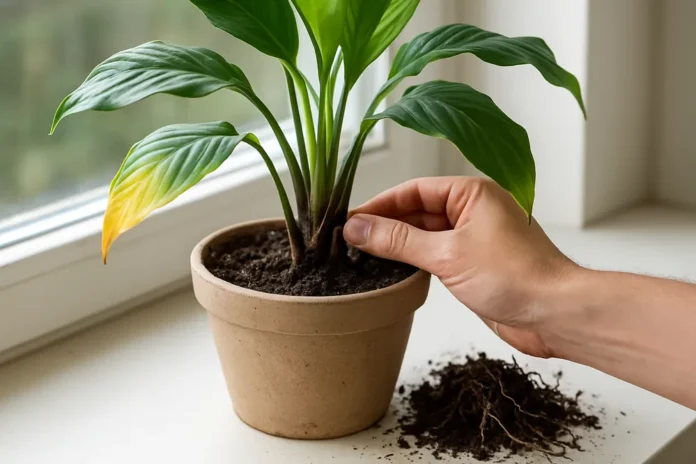
Peace lily stems usually turn black because the plant is staying too wet and the tissue is starting to rot. Cold damage, disease, and normal aging of older stems can also turn them dark.
If your peace lily stems are turning dark, soft, or fully black, the most common cause is excess moisture around the roots. A peace lily can look thirsty even when the potting mix is already wet, which often leads gardeners to water again and accidentally trigger black stems caused by rot.
That said, black stems are not always from watering alone. Cold drafts, poor drainage, fungal or bacterial problems, and simple aging can all darken stems in different ways. The key is to look at the texture of the stem, the condition of the roots, and how wet the soil has been so you can separate a serious problem from a minor one.
In most cases, the pattern of damage tells you a lot. Mushy black stems usually point to rot, dry blackened stems often suggest cold or scorch damage, and darkening on just one old stalk may simply mean that bloom or leaf is naturally finishing its life cycle.
What Black Peace Lily Stems Usually Mean
Peace lily stems can turn black for a few very different reasons, but they do not all carry the same level of urgency. A single black flower stalk or one old leaf stem is often normal aging. Several stems turning black at once, especially if they feel soft or slimy, usually means the plant has been stressed by too much water and root damage.
- Soft, mushy black stems usually mean rot from overwatering or poorly draining soil.
- Black stems with yellow leaves often point to root stress, especially if the soil stays wet for long periods.
- Dry, crisp blackened areas are more consistent with cold injury, heat stress, or physical damage.
- One older stem turning dark near the base may simply be a leaf or flower stalk that is naturally dying back.
Because peace lilies store a lot of water in their stems and leaf bases, damaged tissue collapses quickly once rot begins. That is why the plant can go from slightly droopy to badly blackened in a short time if the roots have already been compromised.
Overwatering Is the Most Common Cause
Why Too Much Water Darkens Stems
Peace lilies like evenly moist soil, but they do not like sitting in waterlogged mix. When roots stay deprived of oxygen, they weaken and begin to rot. Once that happens, the plant cannot move water properly, and the lower stem tissue starts breaking down. The result is often black or dark brown stems that feel soft, wet, or hollow.
Many home gardeners overwater peace lilies because the leaves wilt dramatically when the plant is thirsty. That dramatic wilt can train you to respond quickly, but if the pot still feels heavy or the soil is damp below the surface, watering again can push the roots into constant saturation.
Signs Overwatering Is the Issue
- Stems are black, soft, or mushy rather than dry and crisp.
- Leaves may yellow before they collapse.
- The pot feels heavy for days after watering.
- The soil smells sour, swampy, or stale.
- Growth slows even though the plant is in warm indoor conditions.
- Roots appear brown or black instead of creamy white.
If several stems are darkening from the base upward, overwatering should be your first suspicion. It is especially likely if the plant is in a decorative cachepot where extra water collects unnoticed.
Root Rot and Crown Rot Can Spread Fast
Black stems often go hand in hand with root rot or crown rot. Root rot starts below the soil line when roots stay too wet for too long. Crown rot affects the central base of the plant where stems emerge. Once rot reaches the crown, the damage can move quickly because the tissue there is thick, moist, and vulnerable.
How to Tell Rot From a Minor Watering Mistake
- A mildly overwatered plant may droop but still have firm green stems.
- A rotting plant often has stems that pull away easily at the base.
- Rotting roots are dark, mushy, and may shed their outer layer when touched.
- The center of the plant may smell bad or look water-soaked.
This distinction matters because a plant with early overwatering stress may recover by simply drying out and adjusting your watering routine. A plant with active rot usually needs pruning, repotting, and removal of dead tissue to stop the damage from spreading.
What to Do if Rot Is Present
- Remove the peace lily from its pot and inspect the roots and crown.
- Trim away black, mushy stems and any rotten roots with clean scissors.
- Keep only firm, healthy tissue that is pale or white inside.
- Repot into fresh, airy mix in a container with drainage holes.
- Wait to water until the top part of the mix has started to dry.
Poor Drainage Makes Stem Problems Worse
Sometimes the issue is not how often you water but where the water goes after you pour it in. Even a correctly watered peace lily can develop black stems if the pot has no drainage hole, if the mix is too dense, or if water sits in a saucer or outer pot for hours.
Peace lilies do best in a potting mix that holds moisture without becoming packed and soggy. Heavy peat mixes, compacted old soil, and rootbound pots can all trap too much water around the crown.
Drainage Red Flags
- The pot has no drainage hole.
- Water pools on the surface before it slowly sinks in.
- The mix has shrunk, hardened, or smells stale.
- Roots are circling tightly and there is very little fresh soil left.
- The plant sits in standing water after irrigation.
If your peace lily has black stems and the soil seems to stay wet for a week or more, improving drainage is one of the most important fixes. A healthier potting environment often prevents the problem from returning.
Cold Damage Can Blacken Stems and Leaf Bases
Peace lilies are tropical plants, so they react badly to cold windows, chilly drafts, air conditioning vents, and winter transport. Cold injury can turn stems and leaf bases dark, especially after a sudden temperature drop. In this case, the tissue may look blackened or water-soaked at first, then later collapse.
Cold damage is often mistaken for rot because both can darken tissue. The difference is that cold injury may appear after one short event, even if the soil is not overly wet. Damage is often most visible on the side of the plant facing the window or draft source.
- Symptoms appeared shortly after a cold night or after bringing the plant home in winter.
- The blackened area is concentrated on outer stems or the exposed side of the plant.
- Leaves may also show dark patches, translucent spots, or limp areas.
- The soil may be normal rather than soggy.
If cold exposure is the cause, remove the damaged stems and keep the plant consistently warm. Peace lilies generally prefer indoor temperatures well above 60 degrees Fahrenheit, with the safest range in normal room conditions.
Disease Can Also Cause Black or Dark Stems
Fungal and bacterial diseases are less common than overwatering, but they often follow it. Wet soil, crowded stems, and poor air circulation create ideal conditions for pathogens that infect soft tissue. Once infection starts, stems can turn black, mushy, streaked, or foul-smelling.
When Disease Is More Likely
- Dark lesions are spreading quickly from one stem to others.
- The tissue smells rotten or unusually pungent.
- The blackened area looks wet or greasy.
- You see spotting on leaves as well as stem collapse.
- The plant has been misted heavily or kept in very stagnant air.
Bacterial issues often produce fast, wet-looking collapse. Fungal problems may show more spotting or gradual dark lesions. In a home setting, the first response is usually the same: isolate the plant, remove affected tissue, improve airflow, reduce excess moisture, and sanitize cutting tools between cuts.
If much of the crown is infected, recovery may be difficult. Healthy divisions can sometimes be saved if they are separated from the diseased part and repotted into clean mix.
Aging Flower Stalks and Old Stems May Be Normal
Not every black stem is a crisis. Peace lily flower stalks naturally age after blooming, and older leaves eventually decline as the plant replaces them. A spent flower stalk often changes from green to brown, then darker brown or black as it dries and dies back.
This kind of blackening is usually easy to recognize because it affects one stalk at a time, the rest of the plant looks healthy, and the tissue is not mushy at the base of the whole plant.
- Only one or two older stalks are affected.
- The rest of the plant is firm, green, and growing normally.
- The dark stem is attached to an aging flower or an old yellowing leaf.
- There is no foul smell or widespread collapse.
In that case, simply prune the old stalk off at the base with clean shears. Regular grooming keeps the plant tidy and directs energy into fresh growth.
How to Diagnose the Exact Cause
The fastest way to identify why peace lily stems are turning black is to combine three clues: stem texture, soil moisture, and root condition. Looking at only the leaf wilt can be misleading because both dry and waterlogged peace lilies can droop.
Use This Quick Diagnosis Guide
- Soft black stems plus wet soil usually indicate overwatering or rot.
- Soft black stems plus bad odor strongly suggest active rot or disease.
- Dry black patches after cold exposure point toward temperature injury.
- One old dark stalk with otherwise healthy growth is usually normal aging.
- Blackening after repotting or physical bumping may be bruising or stress on a damaged stem.
If you are unsure, gently slide the plant from the pot. Healthy roots are light colored and firm. Rotten roots are dark, soft, and often fall apart in your fingers. That inspection usually gives the clearest answer.
How to Fix a Peace Lily with Black Stems
The right fix depends on the cause, but black stems should always be removed because damaged tissue does not turn green again. Start by cleaning up the plant, then correct the condition that caused the damage in the first place.
Basic Recovery Steps
- Trim off black, mushy, or collapsed stems down to healthy tissue or at the base.
- Empty any standing water from saucers or outer containers.
- Check whether the pot has working drainage.
- Inspect roots if the plant has multiple black stems or persistent wilt.
- Repot if the soil is dense, sour-smelling, or full of rotten roots.
- Place the plant in bright, indirect light to support recovery.
- Hold back on fertilizer until new healthy growth appears.
Do not try to fix a rotting peace lily by giving it plant food right away. Fertilizer cannot repair damaged roots, and it may add extra stress. First restore healthy roots and stable moisture, then resume normal feeding later in the growing season.
When Repotting Helps Most
Repotting is especially helpful when the plant is in compacted mix, a pot without drainage, or a rootbound container that no longer balances moisture well. Use a fresh indoor plant mix amended for better airflow if needed, and always choose a pot with drainage holes.
How to Water Peace Lilies Without Causing Stem Rot
A better watering routine is the best prevention. Peace lilies prefer soil that stays lightly moist, not constantly saturated. Instead of watering on a fixed calendar, let the plant and potting mix guide you.
- Water when the top inch of soil feels slightly dry rather than soaking it on a schedule.
- Use a pot with drainage so excess water can leave the root zone.
- Pour off water that collects in saucers or decorative pots.
- Reduce watering in winter when growth naturally slows.
- Check the weight of the pot as well as the soil surface, since the top can dry before the lower mix does.
Peace lilies can tolerate brief dryness much better than they can tolerate chronic sogginess. A slight droop that quickly improves after watering is far easier to correct than a rotting crown.
How to Prevent Black Stems From Coming Back
Once a peace lily has suffered black stems, prevention comes down to managing moisture, temperature, and sanitation. Most repeat cases happen because the original stress was only partly corrected.
- Keep the plant in bright, indirect light so the mix dries at a reasonable pace.
- Avoid cold windows, exterior doors, and direct blasts from heating or air conditioning vents.
- Refresh old potting mix every couple of years if it has become compacted.
- Prune aging flower stalks promptly so they do not sit damp at the crown.
- Use clean tools when trimming damaged tissue.
- Do not let water collect around the base of the plant for long periods.
Healthy peace lilies rebound well when the environment is corrected early. New growth should emerge green and firm, while any future darkening should be limited to naturally aging stems rather than spreading collapse.
When the Plant Can Be Saved and when It May Not Recover
A peace lily is usually salvageable if at least part of the root system and crown remain firm. Even if several stems are lost, fresh growth can return from healthy tissue once the plant is repotted and watered correctly.
Recovery becomes less likely when the entire crown is black, the roots are almost all mushy, or the base of every stem is collapsing. In severe cases, the best option may be to discard the plant and start over, especially if there is obvious foul-smelling rot throughout the center.
- Good chance of recovery: some healthy white roots, firm center, only partial stem loss.
- Poor chance of recovery: widespread mushy crown, no firm roots left, severe odor, or total collapse.
FAQ
Can Black Peace Lily Stems Turn Green Again?
No. Once a stem has turned black from damage or rot, that tissue will not recover. Remove it and focus on encouraging healthy new growth.
Should I Cut Off Black Stems on My Peace Lily?
Yes. Trim black stems away with clean scissors or pruners, cutting back to healthy tissue or removing the entire stem at the base if it is fully damaged.
Can Underwatering Make Peace Lily Stems Turn Black?
Severe drought usually causes browning, crisping, and collapse more than mushy black stems. Black, soft stems are much more often linked to excess moisture and rot.
Why Is Only One Peace Lily Stem Turning Black?
If it is a single older leaf stalk or spent flower stalk, normal aging is the most likely reason. If that one stem is mushy and the soil is soggy, early rot is also possible.
Do Peace Lilies Like to Dry Out Between Waterings?
They prefer slight drying at the top of the soil rather than staying constantly wet. Let the top inch dry a bit, but do not let the entire root ball stay bone dry for long.
Can a Peace Lily Recover From Root Rot?
Yes, if some roots and crown tissue are still healthy. Remove rotten parts, repot into fresh well-draining mix, and correct the watering routine.
Is a Black Flower Stem on a Peace Lily Normal?
Yes, often it is. Flower stalks naturally darken and die back after blooming, especially if the rest of the plant looks healthy.
Need the right fix fast? Read our guide to the best potting mixes, drainage pots, and root-rot treatments for peace lilies so you can stop black stems and help your plant recover.
